11
Aug

Thanks again so much to Ian Finney for the interview! I interviewed Ian about his band Christopher as I had written about them on the blog as one of those obscure band’s I wanted to know more. I couldn’t let pass the opportunity to ask him about The Tempest, the much more known band he was in, and whose singles I really enjoy! The band released 4 singles and their album still remains unreleased to this day. A classic band of the 80s for me and very happy to learn more about them!

++ Hi again Ian! Thanks so much for being up for another interview! Are you still in touch with the rest of The Tempest members?

Hiya Roque. I’m in touch with most of the band. I lost contact with Mike but I’m on social media with Steve, Stuart and Lyn. I’ve worked with Steve since the band split and we’re in regular contact.

++ Last time we talked about Christopher so what would you say were similarities and differences between Christopher and The Tempest, if any?

The Tempest was a completely different setup to Christopher. The band was Mike’s show entirely. We all had a lot of space to add our own original parts and arrangements but the songs were Mike’s and it was mainly his gig.

Christopher and The Tempest were both guitar-based bands with similar influences. My guitar playing had evolved a lot since The Tempest and I was trying new things. I was a side man in The Tempest, a lead guitarist. I did have some creative control over what I did and there was some input from me on other things while the album was being recorded, but not as a songwriter. Christopher was my band and I was basically in Mike’s position. It was a mirror image of The Tempest.

++ How did The Tempest start as a band? How was the recruiting process?

Mike had a band called Going Gah Gah with Lyn, another guy on guitar (Pete, I think), Stuart on bass, Lyn on backing vocals and Mark Olly on drums. Mike and Lyn were from Liverpool and Mark and Stuart were Warrington-based. The band had a residency in Warrington at Abbey Green studios and demoed the songs there. Pete left the band and they were looking for another guitarist. I’d heard about the audition from the manager at Dawson’s Music in Widnes and phoned the studio and then successfully auditioned for the band.

++ You were telling me you were underage when you were in it, what about the other band members? Were you all so young?

Yes. I was seventeen, Stuart eighteen, Mike was twenty-one and Lyn was ‘ancient’ at twenty four.

++ Had the other band members been in other bands before The Tempest?

I’m not entirely sure. Stuart was a studio player and Mark Olly had been in other bands, but I’m not clear on the details with the other guys.

++ Was The Tempest also based in Halton? Or where did you usually get together? Where were the other band members from?

The band was based in Warrington but were a Liverpool band. We used to meet at Abbey Green studios or directly at rehearsals in Liverpool or London. When we were recording we were all based in hotels or guest houses in Stockport and London.

++ Were there any lineup changes?

It was like Spinal Tap. We were always changing drummers. Mark, Mick, Jon, Steve.

Mark Olly left the band just before we signed. Mick Burland was auditioned and he played on three studio tracks then Jon Sumpton was with us for a while and finally Steve Dolder (ex-Prefab Sprout) joined. It’s worth mentioning since we are from the same home town, that Damian ‘Diz’ McMullen nearly auditioned for the band but Jon came into the audition and blew Mike away with a ten-minute Jazz solo, who hired him on the spot.

++ How was the creative process for The Tempest? Where did you usually practice?

Mike was the songwriter and we either learned his songs from the demos or during rehearsals. To my knowledge nothing new was written during the time the band was signed. We practised in Warrington at first and after signing we rehearsed in Liverpool then later in London at The Clink, Nomis studios and also Lipstick Studios.

++ What’s the story behind the band’s name? 

We changed the name from Going Gah Gah to The Tempest after signing and I think the record company asked us to do that. Mike thought of the name.

++ And who would you say were influences in the sound of the band?

Mike was certainly influenced by The Beatles and his passion for the band got me into them too. I was a jangle-pop guitarist back then and I was into The Byrds.

++ How did you get the attention of Magnet Records? Did their people come to gigs? Did you send demo tapes?

The groundwork for all this was done before I joined so I can’t tell you any more but demos were sent out and there was a wooing period with EMI, Stiff Records and Magnet. I was very fortunate to be in a position where I joined a band just as they were about to sign a recording contract. It wasn’t an easy ride and I certainly earned my place there.

++ And were there other labels interested in releasing your music?

Stiff Records, EMI and Magnet were interested. Magnet promised Mike more creative control so he chose them, but later we found this wasn’t true. I think if we’d signed with Stiff or EMI the outcome of everything would have been very different.

++ Your first release was the “Always the Same” 7″, right? Was wondering if this was the first time, because of your age, going to a proper recording studio? And if so, how was that experience working with Glenn Tilbrook?

We spent time with Gus Dudgeon in CBS Studios recording a version of Bluebelle before we met Glenn, so that was my first time in a recording studio and I loved it. There was a feeling of deja vu and I was completely at ease with recording.

When I was sixteen I saw a poster of Duran Duran standing in a recording studio with a stand full of guitars behind them. Something struck me about it. “This is what I want to do” I thought, and I was absolutely certain I wanted to be a recording artist. Not to be famous, but to be a professional recording guitarist. I practised so hard. This is what got me expelled from college – I was playing music all the time. I would pretend to be recording live takes in front of a tape machine. When I actually got into a studio and started recording, the engineer Pete Hammond said he couldn’t believe I’d not done it before because I was very precise with playing my riffs and licks and deadened the strings in all the right places during parts of the songs.

Glenn asked me to come up with a solo for ‘Always The Same’ on the spot and I mentioned that I’d been jamming a new phrase at home but it was partly chords. They asked me to play it and I recorded two takes then Glenn asked me to add a few bits on and it was done.

We met Glenn on October 31st 1984 at a rehearsal room near the river. We ran through ‘Always The Same’, ‘Bluebelle’, ‘Tonight’ and ‘The Tempest’. It was a bit surreal to meet him because I’d bought every single Squeeze had released up to that point while I was at school just two or three years earlier. I loved collecting those and they were nearly all released on coloured vinyl.

Working in the studio with Glenn was disciplined and methodical but laid-back. I really enjoyed it. We socialised as well and spent time in the pub and at his place. He remains a friend and we meet occasionally when he’s in the area. He’s always been very complimentary about my playing and my work. I think he is one of the most original British songwriters ever. Squeeze are utterly unique. Pete Hammond and Femi Jiya engineered on the album. Pete is a mixing legend. He engineered nearly everything you heard on UK radio in the 80’s and he’s behind nearly all of PWL’s output. If you’ve been Rick-Rolled, Pete is the guy responsible for that. Femi went on to work with Prince at Paisley Park.

++ Many of your releases were to appear in different formats. Not just 7″s but also 10″s and 12″s for them. What was your favourite format for your music and why?

10”s were interesting because we could get three or four songs on them.

++ Who usually take care of the art for your records? And who appears on the cover of the “Bluebelle” single? And was this the photoshoot that Jill Bryson from Strawberry Switchblade helped with?

Mike thought of the concepts and professional artists developed them. I still have Mike’s original concept sketch for our first single’s cover (Always The Same).

That’s Mike on the cover of Bluebelle. That photoshoot was with Peter Arthur who was the partner of Jill Bryson from Strawberry Switchblade at the time and Jill was at the session. I loved Strawberry Switchblade. I chatted with Jill throughout the day and she learned that I was single and hinted that Rose from the band was looking for a boyfriend. I never chased it up. I can’t remember why. It’s one of those inexplicable mysteries. I think Strawberry Switchblade are remarkable for the cultural influence that they had on Japan that exists to this day. If you look at what they wore back then, you’ll see it. They aren’t copying a certain Japanese Manga style, they invented that look. The band were huge in Japan and that image obviously had a huge influence. I mentioned this to Jill fairly recently and she was very modest about it.

++ But I think I read that there actually “Bluebelle” was to be the first single that it was recorded in 1984 with Gus Dudgeon. What had happened?

The official line at the time was that Magnet Records thought Gus “wasn’t the right guy for our sound”. The truth is much different. One of the other band members had been talking about John Lennon and Gus had been a friend of John. Some things were said and I saw that Gus wasn’t impressed. Then towards the end of the week someone played a joke on Gus in the studio that he didn’t find amusing. I heard him as he turned to his engineer and said “I can’t work with this”. I’m taking a reasonable guess that he quit after that. It’s a very great shame he did because I really liked Gus and admired him for what he’d done for music. He produced Space Oddity by David Bowie, The Zombies ‘She’s Not There’, Elton John’s entire classic 70’s catalogue of songs and John Lennon, who he told me he was ‘”in awe” of. ‘Don’t Go Breaking My Heart’ was one of Gus’ songs and it’s a lifelong favourite of mine. He was a legend. I got him to autograph a copy of Elkie Brooks ‘Pearls’ that he’d produced. He was genuinely touched and flattered that I’d asked him to sign it. It was the only autograph I asked for during that time. He passed away with his wife in 2002 after a motorway accident. I still feel terrible when I think of it.

A month after the session with Gus ended we got a message that we were rehearsing in London near the river for pre-production sessions with Glenn Tilbrook. It was around the time he was going through his split period with Chris Difford and was interested in producing us. We spent a few days jamming the songs and were rehearsing next to The Cure, who we heard through the wall in the next room. We started rehearsing Bluebelle and they stopped their song and suddenly began playing ‘Boy’s Don’t Cry’ maybe because they were the same chords and they thought we were ripping them off.

++ These first two singles were released in 1985, and the next two would appear in 1986. You know there was the “C86” tape that year, and I wonder if you felt akin to what would later be the C86 scene? I can see your sound and style part of it myself, but what do you think?!

Interesting observation. We might have been part of that scene. Magnet and other things messed up a lot of things. Records were not in stores. Singles were getting saturated airplay on major national radio and people were walking into shops to buy our records and they weren’t on sale. Who knows what would have happened if people had done their jobs.

++ Then came the “Didn’t We Have a Nice Time?” single. I have to ask, where was that photo from the front cover taken?

That’s West Wycombe Forest.

++ On this single we see that Bobby Valentino played violin! How was working with him?

I think I briefly saw him. I didn’t really talk that much to anyone back then. I still don’t (laughs). He also played violin on The Bluebell’s Young At Heart. Did you know he’s the brother of Anne Dudley (Art of Noise)?

++ You made a promo video for “Didn’t We Have a Nice Time?” which is really fun! It was filmed at Wimbledon Chase Middle School! I wonder how easy it was to work with children, and was the teacher actually the class teacher? I am sure many of the kids must remember that day!

That school was also featured in the film P’tang, Yang, Kipperbang (classic British movie). It was a two-day shoot with interiors in the school on day one and exteriors on day two in a muddy field. I got food poisoning overnight and they had to hire a portable loo for me for the outdoor filming. Thankfully I didn’t need to use it but it was a tough day. One of the film crew was a bit older than me and she was giving me flirty looks but I felt like death. The kids were all surprisingly well-behaved. Thirty years later one of them got in touch with me through my blog. He was the kid scratching his head in the video. The kids loved it and lined up for autographs after the filming. A kid asked me to sign his plectrum. I was only five years older than them and had left school less than two years earlier. It felt very, very surreal. The Teacher was an actress. I think one of the band had a crush on her.

++ Then you released a cover of the Small Faces’ “Lazy Sunday” on 7″ and 12″. There is even a “Crazy Version” of this song on the 12″. Was this song part of your live repertoire? Or how come you choose to release this cover version? Were there other covers that you usually use to play?

We never played it live when I was in the band and I don’t think they did after I left either. We’d released three original songs and it was entirely our A&R man’s plan (James Todd) to release a cover version. I hated the idea. Absolutely hated it. For me it was the last straw in a long line of disagreements over artistic differences and my role within the band. I told Mike I was leaving after our studio session with Steve Levine. He tried to persuade me to stay but was quite understanding about my decision.

++ And lastly the album. What happened? Why was it never released?

The band were dropped a few months after I left and Magnet Records shelved it.

++ But as you say there are copies out. How many copies do you estimate are or were in circulation?

Who knows. A couple. A few. Maybe more. They obviously manufactured some and I’ve seen at least two copies out there for sale, both at ridiculous prices. The last one I saw online was on sale for over a thousand euros. Maybe these were test pressings – or maybe not – maybe Magnet pressed a run and have them in storage and some got nicked (stolen) or leaked. Either way, a few got out there.

++ Do you think there will ever be a chance for it to be properly released someday? Have there been any attempts to do so?

Not that I know of. Maybe some fans could contact Warners Music and get them to release it digitally. It would be nice.

++ The photography in the album looks like from the same photo session as “Didn’t We Have a Nice Time?”. Am I right? Or not?

Yes. Same photo session and sadly I’m responsible for that look. There was a meeting about what image we should have next and I said it might be interesting to try something a bit Victorian, like ‘Doctor Who’. So that’s my fault entirely. It could have been something very 80’s instead but I persuaded Mike to go with the historical look. In hindsight maybe it wasn’t so bad after all. You’ve seen what some bands look like in the 80’s. I think I was the only artist at showbiz parties with a Beatles haircut and sideburns.

++ And how different was to record an album compared to the singles?

It was the same, it just takes longer. There’s a lot of discipline involved in professional recording sessions. You need to be focused and ready to give your best performance. No messing about. You can also get asked to come up with new ideas on the spot. I love that environment. When I’m required to be musically creative I feel alive.

++ Aside from the releases you appeared on a few compilations. One that surprised me is on a Spanish LP compilation called “Ráyate”. This one has “Didn’t We Have. Nice Time”, twice, on the A and B sides. It looks like they had been DJ mixed, but I can’t say as I haven’t heard them, but have you? Do you know how did you ended up in this 1987 comp?

I’ve heard that Spanish fans love the band but this is new to me. I’ll have to check it out.

++ There are two other Spanish compilation featuring this same song. Do you know if this song was a big hit all over Spain? Or perhaps in some select cities like Valencia, where I happen to hear some UK jangle pop songs became DJ mixed and became big dancefloor hits at the discos?

I know we are popular in Spain, but not details. Again, I’ll have to check this out.

++ Then you are in a South African compilation called “Now That’s What I Call Summer” with “Lazy Sunday”. That’s quite cool. I guess that’s as international you can get and appearing next to ABBA, The Beach Boys, that must have been quite something?

It is and I’ve only just discovered this. It’s an odd release because that was from 1986 when the band was still signed and no one knew about this. It doesn’t surprise me though, that’s what record companies are like.

++ And are there more unreleased songs by the band? Aside from the album of course?

There are lots of demos that were made at Abbey Green and I also made a few demos with Mike after I left, as a favour for him. There is the unfinished Gus Dudgeon version of Bluebelle, which I own the only copy of and several other tracks which didn’t make the album. I think they are ‘The Tempest’, ‘I Cannot Be Sure’ and a few others. I have copies of all of these.

++ I think my favourite song, the only one I’ve heard so far!, is “Bluebelle”, wondering if you could tell me what inspired this song? What’s the story behind it?

To be honest with you, I have no idea – it’s Mike’s song.

++ If you were to choose your favorite The Tempest song, which one would that be and why?

Always The Same, the first single. It was my first solo on vinyl and I think it is the best song The Tempest made. My mum would turn the radio up full when it came on and run to the bottom of the stairs and shout “Ian, your song’s on the radio!”. My parents were so proud of me. My dad couldn’t believe I’d got signed. He made me a wood pedal board for my guitar effects pedals and I still have it. I’ve used it for over 30 years. My parents are no longer here with us and every time I hear the song I think of their excitement and how fresh and exciting it all was for everyone in my life and in the band.

I remember coming back from London after weeks of recording. I was exhausted and homesick. It was 3am and my parents were asleep in bed. My mum knew I was returning home that night and had left a covered plate of sandwiches on the kitchen table for me with a note on it which said “eat if hungry”. I made a cup of cocoa and sat drinking it in the semi-darkness and had a startling moment of clarity. I know it sounds soft but I remember feeling profound love for my parents and gratefulness for everything they had done for me. I thought that I’d remember that moment all my life and I did. Every time I hear the song it reminds me of that moment.

++ What about gigs? Did you play many?

We played dozens of gigs as support: The Bluebells, 10,000 Maniacs, The Cardiacs, The Climax Blues band and The Higsons are a few that come to mind. The Higsons (Charlie Higson’s band from The Fast Show) had such a huge rider (free food, drinks etc. that a band asks for at the venue) that I thought we’d walked into an off-licence (liquor store). We played at all the major venues in the UK. The gigs at the original Marquee are ones that come to mind. We did two full British tours. The first supporting The Untouchables, a U.S. Band that had a chart hit at the time. I think that was three weeks of touring and we supported Squeeze on their Cosi Fan Tutti Frutti En Routti tour which was the 6th to the 15th of October 1985. We finished the tour with two sold-out nights at Hammersmith Odeon and then had a great end-of-tour party with Squeeze at some swanky private club in London. It was filled with artists, actors and BBC Radio 1 DJs. The ‘Comic Strip Presents’ actors were there. I got snapped by Paparazzi in a shot with Glenn and Rik Mayall while I was stood at the bar with Robbie Coltrane. Sarah Greene and Mike Smith were grinning at me – I was dressed like I’d stepped through a 1960’s time warp.

++ And what were the best gigs you remember? Any anecdotes you can share?

So many great gigs. I’m proud of playing at the long-gone Marquee Club on Wardour Street. Who played there is a list of rock history: The Rolling Stones, Bowie, Queen, Led Zeppelin, Fleetwood Mac, Jimi Hendrix…the list goes on and on. Standing on the same stage, using the same dressing room. You could feel the vibe.

At King Tuts in Glasgow I walked into a room and there was a Roman Soldier in full authentic armour with two female Roman ‘Nymphs’ dressed in togas. I apologised and left the room. I have no idea what was going on.

++ And were there any bad ones?

Everyone’s strings went out of tune at one gig and it was hideous. It was insisted that we change strings each day on tour – even bass strings. There had to be one venue where the humidity and temperature caused absolute mayhem with the metal strings. We got in tune again but it caused frayed tempers onstage.

++ When and why did The Tempest stop making music? Were you involved in any other bands afterwards?

The Steve Levine session was the last one we all did together. I sneezed all the way through as I had terrible hay-fever.

I left the band at the end of summer 1986 and they carried on for a few months but got dropped. There were plans to record with William Orbit but it never happened. I’d had offers to remain in London and Indians in Moscow’s manager made me an offer to manage me but I turned them all down. I was secretly suffering from undiagnosed agoraphobia and I just wanted to get back home.

As you know from my previous interview with you, I formed The Snakeskins. It was a break from the discipline and stress of being in a professional band. I felt like I’d missed the middle of the 1980’s, even though I was right at the heart of everything that was happening at the time. As soon as I left I started regaining my lost teen years. I’d been in the band from when I was 17 to 19. I’d been single for three years and on a professional leash. I got a girlfriend, started writing songs and began to enjoy life. It was great. The pressure I had been under in The Tempest was huge.

++ What about the rest of the band, had they been in other bands afterwards?

I don’t think Mike did anything and he put music behind him, as far as I know. Stuart formed his own music company and wrote music for TV. Lyn formed her own band, Carbon 13, and is now solo, Steve joined The Coal Porters and is now one of the highest-paid live drummers in the UK. He also formed a music company with Martin McAloon, Prefab Sprout’s bassist (Steve is a former member of Prefab Sprout).

++ Has there been any reunion gigs?

Noooo.

++ Did you get much attention from the radio?

Tons. We had saturated airplay on BBC Radio One and played Radio One sessions for Andy Peebles, Richard Skinner (I think) and a few other BBC DJ’s who I can’t remember – I was very nonchalant about what we were doing and didn’t take much notice. We certainly weren’t strangers to BBC Maida Vale Studios.

++ What about TV? Made any promo videos?

There was a video for ‘Didn’t We Have A Nice Time and we got airplay on BBC TV on kid’s TV, The Money Programme and Wogan. Possibly others, I didn’t really pay attention to what was going on at the time.

++ What about the press? Did they give you any attention?

Every major music publication got us on board. The NME, Melody Maker, Smash Hits, No 1 Magazine, even the girl’s mag Jackie did a feature on us as well as a bunch of other UK magazines. There were so many.

++ What about from fanzines?

Not that I know of.

++ Looking back in retrospective, what would you say was the biggest highlight for the band?

That’s a tough question. There are so many high points that it’s hard to pick just one. For me, personally, the best thing was getting to work with so many great people.

++ Thanks again Ian! This made my day! Anything else you’d like to add?

Thank you Roque, it’s been a pleasure.

I’m looking forward to releasing my first solo music, so please keep an eye out for that on social media.

::::::::::::::::::::::::::::::::::::::::::::::::::::::::::::::::::::::::::::::::::::::::::::::

Listen
The Tempest – Bluebelle
04
Aug

Thanks so much to Raoulie de la Cruz for the interview! The Casino Ashtrays was a great band he had with Laura Watling/Mazzucco (The Autocollants, Tears Run Rings, Laura Watling) back in the 90s. A proper DIY indiepop band who released a few tapes, one CD and appeared on some compilations back then. 9 years ago the great Jigsaw Records released a retrospective compilation that is a must-have for all indiepop lovers. You can still find copies here. I’ve always been a fan so I had to do this interview sooner or later… and yeah, it took a while but finally all my questions are answered!

++ Hi  Raoulie! Thanks so much for being up for this interview! How are you? I have been curious about this for years now, are you still making music? Or involved with music at all?

Hi Roque! I am doing fine…all things considered! Right before you sent in these interview questions I was actually recording some trumpet parts on my old 4-track for this band I was in called Folklore. Folklore is basically Jimmy Hughes who ran Bumblebear Records. He also played guitar in Elf Power for a few years when he still lived in Athens, Georgia. Anyways, Folklore was his band and I played trumpet in it. And then he moved to Philly, where he continued with new members. Here’s a funny story – and you can cut it out if it goes too long: When I first moved to Athens in 2005, I just kinda hung out for a couple of months before getting a job. One day, I went to go browse in the Star Wars aisle at the local Toys-R-Us (I used to avidly collect Star Wars action figures). When I got there, this dude was already going through all the action figures. I thought, “Dammit! This guy is gonna buy up all the good stuff!” He could sense that someone was behind him, waiting, so he turned around. When he saw me he said, “Raoul???? It’s me…Jimmy!” It took me a minute to register and then I was like, “Oh yeah! Hey, Jimmy!” Then he asked me, “Did you just move here???” “YES!” “You wanna be in my band?” “Sure! Yeah!” And just like that, I was in Folklore! And then while I was in Folklore, I started a super twee band called The French Toasts with my girlfriend, Missy Kulik. We mostly played covers on toy instruments. And then I started playing trumpet in another local Athens band called Werewolves. And in-between all that, I had another short-lived band called The Slow Rowboat. Up until just a couple days ago, I hadn’t worked on music since Missy and I moved to Atlanta a couple of years ago.

++ I reckon that it has been 9 years since Jigsaw Records compiled all Casino Ashtrays songs on the compilation “(Are Your Boring Ideas of Fun the Same as Mine?)”. I thought when that came out that I had to interview you. Not sure why I didn’t ask you then. But now, years after this compilation, how do you feel these songs, most recorded during the 90s have aged?

I still like most of the songs on there, so I guess they aged pretty good? That is to say, I’m still proud of the songs and recordings. Not sure how Laura (Watling/Mazzucco) feels, though! I still like the lo-fi quality of the recordings. To me, it’s indicative of a DIY “Just do it!” kinda approach to writing and recording. We didn’t let limitations in skill, equipment, etc. stop us from recording and sharing our music. It was like, let’s just get these ideas and sounds down on tape and have fun making something. PUNK ROCK, Y’ALL!

++ Let’s go back in time. What are your first music memories? Do you remember what was your first instrument? How did you learn to play it? What sort of music did you listen at home while growing up?

I remember that my parents had 8-track tapes that they would play in the van. I remember there was a best of Elvis tape that got played a lot. And I think a Sha Na Na tape. My mother had this 8-track of piano instrumentals that she liked to listen to. They were all old Latin-American standards like “Tico Tico”. And then when we weren’t listening to 8-track tapes, the radio would always be tuned into some sort of oldies station. Definitely listened to a lot of oldies from the 50’s and 60’s growing up.

My first instrument was probably a toy piano! I remember having one as a child. Funny, because when Missy and I started up French Toasts many years later, we decided to use this toy piano that she had rescued from a trash heap as our main instrument. It came around full circle! In elementary school, I had a chance to learn an instrument and I guess I sort of decided to play trumpet. So, from about 5th grade all the way up until the end of high school, I was involved in school bands, learning how to play trumpet and read music.

++ Had you been in other bands before Casino Ashtrays? What about the rest of the members? If so, how did all of these bands sound like? Are there any recordings?

Long before the Casino Ashtrays was my first real band, Honeychurch – named after Helena Bonham Carter’s character, Lucy Honeychurch, from the movie “A Room With A View”. We were heavily influenced by the whole “MADCHESTER” scene that was al the rage at the time. Xavier, our keyboardist, was very good. Classically trained pianist. Because of him and the organ parts he would come up with, we were able to channel the spirit of The Charlatans. There are a couple of recordings of Honeychurch. The music sounds good, but the lyrics are crap, so they’ll probably never see the light of day. HA! I was still learning how to craft good lyrics with that first band.

After Honeychurch came Cha Cha Cha. That’s the band that I started with my friend Rachel Thorson, who was a later member of Honeychurch, and our friend, Mike Perez. Cha Cha Cha originally started out as a zine that came with a tape of music that Mike and I made, with different singers for each song. The tape was more popular than the actual zine, so the project morphed into a full-time band, with Rachel as the lead singer. We were often described as a “lo-fi version of Luscious Jackson”, which was a fair assessment. We released a bunch of tapes through my cassette label, Popgun Recordings, before being picked up by Japanese label, Motorway Records.

When Casino Ashtrays started up, Laura was already in Autocollants with Ed Mazzucco. They sounded like dreamy, shoe-gazey pop. Brian Medford joined the band towards the end, playing saxophone and drums. Brian and I were in high school marching band together, so that would be the only other band he was in before joining up with us.

++ Of course you were also involved with Popgun Recordings, and that’s something I hope we can talk about in another interview, as well as your other bands. But I wonder, what did you enjoy the most playing in a band or running a label?

Playing in bands was definitely more fun than running a label! I mean, I kinda got burned out on both eventually, but I got tired of running the label long before my interest in playing in bands had waned.

++ How was your town (was it Riverside, California?) at the time of Casino Ashtrays? Were there any bands that you liked? Were there any good record stores? Or what about the pubs or venues to go check out up and coming bands?

Riverside was okay. It’s mostly a punk rock kinda town. Aside from the bands that me and my friends were in, there weren’t many local bands that we liked, HA! There were a few venues like Spanky’s and The Barn at UCR (University of California, Riverside), but again, it was mostly punk. To be honest, unless you went to one of the house shows that Laura or I put on, there probably wasn’t much chance of seeing indiepop bands at that time. This was all long before The Summer Twins became such a big indiepop hit in Riverside. As far as record stores went, there was none better than Mad Platter Records at that time – and everyone from the core group of Popgun bands all worked there at one time or another, including Laura!

++ When and how did the band start? How did you all meet? How was the recruiting process?

Both Mike and Rachel of Cha Cha Cha had radio shows at the University of California Riverside (UCR), 88.3 FM KUCR. We all used to hang out at the radio station while they did their shows. Mike played a lot of funk, instrumental hip-hop, electronic music, etc. while Rachel played mostly shoegaze, indie rock, and indie pop. Laura used to listen to Rachel’s show and would sometimes call the station to put in a request. And then one time we invited Laura to come hang out at the radio station. It was around that time that I asked her if she sang and she said that she was actually the singer in band (The Autocollants). I asked her if she would be interested in singing on a couple of songs I wanted to record and, to my surprise, she was like, “Sure. OK!” I think that was sometime during 1996. Cha Cha Cha and Popgun Recordings started in 1995, so it would have been 1996 when we all first met Laura.

++ How was the creative process for you? Where did you usually practice?

I think I wrote most of our original songs. I would write the songs and maybe record a rough demo for Laura to listen to. She’d learn the singing parts, and then we would quickly record them. And then she would come up with vocal harmonies or additional instrumental parts. And then we’d quickly record those, too. My little Porta 03 4-track was quite mobile and I could set up anywhere. We probably mostly practiced and recorded at my parents’ house, but I think we also recorded and practiced at Laura’s from time to time. I just remember the process being really organic and quick. Feels like most of the recordings came about very quickly. We weren’t super perfectionists about the recording process, and I liked the recordings to be more raw and lo-fi, so I think that helped in that regard.

++ What’s the story behind the band’s name? 

The name “Casino Ashtrays” came from a lyric on “Bus to Vegas”. I had written the song long before the band existed: “The rain fell / from the sky today / and my heart felt like / a casino ashtray”

++ And who would you say were influences in the sound of the band?

I know for a fact that I was listening to a lot of Lois, The Softies, Astrud Gilberto, The Beautiful South, and The Sundays at that time. They were all definite touchstones.

++ Most of your releases came out on your own label, Popgun. I was wondering if that was always the intention, or did you shop for labels at all? 

It was always the intention to put recordings out on Popgun first, just so we could get these songs out into the world as quickly as possible. Parasol Mail Order had started distributing Cha Cha Cha cassettes through their mailorder catalog already, along with a few other Popgun releases and compilations. So, it was natural to just release things through Popgun Recordings. The cassette releases acted kind of like demos, anyways, and they sometimes led to certain acts getting picked up and released on other labels.

++ The art of the releases of Casino Ashtrays is quite peculiar, at least there are two cat photos and one snowy ball sort of souvenir with a jackpot machine in it. Were these your own photos? Who designed them? 

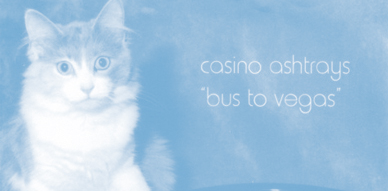
I designed the covers on all the Popgun cassette releases. The first one, “Bus to Vegas”, features a photo I took of a snow globe I bought in Las Vegas. I used to collect snow globes from all the places I visited. The back cover is a photo of a slot machine that was in my friend Amber’s living room. On the “Just Like Me” e.p. I used an image of a Siamese cat I found in an old book. I would sometimes buy books from the thrift store that had interesting images, and I would sometimes use those to make the the sleeves for Popgun Recordings or show flyers. “Live from 88.7 FM KSPC” was mostly done with silly stickers and images cut out from an art history book. “Long After The Commercials Have Ended” uses commercial clip art from the 60s and 70s. Those also came from an old book. And lastly, our CD release of “Bus to Vegas” on Twee Kitten Records features a photo of my then-girlfriend’s cat with a roulette wheel that her family had. We just wanted to tie in the whole kitten thing with the casino thing.

++ Your first tape was “Bus to Vegas” from 1996. Were the two songs on it the first ever recordings by the band? Or had you had previous songs made? Also, did you two ever take a bus to Las Vegas?

Yes, those were the very first two Casino Ashtrays recordings. I had just finished recording all the instrumental parts when I met Laura. It was very good timing. I have been to Las Vegas many times. And I have travelled by Greyhound Bus many times. But I’ve never actually taken a bus to Vegas! I just kinda combined those two experiences in the song.

++ The second tape was “Just Like Me EP”. Now we find 7 songs! A proper mini-album. This is your longest release, but at the same time it makes me wonder, why didn’t you ever release an album? Were there plans to do one at any point? 

Well, in general, I just prefer singles and short releases over full albums. As far as Popgun was concerned, it was just a way to put out more releases in a short period of time. I always thought of Popgun as a sort of a “singles-only” type lable. Also, dubbing tapes was less of a chore with shorter releases!

++ “Bus to Vegas” was reissued in 1998 with an extra song by a different label, Twee Kitten Records. How did you end up working with them? And whose idea was to re-release this tape? Was this third song “Invincible” from the same period of the two other songs?

It was Scott Z from Twee Kitten who approached us, I believe. I don’t remember exactly how, since it was so long ago. I think he had gotten a copy of the “Bus to Vegas” tape through Parasol Mail Order and then wanted to re-release it as a cd on his label, but with an extra song to make it different than the original release. I had already been working on “Invincible” for a release on Popgun, but then ended up recording it for the Twee Kitten instead.

++ And that release was the only one on CD as well. Did you have a preference between cassette as most of your releases or CD? 

I think if someone had offered to put out an entire Casino Ashtrays album on CD or vinyl we certainly would have done it. Popgun Recordings was set up as a “cassette-only” label mostly as an issue of cost. It was simply cheaper and faster to release music on cassette. And so most of the Casino Ashtrays catalog was released on tape.

++ In 2000 you released “Soundwaves & Radiowaves” which were 6 songs recorded live at 88.7 FM KSPC. How was that experience? Was it your first time recording a live session in the radio? How did this opportunity come to be?

That was fun, if a little nerve-wracking! By that time, both Laura and I were seasoned performers, mostly with our other bands. It was certainly my first time performing live on radio, not sure about Laura. I don’t remember how the live session came about. I think that was something that was set up with Laura. Anyways, the show was nerve-wracking for me because the DJ who was on beforehand was Franklin Bruno!

++ Your last release came out in 2004, “Long After the Commercials Have Ended”, it was 4 years after your previous release. Why did it take so long?

“Long After the Commercials Have Ended” was basically a small collection of loose ends. The cover of “Sleepyhead” by The Cat’s Miaow was supposed to come out on a tribute compilation that some other label was putting together. We waited several years for this release to come out and, by that time, I think we had waited long enough and was convinced that the tribute CD would never see the light of day. So, I thought I should, at the very least, put it out on Popgun just so people could finally hear it. We were very proud of our version! “Must See T.V.” was from a CD compilation that Japanese music magazine Beikoku-Ongaku put out. I added it to the tape to help flesh it out. And then “Books on Tape and 45s” was basically a demo that we recorded before Laura moved up to Santa Rosa, California. A finished version would’ve had more instrumentation – like drums, keyboards, and sleigh bells. I didn’t want the song to languish without a release.

++ When it comes to compilations you did appear on a few and one was in a Beikoku-Ongaku compilation, with the song “Must See T.V.”. How did the Japanese find out about your music? Did you get to sell many tapes there? 

Initially, Japanese music fans found out about Popgun because of the releases we were selling through the Parasol Records mail order catalog. That’s how Cha Cha Cha ended up getting signed to Japanese label, Motorway Records, which ended up bringing more attention to Popgun Recordings. Eventually, a few indie record shops in Japan, such as Propeller in Nagano and King Kong in Osaka, started stocking select releases.

++ Then there was your first time on vinyl with the song “Gilded” on “The Crayola Catastrophy” compilation 7″ released by another California label, Kittridge Records. I wonder were you close to them? Was there a close-knit scene in California back then?

The indie pop scene in Southern California was a pretty close-knit, I would say. We came to know Doug Jones who ran Kittridge because he used to come to the Popluck house shows that either Laura or I would curate and host. A lot of folks from the local scene would come to those shows, definitely. Everyone was collaborating and vibing off each other. It was a great time!

++ And were there more songs recorded by the band that didn’t end up on the compilation? 

Aside from the “Live at KSPC” recordings, Not many. Maybe only one song, I think. One that was written by Laura that she chose to leave off the compilation.

++ I think my favourite song of yours might as well be “Dress Code”, with its cool trumpets, wondering if you could tell me what inspired this song? What’s the story behind it?

Awww, thanks! The song is about that joyful feeling when you meet someone who’s into the same weird or obscure stuff as you are. All music tribes/scenes usually have an unspoken “dress code” or style that comes with fandom. That’s really fascinating to me.

++ If you were to choose your favorite Casino Ashtrays song, which one would that be and why?

That’s a tough one. I really like “Gilded” because of the beat that Laura plays on it. To me, it kinda has a “funky drummer” groove to it. And I really like our vocals – I like how we trade on and off, I like the counter melodies, Laura’s harmonies…there’s just a lot of nice layering in the song. The lyrics aren’t too shabby, either. HA! There’s a lyric that Laura sings on it that goes “Are your boring ideas of fun the same as mine?”…we ended up using that as the title of the anthology that Jigsaw Records put out. I also use that lyric as the tagline on my personal Instagram account.

++ What about gigs? Did you play many? 

Not too many, I don’t think. We probably played almost all the house shows we put on, though.

++ And what were the best gigs you remember? Any anecdotes you can share? 

Playing at the inaugural San Francisco Popfest in 1999 was, hands down, the best gig we played. No doubt. We were the first band to go on, on a Friday night, opening for an amazing roster of bands which included The Fairways, Monterey, The Crabs, and Marine Research. I remember that the Bottom Of The Hill club was sold out and packed from the front of the stage all the way back. And you could just feel and see the excitement and anticipation in the crowd. It was probably the most nerve-wracking show ever, but also one of the most fun times performing.

I have a couple of great anecdotes about this particular show, but this is the best one. Okay, so, the previous year, back in 1998, I was living and studying abroad in Oxford, England. Literally, one of the first things I did when I arrived in Oxford was to get my hands on a local weekly that listed all the gigs and concerts in town. I was ready to see some live music and have some fun! To my surprise, I saw that fellow Twee Kitten labelmates, The Relationships, were playing a show in Oxford at this club called >>The Point<< at the end of the week – my very first week in town! What were the odds? So, I ended up going to the show, of course.

After The Relationships played, I introduced myself to the lead singer, Richard Ramage. I complimented their show and said, “By the way, we’re labelmates on Twee Kitten. I’m in this band called Casino Ashtrays!” and Richard, with a surprised look on his face exclaimed, “What the bloody hell are you doing HERE???” We all had a good laugh and many pints were shared that night. Well, I soon learned that Richard used to be roommates with Amelia and Pete from Heavenly…and he suggested that we all get pints one day! And of course, I didn’t turn down that opportunity! I barely remember that day with them at the pub because I think I was so star struck. But I do remember vividly Amelia saying, “Well, maybe someday we’ll get to play with your band!” I thought to myself how great that would be…and that it would probably never happen. But then the next year at SF Popfest it DID happen!

++ And were there any bad ones?

There was this one show that we did with The Boyish Charms, Poundsign, and the Aislers Set. The line-up itself was awesome. And the music and performances were awesome. But the venue was at this all-ages punk club somewhere in Long Beach, California. I think it was called the PCH Club. Anyways, it was basically a rundown warehouse space by the train tracks that was literally crawling with rats. Hardly anyone showed up, so it was basically bands playing to the bands. That was probably the worst show we ever played.

++ When and why did Casino Ashtrays stop making music? Were you involved in any other bands afterwards?

Casino Ashtrays ended pretty much after Laura moved upstate to Santa Rosa, CA. It was just too hard to do the long-distance thing at that time. The internet wasn’t a thing like it is now. Plus, Laura was busy with The Autocollants, Monterey, her own solo stuff and other musical projects. And I was busy being in a bunch of other bands, too. Besides doing Test Pilot, I was in Winnebago, Red Pony Clock, The Easy Outs, a band called The Summer Flings…and I did a bunch of one-off things with different bands. And then when I moved to Athens, Georgia, I started a band with my girlfriend, Missy Kulik, called The French Toasts. And soon afterwards I joined the aforementioned Folklore. Then, both Missy and I were briefly in a band called Gemini Cricket. Somewhere in there, I started a band called The Slow Rowboat that lasted a hot minute…long enough for the band to play one show! And then the last band I was active in was this local Athens band called Werewolves.

++ Has there been any The Casino Ashtrays reunion?

No, there hasn’t been a reunion. It would be fun, though, if we could pull one off!

++ Did you get much attention from the radio? TV?

Well, we did play that one live show at KSPC!

++ What about the press? Did they give you any attention?

No. None from any traditional newspapers or magazines.

++ What about from fanzines?

From fanzines, definitely. Mostly in Japan and Sweden, I think!

++ Looking back in retrospective, what would you say was the biggest highlight for the band?

The biggest highlight would definitely be Casino Ashtrays performing at the 1999 San Francisco Popfest. Such a fun and crazy time! We were so grateful for that opportunity.

++ Aside from music, what other hobbies do you have?

IS there anything else besides music? I like to travel, go to museums, work on craft projects, root around in antique shops, garden, hang out with Missy and our pets. Mild-mannered stuff.

++ I know you are based now in Atlanta, and I have never visited so would love to hear your recommendations as a local, what sights one shouldn’t miss? Food and drinks one should try? 

Well, it’s not Atlanta, but if you’re a hardcore music fan, you should definitely spend a day wandering around Athens, GA. Do that, first. If possible, sign up to take one of the music history tours of the town, if available from the Welcome Center. Maybe catch a show at the world famous 40 Watt Club or at the Flicker Theater & Bar a couple of doors down from there. And of course, spend some time and money at Wuxtry Records and at Bizarro Wuxtry, the comic book shop above the record store. Hiking around the State Botanical Gardens in Athens is a lovely way to spend the day, too. Vintage and antique finds can be had at Starlite Showroom.

We’re still fairly new to Atlanta, so our recommendations are going to be pretty basic and touristy! You should visit the King Center, for sure. It is the final resting place of Dr. Martin Luther King, Jr. and there are exhibits honoring his life and work, along with exhibits for Coretta Scott King and Gandhi. We really like The High Museum of Art. Highly, recommended! The Georgia Aquarium is cool too – it’s crowded, but totally worth it if you’ve never been. I know you’re a soccer fan, so maybe try to catch an Atlanta United game while in town! Or catch a show at The Earl or Terminal West. Record shopping at Criminal Records is a must.

Food-wise, we’re vegetarian. So, in Athens, we highly recommend eating at The Grit. It is a vegetarian Mecca of sorts, especially for road-weary bands. Even if you’re not vegetarian, you have to eat there if you are in town. We also like Heirloom Café and Condor Chocolates. Drinking-wise, we like Rook & Pawn because it’s where all the nerds hang out. But also check out Flicker, Little Kings, and World Famous if you like your drinks with a side of live music.

In Atlanta you should basically just go up on Buford Hwy to eat. It is a long stretch of road bursting with Asian and Latin American restaurants serving up authentic cuisine. There’s also Krog Street Market and Ponce City Market – both are basically fancy food courts, but in the best possible way. Our favorite place to eat is just up the street from us – Arepa Mia. Yummy arepas served up Venuzuelan-style. Drinking-wise close to us in downtown Decatur we have the Brickstore Pub with a wide selection of craft beers and S.O.S., which is this really great tiki bar. And we have My Parent’s Basement which is a bar-arcade-comic book shop combo. It’s where the freaks and geeks hang out. Our kind of people!

++ Anything else you’d like to add?

Thanks for the interview, Roque! Apologies for taking so long to get back to you!

::::::::::::::::::::::::::::::::::::::::::::::::::::::::::::::::::::::::::::::::::::::::::::::

Listen
Casino Ashtrays – Dress Code

30
Jul

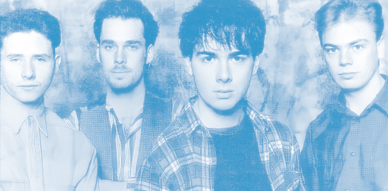
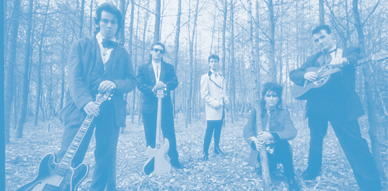
From left to right: Wayne Booth, Jon Brown, Ian Finney, Andy Starkey.

Thanks so much to Ian for the interview! I wrote about Christopher not so long ago and just a week ago Ian got in touch with me! He was very kind to let me listen to more of the wonderful songs he recorded with Christopher and even better was up to tell me the story of the band on this interview! Hope you all enjoy this!

++ Hi Ian! Thanks so much for being up for this interview! How are you? Still making music?

Thanks Roque I’m good, thank you. Yes I’m still making music.

++ Let’s go back in time. What are your first music memories? Do you remember what was your first instrument? How did you learn to play it? What sort of music did you listen at home while growing up?

My first musical memory is of me and my family visiting an aunt when I was about three years old and seeing her upright piano. I went nuts. I’m not sure why but I had to get on it and play. They literally had to drag me off it. A few years later I saw The Osmands performing Crazy Horses on TV and I made a pretend synthesizer out of an old shoe box. When I was fourteen a friend of my sister had an ARP Odyssey (a retro synth) and I spent five minutes on it and was blown away. Despite my interest in keyboards the guitar was my first instrument. When I was thirteen my first girlfriend dumped me while I was sick with a cold so I wrote a song about it and taught myself to play on an old acoustic guitar.

When I was growing up, radio was my main thing and I loved music. It was music typical of that era which was pop, soul, rock, punk, disco, new wave and easy listening. I got turned onto other stuff through my brother’s record collection, like prog and classic rock. When I was teaching myself guitar I’d play along to Rush, Blue Oyster Cult, Santana and Sex Pistols albums.

++ Had you been in other bands before Christopher? If so, how did they sound like? Are there any recordings?

I formed my first band with Lee (Latch) Parker and Simon Deakin when I was fourteen and we were a punk band. I was also in a great band with Jim Free and Barry Cox when I was briefly at college. It was a freeform rock band and we made a few practise tapes. I got expelled from college then got an audition and ended up with a record contract. I was in The Tempest. We were signed to Magnet Records which is now part of Warners but at the time it was the biggest independent label in the UK. I was seventeen years old when I signed the contract and my parents had to co-sign it too because I was legally a minor. The Tempest were an 80’s acoustic pop band, I guess similar to Aztec Camera. I found out we have a kind of cult status in Japan and Spain. Japanese fans go nuts over memorabilia and the vinyl is quite collectible. The unreleased album sells for over a thousand dollars. We made four singles and an album and were produced by Gus Dudgeon who had produced David Bowie’s Space Oddity and all of Elton John’s 70’s classic stuff. Glenn Tilbrook from the band Squeeze produced our album and first three singles and Steve Levine produced our last single. I’m lucky to have worked with some really great producers and musicians and I learned a lot from them, especially in sound production and studio recording.

After I left The Tempest I formed a band called The Snakeskins with some new friends I made at my old college. I didn’t tell anyone I’d previously been signed. We sounded mostly like indie guitar pop but the sound eventually changed into something more like REO Speedwagon and I left. The Snakeskins were together on-and-off for about six years and we made quite a lot of demos but never released anything. We nearly got signed by Island Records and I think we lost out because we didn’t have any management. The MD of Island Records asked us all why should he sign us and we just sat there saying nothing. I left The Snakeskins around December 1989.

++ What about the rest of the band members?

Jon was in a band with the drummer Andy McClure who went on to form the indie band Sleeper with Louise Wener. I’m not sure about the other guys.

++ Where were you from originally?

I was born in an area of Liverpool called Prescot but I was brought up in the town of Widnes in Halton. I’ve lived here all my life.

++ How was the Halton at the time of Christopher? Were there any bands that you liked? Were there any good record stores? Or what about the pubs or venues to go check out up and coming bands?

Halton was thriving musically at that time and we had great nightlife. Everyone was listening to REM, The La’s, The Stone Roses and ‘Madchester’ was going full throttle. The Stone Roses Spike Island gig was a couple of miles away from where I lived. I didn’t go but I heard it. There were at least three indie clubs in Halton – The Cherry Tree in Runcorn and Storeys and Players in Widnes. With the pubs also doing indie music nights you could party from Wednesday to Saturday – four full nights, and we often did. It was crazy. I had some of the best times of my life then.

My favourite band at that time was Jennifer Fever, Jane Weaver’s first band. I’d hang out with Jane in a small cafe and shop called The North. It was kind of idyllic. A couple called Adrian and Nikki ran it and they sold records, tie-die clothing, food and hippy paraphernalia. I spent entire afternoons in there with a coffee talking about music and comic books. At first I had no idea that Jane played or wrote music until there was a gig by her band in the cafe. They were great. I thought she had something good going and asked if I could produce them.

++ When and how did the band start? How did you all meet? How was the recruiting process?

I called the local newspaper asking to put out an ad and instead they ran a story on me. I was kind of locally famous a few years before for signing a big recording deal when I was in The Tempest and I guess they remembered me.

A few people contacted me. Jon was already an old school friend and I asked him personally. We found Wayne and Andy through the newspaper. Mark Kinsella was also a member but he left before we started playing live in ’91. Around October 1990 we began the first rehearsals. By December we were ready to gig.

++ Were there any lineup changes?

Later on we recruited Martin Burns from Jennifer Fever but I guess the biggest lineup change was when I left ! The band hung together for a while but eventually split.

++ How was the creative process for you? Where did you usually practice?

With Christopher the songwriting process was pretty much how I’ve written all my life, except that I’m not as lazy or scatter-brained these days. I’d get an idea, some kind of inspiration, and I’d run with it musically. Everything was written in my imagination or on guitar. I’d record ideas on a small tape recorder or a portastudio – a multitrack tape recorder. We practised in a local rehearsal place called Pentagon Studios, run by Ade Sleigh and his father, Stan and it was a great place. One day I walked into the studio and Alan Crookes from the hit band Poacher was sat there with Ian McNabb from The Icicle Works listening to my Christopher demos. Alan showed interest and invited me to record but after he copied my drum patterns from a drum machine he avoided my calls. I never heard from him again. A few years later one of those Christopher riffs from the demo also appeared on an Ian McNabb song. It’s always great to inspire people.

++ What’s the story behind the band’s name? 

It was a solo thing for me at first and I didn’t want to use my own name so I settled on using my middle name Christopher instead. Then when I recruited the other guys I just stuck with it. Trying to find a good name for a band that hasn’t already been taken is the hardest thing.

++ And who would you say were influences in the sound of the band?

From my point of view as the songwriter it was everyone who I’d been listening to at that time like REM, The Byrds and The Beatles. I’ve never really been that conventional a songwriter to be honest. I don’t listen to a lot of music, don’t play any covers and I discover new artists very slowly. Popular music at that time also had an effect on my writing, especially the production style. I was also listening to The Bangles album ‘Different Light’ throughout the summer and that guitar sound got into my head. They took the 60’s influence from The Byrds and Beatles and mixed it with west coast sunshine pop vocal harmonies and I loved it. Coincidently a few years later I was briefly in the Coal Porters with Sid Griffin, who had been in a relationship with The Bangles’ Micky Steele and had also shared a house with their drummer Debbie Petersen.

++ As far as I know there were no releases by Christopher, is that right? Why was that?

Well apart from the track on the Idea album, we never got that far. I had a knack back then for giving up easily. I wasn’t ego-driven and I’d get downhearted quickly. We had my brother-in-law managing us and he really helped us out a lot and I’m still grateful for that, but we didn’t have the right breaks when I was in the band. We sent demos out to lots of major companies but heard nothing back. I think we sent around thirty or forty tapes out to every major and big independent label in the UK. I left the band even though I was writing prolifically at the time. Months later I heard from Wayne that the major label Polydor had contacted the band after I’d left and were interested in us but our manager told them I’d left and the band was finished. If he’d called me at the time I would have been straight back in a flash.

++ Was there interest by labels at any point to put your stuff out? Did you consider self-releasing?

As I mentioned, Polydor was interested but it wasn’t followed-up. Self-releasing in those days meant considerable costs,for recording, artwork and pressing. It was an expensive business, not like today where anyone can release something digitally and get it distributed globally for almost nothing.

++ So the song “Touch” appeared on the “What’s the Idea” compilation. How did you end up working with Idea Records?

I got a call from my manager Greg and he said they were putting something together with local artists but we had to move quick as there was a deadline. I went in the studio, recorded the song on my own and then produced Jennifer Fever. The tapes went out and we did some gigs. That was it. My manager handled the business side and we liaised with Dave Wycherley, who was Halton Council’s Arts liaison at the time. I’d later heard that they wanted “the two best artists in Widnes” and they picked me and Jennifer Fever. I remember that this pissed off some people.

++ Idea Records, from what I understand, was put together by the St. Helens Community Arts Team. Who were they? What else did they do for the arts in the area? Were you part of it?

I’m sorry to say I didn’t know much about it, but it was a great idea and hats off to them for making it happen. I wasn’t interesting in those kind of details at the time. I was just a kid intent on writing and performing. Business never interested me.

++ So it was a tight scene and you even collaborated with other bands, like producing Jennifer Fever. Was there a lot of collaboration between all of you? What other bands were in town that didn’t appear in the compilation that you were friends with?

At that time, I don’t recall other bands apart from Jennifer Fever and The Snakeskins, who I’d previously been with. The main scene I was involved in socially was around 1987-89, when I was with The Snakeskins. There wasn’t that much collaboration but I’ve always been interested in helping out other artists and still do.

++ Back to “Touch”. When and where was it recorded? Were other songs recorded in this session?

It was recorded in Pentagon Studios Widnes around late Spring or Early summer 1990. The band wasn’t ready and the song was under a deadline so I recorded the song by myself and played everything on it in one afternoon. Adrian Sleigh engineered it and I produced.

++ Were there demo tapes by Christopher?

We made two tapes of three songs each. The first was early in ’91 and the second was made later in ’91 after I sold some recording equipment to fund it, which in hindsight was a mistake. We recorded both demos at Bus Stop Studios in Leigh where in fact I met my then-girlfriend, who was a trainee sound engineer. The studio was run by a guy called Herman, who was kind of famous for having thrown up over Queen’s hairdresser backstage at some event.

++ And are there more unreleased songs by the band?

Not the band as such, but there are demos that I’d recorded myself which were intended for the band. I still have boxes full of demo tapes.

++ I think my favourite song, the only one I’ve heard so far!, is “Touch”, wondering if you could tell me what inspired this song? What’s the story behind it?

I was twenty-three years old and my first long-term relationship had ended. I’d started dating another girl but I felt numb. I put what I was feeling into words and I discovered that songwriting could be cathartic and after that I began to start expressing myself with my music more intimately, emotionally. I think it was the first honest song that I wrote.

++ If you were to choose your favorite Christopher song, which one would that be and why?

It has to be Touch. It was very much part of my life at that time and summed up how I was feeling. Writing introspectively like that kind of makes me feel exposed but I like honesty in music.

++ What about gigs? Did you play many?

As Christopher, probably around eight. Pre-Christopher, hundreds.

++ And what were the best gigs you remember? Any anecdotes you can share?

The second gig we ever played, Christmas or new year 1990-91 at Storeys in Widnes was one of the best gigs I’ve ever done. Jane Weaver was there, John Snaykee (of Manbreak and ex-Snakeskins) and Chris Leckie from Adlib Audio was doing the sound. Chris is one of the best live engineers in the world today and he tours with A-List bands. They all loved it. Everything came together just right and it was wonderful gig for everyone.

Anecdotes? Well we played a gig at St. Katherine’s Teacher Training College in Liverpool and it was full of girls in the audience. One of them took off a stocking and threw it onto the stage while we were playing and after the gig there was a serious discussion trying to figure out who it was intended for. It was all scientific stuff – her throwing direction, the intended trajectory, aerodynamics, etc.

++ And were there any bad ones?

We played in St Helens at a pub known for hosting hard rock bands. It looked like it was full of Hell’s Angels and we were an indie band. The atmosphere was menacing and after the gig a barman told us that was a great response because usually the audience threw things at the band.

Another gig was so poorly publicised that only five people turned up. No one knew the gig was on and those that came to see us were only there because they were friends of the band. We just cracked on and did the set.

++ When and why did Christopher stop making music? Were you involved in any other bands afterwards?

It was around summer 1991. I left the band because I’d lost my best friend, a lot of time, money and I’d had enough. The other guys carried on for a month or two and then split up.

I rejoined The Snakeskins for a while. I formed a band called Fiasco with Dave Pichilingi and played a John Peel session with them. I rejoined the Snakeskins again, then they split and me and Andy from the band formed Muddyhead with ex-Fishmonkeyman bassist Terry Lloyd. We were managed by China Crisis’ Eddie Lundon. I was in The Coal Porters (The Long Ryders’ Sid Griffin’s band) very briefly, around two weeks I guess. In the early 2000s I briefly formed a band called Penny Blue, then in 2006 I got an offer from Tommy Marolda to record in Las Vegas and interest from The Killers management, but due to family commitments and my health at the time I couldn’t do it.

Since then I’ve been working on various projects, producing music for computer games and writing orchestral pieces for documentaries and The History Channel. When Glenn Tilbrook played in my home town we met before the gig and he asked me if I wanted to perform one of my new songs onstage. I was nervous as hell but I did it and it gave me the confidence to play live again. I’d been having problems with agoraphobia and leaving the house and it was a big help in getting me interested in playing live music again. After that I formed The Coralaines and recorded a Rock and Roll album because it was something I always wanted to do. I used all the right period equipment and production methods to get an authentic sound and it was great fun. We played a few great gigs thanks to Mike Badger (from the La’s). We performed at the Jacaranda club’s anniversary which was a big deal as it was one of The Beatles’ first venues. Travelling and rehearsing was really tough for me and it took about two years to play two gigs but it was worth it. The band split at the end of last year so I started working on new songs for myself. I’ve done some remote guitar sessions over lockdown and I’m currently working on my solo music. I have lots of plans.

++ What about the rest of the band, had they been in other bands afterwards?

Wayne and Andy went separate ways and did their own thing, I think it was mainly cover bands. Jon was writing his own music and Martin moved to the states.

++ Has there been any reunion gigs?

No, I never really considered it. I’d never say never though, to any of my previous bands.

++ Did you get much attention from the radio?

We got interviewed on a BBC Radio show called Hit The North which was hosted by Mark Radcliffe who is a BBC DJ legend. He loved ‘Touch’ and said with the right backing it could be a hit. Coming from him, it was a great compliment.

++ What about TV? Made any promo videos?

Not with Christopher. I made one with The Tempest and I’m making new ones for my upcoming music. Film-making is a growing interest for me.

++ What about the press? Did they give you any attention?

Yes, the local press was great but we never got any national coverage.

++ What about from fanzines?

We weren’t approached, though there were a few around at that time. I honestly think we weren’t around long enough to make an impression.

++ Looking back in retrospective, what would you say was the biggest highlight for the band?

Being on the IDEA album and definitely the second gig at Storeys at Christmas 1990-91.

++ Aside from music, what other hobbies do you have?

Strictly-speaking music isn’t a hobby for me as I work in it professionally, but I do love composing orchestral pieces. I taught myself orchestration about twenty years ago and it’s the purest form of musical expression I know. Apart from music, I have plenty of interests and hobbies. Art, particularly impressionism, art deco and art nouveau. I trained in Art before I was expelled and I’ve always been fascinated by it. I was a huge Salvador Dali fan when I was a kid and tried to paint like him. Alphonse Mucha and Edward Hopper are other favourites. I love film, all film, classic fantasy and horror, certainly the classic Hollywood movies and all French cinema. I adore nature and animals. I like photography and gaming, especially RPGs -both computer games and pen paper and dice RPGs – and I’ve been a comic book geek since I was a kid. I love the work of Stan Lee, Jack Kirby, Steve Ditko, Jim Steranko and Alex Ross. Alan Moore is phenomenal. Kurt Busiek’s Astro City is a recent discovery and I think it knocks the ball out of the park. I’m not a TV person, but I’m nuts about classic 60’s and 70’s TV like The Avengers, Batman, Doctor Who and all of Gerry Anderson’s work. I’m also heavily into French 1960’s pop music. It combines two of my favourite things, 60’s music and France. I tend to slowly discover music that I’ve found on my own. It’s great when that happens. There’s a universe of music out there that I’ve never heard and I think that’s amazing.

I also get lost in the internet and often wander down rabbit-holes of weirdness that sometimes yields good things. I find the internet inspirational, crazy, terrible and fascinating. I’m also fascinated with Paris at the end of the nineteenth century during the Belle Epoch and 1950s America.

I have tons of interests and I never get bored. The only problem is time. There’s never enough of it.

++ Never been to the Halton or the St. Helens area. So I will ask for some recommendations. If  I was to visit your city what shouldn’t I miss? What are your favourite sights? And any particular food or drinks that you think one shouldn’t miss?

Generally Halton is a quiet place and it’s not a tourist haven. There are old places around Halton like Norton Priory, and Farnworth Church which was built before 1066 and we have an historically great tradition of Rugby.

I spent my younger years in Crow Wood Park and Sunny Bank, The Bongs (an area of open hilly land nearby) and later Pex Hill. As a kid or teen I’d ramble around with friends, walking or running everywhere. I still love walking in Victoria park. It’s an old Victorian park and it can be a magical place. It also has a great ice cream shop.

I haven’t been into town for food in ages, but Marie Barrows Fish & Chip Shop is legendary. Donatello’s in nearby Warrington makes the best pizzas I’ve ever had in my life and Eureka, the Greek restaurant just out of town is amazing.

++ Anything else you’d like to add?

I played guitar on some remote sessions during lockdown recently for an old friend and Joe Walsh from the Eagles said he loved my guitar style. That was such an amazing thing to hear. You can’t buy compliments like that.

I’m also recording new music – please keep an eye out for that.

::::::::::::::::::::::::::::::::::::::::::::::::::::::::::::::::::::::::::::::::::::::::::::::

Listen
Christopher – Touch

28
Jul

Thanks so much to Dominic Silvani for the interview! Penelope’s Web was a superb indiepop band in the 80s that released a self-released EP and then another on Cherry Red. In 2014 the band released a retrospective album with a bunch of unreleased tracks on Firestation Records. I thought that it was better late than never to get in touch and find out more about this terrific bands that left many songs that should be considered C86 classics!

Oh! and do check their Facebook page!

++ Hi Dominic! Thanks so much for being up for this interview! How are you? Still making music?

am well, thanks, despite these crazy times and, yes, still making music. I have a number of different things going on currently. I’m working on a solo album to follow up last year’s solo EP ‘The Impatience of a Sinner’, I’m recording an album with my band The Avon Guard as soon as the pandemic allows (we have a gig lined up supporting Sex Gang Children at The Lexington in London, which has been postponed twice already) I’ve recorded another track with DJ/Producer Duncan Gray to follow up our previous collaboration ‘Silence’ on his album ‘The Malcontent Vol.1’ and I have recently begun work on some songs with Witold Leonowicz (Penelope’s Web founder member) after a gap of over thirty years!
I’m pretty much a permanent fixture on the London alternative folk scene, playing gigs regularly at The Lantern Society at The Betsey Trotwood in Farringdon and The Empire Bar in Hackney
++ Let’s go back in time. What are your first music memories? Do you remember what was your first instrument? How did you learn to play it? What sort of music did you listen at home while growing up?

I’m the youngest of eight children and my musical tastes are very much influenced by the different music listened to by my older brothers and sisters. When I was young, I could walk around my house and hear different music emanating from each bedroom. For a while I shared a bedroom with one of my older brothers who used to practise his songs for busking, which made me a slightly odd eight year old as i knew all the words to most of Leonard Cohen’s songs (Leonard has been my hero for more than 40 years). I was slightly too young to be a proper punk but spent my teenage years listening to mostly post punk bands like Joy Division and Echo and the Bunnymen and the bands they were influenced by (the Doors, The Velvet Underground etc)

++ Had you been in other bands before Penelope’s Web? What about the rest of the members?

I started Penelope’s Web with two school friends, Witold Leonowicz and Gary McCormick in the early 80s. We were joined for our first ever gig at Wolverhampton polytechnic by Paul Chivers (now a successful DJ/Producer under the name Ramjac Corporation) on drums. We were without a name at this point and as the gig was for the Chinese New Year and it was the year of the Rat we were billed as The Ratty Band!

++ Where were you from originally?

My family moved to Wolverhampton when I was about ten. I was actually born in Leamington Spa but have only been back there once since, to record ‘Potboiler’ at Woodbine studios

++ How was Wolverhampton at the time of Penelope’s Web? Were there any bands that you liked? Were there any good record stores? Or what about the pubs or venues to go check out up and coming bands?

Wolverhampton was pretty bleak in the 80s with fairly high unemployment and not many venues, but the poly had some amazing bands playing (The Fall for 75p i particularly remember!) and JBs in Dudley was another gig we played fairly often. There was quite a few well known Midlands acts a couple of years older than us like The Mighty Lemon Drops, The Wonder Stuff and Pop Will Eat Itself (who rehearsed in the same studio as us) but the only other local band i really remember well from that time were the excellent The Sandkings who we shared a bill with a couple of times. Their singer later became Babylon Zoo who had a huge hit with ‘Spaceman’.

++ When and how did the band start? How did you all meet? How was the recruiting process?

Gary, Witold, Paul and I shared a house in the student area of Wolverhampton for a while. I didn’t play any instrument at all at this stage but wrote all the lyrics (i didn’t really play guitar until about four years ago) so most of the songs we wrote were collaborations between Witold and I or Gary and I. We made our first demo at this point, which i sadly no longer have a copy of anywhere. After the first gig at the poly we recruited Andy Barnett on saxophone (who i believe went on to play with Goodbye Mr Mackenzie and now runs a brewery in Edinburgh, Barney’s Beer) and Mark Sayfritz (who worked with Goldie later). Paul Chivers moved away and we recruited Steve Markham to play the drums and settled on the name (the idea being, as with the greek myth, it was a never ending project) and recorded another demo which, after a bit of promotional help from my then girlfriend’s dad, was much to our surprise played by legendary Midlands DJ/Journalist on his local radio show and I was invited on the local arts radio show with Barney to do an interview.

++ Your first release was actually a self-release, right? It was the 12″ “The Gap” EP on your own M.T.G. Records. Wondering why did you decide going that way of putting it out yourselves? And what does M.T.G. means?

We recorded our debut EP at a studio in Derby, i think it was called The Square or something very similar, by which time Witold had left the band to pursue his career in art (his work being used as the cover for the EP) and been replaced by a good friend Gavin Abbs, who had produced our very first demo as The Ratty Band, and we played a number of gigs (the high points of which were supporting The Shop Assistants at Huddersfield Polytechnic and John Otway at JBs in Dudley. We released the EP on our own label MTG records (i had been visiting my girlfriend in London and heard the station announcer recording at Bank saying ‘Mind The Gap’ and as our new song was The Gap it seemed appropriate) and received a fairly decent review in Sounds for the EP and seemed to attract a bit of record label attention and I have vague memories of meetings with EMI and Siren, amongst others, which amounted to nothing. Mike Davies introduced us to some potential managers. Ben Bates (allegedly former manager of The Sweet) and Rober Wace (The Kinks, Stealer’s Wheel) but neither came to anything. Around this time, Alex Patterson (later of The Orb), who was then A & R for EG records, came to a few gigs and for a moment this looked promising but again nothing concrete materialised.

++ Then you’d end up signing with Cherry Red Records. How did this relationship come to be?

In 88 I moved to London and made contact with Robert Wace again and Gavin and I signed a management deal with him. We recorded a demo with Charlie Llewellyn (ex Blue Aeroplanes producer) at Pathway studios in Islington and Robert got us a deal with Cherry Red records. We recruited a bass player, John Thompson and recorded more demos at Blockhouse Studio with Jezz Wright (soon to have a worldwide hit as Liquid with ‘Sweet Harmony’) and then added drummer, Steve Oldham but although we then recorded the single ‘Potboiler’, the B sides ‘Low Sun’ and ‘Mistress Quickly’ and the planned follow up single ‘Political Nightmare’ at Woodbine studios with John Rivers (lovely man, great producer), we only played one gig together, at Wolverhampton Poly again.

++ After many years Firestation Records would release a retrospective compilation. And I was wondering who made the selection of songs? I ask because I notice that for example “Rags” wasn’t included?

In 2014 I was contacted by German label, Firestation records about putting together a compilation of Penelope’s web recordings. As many of these were owned by Cherry Red (including the demos recorded at Blockhouse and the woodbine studio recordings), we concentrated mainly on demos from before we moved to London so there are still Cherry Red recordings (Rags, Stress Timed, Political Nightmare that have never been released). The cover is a photograph by Witold Leonowicz of his son Theo.

++ When I see the amount of songs, I wonder why was there never plans to release an album?

I think it was a real shame that Penelope’s Web never got to release an album. We could easily have done so in the late 80s in the midlands, material wise, and again had enough new stuff to do the same with Cherry Red but somehow it never happened. I’m trying very hard to make up for that now!

++ I think my favourite song of yours might as well be “Potboiler”, wondering if you could tell me what inspired this song? What’s the story behind it?

Thanks for your kind words about Potboiler. It’s a pretty straightforward break up song i think about trying and failing and trying again to move on. I was reading Robert Graves ‘Goodbye to all that’ at the time and just adapted the title for the chorus.

++ If you were to choose your favorite Penelope’s Web song, which one would that be and why?

I think if i had to choose a favourite Penelope’s Web song it would probably be ‘Little World’ from the first EP, mainly for lyrical reasons but also because I think Witold has a very original musical angle. I’m enjoying working with him again after all this time.

++ Did you get much attention from the press?

Potboiler received airplay fron Whispering Bob Harris on radio one and got a decent enough review in the melody maker but office politics seems to have caused a great deal of problems at Cherry Red around this time and it was not long before we (and all the other bands there as i understand it) were dropped from the label, Gavin returned to the midlands to start a dance label, fried egg records, Steve and John joined Bad Manners (for the next ten years) and I started playing gigs with Penelope’s Web founder Gary McCormick and other friends Phil Heap, Martin Wendholt and Claire Lingham) under my own name and released a cassette ‘the daylight and the dream’ on our own Oddball records. Robert got us some interesting gigs (eg, a deb ball at cambridge university) and had talks with other labels which came to nothing. I continued my association with Robert Wace, which was never dull (I could probably talk for hours about him and his very old school ways, meeting Ray Davies etc), up until the early noughts by which time i had four young children and needed to try to make a living, taking on a number of different jobs which forced music into the background. Since 2008 i have run a youth football club, Walthamstow Wolves (obviously we are all avid Wolves fans as a result of my being brought up in Wolverhampton), with my two oldest sons, Louie and Joe.

++ And what were you up to music-wise after the demise of Penelope’s Web?

In 2014 i also  recorded ‘Forget’ with long term friend Andy Mitty (former lead singer and guitarist with Camden indie/glam band Transistor) under the name The Avon Guard and was pleasantly surprised to received airplay and reviews from all over the world and followed this up with another release  ‘Parasite’ which was also well received. In 2015 a dance remix of ‘Forget’ by Spanish DJ Modernphase (member of trio Gameboyz) followed and ‘Parasite’ was also brilliantly remixed by Duncan Gray the following year in 2017.
In 2016 i was approached by Maggie K De Monde of Scarlet Fantastic to record a duet of Lee Hazlewood and Nancy Sinatra’s sand on their album, Reverie. I also performed this song live at a few gigs in 2017
The Avon Guard supported Scarlet Fantastic at The Water Rats and Sex Gang Children at Dingwalls amongst other gigs over the next year or so
I also collaborated on the song ‘Silence’ for Duncan Gray’s album ‘The Malcontent Vol 1’ in 2017 and have recorded another track for the follow up album soon to be released
In 2017 I began learning to play guitar and have since played many solo gigs in and around London. in 2019 i released my debut solo EP ‘The Impatience of a Sinner’ recorded at Reptile Studios in East London with producer Jon Hess and toured Germany on a double bill with fellow singer/songwriter, Jeremy Tuplin. I was working on my debut solo album ‘Anatomy’ with Jon Hess when the pandemic struck. As soon as possible i will return to this. I have also recently begaun playing my own version of some of the old Penelope’s Web songs and I’m hoping to record these in the near future as well
During lockdown i have begun working on new material with Penelope’s Web founder member Witold Leonowicz, which we will releasing before too long and hopefully playing live too.
The Avon Guard will be finally releasing their debut album in the new year and will be gigging again as soon as is possible beginning with a gig supporting Sex Gang Children at The Lexington in London

::::::::::::::::::::::::::::::::::::::::::::::::::::::::::::::::::::::::::::::::::::::::::::::

Listen
Penelope’s Web – Potboiler

23
Jul

Just last week I wrote about the Isle of Wight band Cassie on the blog. It didn’t take long, as you see, that Hugh Lewis, the drummer, got in touch with me! And even better he was up for an interview! So here it is, the chance to learn a little bit more about this obscure powerpop band that left a classic 7″ that now has just been reissued!

++ Hi Hugh! Thanks so much for being up for this interview! How are you? Still making music?

Thanks for your interest in Cassie. I’m very well!!! Sadly I’m not involved in the making of music anymore although I did stand in on the drums for a Turkish band a couple of weeks ago, really enjoyed that

++ Let’s go back in time. What are your first music memories? Do you remember what was your first instrument? How did you learn to play it? What sort of music did you listen at home while growing up?

I must have been 6/7 when my Mum first took me to a folk night.Loved it and we went quite a few times after that. It was 1972 when I pestered my parents to buy me my first 45’ Starman by David Bowie.
Played about a bit on the guitar in 1977, within a few weeks I wanted to play the drums. Had a handful of lessons, but after that used to watch drummers play when I could, and then lots of practice.

Early 70’s glam rock!! Bowie, Faces, Rod Stewart, Stones, Who, Slade, Sweet. Mid to late 70’s Punk/new wavw. Early 80’s: NWBHM

++ Had you been in other bands before Cassie? I read that you all were in a band called Flirt? How did it sound like? Are there any recordings?

Yes Hunter, you can hear the material we did on isleofwightmusic.com, made my live debut with them in late 79′.

Flirt was the same as Cassie, same line up, it was Wilf Pine our manager in the early 80’s who got us to change our name. Everything we recorded before the “Change My Image” 7” version was under the name of Flirt

++ And aside from Flirt, were you all in any other bands?

Flirt was the same as Cassie, same line up, it was Wilf Pine our manager in the early 80’s who got us to change our name. As mentioned I played in Hunter originally, also Warrior a NWBHM band, sadly there are no recordings.Also Rendezvous- go to Isleofwightmusic.com and you can hear everything I recorded with them

++ Where were you from originally?

I was born in Bromley, Kent, UK, but we moved to the Isle of Wight when I was about 2 years old.

++ How was the Isle of Wight at the time of Cassie? Were there any bands that you liked? Were there any good record stores? Or what about the pubs or venues to go check out up and coming bands?

The IOW is a holiday destination, it was always great in the summer, quiet in the winter. There were loads of places for bands to play in those days.

Local bands I liked were The Pumphouse Gang, Last Straw, Thin Red Line

Studio 4 in Ryde was the best!!!

Stacks of them at the time – Prince Consort, LA Babalu Club,Crown Inn, Royal Sandrock, Eight Bells, Solent court etc etc

++ When and how did the band start? How did you all meet? How was the recruiting process?

We think about 76/77

++ How was the creative process for you? Where did you usually practice?

Nigel wrote the riff, Debbie would have the lyrics down,Me and Eric would sort out the rhythm section. In a little village called Binstead, in a converted shed

++ What’s the story behind the band’s name? 

Wilf Pine who signed us to a.k.a records changed us from Flirt to Cassie

++ And who would you say were influences in the sound of the band?

Blondie, Pretenders, Kim Wilde??

++ So early on you signed a deal with Video Records and even a publishing deal. I don’t think that is quite common these days, so quite curious how did you caught their attention? Through demo tapes? Gigs?

It was a demo we recorded late in 79’.

Radio victory a south coast radio station featured us and played the demo, Video Records heard it from there I think!!

++ But for some reason the songs you recorded for Video Records never pressed on vinyl. The label folded, right? What happened? How did the band take this blow?

No they never got out. Yes that’s right, ran into financial problems. To be fair in our stride, although we were all pretty gutted.

++ After this you went to record demos for Wilf Pine who was Black Sabbath’s manager. How did this relationship happen? And how was that recording session?

To be honest I can’t remember how Wilf got involved!! One day he wasn’t there the next he was!!

Arnie’s Shack in Poole, 3 tracks were recorded.The A’ Side , ‘B’ Side plus Falling which was to be a follow up single

++ Again for some reason you couldn’t get a record deal, right? So in 1982 you self-released a 7″ on your own A.K.A. Records. How did this work out for you? How did you raise money? Was the 7″ sold? Or was it mostly for promo copies?

Not well, the label was nothing to do with the band more Wilf’s project. There was no official release, and from what we can tell hardly any pressed, no media interest.

No idea, Wilf paid for the recordings. We don’t know anything about sales as there was no feedback, certainly no royalties paid.

++ There was no sleeve for it, right?

Nope, everything done on the cheap!!!

++ And did A.K.A. Records name mean anything?

Don’t think so, if it did I don’t know what!!!

++ Then there was interest from Dakota Records. But again nothing came out of this. What happened? Was there interest from any other labels?

Yes. The band never had any management again when it all finished with Wilf so nobody drove the business side of the band!!

No the band called it a day after the Dakota thing never materialised!! 3 Labels and nothing to show for it, I guess we’d had enough by then

++ The Isle of Wight Music website have all your recorded output, 12 songs. Well, I have to ask, is that all your recorded output or are there still unreleased recordings by the band?

Not anymore they don’t, we have asked them to take them down.

I think including the single and B side there are a total of 18 songs

++ And from where do these recordings in that website come from? Different demo tapes?

Yes from 80 to 84

++ And aside from the 7″ you put out, did you appear on any compilations?

The band no. I also appear with Rendezvous on the feet on the Street compilation

++ This year a reissue of the 7″ came out on Reminder Records. I only noticed that it is a US based label! I am curious about the story of how this release came together? How did the label track you down?

Yeah great isn’t it!!! Our fourth label !!!!! Yes from Brooklyn, New York City.

They heard the song on Yo tube, saw us on isleofwightmusic.com and got the band members names from there.After that they found that Nigel Hayles is no longer traceable as he sadly passed away in 02’ Eric Biggs has no social media presence at all.Debbie Barker is now married and obviously had a different name Debbie Coles. That left only me they could traceI spoke to the Labels CEO Jeremy Thompson in December last year about it all, from there as they say ’the rest is history’

++ I think my favourite song of yours might as well be “Change of Image”, wondering if you could tell me what inspired this song? What’s the story behind it?

Great song.

Who knows, Debbie wrote the story!!! It’s about female empowerment

++ If you were to choose your favorite Cassie song, which one would that be and why?

“Hold Me” or “Find a Way”.  I think. Just really like the groove of both

++ What about gigs? Did you play many?

Yeah at one stage, three times a week

++ You even got a six month residency at the Royal Sandrock Inn in Nilton. How did this happen? How many gigs did you play there? Did you have a big local following?

That’s right. The owner of the pub saw us at a different venue, liked us and asked us to play there. No idea, I guess once a week for 6 months, around 24/25 I would think

Not really, but we were very popular in Niton lol!!!

++ And were there any bad gigs?

Plenty lol!!! Sometimes you’d hear ‘“ Your shit you are”

++ When and why did Cassie stop making music? Were you involved in any other bands afterwards?

I think we’d had a gutful by 84. Yes Rendezvous until 86 time.

++ What about the rest of the band, had they been in other bands afterwards?

Debbie sang for a while longer when she moved to London
Nigel & Eric played in a covers band

++ Has there been any reunion gigs?

No

++ Did you get much attention from the radio?

A fair bit, but only mainly local stations

++ What about TV? Made any promo videos?

Nope

++ What about the press? Did they give you any attention?

A little bit at the time

++ What about from fanzines?

Nope

++ Looking back in retrospective, what would you say was the biggest highlight for the band?

We wrote some catchy tunes and the fact that people seem interested in them 40 years on is great!!!

++ Aside from music, what other hobbies do you have?

My main other love is football, I’m a qualified UEFA ‘A’ Coach and have earned a living in football for over 20 years.

++ Never been to the Isle of Wight. So I will ask for some recommendations. If  I was to visit your city what shouldn’t I miss? What are your favourite sights? And any particular food or drinks that you think one shouldn’t miss?

The Isle of Wight Festival!!! Brilliant festival. It’s a stunningly beautiful Island

++ Anything else you’d like to add?

Nope I think we’ve covered it all pretty much, thank you for your interest in Cassie!!!!!

::::::::::::::::::::::::::::::::::::::::::::::::::::::::::::::::::::::::::::::::::::::::::::::

Listen
Cassie – Change of Image

02
Jul

Thanks so much to Paul and Iain once more! Just a week or so ago we did an interview about the fantastic Radio Ghosts, the band they were in back in the early 80s in Scotland. Then in the mid-80s they would move down to London and form A Tune A Day and released a 7″ record. I actually had written about A Tune A Day on the blog many years ago, so it was great to finally learn more about the band. It is time to find out more about them!

++ Hi Paul and Iain! Thanks so much for being up for another interview! How are you? Are there any plans for this summer, even in these strange times?

Iain: We are both busy working on new Radio Ghosts songs. (The Radio Ghost are dead: long live the Radio Ghosts). We have dozens and there are still more creeping in unbidden all the time. We are trying to burnish a selection of the brightest and shiniest to be released in the not too distant future.

Paul: I’m hoping to go for a short walk this summer, possibly round the block, or maybe the park. Don’t want to get my hopes up though.

++ Last time we talked about Radio Ghosts, so just to put this in context, the Radio Ghosts ended as a band in 1982 and when did A Tune A Day start as one? Were you involved with any music projects in between?

Iain: I moved down to Eastbourne, a little seaside town on the South coast of England to work for a publishing house down there. Paul visited a few times and decided to move down too. It took a couple of years or so to get the band up and running, so mid-eighties or thereabouts.

Paul: To rewind a wee bit, after Radio Ghosts split, Iain and I started dabbling with some new musical ideas, and enjoyed it enough to start a new band together. We even got a new drum machine (a little Boss DR-55 Dr Rhythm, gear trivia fans), which turned out to be marginally more programmable but somehow less fun than our original Radio Ghosts one. So we asked Craig, the Radio Ghosts drummer, if he wanted to join us, which he did. So for a while we were three-quarters of the Radio Ghosts, reunited, but without the main frontman and songwriter. Iain stepped up brilliantly with the songs and vocals, but there was a bit of an instrumental gap without Martin’s guitaring. So we spotted an advert in a music shop (or possibly in Melody Maker music paper?) from a local keyboard player looking for a band. This turned out to be Paul Piacentini, who was a bit of a keyboard wiz, if not particularly in the right kind of New Wave/post-punk vein as us at the time. But we made a good noise together, started rehearsing, recorded a rough demo and even played a gig at the local Doune Castle venue. Then Iain moved down to Eastbourne…

I carried on with Paul Piacentini in Glasgow, as Bamboo Shoots, for the next two or three years, making demos and doing a few gigs. I visited Iain in Eastbourne a number of times, and in early 1986 we made a demo at a local Sussex studio, and I liked it so much I decided to move South to start a band down there with Iain. That was A Tune A Day.

++ Who else was in A Tune A Day? And how did they end up playing with you?

Iain: I recruited a friend from work, Nick Fuller on guitar, and we went through one or two drumming candidates, including a machine and a psychotic chef, till we eventually found Martin Scott by advertising, when we moved to London.

Paul: I think Iain and Nick had done a couple of small local ‘acoustic’ gigs before I moved down, but when ATAD started properly we got a full PA and a drummer. We quickly became regulars at one of the town’s best small venues (there wasn’t a huge choice – of venues or bands), which was a pub called, this is true, ‘Bilbo Baggins’. The highlight of our brief Eastbourne period was probably playing at an open-air festival in the middle of a Napoleonic fortress. It was like a toy village version of Pink Floyd at Pompeii.

++ So you had moved to London and that’s where A Tune A Day starts as a band. What prompted your move? Was it because of music? Studies? A change of scenery perhaps?

Iain: Again, work made it possible for us to live, work and play in London. By day Nick and I worked for a big publishing house in central London and by night we played the London circuit.

Paul: I’d only been in Eastbourne a few months when those bastards announced that their sodding publishing jobs were moving to London. But I didn’t want the band to just fall apart – again – so I moved up to London too. And we went from strength to strength. Or at least from low-strength to medium strength.

++ Whereabouts in London did you settle at?  Did you both move at the same time? Were you flatmates? Or lived close by?

Iain: We were all relatively close in South London, near Clapham Junction, Balham and Tooting and able to easily meet up and play.

Paul: I slept on Iain’s couch for a few months, pushing the tolerance of him and his girlfriend, and then got a bedsit in Balham/Tooting Bec, just a train-stop away from Clapham Junction.

++ Were there any bands that you liked in town? Were there any good record stores? Or what about the pubs or venues to go check out up and coming bands?

Iain: Being in London gave us the chance to see loads of bands as well as all the other delights on offer there. It’s a great place to be when you are young and free and have a bit of money in your pocket. We were busy playing in all the places up and coming bands and those slightly more established played, the Rock Garden, Dingwalls, the Mean Fiddler, a place beside the Town and Country Club called the Timebox and many more.

Paul: It was a bit of a revelation, living and playing in London. When you grow up elsewhere, in Scotland for instance, you heard about these legendary London venues of the time – Dingwalls, The Rock Garden, the Mean Fiddler. And you imagine they must be, if not exactly lined with gold, at least big, plush and a cut above any of our local venues. But then you get to play there and you realise they’re just like any other small scabby ‘toilet’ venues anywhere, with dodgy equipment, watered-down beer and revolting toilets. And you never got paid anything – or very little. Sometimes bands even had to ‘pay to play’, to help cover a venue’s running costs. It was a bit of a racket. But we loved it all anyway. And we were in London, which enormously increased the chances of record label A&R people coming to see you play… more of which in a minute I’m sure.

++ What’s the story behind the band’s name? 

Iain:  I can’t remember how we came up with it but it’s the title of a series of music tuition books. The unprepossessing oddity of it appealed to us. We have always been suckers for quirky and odd.

Paul: It was, I think still is, the name of a series of instrument tutoring books. It only means something to people who know the books, and it would raise a rye smile, if we were lucky. Although I did once hand one of our demo tapes to Scottish actor Robbie Coltrane (Hagrid in the Harry Potter films – he’s not so tall in real life), and he belly-laughed and said, “A Tune A Day! Llovve it.”

We did find it very difficult to get the name across to anyone who didn’t know the books though – especially when we said it out loud. With our Scottish accent, apparently it sounded to English people like we were called ‘Tuna D’. We should probably have just changed the name to that.

++ How was the creative process for you? Where did you usually practice?

Iain: Anyone who plays in a band for more than a moment will discover that rehearsal rooms are mostly vile cesspits housing horrible sound equipment, designed to crush your spirit and leave you bleeding hope and creativity onto their sticky carpets. We were lucky in finding a nice clean rehearsal room with decent gear a stone’s throw from Millwall’s football ground where they brought you drinks and sandwiches and were nice to you.

Paul: Yes after months of trying all kinds of rehearsal dives around London (most of them under railway arches for some reason) we were lucky to find one that didn’t smell like a sewer or electrocute us. The Music Room in New Cross it was – they were very nice to us. Charged us a fortune, mind, but with a smile and lots of tea.

As for the creative process specifically, at that time it was mainly Iain writing the songs (I wrote the odd one too), and then he would show us what he’d written and Nick and I (and whoever the drummer was at the time – probably Chris by then) would create and add our parts to suit the song.

++ And who would you say were influences in the sound of the band?

Iain: Too many to mention

Paul: Here’s an odd story. The first time we played the Timebox at the Bull & Gate (a now-legendary indie venue in north London), which would probably have been late 1986/early 1987, someone in the audience said to us afterwards, “You must be REM fans?” And Iain and I looked at each other and said, ‘Who are REM?” They were apparently some American cult band that had made a couple of albums, but weren’t that well-known yet. So we were obviously a bit like REM, before most people knew what REM were like – including us.

We didn’t think we sounded like anyone, but I guess it was quite a clean-style jangly-guitar sound at the time, compared with some of the more raucous things we’ve done before and since.

Iain: It was around that time we bumped into Alan McGee at a London gig, the guy who discovered and managed Oasis. I had known him slightly in Glasgow. I went for a pint with him and some of Primal Scream and they were all banging on about REM; they had just seen them live. I went out and bought an album after that and finally found out what they sounded like.

++ Your label was The Clapham Omnibus. Was it your own label or was it someone else’s?

Iain: That was our own label.

Paul: Yes just us – with only one recorded release, as far as we know.

++ I was quite curious about the name of the label when I wrote about the 7″ some time ago. One thing that I was a mystery to me is that the address on the sleeve seemed to be more in the area of Tooting or Balham, not Clapham. Am I right? And the other mystery to me was the catalog number, FARE 37. I was told there was a 37 bus there. Was it a bus you usually took?

Iain: Both man and omnibus are theoretical. “The man on the Clapham omnibus” is a phrase used in court cases a hundred years ago as a guide to what the man on the street might think in a given situation.  “The accused was observed to propel his bicycle along the high street in a state of undress, balancing a hedgehog on his head whilst playing the banjo and singing Rule Britannia. I put it to you that the man on the Clapham Omnibus would consider this behaviour…odd.” (Yes, I made that up, but you get the idea). An omnibus can be a collection as well as a vehicle and the local connection made sense too.

Paul: So yes we lived near Clapham, and there was indeed a local 37 bus, so the label name and catalog number made us laugh. Laughs were in short supply, it was the 80s.

++ The only songs you released, “I Am Going Home” and “I’m Not Going to Get Out of Bed In the Morning” were recorded and mixed by Lance Philips. In which studio were they recorded? And how was working with Lance?

Iain: Lance was great. He was a friend of Nick’s who just happened to be a trainee engineer at George Martin’s extremely impressive Air Studios in central London. He had the freedom to use and thereby learn the studio in downtime and we made full use of that. When Mark Knoplfler and Elvis Costello, who were recording there at the time, amongst others, went home for their tea, we arrived and worked on our record into the night.

Paul: And this was when Air Studios was still at Oxford Circus, right in the middle of London, before they moved out to some leafy suburban church. Proper historical landmark it was – and you felt a real connection to musical history being there. We didn’t do the whole single there though, mainly just mixing and overdubs – the rest was done in a tiny studio in Hackney where the engineer slept in a sleeping bag on the control room floor. Not during the session, I don’t think.

++ The cover photo, taken  by Jane Skinner, where was it taken?  Which pier is this? who is the person that was photographed?

Iain: That is a picture taken by our friend Jane of my then girlfriend Isabel by Eastbourne pier. It seemed to reflect the bleak homesickness of the A-side.

Paul: A lot of that pier was later destroyed in a fire. We had nothing to do with that.

++ Aside from the 7″ released in 1989, were there demo tapes released? Maybe sold at gigs? Or compilation appearances? Or was the 7″ the only thing that went public?

Iain: We had a few demo tapes but did not release anything else to the public.

Paul: Yes we had three or four other demo tapes, which of course I’ve still got in some form, somewhere.

++ Speaking of the 7″, how many copies were made?

Iain: More than we needed.

Paul: Probably 1,000, I think. I had boxes of them stacked up a wardrobe in my bedsit for months. Maybe years.

++ And how come there were no more releases?

Iain: If the world had beaten a path to our door demanding more releases, they would have been forthcoming, but that path remained unbeaten and that door remained shut, never again to open.

Paul: It was quite expensive to make your own records, even then, and we were rubbish at asking people buy them, even at gigs – so we didn’t shift enough to cover the costs. We hoped we’d get signed and get an advance to make more, but that didn’t happen.

++ Are there more recordings by the band? Unreleased songs?

Iain: Yes, but not the recording standards of the single, which had five figures of studio time costs behind it (even though it actually cost us nothing)

Paul: Probably about another 10 songs that are decentish demo quality, but never released.

++ You said you were very nearly signed by Virgin Records. What happened? What’s the story with them?

Iain: You tell that story Paul

Paul: Well… We never had a manager or an agent so I was the one doing all the gig-booking and record label contacting, sending out demo tapes and singles. Most often we’d get a straight, standard rejection letter, occasionally with an extra, personalised comment added by hand if you were lucky (still saying no, but they quite liked something or other). Now and again an A&R person would say they’d come and see us play live. Sometimes they even turned up. So we were playing a Saturday night gig at the Clarendon Ballroom in Hammersmith – now demolished, but seemed semi-derelict even then. It was a good gig though, we played well, and just as we finished the last song, before we’d unplugged our guitars, this guy leapt onto the stage (a good two feet off the ground), rushed up to me with his hand out. Not in a threatening way, as you might expect, but enthusiastic-like. He said, as he shook my hand, “Ronnie Gurr, Virgin Records – call me on Monday morning.” And then he rushed off again. I was a bit in shock, and didn’t really sleep that weekend. This was it, I thought, we were about to arrive in the big time. Monday morning came, I was up early, and I’m thinking, how early do A&R guys get to work? Not 9am surely. Prob not even 10am. 11am seems too late though, like we’re not interested. I opted for 10.30, phoned Virgin, got through to Ronnie, and he says, “Sorry, who were you again?” Having to remind him, and re-sell ourselves on the phone from scratch on a Monday morning, to a probably hungover record exec with a hazy recollection of the weekend… It was never going to end well. We never heard from them again.

I was also phoned at home by the boss of GoDiscs records, a fairly successful 80s label – but that turned into a dead-end too.  We were destined just to be cults, with a capital L.

++ I think my favourite song of yours might as well be “I’m Not Going to Get Out of Bed in the Morning”,  so what’s the story behind it?

Iain: In my foolish and curious youth I studied philosophy. I neither enjoyed it nor covered myself in glory in that study and the only area that spoke to me was existentialism. The song is about that youthful search for the meaning of life, namechecking Albert Camus and Jean Paul Sartre in as non-po-faced way as I could manage.

Paul: Great song – Iain is a criminally under-appreciated songwriter. Even by us. No, we appreciate him. It’s the rest of the world that doesn’t know what it’s missing.

++ If you were to choose your favorite A Tune A Day song, which one would that be and why?

Iain: I suppose our signature song was My Friend. That is the one that got us gigs and attention and usually started or finished our sets. We would have released it at some point if we had gone the distance. We tried a couple of times but I am not sure we had a definitive recorded version though.

Paul: My Friend was always a classic. When we sent that out on an early demo tape, we were phoned up for an interview by a music journalist called Andy Darling, who worked at London mag City Limits at the time. In his review of My Friend he wrote something like “Music that makes you want to kick Coke cans down the street.” I think he meant in a feel-good way, not in blind fury. But I’ll take it either way.

There were some other great songs too – Run Round In Circles, from our first ever demo tape. One Man’s Ceiling, from a later demo. Enid Blyton Lied. Buster Keaton In A Polyester Suit (a title that even made John Peel smile.) No one but Iain could have come up with those songs.

++ What about gigs? Did you play many?

Iain: We played a lot of gigs around London, having already played quite a few on the South coast

Paul: Yes we did a lot of the ‘indie circuit’ gigs in the late 1980s – including the Mean Fiddler, Dingwalls, Rock Garden, Timebox, Hype, George Robey, Cricketers, so many I’ve forgotten most of them.

++ And what were the best gigs you remember? Any anecdotes you can share?

Iain: If I think back to those gigs it is details that I remember. There was a promoter called Jon Fat Beast (his choice of name) who booked us and introduced us, who would smear baked beans into his enormous naked belly and other such distasteful antics to get attention. Jason Bonham, John’s son and later replacement in Led Zeppelin wanted to jam with us at one gig. We said no. At a gig at the Mean Fiddler a young woman right at the front of the crowd where no-one could see, was making highly lascivious gestures at me as I tried to concentrate on singing and playing. But mostly I remember standing in the lights playing guitar and the brilliant feeling that being there making that music gave.  Unbeatable. Who needs success, approbation or sales when you have that feeling? Well they would have been nice but not everyone gets close to what we did have.

Paul: Jon Beast, the Timebox promoter, was very good to us – his public persona was of a chaotic self-destructive extrovert, but he was also a nice, hardworking, helpful guy, trying to give a leg-up to as many new bands as possible. An enigma. He died a few years back, way too young.

The Jason Bonham incident was weird – it was some naff nightclub we were playing in Eastbourne (might have been called Tuxedo Junction). After the gig these very drunk guys approached us and said their mate they were with was Jason Bonham (son of Led Zep drumming legend John), would we let him play drums? And I was thinking, hang on, first of all, how do we know it’s really Jason Bonham (this was probably 1987, and he wasn’t that well-known) – why would he even be in a club in Eastbourne? Why would he want to play with us? So I’m thinking chances are they’re just taking the piss. And besides, in the unlikely event that it really is Jason Bonham, he’s just going to show us up. So anyway, we said no. That’s a kind of claim to fame, I guess.

The best gig ATAD never did was on the day that a big hurricane hit southern England, in October 1987. We were due to support the great Wilko Johnson in Hastings that night. But the roads were blocked with fallen trees, and we couldn’t get there. Damn shame.

We did once support the Rainmakers (a popular American pop band of the era who’d just had a hit with Let My People GoGo) at a big concert hall in Folkestone – that was fun.

++ And were there any bad ones?

Iain: Oh yes.

Paul: I think I’ve blanked most of them out. I did turn up at completely the wrong venue once. Just the once. We played so many gigs in so many venues that they all began to kind of merge into one in your head. So when I walked in, with my bass case, there’s these other, unfamiliar musicians there, starting to set up their gear. And for a split-second I thought, what do these guys think they’re doing? Then I immediately realised my mistake, turned round and walked out without saying anything. I can kind of imagine what they were saying about me as I left. Fortunately the ‘proper’ venue wasn’t too far away…

I also lost a bass combo amp after a late-night gig once. Because my amp was so big and heavy, and I didn’t have a car at the time, I sometimes asked the drummer to take it to his house after a gig. Unfortunately this one night he was so knackered when he got home, when he’d brought his drums in from the car he just went straight to bed – forgetting that he’d left my bass amp sitting out in the street, on its own, all night. And it wasn’t there in the morning. I still wonder sometimes who on earth would just walk off with a large bass amp that they randomly found in the street in the middle of the night, but you know, it was London.

++ When and why did A Tune A Day stop making music? Were you involved in any other bands afterwards? I must say I am very curious to hear the Potato Underground someday…

Iain: Paul became the editor of a music magazine, Nick became a millionaire businessman, having meetings with Boris Johnson and other undesirables, Martin became a lawyer and one of Paul McCartney’s management team. And I had pencils to sharpen and other such pressing matters to attend to. Life gets in the way.

Paul: I started working at a musicians magazine called Making Music, and eventually became the editor – so writing about music ironically started taking up more time than actually doing it.

But the main reason ATAD stopped was that Iain decided to move – again – this time back to Glasgow. And I just thought, enough is enough, I can take a hint. Even though I clearly can’t.

(Once back in Glasgow Iain went on to form a band with his two brothers, called, intrepidly, The Bain Brothers – and they even recruited Martin on guitar for a while, in a semi-reunion situation. But he might not want to talk about that. Families, you know.)

Meanwhile, down in London, one of my colleagues at the music magazine, a guy called Jon Lewin, asked me to start a band with him and a couple of friends, and we did some gigs around London as The Potato Underground. We also briefly went under the name ‘Crap’ – but we decided that people might assume it was an ironic bluff name, and they would expect us to actually be shit hot virtuosi. It wasn’t, because we weren’t. Good songs though. We did some very weird distorted cover versions too, like thrash punk versions of Kraftwerk’s Model and Pet Shop Boy’s Left To My Own Devices… Very strange, but fun.

++ What about the rest of the band, had they been in other bands afterwards?

Iain: Nick has just re-emerged and got in touch this very day in a band called Cutwater.

Paul: I think Nick has been in that band, under various guises, pretty much ever since the ATAD days. We did have a couple of brief reunions with him, to play a couple of parties and even make a short demo in about 2000.

++ Did you get much attention from the radio?

Iain: We did the odd radio interview but I don’t think we got much if any airplay.

Paul: Yes I seem to remember we were interviewed by BBC Radio Sussex, but I have no memory of what was said. And we did stalk John Peel outside the BBC studios in London one night, so we could personally hand him a demo tape. He liked the song titles, don’t think he ever played it on air.

++ What about the press? Did they give you any attention?

Iain: No

Paul: Well apart from the Andy Darling stuff in City Limits, as mentioned above. And we had a short review piece in Time Out once too, can’t remember who wrote it. They came and took a photo of us in my scabby bedsit kitchen too, I recall.

++ What about from fanzines?

Iain: And no

Paul: Mmmm, don’t think so, but possibly, somewhere…

++ Looking back in retrospective, what would you say was the biggest highlight for the band?

Iain: I refer you to my earlier answer in regard to how it feels to do this thing.

Paul: Mostly the above – making a record, working at Air studios, doing some fun gigs, playing the London gig circuit, almost getting signed…

++ Lastly one non-music question, one about football. Do you support any teams? Do you think Scotland has a chance to qualify to the next World Cup?

Iain: I watch the odd international game but have never been a fan. Glasgow has this ridiculous Celtic/ Rangers divide and there was always too much accompanying nonsense for me.

Paul: I admit to being a bit hooked into that partisan nonsense when younger – I’m still a big Glasgow Celtic fan, but just in a footballing sense, sensibly.

As for your second question – it seems unlikely Scotland will ever qualify for anything ever again! Not sure how that happened. They had some of the greatest players in the 60s and 70s (Celtic were the first British team to win the European Champions Cup, in 1967, and Scotland regularly qualified for tournaments in the 70s and 80s – more often than England at one period.) But I guess they haven’t invested enough in training for young talent, or whatever, I don’t know. It’s frustrating anyway. So we might stick to the music – we have a bit more control over that.

++ Anything else you’d like to add?

What about you, Roque? Have you played in many bands, made your own records, as well as releasing other bands? And how come you’re interested in obscure bands from olden-days Scotland? :0)

Thanks for the invitation anyway – it’s been fun reminiscing. All the best to you.

PS – we like your list of ‘beliefs’ too:

Cloudberry believes in:
+ unrequited love
+ systems of resistance
+ sense of community
+ DIY ethics
+ international socialism

::::::::::::::::::::::::::::::::::::::::::::::::::::::::::::::::::::::::::::::::::::::::::::::

Listen
A Tune A Day – Im Not Going To Get Out Of Bed In The Morning

18
Jun

Thanks so much to Ian, Paul and Martin for the interview! The Radio Ghosts have just got back together, after releasing some great records in the early 80s, to release a new album called “Boo!”. They have written new songs and they sound great. The CD is available directly from the band, which features members of classic indiepop bands like The Wee Cherubs, The Bachelor Pad or A Tune A Day. Get it here!
And to learn more about them, here’s a great and funny interview I just did with them!

++ Hi! Thanks so much for being up for this interview! How are you?

Iain: In the pink. I speak only for myself; the others may admit to other shades.

Paul: Even paler than usual, having been indoors even more than normal.

Martin: Hi! I am fine, if slightly distressed from having recently emerged from a bath which was far
too hot.

++ I was surprised to see a new release by the band, a CD album! It has been released so many years after your previous release (1982!). I have to ask, what sparked this reunion?

Iain: Paul and Martin got in touch to suggest a one-night reunion birthday party gig. We played to a small invited audience and had such a blast we thought it was a shame not to do more. I said, ‘let’s make a concept album!’ but common sense prevailed and we started writing and recording in a more conventional manner.

Paul: In July 2018 we reunited to play at Iain’s birthday event – I’m sure Iain won’t mind me telling you it was a big birthday for him. He was ninety. No, not really, but we’re none of us young any more, you know. I just thought we should try and do something together while we still have a few usable faculties left.

Martin: In fact, we were working on the middle eight of a particularly tricky song from 1982-2018. This took up all of our attention, so gigging just had to take a back seat for a little while. Eventually, we went back to our initial version, so that was fine. Then we decided just to play a few songs at some bum’s birthday party, just for something to do really. Iain, I think his name was, but I wasn’t really paying attention.

++ Are the songs in the new album brand new? Or are there songs written back in the day?

Iain: It’s all new material and gushing out at a positively indecent rate. We have score of news songs written over the last year or two. Not all will manage to crawl from their puddles in our dark recesses into the light but many will at some later date.

Paul: We played some of the old songs at the reunion gig, but we decided it would be good to record some new stuff – and there seemed to be a lot of it emerging. It was quite hard reducing it down to just one album’s worth.

Martin: All except one are new, and written in a ten month spell of feverish, frantic creativity.

++ The new album is titled “Boo!”, why did you choose that name?

Iain: As, I believe most bands do, we spent ages mulling over what to call it, eventually settling on Hauntology Volume II: A Dance and A Cheery Song. Which we thought was great until we had to say it out loud. Paul saved us with this pithier and relevant suggestion.

Paul: I think we had been thinking too seriously about it for a while, and Boo! just made us smile.

Martin: We chose that name because that, allegedly, is what ghosts say.

++ For anyone new to your music, what can they expect in “Boo!”? Has the sound of the band changed much from your first period?

Iain: Freneticism and angular guitar has given way to a more varied feast of musical offerings. We have enriched our musical palette, nibbled on a sonic smorgasbord from hither and yon, sipped from the cup of diversity and offer up a banquet of tasty treats with more depth, width and heft. All nonfattening.

Paul: There’s things about it that still make it identifiably Radio Ghosts – Martin’s guitar playing is very distinctive for one thing, and often takes songs in unexpected and sometimes breathtaking directions. But there are differences too. The fast songs are less fast, and the slow ones are deeper, man. Iain and I are singing more now too, which I think adds new colours. And the technology has changed how we record songs too. Because we live in different parts of the country, we mostly record digitally, which also means we have more control over the recordings than we did when we were hiring studios and paying by the hour. Oddly, although you might think remote working would make collaboration more difficult, it has actually increased it I think. Partly because we have the time and space to go away and think about what we would add or change, rather than always having to come up with something on the spot in a studio or rehearsal room.

Martin: Dramatically. Our earlier incarnation produced spiky, guitar based post-punk excursions into harsh introspective territories. Our current form sees us more mature, still stirring the same pitch dark pot of paranoia, but not putting so much chilli in. Though the themes remain, the music ha definitely evolved and is more satisfying and rewarding for the listener.

++ And who are Spectroscope, the label that released the album? Is it yourselves?

Iain: We are not liberty to divulge this information.

Paul: Scary, dangerous people. Move on.

Martin: They say we may never know who is behind the shadowy Spectroscope entity. We definitely feel this is an area where the fewer questions we ask, the healthier we will remain.

++ Oh! And there are these three cartoons of the band members in the sleeve and booklet. Do tell who is who?

Iain: I believe I am the big-eyed, worm-like one. I make no comment on that.

Paul: For some reason I’m the cartoon character with the huge ears. I can see no possible justification for this. Other than the fact that I do have huge ears.

Martin: Cartoons, well perhaps, but the likenesses are striking and the depictions were based on real imagery from private sources. Martin is depicted wearing a loose-fitting summer dress, with his unmistakeable ear-flaps semi-extended. Iain, with his massive, earless grey head, is shown with his bifurcated trunk fully deployed. Paul is the only member of the band daring enough to sport cullottes, and as usual, is happy to bare his teeth to the world.

++ Let’s go back in time. What are your first music memories? Do you remember what was your first instrument? How did you learn to play it? What sort of music did you listen at home while growing up?

Iain: I wanted to learn the flute. Instead my music teacher gave me a recorder and public humiliation. Then a schoolmate stole a guitar for me. We didn’t have a proper record-player in our house until my father suddenly bought a decent stereo system and the world turned upside down.

Paul: My dad had quite a few old 78rpm discs – an eclectic mix of big band and light operatic stuff as well as Jimmy Shand accordion reels, and one of my earliest favourites, “Ghost Riders in the Sky” by Frankie Laine. He also had some early 45s – I particularly remember Anthony Newley’s “I’ve waited So Long” and Grieg’s “Peer Gynt” on EP. Like I say, eclectic. My oldest sister bought most of the early Beatles 45 singles when they came out, so they were always an influence. Actually thinking about it, my dad most likely bought those for her, as she’d only have been 11 in 1963. He also had one of those cool hinged-lid record players that could stack up 45s and drop them down one after the other. At school, as well as listening to Bowie like the cool kids, I also had a weakness for glam-pop bands like Roy Wood’s Wizzard. Later I got into Steely Dan, then Talking Heads, Buzzcocks, Cure,
Kraftwerk, Human League, Joy Division…
My dad also bought me my first guitar (for £8) when I was 12 – an almost unplayable steel-strung classical-type guitar (the action was about an inch off the frets at the top of the neck) – and then when I was about 15 I got my first ‘proper’ guitar, a big red jumbo acoustic… But I didn’t start taking music-making seriously till I met Martin, then I quickly realised I was never going to be as good as him on the guitar – which also partly explains the move to bass.

Martin: My earliest musical sources were playing my sister’s pop and Motown singles, my father’s 78’s, on the same radiogram. One evening, on the radio, I heard Immigrant Song played live by Led Zeppelin, and knew at that time that there was something deep and dark about it, much more so than any of the members of Led Zeppelin did. Then my brother brought home some prog rock albums – Atom Heart Mother, Ummagumma, In The Court of the Crimson King…and hey ho and away we went. But I still had a deep love for chart fodder. The 1960’s was a very rich melodic period, musical invention was spilling out everywhere.
My first instrument was a plastic guitar whose neck I accidentally broke and then had to hide under my bed after unsuccessfully trying to glue it back together. My parents took pity on me and bought me a cheap acoustic. I learned to play this along with Paul as we had taken up the guitar roughly at the same time. I was always very jealous of his big, red jumbo. And his nice guitar. Then my father saw I was making progress, and bought me a Sigma acoustic in the 1970’s. I still have it. It sounds awful.

++ Had you been in other bands before the Radio Ghosts? What about the rest of the members? If so, how did all of these bands sound like? Are there any recordings?

Iain: We were all three in a band called The International Spies (called after an Anaïs Nin book, which kind of says something about our street cred. The leader became a successful sociologist, which also kind of says something about our street cred)

Paul: Martin and I had dabbled in music-making for a few years, as school friends, mostly in each other’s houses – we just wrote ridiculous songs and did sonic ‘experiments’ with whatever very basic, ropey recording equipment we could get our hands on. But we had a few minor collaborations with other people – one of which led eventually to the formation of the International Spys, a confusingly long-haired post-punk band. The reason I started playing bass was because the Spys didn’t really need a third guitarist at the time, and there was talk about bringing in someone else on bass – so I decided to switch to bass myself, basically so I would have a place in the band. But it turned out to suit me musically anyway.

Martin: Paul and me had various bedroom bands, and recorded some very awful things on a variety of old reel to reel tape machines and comically failing cassette recorders. It would be hard to describe accurately what these recordings sounded like. Some things are better left unheard. Then, we were approached by some guy to be in a band called The International Spies, and made our entrance onto the punk scene. The Spies were disgraceful.

++ Where are you from originally?

Iain: We are all Glaswegians, of the Southside variety.

Paul: I’m technically a northerner – born in Springburn, in the north-east of town, but moved south to Shawlands when very young.

Martin: From the South Side of Sunny Glasgow.

++ How was Glasgow at the time of the Radio Ghosts? Were there any bands that you liked? Were there any good record stores? Or what about the pubs or venues to go check out up and coming bands?

Iain: We formed in the post-punk period when all things were still possible, if not entirely probable. There was an epidemic of bands, largely centring around our local venue, the Doune Castle, a beer cellar with a sticky stone floor, sticky tables and some stonking music.

Paul: We were lucky living so near the Doune Castle pub, which was one of the main gigging venues for up-and-coming Glasgow bands in the late 1970s/early 80s. The punk/new wave era and its ‘anyone can be in a band’ ethos was great for us – we knew we didn’t want to be like a slick and predictable ‘covers band’, even though that might have got us larger (but less discerning) audiences, more gigs and and more cash. Or any cash. Enjoying the music we played always seemed more important than a music career for us.
Other popular Glasgow venues at the time included the Mars Bar, in the city centre, and dance-club type venues like Night Moves and the Mayfair ballroom. The record stores I remember best were independent ones like Listen and Bloggs. Have I still got the carrier bags…?

Martin: There were many bands playing in Glasgow at that time, all of whom were effortlessly attracting more success than we did. We didn’t make strenuous efforts to be commercial, mainly because we lacked the know how to do so. Simplifying and deadening your music so that it became
commercially more palatable was not our palette.

++ When and how did the band start? How did you all meet? How was the recruiting process?

Iain: There was a bit of a Southside music scene going on. My brothers both played in other bands and The International Spies supported my older brother’s band, The Alleged. Through that I met Martin and Paul.

Paul: Iain joined the Spies a few months into their existence, and when they imploded in late 1979 we thought it would be good if the three of us carried on in some form. Being in a band seemed like a pretty essential and quite natural thing to do at the time – or at least not being in a band for any length of time felt wrong, somehow. We were lucky to know each other already, and we didn’t have to get into the whole ‘musicians wanted’ recruitment thing – though we’ve probably all done that with some later bands.
Without knowing much about drum machines, we bought a drum machine, and gigged with that for the first six months or so. I still have it of course, being a hoarder – an Electro-Harmonix Rhythm-12. It was almost entirely pre-programmed, with preset fixed rhythms, so you could only really vary the speed/tempo. So we would do ridiculous things like use an extremely slow tango rhythm, or an unnaturally fast reggae rhythm, with jaggy frenetic guitars over the top. So our original drummer looked like this…

It was a novelty at first, but when we realised it was a bit limiting, musically and visually, we drafted in Craig Leslie, a great local 17-year-old drumming prodigy who could play fast punk or slow jazzish styles, or even both at the same time. And no doubt tango and reggae at various speeds if asked.
You can still hear the EH Rhythm-12 on the backing of ‘The Big Man Bites The Sidewalk’ on the Handfuls mini-album (and also on the ‘Falling Into Darkness’ demo on Messthetics).
As a sidenote anecdote, while we’re on the subject of ‘The Big Man…’ – that was a memorable recording for a couple of reasons. It was originally called ‘23’, just because we liked the number, but when we were recording it at Park Lane Studios, we wanted something weird and surreal to add to
it, and the studio engineer, Kenny McDonald, suggested we might add some random radio sounds – like a channel-tuning radio in a Beatles/Walrus style. We liked that idea, so we turned on a little transistor radio in the studio – and literally the first thing we heard was a live news broadcast of the shooting of President Reagan, which we had no idea was happening right then. So we scrambled to stick a microphone against the radio and quickly recorded some of the broadcast. This was long before the days of affordable samplers, so what you hear on that track is a pretty much live radio broadcast of a historic event, almost as it happened, faded in and out of the track. So there you go.
The other thing about that track? Just a wee musical anomaly that always makes me smile – there’s a big noisy ‘stramash’ section near the end, where we all just hit our instruments and other random things as hard as possible for eight bars, which was good cathartic fun to do. But when we stopped hitting things, unknown to us, we’d gone out of time with the drumbox, so we were then playing along with the off-beat for the next section. But being the musical pros we are (ahem), we seamlessly slid back into the right rhythm for the end section. And it all sounds intentional, of course. Too much information for you, I know, but who else are we going to tell?

Martin: After escaping from the International Spies, Paul and me decided to see if we could entrap Iain into playing guitar. He fell for it, and we knew that the extensive list of other desperate candidates for the gig need not apply.

++ How was the creative process for you? Where did you usually practice?

Iain: We mostly practised in an office on an industrial estate just outside Glasgow, where we could make as much racket as we wanted and the drummer could practise handbrake turns in the van.

Paul: When we started, as a three-piece with a drum machine, we just practised and worked out songs in each other’s houses. Then when we recruited Craig on drums, that wasn’t practical, but luckily his dad had a warehouse/office space on an industrial estate in Renfrew just outside Glasgow, near the Airport, within smelling distance of the sewage works. Craig also had a van, which meant we no longer had to hire transport to get our gear to gigs.

Martin: Songs would be born and shared and then either prosper or left aside. Informal rehearsals took place in various bedrooms, basically whoever had the most amps, then more complete recitals would take place in various rehearsal locations, our favourite being in our drummer’s dad’s office, next to a warehouse complex, because it was free, and because we got to drive the forklifts.

++ What’s the story behind the band’s name? 

Iain: The other two were keen on a relatively obscure band called Slap Happy. It comes from one of their songs.

Paul: We just liked the sound of it, and liked that it was a reference to an obscure band we liked. It was only later I found out it’s also an astronomical reference – a radio ghost is an “X-ray cavity caused by shock-induced compression of fossil radio plasma”. Which is more information than anyone needs. It’s also appropriately how we often feel.

Martin: One of our secret influences was a wonderful dissolute trio called Slapp Happy. They had a song called Arthur Rainbow, which contains the line ‘he’s cool like the breath of a Radio Ghost’.

++ And who would you say were influences in the sound of the band?

Iain: I suspect the others will suggest different names but Talking Heads, Television, The Velvet Underground, the Beatles and Bowie are some of the names from that time, I would guess.

Paul: It probably changed from song to song, and definitely over time. I think we combined a lot of earlier and contemporary influences into quite a unique sound, not like any single other band. The sound was also inevitably influenced by the technology of the time, including early drum machines, roto-toms and affordable synths, as well as all kinds of guitar effects proliferating in those days.

Martin: Our peers and contemporaries at the time, too many to mention.

++ I know you were recording already in 1979, as the “Falling into Darkness” song that appeared in the Messthetics compilation was a demo from that year. Were there demo tapes prior to this one? And what other songs were recorded before your first release?

Iain: No idea.

Paul: We were recording all the time, in a sense – but mainly just mono cassette tapes of practice sessions. Martin and I had been making rough recordings for years – some of them on old reel-toreel tapes, now largely disintegrated. We always liked to capture what were working on – mainly so that we didn’t forget it, in case it was good. They were never meant for public listening or release.
But Chuck Warner, the Messthetics compiler, asked me send him as much stuff as I had, and ‘Darkness’ happened to be one he liked that didn’t sound quite as muffled and distorted as most of the others, so he put it on the CD.
We also did do a sort of studio demo as a 3-piece in a Hospital Broadcasting studio (for some reason) – but the quality of that was probably worse than our home cassette tapes.
I do have a few other ‘proper’ Radio Ghosts demo tracks from around 1981 that were never released – like ‘Black Shiny FBI Shoes’, ‘Belief in Myself’ and ‘The Funny Men’. Not sure the world would want to hear them, but I can dig them out if there’s any demand.

Martin: I frankly have no idea about that release. I do know about the song, which may have been inspired by Paul opening a cupboard door at a large venue we were about to play at (the Plaza in Glasgow, with the Cuban Heels) and taking a step in, only to find it was an unlit flight of steps down into a basement. ‘Help me, I’m falling into daaaarknesss’ he shouted. ‘Hang on,’ I replied, ‘I want to write that down, it might make a good song title.’

++ Your first release being “The Radio Ghosts Say Hello to the World of Love” EP, which was out in 1980. This one came out on Statik Records. Never heard of this label, so wondering if you could tell me who were behind them? How was your relationship with them?

Iain: That label was formed by The Alleged, Restricted Code and Positive Noise; the first two bands have also recently resurfaced.

Paul: We knew the bands that launched the Statik label – I shared a flat with a couple of the Alleged, Iain was related to one of them, and we all played the same sort of gigs. So it was quite close-knit. Not sure they released that many other records.

Martin: If I could remember, I would tell you.

++ This EP, in the front cover, has a text about a bearded man in a pub. What’s this about?

Iain: This was about us having a laugh, playing with phrases and giggling disproportionately.

Paul: I think it’s Falstaff, from Henry IV, Part 1.

Martin: The text is free association word play, which may very well have been written, at least in part, in the Shawlands Hotel bar. As well as our musical and pharmaceutical influences, we had literary inspirations too. Many of them came to play for that tawdry little sololiquoy.

++ Your 2nd record, the mini album “Handfuls of Everything”, came out in 1982 on Grampaphone Records. Again a label I’ve never heard. Can I ask any details about them?

Iain: It was a very do-it-yourself era. We just wanted to make music and let people hear it. So we did.

Paul: It seemed a good, funny label name for a record put out by young guys. Wouldn’t be so funny now.

Martin: I refer you to my previous comments on Statik Records. But I do think Grampaphone is a very good name for a record label.

++ By the way was there any interest by any other labels? Perhaps big labels

Iain: We had some interest but nothing ever came of it. Martin’s bands may have had more serious interest. I don’t know.

Paul: We did approach some record labels at the time, but we weren’t really savvy enough about, or have enough interest in, the business side of music to know how to approach it, or to know how to present ourselves as commercial entities. We never had a manager or agent, we used to find and book the gigs ourselves – mostly me I guess. I think sometimes those things can make the difference between commercial success and failure, rather than the music itself – our music was a lot better than some bands who did get signed. Not that we were the best band musically either, but we had something, and we could have BEEN somebody, man. We could have been contenders. I blame our older brother Charlie, he should have looked out for us.

Martin: I think the Ghosts were too uncompromising, and in a way, not good enough, to attract major label interest.

++ The front sleeve of the the mini-album has photos of the band members. Where were they taken? At your practice space perhaps? While on the back I’d guess there’s photos of you as kids/babies. Who is who here?

Iain: Yes, the industrial estate. I had the Fireball XL5 toy. Where is that now, I wonder.

Paul: I was quite proud of my Bass Machine bass amp, behind me in the pic. Its claim-to-fame was being dropped down the stairs of the Edinburgh Playhouse. Not deliberately, but we were too drunk and laughing too much to keep hold of it – and it was the quickest way down anyway. I seem to remember I’m wearing a leather jacket lent to me by flatmate and fellow bassist Brendan Moon – I was in the early throes of vegetarianism, so was unsure about wearing it, but Brendan insisted it would make me look cooler. I think I just looked like I was auditioning for the Grease house band.
On the back I’m the one on the ground in the nappy. Nothing’s changed.

Martin: Indeed they were, at the head office of Gordon Leslie Transport near Glasgow Airport.

++ This EP had many more songs, 6 in total. Some were recorded at Park Lane Studios and some in Cava Studios. Which studios did you like better and why?

Iain: Cava was plusher and more expensive. Park Lane was more rough and ready and therefore more comfortable to work in.

Paul: CaVa was a good experience for us I think – we’d never been in a proper top professional recording studio before (or very much since tbh – well apart from me and Iain moonlighting at George Martin’s Air Studios in London, but that’s another story). I can’t even remember why we used CaVa, or how we afforded it – we must have got a special deal somehow.
Trivia time again – the slamming door at the start of ‘My Room’ was me closing the big soundproofed door of CaVa’s sound room, which I thought would double nicely as a padded hospital ‘cell’ door. Took longer than it should have to get that sound right, and no doubt pissed off the rest of the band in the process.

Martin: Ca Va was a much revered, professional studio in Glasgow, but not so professional that they didn’t notice me pushing up the volume slider on Reflex Reaction half way through it. Park Lane was definitely our favourite of the two, as it was much more relaxed and informal, and you could skin up like a madman and no-one really cared.

++ Are there any other releases by the band? Compilation appearances?

Iain: Not as far as I’m aware.

Paul: Don’t think so, just the Messthetics stuff as far as we know.

Martin: The answer is no. None that I know of anyway.

++ And are there more unreleased songs from this first period of the band?

Iain: Paul is a hoarder. He has many, many ancient recordings stashed away, but damned few of them are of releasable quality.

Paul: There are some unreleased recordings, but they’re mostly verrrry rough rehearsal tapes, and I doubt even the best modern digital audio enhancements could make them sound acceptable.

Martin: Dozens of them, all locked in a vault and still squeaking and bleating to this day.

++ I think my favourite song of yours might as well be “Author”, which was inspired by Kurt Vonnegut’s “Breakfast of Champions”. Is this your favourite book by him? Which other authors come to mind, as a top five?

Iain: I think Breakfast of Champions is my favourite, but I also enjoyed Cat’s Cradle, Sirens of Titan and others. Authors: Flann O’Brien, Raymond Carver, Cormac McCarthy, Dickens, Haruki Murakami…not a top five but just some favourites that spring to mind.

Paul: Martin introduced me to Kurt Vonnegut – I was particularly struck by the writing style of Breakfast of Champions, and the excellent use of the scrappy hand-drawn illustrations. I liked Flann O’Brien’s Third Policeman too – the first band I started with Iain after the Radio Ghosts was briefly called Sergeant Pluck & The Bicycle Pumps – a Third Policeman reference – but we only ever played one gig before Iain had to go and catch a bus to England. I have to admit to being less literally literate than Iain and Martin (not sure how I wangled an English Literature degree), but I did get a bit obsessed by Douglas Adams for a while, and have enjoyed an odd bit of Orwell, McCarthy and Banks.

Martin: It was just a book I happened to enjoy at the time. At this time, it was considered cool to be stating around Glasgow with a book in your coat pocket, such that the title could be seen, thus letting all and sundry know how desperately cool and learned you were. But that was just a book I enjoyed. As for the second question, anything by Barbara Cartland really. Oh and maybe Masque of a Savage Mandarin by Philip Robinson. And while we’re at it, Merlin by Robert Nye.

++ If you were to choose your favorite Radio Ghosts song, which one would that be and why?

Iain: 1969. It’s Martin and Paul at their best in terms of invention and production.

Paul: Out of the older recordings – I like them all, to be honest, but if pushed… I still find Handfuls of Everything can give me goosebumps, and I like the manic disco frenzy of I Won’t Tell You Lies. On the Boo! album, again it could be any of them, but I love the moody atmosphere created on Campfire, and the pure swaggery noisiness of Bring The Quiet. Some great new tracks in the pipeline too, including Biscotheque, Hidden and Little Snowflake…

Martin: Oooh I love choosing favourites let’s see. My current favourite is a song about those despicable, loathsome, shitty spiteful little arsehole-shaped creatures, wasps, called Wasp, but yesterday I was crying after listening to a song called Hidden. Neither of these have been unleashed on the public yet – but will be.

++ What about gigs? Did you play many? 

Iain: Lost count but not enough.

Paul: Maybe 100 or so over the 2-and-a-half years we were together? The Doune Castle in Shawlands was our local, most regular venue, and also quite prestigious on the ‘indie circuit’ (which probably wasn’t called that yet back then), despite being really just a small grubby bierkellar
underneath a steakhouse.

Martin: TOO MANY.

++ And what were the best gigs you remember? Any anecdotes you can share?

Iain: The last few where we were developing more a groove. We covered Chic and our own songs were really coming along.
Paul: Yes we got to play a few support gigs in Glasgow and Edinburgh with touring bands – like Huang Chung, who had a couple of chart hits and kept changing their spelling. One of the other highlights for me was a charity gig I organised at a big local Glasgow dance hall, the Plaza (now demolished, not completely because of us) – which was probably the biggest audience we played to in one place (500+). And of course I managed not to die after falling down a flight of stairs in the dark. And then later our frantic cover of Le Freak became semi-legendary. In the sense that we’re only half sure it ever happened.

Martin: I remember Huang Chung’s gong fell off the stage and landed next to me, and I was deaf for the next 2 days.

++ And were there any bad ones?

Iain: We did a two-night tour, hitting Glenrothes and Dundee. At the second gig a shaven-headed Dundonian pulled out a knife as we were on stage. ‘Ye Glasgie bastards,’ he growled. Show business, eh?

Paul: There were a few dodgy gigs in very unlikely venues, where we knew nobody and told nobody we were playing, but somehow expected people to magically turn up. Sometimes they did, but often they didn’t. (See, not very business-like.) I remember one gig where there were only two people in the pub/club audience, and they were only there to play pool, not listen to the band. The show went on anyway. There was another one where we kept getting electric shocks off the equipment, and our roadie/tech guy/vandriver Dougie worked out it was the faulty electrics in the venue – but instead of us refusing to play, he rigged up some kind of makeshift earth-grounding system and held it in place while we played. There was very little health & safety in those days.
One other classic gig always makes me laugh – we were mistakenly booked into a pub venue that normally hired country & western bands (surprisingly popular in Glasgow, but wasn’t at all what we did.) When we started playing, only halfway into the first song, the pub manager quickly realised the mistake, walked over and literally unplugged us from the power socket, only offering a simple, curt, “Not tonight boys.” We had to just pack up and leave.

Martin: Oh, the Dundee gig, which became known as the Tay Bar Disaster, was the pits. It was a tiny, narrow little place, but we brought in the full PA (well, we’d paid for it). It must have been SO LOUD. And he really did have a knife. Plus he kept switching on my effects pedals on while we were playing. Or even worse, turning them off during my solos.

++ When and why did the Radio Ghosts stop making music? After that you all were in very well known bands of course. But if there’s a chance to just list them, that’d be great!

Iain: Martin was always an infinitely better guitarist then me and I suggested I should do more of the singing which would leave him more free to do the tricky bits. He wanted to go in a different direction and instead formed the less complicated and more dreamy The Wee Cherubs. I left the
country in high dudgeon, or was it low dudgeon? No, I think it was a bus.

Paul: We stopped in around mid-1982. Ironically we were probably sounding better than we ever had as a band. The reasons were probably complicated, and might have seemed different to each of us. It did seem like we’d been trying for eons to make it, and were frustrated at limited success – but I guess in retrospect we might have got lucky if we’d stuck at it a bit longer, we’ll never know – just didn’t seem an option at the time. We all knew we wanted to keep doing music, so all threw ourselves into new projects. But it always seemed a shame we never did more together. We are now though.

Martin: I had become an insufferable little prick, certainly, and eventually decided that the others, who are two very nice people, should not have to put up with me any longer. We’d played so many gigs, tried so hard, made so little progress, so enough was so enough. I know I felt that the songs we used to love playing were becoming a bit of a chore, and losing their impact.

++ Had you been in other bands afterwards?

Iain: Paul had an electronic duo called Bamboo Shoots and later Iain and Paul played together in a band called A Tune a Day. There were other groups but the names would mean little to anyone and that was the case at the time too.

Paul: I realise this may shatter your idea of who I might actually be, but I’m often confused with other more famous musical Paul Quinns in various other bands. For instance I’m NOT the Bourgie Bourgie/Edwyn Collins-collaborating Paul Quinn – though we are more-or-less contemporaries. I’m also not the Paul Quinn who played drums in the Soup Dragons and then Teenage Fanclub. And I’m not the guitarist in Saxon – never had the hair for that. As we all do different things, I’ve always felt the four of us namesakes should get together and form a complete band called The Paul Quinns. But then I think, no. Other than Bamboo Shoots and A Tune A Day – who were very nearly but never quite signed by Virgin, Go Discs and some other 80s record labels – I was also briefly in a band in London called the Potato Underground.

Martin: That bit about Paul Quinn not being Paul Quinn is hard to accept. Anyway, I formed the Wee Cherubs after the Ghosts, who are enjoying a little revival just now as Optic Nerve Records are rereleasing the single Dreaming, as well as an album of previously unreleased demos. After the Cherubs, I formed the Bachelor Pad with Tommy Cherry, and quickly lost my mind. Wheee!

++ Did you get much attention from the radio? TV?

Iain: Our various formations had a few airings and interviews on local radio and some of Martin’s work made it onto TV. We did not set the broadcast media alight. John Peel played our records on national radio and for a short while we got fan mail. Which was just plain weird.

Paul: The John Peel radio playings were probably the highest profile, and a bit surreal. He had a huge cult audience on BBC Radio 1, and when he played Handfuls of Everything he read out our address on-air, and we got about 50 fan letters. Some people even quoting lyrics to the songs, having picked them up after just one hearing. This was way before the internet, so there was no researching or lyric-checking going on. We were quite chuffed. Some people kept on writing to us, even after we’d run out of things to tell them, and had run low on hair and bits of clothing to send them, which was kind of odd.

Martin: After John Peel played our single, and read out my address, I felt very chuffed but expected nothing, but then I got a deluge of letters. It was just so wonderful. We wrote back to them all. I even went to someone in Glasgow who had written, to personally give them a copy of the single.
They were hugely embarrassed that a Pop Star should walk two miles to do this – from Shawlands to Pollokshields! – and quickly offered me a cup of tea, which I wouldn’t have touched if you’d paid me.

++ What about the press? Did they give you any attention?

Iain: Very little.

Paul: I think we got a couple of reviews in the music press – I remember the singer in local band Positive Noise doubled as a reviewer in a weekly national music paper… possibly Sounds, or Melody Maker? I probably even have a copy of it somewhere, but who knows where. Or why.

Martin: some gig reviews, and I think a few singles reviews. I remember my singing being described as ‘diffident’ in one, and so for years, I thought that ‘diffident’ meant ‘horrible and badly out of tune’.

++ What about from fanzines?

Iain: I remember one in particular. We interviewed by Bobby Bluebell before he was in the Bluebells (‘Young at Heart’) for a fanzine called Ten Commandments.

Paul: We were interviewed as a three-piece (must have been 1980) by Robert Hodgens – later called Bobby Bluebell – in Ten Commandments fanzine. There is a copy of that somewhere.

Martin: what they say, they seem to know what they’re talking about.

++ Looking back in retrospective, what would you say was the biggest highlight for the band?

Iain: The last few gigs in Glasgow and Edinburgh really felt like gigs ought to. Buzzing.

Paul: Getting played on the Peel show is still a good one – to be fair he did play A LOT of bands over the years, but at least we can say we were one of them.
And making records was a big thing – I liked the whole process from the studio to the pressing plant, especially getting them back all neatly packed in cardboard boxes with all the spines matching. At the time it just seemed like something everyone was doing, or everyone we knew anyway, but in hindsight, in the big scheme of things, it’s not something everyone has done. And it’s great to be doing it again.

Martin: looking back, just having a band that was doing its own thing, playing gigs, being enjoyed by people. But the best thing for me personally was the sheer fun in having these two guys as friends.

++ Aside from music, what other hobbies do you have?

Iain: I read, write and run a book group.

Paul: I rescue bees with teaspoons of sugary water. And I stamp on the ground until worms come up then feed them tea and biscuits.

Martin: I am engaged in a ceaseless campaign to rid the nation of wasps, fuck that Springwatch guy. I have a dog that has no respect for me. I have* a tame blackbird called Cheesybeak. I enjoy making videos for the band and these can be seen on the Radio Ghosts’ Youtube channel, and my own channel as 0ldfinger (with a zero). Smash that Like and Subscribe! Button as hard as you dare.

*No, I don’t

++ Been to Glasgow a couple of times but I still would love to hear your recommendations as locals, what sights one shouldn’t miss? Food and drinks one should try?

Iain: Take a stroll up Byres Road, get a coffee at the Tinderbox, try a Play a Pie and a Pint at Oran Mor, go to the Botanics and the Kibble Palace, see a play at the Citizen’s theatre, a film at The GFT, get a curry at Mother India’s Café and see bands at the Barrowlands or one of the more low key venues like Mono. The West End is the place to be, says a Southsider.

Paul: I don’t live there any more, now down in the south coast seaside town of Brighton, but Glasgow always has a big place in my heart. Or maybe it’s an arterial blockage. But you MUST have pakora when you’re in Glasgow. It was introduced in the 1960s by Indian/Pakistani immigrants, and has become as Scottish as porridge and haggis. And when you walk around the town centre, look up – the buildings are astonishing. Glasgow’s also surrounded by hills, and less than an hour from the seaside – take a trip down the Clyde Coast and eat chips in seafront cafes. Martin can advise on the whisky choices…

Martin: Yes, I am something of a cultural ambassador for Scotland and Glasgow. What I’d do is go into any large discount supermarket and buy a bottle of own label whisky – the cheapest you can find will do. Drink it noisily in the queue for the checkout, and get yourself into a violent argument about nothing in particular with the first person who makes eye contact with you, and have yourself escorted from the premises, shouting I DO NOT CONSENT. That’s what I call a day well spent.

++ Anything else you’d like to add?

Iain: You can follow our Facebook page – https://www.facebook.com/radioghosts/ And you can buy the Boo! album, or individual tracks, on iTunes or Amazon, or stream on Spotify or Deezer, among other places. Or we can send you a CD ourselves, for $10 + P&P!

Paul: We’re working on a new album, and may well release individual tracks into the wild as we go along. Keep an eye on the Facebook page.

Martin: I think Roque is a wonderful name. I think I told you this before. Do you want to swap?

::::::::::::::::::::::::::::::::::::::::::::::::::::::::::::::::::::::::::::::::::::::::::::::

Listen
Radio Ghosts – Author

28
May

Last September I wrote about the great mod/powerpop band The B-Team! And just last week Paul Rosendale from the band got in touch with me! And even faster I sent the questions for the interview today, and he replied also today! Exciting! So without further ado, it is time to learn more about this terrific band that left just a few songs but how good are these songs, right?!

++ Hi Paul! Thanks so much for being up for this interview! How are you? Still making music?

Hi Roque, I’m good thanks, I no longer play live (last live gig was in 2011) but would be up for it if I knew of a band that required a bass player and who wanted to recreate the authentic late 70s early 80s Mod/Powerpop sound. Still making music though, I currently produce music as backing for video productions.

++ Let’s go back in time. What are your first music memories? Do you remember what was your first instrument? How did you learn to play it? What sort of music did you listen at home while growing up?

My very first Music memory was Queens performance of Bohemian Rhapsody on TV. I was 9 years old at the time and music hadnt been a big part of my life before that, but I was blown away by something I had never heard the likes of before.

My first Instrument was in 1976, an old battered Columbus Bass Guitar in burgundy red.
Later on in 1981, I purchased a 1974 Gibson Grabber bass with sliding pickup. This was the instrument I played during my time in The B-Team.

I am totally self taught, I would play along by ear mainly to songs by The Jam or Dr Feelgood. Bruce Foxton being a big influence and John Entwistle an idol.

What sort of music did you listen at home while growing up?

After hearing Queen I started to explore music more, and through my parents records I picked up on Dr Feelgood —my dad had their first two albums, ‘Down by the Jetty’ and ‘Malpractice’ and R&B Blues became my first love. I started to listen to The Who, The Spencer Davis Group and a lot of 60s R&B. Then punk came along in 1976 —I loved the energy of punk but never got truly into it as I wanted more melody in the music I listened to. Then along came The Jam and thats when it all changed for me.

++ Had you been in other bands before The B-Team? Are there any recordings?

Yes. I formed a band with my cousin Mark. He had been playing in a band called The Gliders with Steve Moran (of Long Tall Shorty/The Rage). When the Gliders split, Steve joined LTS and I joined up with Mark and we formed a band called ‘Annex’ —It was all synthesizers with me on bass guitar —very OMD and not my thing really.

Annex were of the time really, early 80s sounding, very like Ochestral Manouvres in the Dark or Depeche Mode.

There was a Demo EP made with four tracks.
‘Looking at You’ – ‘Starshot’ –
‘Turn out the Lights’ – ‘Souvenir’
but I havent seen one for about 30 years.

++ Where were you from originally?

I was born in Edgware, Middlesex and lived in Enfield from 1970. All the members of The B-Team were from the Enfield area in Middlesex just outside London.

++ How was your town at the time of The B-Team? Were there any bands that you liked? Were there any good record stores? Or what about the pubs or venues to go check out up and coming bands?

There was a good little independent record shop called Backtrack Records who stocked all the vintage stuff and collectables, spent many a day in there. As for venues the best was The Fox Hotel. Steve Marriott (Small Faces), Wilko Johnson (Dr Feelgood), Geno Washington all featured as well as local bands such as The B-Team, The Way Out and XL.

++ When and how did the band start? How did you all meet? How was the recruiting process?

The B-Team were already going strong when I joined. I was playing for Annex and we had a support spot at a B-Team gig in Enfield, a week or so later I heard the B-Team were playing locally, I had enjoyed their sound, so I decided to see them again. To my surprise, when they took to the stage it was as a three piece with no bass player. I learned from a friend that Tony Vesey had left to form another band, so I approached Kelvin after the gig asking if they were looking for a bass player.

++ How was the creative process for you? Where did you usually practice?

Kelvin wrote all of the lyrics and we would just jam around the chord progressions he came up with, inputting our own ideas for each instrument until the songs just came together. Most of our rehearsals were done in The Haringey Centre near Tottenham in North London.

++ What’s the story behind the band’s name? 

It was decided before I joined, but from how I heard it, it was a play on the word ‘Beat’
—The B-Team sounds like ‘The Beat Team”

++ And who would you say were influences in the sound of the band?

We were all influenced by The Jam, however, other influences that crept into the sound came from 60s soul, Powerpop, Elvis Costello and Squeeze.

++ As far as I know you only released one 7″ back in 1985. I was wondering before this 7″, had you been recording already? Or was this the first time you were going to a proper studio?

Tony Vesey was the Bass player for the recording of All I Ever Wanted/Bad Day. I dont know if it was the first time for them at the time.

I had been in the Studio before, recording for Annex in 1982.

++ And how was the experience of recording at Empire Studio in Manor Park? Who produced it?

Again, that would be a question for those that were there. Tony recorded the bass but left the band before the single release, so I only ever played those songs live.

++ The “All I Ever Wanted” 7″ was released by the Diamond Record Corporation. Who were they and how did you end up working with them? Was it a good relationship?

They were an independent record label in London in the Mid 1980s. Mainly specialising in The Mod Revival happening in the UK at the time. They were run by a man called Martin Hampton who used to also promote gigs at The Fox Hotel. As well as The B-Team they recorded tracks by Long Tall Shorty, The Moment, The Scene, The Way Out and The Rage.

++ The record sleeve is interesting too. It was designed by the Artschool. Were they friends of yours or who were they? Was it their own idea the band logo?

The design was all done before I joined the band so cant help you on that one, sorry.

++ Then the band photos taken by Deborah Laight and Jo Baker, where were they taken? Do you remember?

This I can answer as Jo Baker was my partner and Deb Laight was Kelvins partner. The photos were taken at a place called Gentlemans Row in Enfield Town, Middlesex.

++ And how come both sides of the record are B sides? Was that a mistake?

No, it was not a mistake. It was a small joke that the name of the band was the B-Team so the songs were released as B-Sides.

++ Many years after you would get your two songs from the 7″ released on the “This is Mod Volume 3 – A Diamond Collection”. Did this create any new attention for the band?

Yes, a new generation of Mods discovered the band and also those that missed us first time around became aware of us. I was living in Spain when I discovered its release and on my return to the UK became aware of more people knowing who we were.

++ And what about in 2018 when you were included in the Japanese compilation “Ita Cemetry Gates Volume 3”?

I have heard that copies of the Diamond release of ‘All I Ever Wanted/Bad Day’ have been going to Japan for over £100 each, but that was before the release of this compilation.

++ I read that there used to be a live tape from a gig at the Wood Green in London 1986. Was this tape sold at gigs? Were there any other tapes by the band?

Yes, the tape was sold at subsequent gigs and I have been unable to trace a copy since losing mine in a move 20 years ago. I would dearly love to trace a copy if anybody has one.

++ Then was there a 2nd single? I read that “And All Because” was released by ASM Records. Is this true? What format was it in? How many copies were made?

The second single was ‘All Because (I Love You)’  a split single with another artist on the flipside. Again the matrix listed it as the B-Side (ASM001-B). It was released on 7″ vinyl by Main Feature Records, Marketed and Distributed by ASM records

++ Was there any interest by any labels in your music?

In 1985 Stiff records had an interest, turning up to some gigs at The Fox Hotel but nothing came of it and In 1986 John Weller had an interest in managing the band at one point.

++ And were there more songs recorded by the band aside from the 3 we’ve mentioned?

No. Just the three releases unfortunately.

++ I think my favourite song of yours might as well be “All I Ever Wanted”, wondering if you could tell me what inspired this song? What’s the story behind it?

That would have to be a question for Mr Kelvin Davis I’m afraid.

++ If you were to choose your favorite The B-Team song, which one would that be and why?

It was a song called ‘Helen Please’ from the live set. I came up with a Foxton inspired bass line that I loved playing live, I also liked the harmonies in the chorus and the whole 60s/Powerpop feel to the song.

++ What about gigs? Did you play many? 

A lot in ’85/86. From Dingwalls, The Fulham Greyhound and The Rock Garden to The 100 club —which is probably the one remembered by most of the mod fraternity.

++ And what were the best gigs you remember? Any anecdotes you can share?

Supporting Steve Marriott’s packet of Three at The Fox was easily my most memorable gig. He had been an idol of mine since my discovery of The Small Faces as a 10-year old. The fact that it was my first live performance for The B-Team made it even more memorable.

After that first rehearsal when Steve had said “He’s in”, Kelvin gave me a tape of the B-Team full live set and said,
“You’re going to need to learn all these for the next gig.”
I replied “No problem, when is it?”
He said “Saturday, supporting Steve Marriott”.
..It was Tuesday.. I had three days to learn a whole new set and go into a live gig without rehearsals.

++ And were there any bad ones?

At RAF Wyton in Cambridgeshire 1986.
I had to follow the band van up to the gig on a scooter and it rained heavily all the way up. I played the gig soaked through and then at 1am had to follow the van back home while it rained even harder.

++ When and why did The B-Team stop making music? Were you involved in any other bands afterwards?

I left the band in 1986 bought a house and started a family, I think they continued on for a short while after.
Kelvin started a project called ‘Screamboat’ who I rehearsed with a couple of times but never joined. Steve was also involved with them at some point. After separating from Jo I joined a band called Thirsty for a while in 1996 and then moved to Mallorca in 1999 where I had a solo show that I took around the island. On return to the UK I formed a covers band called The Retrobates and we played up until 2011. Unbelievably the last gig I played was back at RAF Wyton, the scene of my horror gig.

++ What about the rest of the band, had they been in other bands afterwards?

There was The Screamboat project for Kelvin and Steve still plays, he has been in a couple of bands, one of which I think was called ‘Wellah’.

++ Has there been any The B-Team reunion?

No. And none is planned. Sadly Doug passed away around 10 years ago while I was living in Mallorca.

++ Did you get much attention from the radio? TV?

Had record of the week on Capital Radio in London in 1986 but sadly it was the show between 4am and 6am so nobody really heard it.

++ What about the press? Did they give you any attention?

The local press gave us lots of coverage but nothing nationally.

++ What about from fanzines?

The band was interviewed for a modzine after the gig at the 100 club. Sadly it folded before going to press. The interview was passed to ‘In The Crowd’ —a mod fanzine, but I dont know if it ever got used.

++ Looking back in retrospective, what would you say was the biggest highlight for the band?

I would say the gigs to promote the release of the first single. Playing at places like Dingwalls, The 100 club, The Rock Garden gave the band exposure to a much wider audience.

++ Aside from music, what other hobbies do you have?

Its all music, music, music.

++ And lastly, you just put together a Bandcamp for the band as well as a Facebook group! Tell me a bit about them, and what sort of updates we’ll be able to see in the future?

I wanted to keep the memory of the band alive as I know there is still an interest in Mod/Mod Revival spreading over four generations from the 60s to the present day. I would love it if somebody came forward with a copy of the live tape so that I could remaster it and release it on Bandcamp as a live album. I would also like to collaborate with singer/songwriters on a project as I have unfinished studio tracks needing vocals.

:::::::::::::::::::::::::::::::::::::::::::::::::::::::::::::::::::::::::::::::::::::::::::::

Listen
The B-Team – All I Ever Wanted

07
May

Thanks so much to Bruce and Ian for the interview! I wrote about Beware the Green Monkey not too long ago. Happily both Bruce and Ian got in touch to tell me the story of their band!

++ Hi Bruce and Ian! Thanks so much for being up for this interview! How are you? How are you handling these Covid-19 times? Still making music?

Ian: Just chilling out in the apartment, chatting with old mates on Zoom, and yes, a little bit of music making on the sofa. We have just been allowed out by the Authorities after 7 weeks of very strict lockdown. Nice to walk around again outside without being hassled by the police or the army.

Bruce: Pretty much the same as Ian but in a cottage in Colne. Like Ian I’ve been keeping in touch with family and friends via technology and shopping regularly for my parents who are self isolating due to their age. We can go out in the UK and to be honest it’s pretty much the same for me as I’m quite a home bird now.

++ Ian you moved to Tenerife, right? How are you liking it there? How’s your Spanish? Have you been in bands there? What about you Bruce? Are you still in the UK?

Ian: Tenerife is fine. Nice weather all year round and an easy going lifestyle. The Canary Islands are an interesting place to visit or spend time discovering. Occasionally I have done some impromptu gigs with friends. It’s more about having fun and making a noise than being a great band. I have worked with a variety of singers, brass players, blues/rock musician friends and so on who have contributed to recordings or just turned up at gigs and played.
The music scene here is not what it was a few years ago. Down to problems such as drugs and noise a lot of the “real music” venues were closed down and now it’s just tourist fodder so I mostly don’t bother going to see music live these days. We are off the beaten track and it’s Spain so we never get any decent English language bands playing here. I got a freebie to see Simply Red’s “Farewell Tour” a few years ago. It was on a golf course and the band were about a mile away as they had overestimated how many people would want to pay for the VIP seating that was about 20 rows deep. So about 2 people were up near the stage and the rest of were somewhere in the distance. Surreal gig. Personally not a fan myself but hey, it was free ha ha.

My own music, or a small selection of it, can be found here:

https://soundcloud.com/warburger-1

Bruce: Yes I’m still in the UK in the sae area I’ve lived in for the last 50 years. I do yearn to move to the Mediterranean as recently I have discovered I am half Cypriot. I was adopted as a baby to an amazing family but after a DNA test I’ve found not only my heritage but also 10 brothers and sisters! Amazing really.

++ Let’s go back in time. What are your first music memories? Do you remember what was your first instrument? How did you learn to play it? What sort of music did you listen at home while growing up?

Ian: My first musical memories was my parents record collection…lots of country and western and ballad stuff for my dad plus a couple of my mum’s Beatles LPs. 
I started as a drummer. A friend needed a drummer for his new wave band and never having played I said I would give it a go. Turns out I was OK at it. Then I fronted a rock band, just local gigs when we were about 15. After that I picked up the guitar.
The first song I learned to play was Stairway to Heaven. A friend knew the first 4 intro guitar phrases and I worked out the rest by just playing along. It was a good one to start with, it has a bit of everything so if you could master that you could play pretty much anything.

Bruce: Like Ian to was The Beatles, I still absolutely adore this band and had the privilege of working for them a year or so ago (more on that if anyone is interested) I also love most prog rock bands ie YES, Genesis etc…. But also Floyd, Zep and all the classic bands from that golden era. I do play guitar but not well enough to preform on stage but I strum away whenever I get the urge to play.

++ Where were you from originally?

Ian: A small village near Stockport.

Bruce: A small village near Burnley

++ When and how did the band start? How did you all meet? How was the recruiting process?

Ian: BTGM was formed in around 1986 at North Staffs Poly where I was a design student. In my halls of residence I found a guy named Paul with a bass guitar and started jamming with him. We decided we need a drummer and rumours led us to the door of Jon the drummer, also a student (partially) and he was up for making a noise with us. We all liked bands like Talking Heads, Peter Gabriel, Genesis, Rush so we had some common ground for making music.
We had a few guitar players, percussionists, singers etc all come and go, it was a non-serious venture but we did a few gigs at the Student Unions and bars around the city.

Bruce: I met Ian & Paul through Jon Turner the drummer in BTGM. We were in a cover band together when I was 17 and one evening Jon played me a video of the track ‘Beware the Green Monkey’ that Ian had made whilst at Poly. Jon was performing on the track and the video was animated, it just absolutely blew me away and from there I suggested that perhaps this band could reform with myself having a ‘go’ at singing. Quite a hard ask as Ian, Paul & Jon were doing this years ago at Poly and I was just some cover band young singer with daft ambitions. Mark Jezierski was a great keyboard player who I’d known for a few years and was really eager to play with, he joined the band after myself when we’d been offered a full UK tour back in 91 with another local to me band ‘The Millltown Brothers’ Have to sayI felt pretty guilty asking to be the lead vocalist but glad I did and we all got together and made an attempt at stardom.

++ How was the creative process for you? Where did you usually practice?

Ian: Mostly songs were just written, either by myself or Jon, and we just worked it out and rehearse together. We jammed a little but mostly ideas were brought in to be worked on.

We were fortunate in that Jon’s house also doubled as our rehearsal space, poor neighbours!
Later on Jon’s Dad had a room up in Lancashire that we had as a permanent practice room. At first we would make the trip up there at weekends, me from London and Paul from Manchester, then eventually we decided that work was boring so we thought we would give rock and roll stardom a shot, packed in our jobs and decamped to Lancashire, which is where eventually we met with Mark and Bruce.

Bruce: The creative process was very much driven by Ian & Jon, both outstanding songwriters!!! Ian and Paul being graphic designers put the finishing touches with merchandise, cassette sleeve designs, gig posters etc… this was a time where your t-shirts were as important as the music you created, and we had two cracking designers knocking up some really strong designs, we sold tons of merch.

As Ian stated, we had our own practice room that myself, Jon and the cover band we were in built (with bits of carpet on the walls, and it was as damp as a rain forest in there) we used this room as the base for our rehearsals.

++ What’s the story behind the band’s name? 

Ian: The name refers to the African Green Monkey. In the 80s when the AIDS epidemic appeared there were many (probably inaccurate) theories around where it came from, and the Green Monkey was one of them.

It became a song and “concept album” which is lost in the mists of time and also I incorporated the music and ideas into a series of Public Information videos that were used by the Terence Higgins Trust to raise awareness. So really we have always been a band for an epidemic, ha ha.

When we were trying to come up with a name for the band BTGM was proposed by the guys. I was not keen, it’s a pretty crazy name, but I was outvoted and we got stuck with it.

++ You were managed by Hugh Beverton who at some point had a small part in Doctor Who. How did you know him? How was working with him? Any fun anecdotes you could share?

Ian: The night before we played a London gig that was apparently to be attended by 14 major record companies we were playing in Peterborough. A couple of us stayed with Hugh at his friends house. In the morning as we were all waking up we heard cries of distress coming from the bathroom and someone shouting “Help me!”. Hugh had managed to put his foot through the bathroom sink, slicing a nice big hole that required a trip to A&E.
At the gig that evening he turned up with a plaster cast and a crutch for our Big Night.

We didn’t get signed that night. Not Hugh’s fault, and to be fair he was just as prone to calamity as the rest of the band.

We did get a development deal from East West records, the result of another ill fated gig where we drove the length of the country to be greeted by an audience of one person sat a long way away at the back of the room we were playing. Fortunately that one person was Ed…something…a record exec who liked what I heard.

Bruce: Hugh was a real gent, he was so behind the band and spent his hard earned money trying to get us a deal. Hugh very sadly died several years ago of brain cancer the same condition which cost Mark our keyboard player his life also. Both Mark & Hugh are in our thoughts very much, we miss them both.

++ So how come there was no releases by the band? Was there any interest from any labels?

Ian: Yes, but at the time music was becoming more about the Acid Dance scene and bands like us were not that viable a proposition for record companies.

Bruce: In the days we were around you needed a record label to release music, it was all about distribution and without a label you were pretty much dead in the water. We did have major interest but I think we were just too eager for a deal and labels in those days needed to see bands that really didn’t care about the industry aspects, ie they wanted bands that said NO and we would have signed anything. I think our chase for the deal was the wrong way to run the band, we should have just made great music which I believe we did and let the rest happen naturally.

++ You did record some demo tapes, right? How many did you make? Who produced them and where were they recorded?

Ian: We recorded stuff in bedrooms, rehearsal rooms and occasionally in The Shed studio near Stockport or Flame Studios in London.

++ Something that surprised me that even though you didn’t release a record you did make two promo videos, one for “Precious Time” and another for “In My Time Dying”. How come did these happen? Who made them? And where were they filmed?

Bruce: Precious Time was an ITV / Granada production. Every Friday after the local news they’d highlight a band. This spot was utterly important as it was all about Manchester in those days and the bands on the Friday night spot were all signed ie The Stone Roses, Happy Mondays etc… I think we were the only unsigned band to ever get that spot. It was filmed in Sefton Park in Liverpool and due to The Milltown Brothers who’d also been on the show and their connection to Burnley Football Club they assumed we all loved football. I know Ian is a fan of Man City but I was an outlander with Burnley Football Club ie I just wanted them to do well for our local area. I’ve never played football but that is apparent from the shots within Precious Time. It was a very fun day and we loved the exposure, it really helped make the band a more serious set up.

Ian: The In my time of Dying video was filmed in London by a guy called Jon Harris, a friend of Paul, who later went on to a sparkling career as a film editor known for his work on Snatch, Layer Cake, The Descent, Stardust, 127 Hours, The Woman in Black, The Two Faces of January and T2 Trainspotting. 
There was a lot more footage filmed in Highgate Cemetary but for some reason that did not make it into the video.

++ From the video of “Precious Time” I can tell you love football! I have to ask them, what teams are you fans of?

Ian: Manchester City. I used to go as a kid with my brother and stand in the Kippax when football was just starting to boil over with hooliganism problems. Quite a heated environment for a young kid. I saw the classic 70s team full of great players but they never won much as that was also the time when Liverpool, who thumped us every time I saw them play, were coming into their period of domination. I occasionally go to the Etihad where my brother had a corporate box type thing. A long way from the Kippax but tasty food and rubbing shoulders with some City greats. Not bad.

++ A few days ago Ian posted on Soundcloud an album worth of songs of NOT Beware the Green Monkey. I am a bit confused! Are these songs recorded by Beware the Green Monkey or not? Or are these new recordings?

Ian: These were BTGM songs but I do not have the original recordings, or they were just not that great versions. There may be some stuff around that I do not have. Possibly Paul has some more, but BTGM was very much something from the past as we got on with other things. Personally I didn’t really do any music again until 2005.

So a few years later when I decided to start messing around again I didn’t really have much new material but also I felt like playing around with a few of the old songs that had something more to work with. I started writing new stuff, with no real plan to try and sound like BTGM, and my solo stuff has explored a lot of musical avenues outside of the Indie Band sound.
I did come up with a few songs that had that BTGM sound I guess so I included them as part of that compilation of later stuff but it was all pretty much recorded single handed as I explored the wonders of digital production at home.

Bruce: To be fair, Ian has kept the BTGM thing going as it really was his band alongside Jon and Paul. I love what Ian has done and I am massive fan of his music so much so I’ve just bought a mic and stand and am now collaborating on some old and I think new tracks via technology, two rooms etc… We do not have any ambition at all but it’s just fun to work with Ian on some music.

++ I think my favourite song of yours might as well be “Precious Time”, wondering if you could tell me what inspired this song? What’s the story behind it?

Ian: It was a song written for an ex girlfriend, I don’t remember exactly what point I was trying to make ha ha.

++ If you were to choose your favorite Beware the Green Monkey song, which one would that be and why?

Ian: Pray for the Rain. Not one of my songs but one of the ones where we got to play complex music rather than just a 3 minute single. That recording whilst not perfect shows really what we wanted to be. We were always a bunch of sad prog rock fans who dressed trendy. We would probably not have got to make a second album as our musical tastes were well out of step with the music scene at the time.

Bruce: I love Pray for the Rain as like Ian said it was our journey into the world of Prog Rock which is really where we all wanted to head. For me Happy Man one of Ian’s songs and In My Time of Dying again an Ian tune are my favourites. We used to open the set with In My Time of Dying and it was always a great one to kick off the live shows.

++ What about gigs? Did you play many? 

Ian: Too many.

Bruce: I’d have played loads more, I just love performing live. We did a lot of gigs all over the show including one in Camden where Suede supported us. We also played with Liam Gallagher when he was in The Rain, the band that eventually became Oasis.

++ And what were the best gigs you remember? Any anecdotes you can share?

Ian: We would probably all agree that Cambridge Junction was a high point. Although only the support act the audience treated us like we were the Rolling Stones or something and we got to indulge our on stage rock posturing fantasies without people laughing at us. It was the only time we ever stayed in a Hotel. We joked about throwing the TV out of the window but really we were too nice and sensible to do something like that.

Bruce: Burnley Mechanics our hometown show (well mine and Jon’s) was great and Ian can send you some of the video from that evening. We sold the venue out which was around 450. Also Cambridge Junction, that was a really amazing show! We signed so many autographs and felt like rock stars

++ And were there any bad ones?

Ian: Yes, many. Being held in the dressing room by the police after an unfortunate glassing incident in Bangor, Wales. At that stage we had a lot of hangers on. Mostly good guys who gave up their time to help roadie for us, but the entourage was getting out of hand and that was one of the nights when I realised I was no longer enjoying the ride. Probably the beginning of the end for me.

Bruce: All bands play shit gigs, we did too. The ones where it’s literally 3 people and you’ve travelled 300 miles to get there. It’s all part and parcel of being in a band that isn’t famous. We did have some fantastic one’s also.

++ Looking back in retrospective, what would you say was the biggest highlight for the band?

Ian: A couple of gigs were great, but I have always preferred “the studio” so having a few good songs well recorded was a big thrill at the time.

Bruce: The 21 date UK Milltown Brothers tour. The MB’s were at the hight of their fame after releasing the critically acclaimed album ’Slinky’ so pretty much all the dates were sold out. I have some very very happy memories from this tour.

++ Aside from music, what other hobbies do you have?

Ian: Doing nothing. An art in itself. Walking, travel. I did an illustrated story book that received a nice review from Mark Radcliffe but got nowhere. But largely nothing where possible.

Bruce: I’m still in a band, albeit a cover band. I love playing covers and performing original music at 50 is too much pressure as you need to have an objective to make that kind of music ie a deal, tours etc… which I do not have any ambition at all for.

::::::::::::::::::::::::::::::::::::::::::::::::::::::::::::::::::::::::::::::::::::::::::::::

Listen
Beware the Green Monkey – Precious Time

28
Apr

Thanks so much to Harry Vogel for the interview! I wrote about the German band Friends Ahoj some time ago. Happily Andy from The Bartlebees saw my post and directed me to Harry. Then Harry was the best as he answer all my questions in record time, a few days! And even better, answers with lots of detail and you can also tell his passion for music (and soccer!). Enjoy!

++ Hi Harry! Thanks so much for being up for this interview! How are you? Still making music?

I’ve been playing in bands ever since 1981, in local punk bands at the beginning and then in 6Ts-oriented bands;  right now I’ve got a band called “Smart Patrol” which plays 1978-inspired Powerpop. Check out our website: www.smartpatrol.de (the guy in the middle with the sunglasses is me!)

++ Let’s go back in time. What are your first music memories? Do you remember what was your first instrument? How did you learn to play it? What sort of music did you listen at home while growing up?

I’ve wanted to play the guitar ever since I was a little boy, but due to my family’s economic situation I just couldn’t afford instrumental lessons or the instrument, so I started saving money when I was 15, bought a guitar and taught myself how to play.

I got into Punk in 1977 when I was like 13, my favourite bands being the Sex Pistols and the Jam; influenced by Punk I completely rejected the music of all the “big” MOR rock groups and this hasn’t really changed since then, but of course I broadened my horizon and developed a keen interest in any music that was unusual, new, provoking etc. .. .all the stuff that was called “New Wave” over here in Europe around 1979/1980, bands like Joy Division, Spizz Energi, Gang of Four, Specials or US bands like Devo (still one of my favourite bands today) or the B-52s and lots of more or less unknown German bands of that genre …

I also very much enjoyed those 1981/1982 bands playing what we called “hedonistic pop”, such as ABC, Kid Creole and the Coconuts, Human League and the likes but somehow around 1982/83 I grew more and more and disillusioned by most contemporary bands. Having bought into the “independent” ideology of early Punk I just hated to see how bands that I appreciated change their style just to make more money …

So at one point in 1983 I started to look around for music that was fresh and new and could not be commercially exploited … and found in those thousands of 1960s bands that never made it … so compilations like “Chocolate Soup for Diabetics” or “Pebbles” or the Kent Soul compilations became my new gospel so to say … I immersed myself in the rapidly growing European Mod scene and never left it – I’m still active these days as a DJ, musician and organiser of a regular all-nighter here in Munich

++ Had you been in other bands before Friends Ahoj? What about the rest of the members? If so, how did all of these bands sound like? Are there any recordings?

Of course, I started my first band in 1981  – we called ourselves “Doppelschock” (yes .. that translates as “Double shock” and we simply covered the Ramones and added German lyrics .. .then in 1982 I joined another Punk band called “Tollwut” (= rabies) and in 1983 I started one of Munich’s first Neo-mod bands called “Swinging London” (https://www.discogs.com/de/artist/1614732-Swinging-London) – we played kind of a mixture between US Garage Punk and British beat and the people on the German Mod scene liked that a lot, so although we couldn’t play that well we were invited to pay all around the country

Another newly formed Munich Mod Band was called “Merricks” (https://www.discogs.com/de/artist/20233-Merricks), and Bernd Hartwich and Günther Gottschling were founding members  -we played some gigs together, found out that we shared the same ideas in many respects (not only music wise, but also when it came to soccer: we fervently hate Bayern München and love  Munich’s “underdog” soccer club 1860 München, which has been on the losing side ever since the early 1970s).

What I liked about Bernd and Günther was their open-mindedness and enormous creativity; while I was trying to meticulously copy the 1960s sound they were using the 1960s as a kind of foundation on which they started to build something new …

++ Where were you from originally?

Bernd and me were born in Munich and have been living there ever since! Günther and Carl are from Geretsried (near Wolfratshausen)

++ How was Wolfratshausen at the time of Friends Ahoj? Were there any bands that you liked? Were there any good record stores? Or what about the pubs or venues to go check out up and coming bands?

Wolfratshausen is and always was a nice, little, cosy, but also very sleepy provincial town – no record stores, pubs, venues etc. that are worth mentioning…

But that’s not a problem, because it’s only a 20-minute ride on the speed train to central Munich anyway!

++ When and how did the band start? How did you all meet? How was the recruiting process?

Well, as I already mentioned we’d known each other for some years already and played soccer together every now and then.

In the summer of 1988 the Merricks and Swinging London played a gig in a larger venue (there must have been about 600 people there) and before the gig Günther and Bernd suggested we’d do an encore together … so we agreed on playing “There’s a cloud over Liverpool” by one of our favourite bands (The Times form the UK) and a silly version of a silly ice-cream commercial that had gone viral back then!

We had a great time and a lot of fun doing this improvised bit and what I liked was this crazy mixture of something we really, really loved (The Times) and something as trivial as an ice-cream commercial!

Well, a few weeks later Bernd told me (in the beer garden that we used to go after playing soccer) that there’d be a band competition in Wolfratshausen (where Günther (and his mate Carl) lived, and that they had this idea to form a band just for this occasion and play something really weird and unusual, just to make fun of the whole concept of a band competition and asked if I wanted to join.

I liked the idea a lot and after a few beers we had a concept and a name for the whole thing:

Friends Ahoj (cause we were friends, “Ahoj” is Czech for “hi”) and our idea was to play 6Ts style surf music … I as the lead guitarist was ordered to play on my 12-string Rickenbacker, though – not really the best idea if you want to play surf … but that’s what the whole thing was about, anyway.

So we rehearsed a few times and then went to Wolfratshausen. The venue was packed, there must have been nearly a thousand people there, and apart from us all the other bands were of the usual kind: there was this leather-clad Hardrock band, the long-haired Hippies improvising for hours being high on whatever they were high on, the College Kids Funk band, the 5th generation Punk band and of course the Jazzers – all of them (apart from the Punks, of course) far better musicians than we were, so we thought “What the heck – we’ve got the better show”

So we decided to do mock the standard Hardrock-band show (all the stereotypical poses, every solo on your knees with the head bent backwards etc.) while playing surf-music (on a 12-string guitar)

Oh, and our encores were the ice-cream commercial and a kind of blues-version of Monty Python’s “Always look on the bright side of life”

The kids in the audience just loved it and we ended up as number 2 in the contest (the kids voted for us as nr. 1, but the jury consisting of music teachers opted for the Jazzers instead – and they had the decisive vote)

Evers since that day we had  a lot of fans in Wolfratshausen and people in Munich heard about us and asked us to play in Munich to, and so  we did … in 1989/90 I guess we must have been among Munich’s 10  favourite “Indie”-Bands or so …

++ How was the creative process for you? Where did you usually practice?

Swinging London and the Merricks shared the same rehearsal room, so that’s where Friends Ahoj rehearsed, too.

I like rehearsals very much because it was all about creativity with no limits – we’d reject no idea, no matter how weird or impossible it sounded. We’d simply throw ideas together and see what happened. In the beginning Günther would come along with songs and we’d simply join in and see where it would carry us.

And by and by I started writing songs, too, because I found it sort of “liberating” no to think “does it sounds 1960s enough”?

Bernd would instill ideas such as “How about writing a song about Kurt Vonnegut?”  – that’s how “Kilgore Trout” came about, and Carl, who was not only a great drummer but also a fantastic pianist would suggest “Hey about me playing the break in ¾ time and you tick to 4/4 time” … after 25 seconds be all broke down laughing as it sounded so weird!

++ You mostly wrote songs in English right? Why? And where there any German songs?

Back then we didn’t really think about that … we just did it … the Merricks had already started singing in German, I had been singing German in my first two bands … I just felt right that away and we never sang any song in German as far as I can remember

++ What’s the story behind the band’s name? And why sometimes it was written Friends Ahoi and other times Friends Ahoj? What’s the preferred way?

OK, I’ve already explained the name and we never thought about how to spell it correctly; I guess in Czech the correct spelling is “ahoj”, but in German you haven’t got words ending in “i”, so some people possibly just used a German spelling habit on the word … we didn’t care much about things like these!

++ And who would you say were influences in the sound of the band?

Phew … that’s tough … The Beach Boys, The Fantastic Baggys, Jim Jiminee, They might be Giants, The Housemartins, The Freshies … it wasn’t about bands, more about using different styles and putting it all together – so back in 1989/90 that must have been anything from Soul via Wimp-Pop to Neo Rock (e.g. we occasionally covered the Godfathers’ “Love is dead” …

++ As far as I know you only released one 7″ in 1993 on the Ice-Cube Toneporter label. Who were behind this label? How did you end up working with them? And how was your relationship with the label?

I honestly can’t tell you as Bernd was the one who was in contact with those guys – they heard our tape, liked it and offered to release a 45, and that’s what we did

No other label was interested in us anyway, or maybe we just didn’t care and take those things seriously enough – after all we all considered Friends Ahoj to be not our No. 1 band: the others had the Merricks (and they were going from strength to strength in the early 1990s) and I played with Swinging London and (starting in 1988) “The Heartbeats” (https://www.discogs.com/artist/1056159-The-Heartbeats-4) … also a household name on the German Neo-Sixties scene …

++ Where were these two songs recorded? Was this your first time at a recording studio? Or were you already familiar with them?

We recorded the songs in Bernd’s studio, not a studio as such, but it had everything we needed, some mics, mixing desk, 8-Track (or was it already hard-disk recording? I can’t remember)

We all had been in recording studios before with our other bands, but being in Bernd’s  studio was much more relaxing … no pressure, no financial constraints etc.! AND Bernd was a great producer: very patient, calm, easy-going …

++ Who produced the record? And were there any other songs recorded during that session?

At that time we only recorded the two songs for the 45s, and those were the only studio recordings that all of the members of the band contributed to – and Bernd produced it, of course!

++ Tell me about the art of the 7″. Who made it? And how come there were different colors for the sleeve, yellow, white and blue? Were there more colors?

I guess some friends of Bernd’s must have provided the drawing, but the writing and the layout were obviously done on my computer … the colours – that was a label decision that we liked but I can’t say if there were more colours – I don’t think so, as that would have been a bit too expensive, I guess!

++ I read that some copies of this 7″ came with German candy. Is that so? What sort of candy?

Yeah the guys from the label came up with this great idea of throwing in some packs of “Ahoj” fizzy powder … stuff we’d known from our childhood in the early 1970s … you could eat it like that and it would kind of foam in your mouth or you could stir it into a glass of water and it would give you the worst lemonade you can imagine!

It’s still sold today: https://www.ahoj-brause.de/

++ Why were there no more releases by the band? Was there any interest from any labels?

Hmm, well … in 1993 there was a bigger label interested in releasing an LP, but then Bernd and the others somehow felt that it would not be that good for their No. 1 band “Merricks” if a “side-project” (and that’s what Friends Ahoj was for all of us) used up more and more time, so they decided to cut down on Friends Ahoj

That was ok by me anyway, as I’d just started working as a High School/College teacher of English and history and that was pretty time-consuming too … and after all I was in three bands, too!

So we decided to reduce Friends Ahoj to a project that would produce some songs occasionally and release them on compilations

++ You did appear on a few compilations like “Frischer Morgentau”, “Die Schönste Platte Der Welt”, “Wagweiser Durch’s Eiswürfelland”, “Ein Spätsommercocktail”, “Limited Europopsongs” and “Munich Goes Pop”. Am I missing any other ones? And do you remember how did you end up on them?

All sorts of minor labels asked us for contributions and we would gladly agree, as long as it all would not turn into a full-time commitment again.

We used rehearsal room recordings for the first compilations (“Step by step” and “Dark rooms”) and recorded “Man who sold Manhattan” and “We might be giants” in Bernd’s studio sometime in late 1993 and 1994 – back then Carl was no longer involved, he’d already joined Munich’s most famous and successful Indie-Band “FSK” (who to the present day still occasionally rehearse in our rehearsal room).

“My woody’s called Woody” and “Drink to me” came from the same tape of rehearsal room recordings as “Step by step” and “Dark rooms” … those must have been recorded in 1990/91 …

++ What about demo tapes? Are there more recordings by the band? Unreleased tracks?

The only Demo we ever made was this tape with ca. 12 songs, about half of which ended up on the compilations – I still have the tape but never bothered to digitalize it … might have to do that sometime soon.

The songs were Step by step/Mushroom seller/My woody’s called Woody/Life has just begin/The vanishing girl/Drink to me/Surf Ahoj/Kilgore Trout/Have you seen that girl/Where have all the beach girls gone/Dark rooms/From my sweetheart to the bottle/Love comes slow/Grandstand girls/Have you seen that girl (7″ version)/Larissa

++ I think my favourite song of yours might as well be “Grandstand Girls”, wondering if you could tell me what inspired this song? What’s the story behind it?

We went to all the home matches of our favourite soccer team 1860 München and became quite notorious as we were so different from the ordinary soccer fan: we were about 20 people, most of us with a more or less academic background (so the fans around us called us “The academics” (not really – there is a rather condescending Bavarian slang word they used – and we liked that).

We really enjoyed deconstructing stereotypical fan chants (just like Friends Ahoj did with  musical stereotypes) and did that all the time while in the stadium. Actually the last time I met Bernd in the stadium last December it took us about 3 minutes to start doing that very same thing again!

The other thing in which we were different was that some girls came along with us and they were just as fanatic as we boys were – and so as to pay our respect to the girls (back in the late 80s it was rather unusual for girls to attend football matches)I wrote “Grandstand girls” – they were really special .. I still meet some of them around the stadium when there is a match today!

++ If you were to choose your favorite Friends Ahoj song, which one would that be and why?

Very hard to say, of course I love them all … of all the songs that Günther wrote I guess it’s “Step by step” (which ends with me babbling some phrases I had pinched from Monty Pythons) and from my side I’d say it’s “My woody’s called Woody”  … you know … if you were a surfer in in LA in the 1960s and had Woody, what would you call it? Of course, “Woody” is the best name for a woody! Of the more “serious” songs I’d say it’s “The man who sold Manhattan for a dime”

++ What about gigs? Did you play many? 

Possibly 15-20 gigs in 5 years, don’t forget: it was just a side-project!

++ And what were the best gigs you remember? Any anecdotes you can share?

Well, the first one became a legend in itself as we did not only take the piss of ourselves, but also of the Hardrock band and the mayor of Wolfratshausen, who attended the band contest and was called “Rockhart”, which we immediately turned into “Hardrock” and so dedicated every other song to “Mayor Hardrock”

The first gig in Munich ever was great, too (like all the others, actually), we possibly spent more time on stage telling jokes or starting and stopping songs, throwing in weird breaks (I think we played the  “Guns of Brixton” intro as a break in every song that night)

Oh yes, and there was a brilliant gig in a village close to Wolfratshausen. When the people asked for more and more songs after we’d played all the encores, we decided to play the whole set again, but all the songs would be Ska versions … we’d never tried that before, but it worked!

++ And were there any bad ones?

Not as Friends Ahoj proper – but I remember that in 1994 we were asked to play at a New Year’s Eve party – Günther, Bernd and me … and Bernd didn’t show up, Günther was always kind of quiet and shy and I was in a rather gloomy mood that night … I shouldn’t have gone on stage that night, it was depressing, as it was so obvious that Friends Ahoj only worked with all the four of us on stage!

++ When and why did Friends Ahoj stop making music? Were you involved in any other bands afterwards?

As I already mentioned it was just a side-project, we all had other bands and for me starting the job as a teacher was a game-changer, so to say, as I could no longer spend most of my time playing music.

Then in the mid-90s the Merricks became very successful with their LPs “The sound of Munich” and “Escape from plane Munich”, I got more and more involved in the international Mod scene as a DJ, organiser of parties, allnighters etc. – not to mention the other bands I played in …

So we never really stopped Friends Ahoj, we just did no longer work on that project … every now and then Bernd and I would discuss the option of maybe reviving Friends Ahoj again, but we actually never really saw a point in that

I stopped Swinging London in 1997 and the Heartbeats disbanded in 2000 after a cool gig at the Purple Weekend in Leon/Spain). I started playing some music with old friends from the 1980s Punk and Mod scene which eventually turned into my current band “Smart Patrol” (LP “Overage Underachievers” on Screaming Apple Records)

++ What about the rest of the band, had they been in other bands afterwards?

Carl still plays with FSK  – a highly gifted and appreciated musician.

Günther left Munich for the countryside, started a family, gave up music and is living a quiet life away from Munich – I haven’t seen him for maybe 15 years.

The Merricks ceased to exist at around 2003 or so, and Bernd soon formed an excellent new band called “Der Englische Garten” (named after Munich’s biggest park) – in my eyes one of the best contemporary German bands (http://www.der-englische-garten.de/)

++ Has there been any Friends Ahoj reunion?

No. never, and sadly now it’s impossible

++ Did you get much attention from the radio?

They simply ignored us

++ What about the press? Did they give you any attention?

They did not care, and neither did we

++ What about from fanzines?

Yes, all those fanzines specializing on weird pop music around the world have kept on contacting us ever since the early 1990s

++ Looking back in retrospective, what would you say was the biggest highlight for the band?

The very first gig, no doubt!

++ Aside from music, what other hobbies do you have?

Soccer, skiing, DJing, dancing at parties to shit-rare original R&B or Latin 45s

++ Never been to Munich so I’ll take the opportunity to ask a local for any recommendations you’d have? Like sights one shouldn’t miss? Food and drinks one should try?

Whatever you do, do not miss going to a beer garden, try the different types of Bavarian food they offer and drink a lot of the beer!

Spend an evening in Friends Ahoj’s former meeting point, the “Baader Cafe”

Go any buy records at Optimal (Kolosseumstr. 6) – they also released some of the “Merricks” and “Der Englische Garten” records!

Get completely drunk at “Schwarzer Hahn”(Ohlmüllerstr. 8)

All these places are within walking distance from tube station “Fraunhofer Straße”!

++ Anything else you’d like to add?

The last time I met Bernd was on January 10 when I played with “Smart Patrol” at a fundraiser for an 1860 fan club that is committed to fighting fascism in the soccer stadium. Only two minutes before the gig I learned that Bernd was suffering from an incurable disease, but he was there in the front row enjoying the gig and I was standing there trying to give it all, as I understood that attending the concert was Bernd’s way of saying goodbye to me.

That night we sang two songs in German, just for fun, and after the gig Bernd told me that we should really sing all the songs in German … then he had to leave. Sadly, he died on March 11 and leaves a big gaping hole in Munich subculture. We lost a great musician, DJ, producer, soccer player and fan … and a good friend.

Addendum May 12, 2020:

I visited Bernd’s widow today and she reminded me of possibly the weirdest Friends Ahoj gig ever, so weird that I’d completely forgotten about it!

We were to open for a singer/songwriter called Rodney Allen (of the Blue
Aeroplanes) in a club in Munich in 1992, but Bernd got sick so we couldn’t play as the full line-up. Instead Günther and I decided to play as a two-piece and we didn’t play the whole set on our normal instruments, but on
children’s toy instruments!
The story of the gig is also how his future wife did NOT meet him for the first time (as he was sick), but heard about him for the first time: She went to see Rodney Allen, hadn’t heard anything about us, but was completely puzzled as everybody in the audience talked about us not playing and how terrible it was that Bernd was sick – and she thought “Who is this Bernd Hartwich guy that everybody is talking about? Doesn’t anyone want to see Rodney Allen?”

::::::::::::::::::::::::::::::::::::::::::::::::::::::::::::::::::::::::::::::::::::::::::::::

Listen
Friends Ahoj – Grandstand Girls