16
May

Thanks so much to John O’Sullivan for the interview! Back in October I wrote a bit about Public Address on the blog and John was kind enough to get in touch. He was also up for answering some questions and sharing the story of his band! You’ll find the answers right below! Now sit back, grab a beer, and enjoy the read!

++ Hi John! Thanks so much for being up for this interview! Tell me are you still making music?

Hello Roque, you’re more than welcome, and thank you for asking me. Yes, I still write and play music, but only for my own pleasure nowadays, the fire in the belly to play live has left me. In fact, I’ve only played live on one occasion in the last twenty-five years when myself and Glenn (the bass player from Public Address) did a set of covers, including an old PA track, Goodbye From Her, at his wedding reception in Edinburgh in 2011. I still love the songwriting process, even without an outlet for it nowadays.

++ And still living in Worksop? What were the places you used to hang out? Has it changed much since they heyday of Public Address? Are there any sights worth checking out in town?

Yes, I still live in Worksop, although that will be changing soon. Back in the 80s there were quite a few venues were live music flourished in Worksop. The Frog & Nightgown and The Old Ship Inn are two that spring to mind. It was at The Old Ship that we stole our drummer, Derron, from his then current band (their name escapes me, sorry). We used to rehearse at a few places in town, a room above The Queens Head was used a few times, but our main room was at The Regal Cinema on Carlton Road, across from The Frog, which was our post-rehearsal watering hole of choice. Worksop has changed a lot these past thirty years and I rarely venture into town to socialise to be honest. I live on the doorstep of Sherwood Forest (Robin Hood and all that) with lots of fantastic countryside surrounding the town, so I enjoy going for walks in the area. Clumber Park is a large National Trust property on the edge of Worksop which is well worth a visit.

++ Where there any other good bands in the area that you liked?

There were some great bands in and around Worksop, but I can’t remember any of their names, sorry. How bad is that? Worksop is only a short drive from Sheffield which was producing lots of great bands in the early 80s, including Heaven 17 and The Human League. I have a vague memory of drinking (that’s why it’s vague) in The Frog with Phil Oakey on one occasion. But I may have dreamt it.

++ How did the band start? How did you all meet?

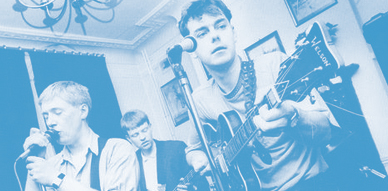
Me and Glenn knew each other all the way through our schooldays, and it was our love of The Beatles that got us into music and the idea of forming a band. We started writing songs when we were 13/14 years old – terrible songs! – but as we got older we got better. Well, I hope we did anyway. I still have cassettes of our early efforts, some of which I’ve put on MP3, which get an airing once in a blue moon. It was through Glenn that I met Stuart, our lead guitarist, as they both worked together. He had played in bands in Manchester in the late 70s/early 80s, supporting the likes of Joy Division and New Order, and was the driving force in getting the band to be more professional. Stuart and I eventually worked together as arrangers on the songs, and his lead guitar riffs were an essential part of our sound. Derron, as I mentioned earlier, was poached from another local band and was, together with Glenn on bass, part of a great rhythm team that kept us tight when we played live. Glenn was actually the lead singer and I was the bass player when the band first started, but we swapped over when I got told early on “You write the bloody songs, so you can bloody sing them.”, except the word bloody wasn’t actually used. I have an average voice and was never fully comfortable in the front-man-wiggles-his-bum role, but once I’d taken my glasses off – which made the audience a total blur – and got the first line of the opening song out I would relax into it. It still didn’t stop me screaming instead of singing occasionally (check out She Don’t Remember on ReverbNation!)

++ And was Public Address your first band adventure?

No, me and Glenn were in another band in 83/84 called Wine By The Glass. We played acoustic covers and we were less than average! It was the experience of that band breaking up that inspired some of the lyrics in James Dean.

++ Where does the name of the band come from?

I honestly can’t remember who came up with the name, but I do remember that we didn’t want to be ‘The” anything. It was probably Stuart, but I can’t say for certain.

++ Who and what would you say were the main influences of the band?

The Beatles were a massive influence for both me and Glenn. They still are for me. Their output was amazing, and their growth as songwriters and performers in such a short period of time was phenomenal. But my big influences at the time of the band were The Smiths and Prefab Sprout. The triumvirate of Morrissey/Marr and McAloon created amazing songs with incredible melodies and superb lyrics. I tried to – and still try to – write with that attitude, making the words and tunes work independently of each other, which I hope I sometimes achieved. Not always, I admit, but I gave it a good go. Derron was a massive New Order fan, but I can’t remember who influenced Stuart.

++ Tell me a bit about The Fabled Stable Records. Was it your own label? How did that work out?

It was our own label but it never really existed, hence the use of the word Fabled. I also really liked how the words ‘Fabled Stable Record Label’ sounded when said together so I pushed for that as the label name. It was just an exercise in me being a smart-arse to be honest, and the rest of the band let me get away with it. The publishing company ‘Remember This (Music)’ was also fictional. The crazy idea was that we’d eventually have numerous Remember This outlets. Just a bit of fun really.

++ You released one 7″ as far as I know, right? Both songs are top-notch! Can you tell me the story behind these songs?

Thank you for the compliment, Roque.

James Dean, as was the case with most of my songs, was about me or things that I’d seen/experienced. I rarely wrote third-party story songs, and James Dean was a definite first person song. I actually was 21 when I wrote it, and I really was still a child, as the lyric states. The line “leave the house to shouts of Dumb and Immature” related to the break-up of WBTG. We didn’t plan the sacking of the singer very well, so badly in fact that the day after the event we realised that all our gear was still at her house. I recall making a hasty exit, carry guitars and amps under my arms with mic stands flying around my head! Dumb and Immature were two of the milder expressions used that day. ‘The group of chords that raised a smile, I haven’t found one for quite a while.”, was self-deprecating and ironic as I had found one for the song itself.

Heart Ache was a group effort insofar as it began as a jam during a rehearsal session. Stuart and I then arranged the rough ideas into song form, and Glenn and Derron got busy with their rhythm parts. When it was taken into the studio it was a reserve song as we intended recording another track as the B side, and the lyrics were very much in a basic state. However, that intended B side song – which I now can’t remember at all – became a dog to record and we decided to go with Heart Ache. So while the others got on with their parts I quickly finished the lyrics. They’re not great to be honest, just words to go with the groove, but by the end of the session we were happy with what we’d produced. I actually wanted it as the A side but I was outvoted.

++ And how do you remember the recording session?

We used the same studio, Input in Sheffield, where we’d made the demos of Goodbye From Her and Can You Hear Me Now? back in April ’86. They’d been engineered and produced by Nick Wild and he did a brilliant job so we used him again for these sessions, although we decided to self produce. I do remember I had trouble singing the first few lines of James Dean in tune – no surprise there – and the finished item was a couple of takes expertly weaved together by Nick. We brought in Mick Ellison, who had previously been in the band for a short time, to play keyboards during the sessions, and he added such a lot to the tracks I was hoping he’d re-join, but he didn’t. I always enjoyed our time in the studio. I don’t remember much, if any, falling out, though I’m sure there must have been.

++ This record seems to be a bit obscure for some reason! Why do you think that? And how many copies were pressed if you remember?

We had 1,000 copies pressed and self distributed them around as many record stores as we could. We eventually sold about 750 or so. It’s obscure because it didn’t create enough of a buzz so subsequently became forgotten. I think it was a good song, we certainly gave it our all when recording it and when played live, although the live version was much shorter. We didn’t use the intro that’s still on the version available on YouTube – I cut that out when transferring it to ReverbNation – and we never used the last chorus live either, going straight to the last guitar break after singing ‘overtaking just like Jimmy Dean’.

++ As I was looking for more information I found that there were more recordings of the band uploaded to ReverbNation. So I wonder how come you didn’t release more records?

The single was funded by a local businessman who believed we had potential, as the cost was too prohibitive for us to fund ourselves at the time. Put simply, we never got to the point where we could record and release another single.

++ Counting them and the 7″, are there still more unreleased songs by Public Address?

Not that I am in possession of. The seven tracks that exist are taken from a cassette tape I made back in 1987 to give to my then girlfriend (she subsequently became my wife, and then my ex-wife!). They were copied from masters of our demos and live shows that were in the possession of one of our roadies. Sadly, he took his own life a short time afterwards and the master tapes were never recovered. So everything I have is up on ReverbNation, though there were lots of other songs recorded.

++ And from all of these songs, from your repertoire, what were your favourite ones and why?

My favourites were Goodbye From Her and Can You Hear Me Now? GFH was a very personal song (you see, it’s all about me!) and the lyric started off originally as a poem. I think it was the best song I ever wrote, and the melody is very simple, with only three chords used in the whole song. When we came to arrange it Stuart wrote some brilliant lead guitar riffs, and I think Glenn’s bass line and Derron’s subtle changes from rimshots to snare and back again really add light and shade to the track.

CYHMN contained my favourite chord sequences – I love great chord sequences – and I liked the fact that the intro was also the outro. I was never a fan of Derron’s double snare during the chorus (his nod to New Order) but I could never talk him out of it. If you take the first letter of each line of the lyric it spells out BEATLES JOHN and PAUL (my subtle tribute), and the first line ‘Back again with nothing new’ was my little dig at our critics who said everything sounded the same. It probably did though, to be fair.

++ What about gigs? Did you play live often? What was the worst gig and the best gig you’d say?

We played quite a lot over the two years we were together, though we didn’t travel any further afield than Sheffield, Derby or Nottingham. My favourite gig was the night we supported It Bites at the Porterhouse in Retford in March ‘87. They’d had a big hit in the UK called Calling All The Heroes, so we were lucky to get the support slot as a lot of the local bands were after it. Our single had just been released and we saw it as a showcase gig. The three live tracks available on ReverbNation are from that gig. There’s a bit at the end of She Don’t Remember where I can be heard in the background saying, “New ending”, as, for some unknown reason, we’d just extended the track by a few bars. That still makes me smile when I hear it. I just remember it as a great night with fantastic support from both our fans (we had a regular following by then) and those that were there specifically there for It Bites. The worst gig was at a venue in Nottingham, again my memory fails when it comes to its name – possibly for legal reasons – where we just didn’t connect with the locals at all. If anything, they were downright aggressive and we couldn’t wait to get out of there. I think we played everything at double speed and packed up in world record time. Probably broke the speed limit driving home too.

++ And looking back, what would you say was the highlight of Public Address?

Recording and releasing the single was the highlight for me. I really believed at the time that things would happen for us – the self-belief of youth and all that – but it wasn’t to be. I wouldn’t change a minute of the experience, both good and bad.

++ Then what happened? When and why did you split?

In the summer of 1987 we’d been together for two years, in and out of each other’s pockets, rehearsals, live shows, etc, and we needed a break. We decided to have the rest of the summer away from the band and get back together again in the autumn. When we eventually met up again Stuart said he wanted us to introduce covers and play more in what the Brits call ‘clubland’, i.e. more showbiz and less indie pop. I took this as criticism of my songs and my vision of the band so I threw my toys out of the pram and we split up, with Stuart and Glenn going off into clubland, and Derron and myself starting another band along with Mick Ellison. We never really got any further than some demos before it fizzled out in 1988. Having known Glenn all my life up to that point, we didn’t speak again for almost ten years (how silly is that?), but it’s been like old times again for the last 15 years or so (I was best man at his wedding in 2011), and he’s now the lead singer in a Mod/Ska covers band called The 5.15s who are brilliant live, and he’s a great front man. I do sometimes wish I was up there too, but on bass, in the background, backing vocals only, grooving with the drummer.

++ Since then have you been involved with other bands?

No, I pretty much gave it all up in 1988. I sold all my gear the following year when I got married, apart from one acoustic guitar. I now have a beautiful Epiphone John Lennon EJ-160E acoustic/electric that gets a play every day. I start writing more songs than I ever finish nowadays, but I can’t imagine not ever trying to write new melodies and lyrics.

++ And aside from music, what other hobbies do you enjoy doing?

Having reached my half century I need to stay fit and healthy, so I enjoy going for walks, especially around Clumber which is big enough to enjoy without seeing the same things each and every time. I enjoy going to gigs and the cinema when I can, and I’m lucky enough to be in a relationship with an incredible woman – hello Charlotte – so I get most pleasure from being involved with my new family, as well as my old family – hello Da, hello Sis -and seeing my friends. Oh, and drinking quality red wine, that’s right up there too!

++ One last question then, your favourite “James Dean” movie?

Giant. Dean is brilliant in the movie, and Elizabeth Taylor was, is and always will be a goddess.

++ Thanks a lot, anything else you’d like to add?

I just want to say that I’ve enjoyed the whole experience of initially finding your blog on Public Address, reading your very generous remarks on something created almost three decades ago, and then being given the opportunity to discuss the band further with you in this interview. So, thank you, Roque, for bringing back memories of good times from my past. I’m flattered that you’ve enjoyed something that we all worked so hard on back in the day, and if this leads to a few more people liking our music we’ve got you to thank for it. Best regards, John.

::::::::::::::::::::::::::::::::::::::::::::::::::::::::::::::::::::::::::::::::::::::::::::::

Listen
Public Address – James Dean
23
Apr

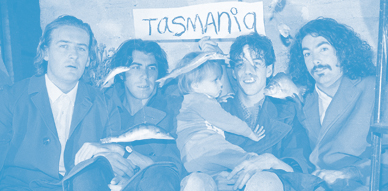
Thanks again to Andy and Neal for yet another interview. Some time ago I interviewed them about their most known band Hellfire Sermons. Today we go a bit further back in time to their adventure with Swim Naked. You can also find more about them on their Facebook page. Hope you enjoy reading this!

++ Hi again Andy and Neal! How are you doing!? Once again another interview, now about an earlier project, Swim Naked. Formed in 1982, right? Was this your first band with your longtime friend Neal Carr? And what kind of music were you into at this time?

Neal: We were discovering lots of music together at the time, the band was an extension of that. I was into the likes of Orange Juice, Joy Division, Gang Of Four, The Cure, Teardop and The Bunnymen when I first met Andy and Chent. We were all exploring the likes of The Velvet Underground, The Doors, Tamla Motown, Love, The Creation, The Action, Thirteenth Floor Elevators but also Sister Rosetta Tharpe and Ennio Moricone before and during the time of the band. Joy Division / Warsaw were also a big influence. We actually formed in 1981.
Punk had set this Year Zero thing, which I for one had bought into, and the music press didn’t really cover the past.. so for me, meeting Andy who had already started buying reissued singles by The Creation and Elevators, plus some Motown,, it opened a whole world to me. But we all kind of influenced each other with what we were reading and listening to. Chent was a year older than us and had read quite a bit more it seemed.

Andy: I was a punk when I lived in London into the Cure, Buzzcocks, Vibrators, UK Subs, Gang of Four etc. then the mod revival gave us the chance to listen to the Who (feedback!), Small Faces, soul music, then the US garage bands, the Doors and Velvet Underground. At that time me and Chent listened to ‘Sister Ray’ at least once a day. Chent had done a lot of English classic poetry – John Donne etc, so his lyrics had a literary side.

++ The band as really a trio with the inclusion of Chent Goss. How did you three knew each other?

Neal: We met at Uni. Andy walked up to me with my Cure badge and said “so you like the Cure” – haha. We later found we both know Chent independently. Chent wrote lyrics and one time, I think it was his idea, I put some music to one song. It seems crazy looking back that it took so long,,, I played guitar, Andy bass, and Chent wrote stuff… I don’t understand why no one suggested it.

Andy: Chent appealed to me as a rebel and well read thoughtful character. He had been at quite an eminent private school but had pushed against the conformity and pushiness you find in these places. He got ne onto good writers like Gogol and Kafka, and I got him onto punk music and 60s beat groups and primitive garage bands. He wrote lyrics with no band to play them, but they were good, I could tell.
As Neal says I was so pleased to meet someone else who liked The Cure. We used to listen to records together and talk about them endlessly. We still have one debate from those days – is one band better than another or is it all subjective. I feel that the Velvet Underground are superior to the spice Girls but Neal says that I can’t prove it lol. The argument continues. We have been very good friends and collaborators now for 32 years!

++ Was this your first band experience?

Neal: No, I’d been in a couple of bands at school. Fun, but I have no decent tapes. I certainly cringe at the lyrics I wrote back then.

Andy: it was my first band. I did have a bass and had done lessons, but Neal had hold the music together – but we learnt fast – and some of those limitations actually helped.

++ On Facebook it says that you had a label called Hidden Heartbeat. So, who were they? And how come there are no releases?

Neal: Luminous Crocodile was on Hidden Heartbeat

++ There is a song that counts with vocals by Clare Millington. Who was she? And why wasn’t she full-time on the band?

Neal: The three of us had been the core of the band, but we’d had a drummer (darn it, his name escapes me.. second name Wilson ?) Unfortunately he left Liverpool , but in our final year Clare and another guy (Chis..?) joined to sing and play keyboards respectively. We also borrowed Adam from Where’s The Beach to drum sometimes before Tom Gent (later of Decemberists) joined.
So it was simply that people came and went – and we had two very different singers at one point, which was hard to juggle.

Andy: I liked that about Swim Naked – the songs were very diverse, from violent jams based on the Velvets, to pop or folky things. ‘Logical Silence’ was brought to us by Chris Wilkinson from a Preston band called Horrorshow and its quite a typical student song about difficulty in expression, loneliness, I like our treatment of it. Neal’s guitar is based on the sound of The Misunderstood – bendy chords, the bass and keyboard are maybe like he Sound or Chameleons.

++ Did you play many gigs with Swim Naked? Do you remember any?

Neal: 2 I think… one at a Uni Hall.. and one at The Left Bank Bistro in Liverpool . This was the 6 piece band. We were all terribly nervous, so I don’t think much fun was had.

Andy: That was the two. We had an idea that over-rehearsing would “kill the magic” so it was a bit hot and miss, and didn’t help the nerves!

++ Where does the name Swim Naked come from?

Neal: I think it was Chent’s idea – but I can’t remember where it came from. I always think it was to symbolise freedom and risk in creativity.

Andy: It was about absolute freedom. Funny thin is lots of people like us on Facebook just because of the name – they have interests like ‘nudity’ and ‘hot chicks’

++ On the Facebook page there are some of your recordings. I’m loving “The King of Love and Sex”, “Girlfriend” and “Logical Silence”. Was wondering if you could tell me a little bit of the story behind each song?

Neal: I’d say all our best lyrics were from Chent (KoL&S and GF were him). Some of it was about using our current obsessions with the likes of Kafka or JG Ballard out there… some of it was more personal to Chent. I’m afraid I don’t remember much about these two. Girlfriend was lift from some lyrics Chent had already written,, I think KoL&S was a germ of an idea that crystalised as we wrote the music. I think it may have been a skit on the Doors.
Logical Silence was from a band called Horrorshow (?) that keyboardist Chris was in.. he brought that with him and we re-arranged it. He had a tape of a drum pattern that we all played along to.

Andy: The King of Li=ove and Sex was ironic piss take of macho boasting, its supposed to be over the top. We had a drummer at one time (Lou) who was going through a sex change and he left because the lyrics were offensive – but it was supposed to be funny!
I do like ‘Girlfriend’ – it is quite a good look at a relationship and pregnancy (“her body’s white and leaping, and you lie there shivering in the wind, with an empty mind”), the heavy feet of pregnancy, and Neal’s guitar part rocks, good melody.
Logical Silence was the best song we got from Chris, we completely re-arranged it, and it worked well. Claire’s singing is nice as not trained – its a little bit hesitant. There’s a lot more with her – I think ‘Won’t We’ is good for her voice.

++ There are two other songs, “The Storm” and “The Love Bog”, way less poppy, more experimental I’d say. So you had these two sort of sides in Swim Naked. Throughout your career you always had a more poppier side I’d say, so I’m quite surprised by these two songs. Care to tell me what were they about?

Neal: I think Chent had the biggest hand in the music and lyrics of The Love Bog, We set out to create something very extreme with the music – the weird effects are created by the dischords between the notes on the two vl-tones. It used to freak out our cats. I’m not sure what it is about, I originally thought it was linking love with a sort of stifling torpor, but listening again, it seems more optimistic than I thought.

Andy: The ‘Love Bog’ is off the scale, its based on a dream but sounds more like a night mare, .ore unusual lyrics – “You’re thinking of the smell of meat” and “Fireflies buzzing in the air, of oozing wine, there is no time, no warning sign”. And the discords did used to frighten my cat. The horrific discord comes in on the offbeat, its more like a fire alarm than a song. The Casio VL Tone gave the song its sound. A bit of that dischord effect can be heard in the intro to the Hellfire’s song Sarasine’
‘The Storm’ was written after Neal left to do a side project with Claire called The Lids’. The drummer was really angry at the time and we just poured out the song. I like its atmosphere.

++ From all the Swim Naked songs, which was your favourite and why?

Neal: I very much liked “Alone”, which is about walking alone in a city at night in fear… excellent lyrics from Chent and I think we nailed the music – sort of Joy Division-like. I originally sang it, but Clare did a much better job.
The songs I most associate with the band are Drive, The Venus Men and Dance of My Mother. They were all composed with the three of us plugging away over many months of change – it’s that evolution that I liked. The first two are kind of Velvets/Doors soundtracks to Crash by JG Ballard … the latter is kind of unclassifiable, based on a bass riff Andy had that I couldn’t fathom at first.
Nowadays I feel like The Doors and especially Jim Morrison are overrated.

Andy: I like ‘Dance of my Mother’ which is about a birth, and the closest I have ever heard to it is maybe Sonic Youth, but with better lyrics.
‘Girlfriend’ I love for the catcy repetition of the keyboard set against Neal’s chords.
And ‘Flashing Red and Orange’ is a kind of violent Cramps thing written about some disturbed events at Chent’s house

++ Did you ever rerecorded any Swim Naked songs for your later projects?

Neal: I “borrowed” some of the acoustic/strummy songs for my next band with Clare (The Lids). Otherwise, I think we have just lifted bits now and then,

Andy: The Lids was fantastic, a bit folky, nicely played with Clare singing, many indie fans would love it.

++ Are there any more recordings by the band?

Neal: Yes, as you probably get from the above, there is plenty more.

Andy: About 20 songs looking for a release,

++ Ever thought of putting together some sort of compilation of these songs? Perhaps adding the Jenny Lind and Decemberists songs? It would be a hit I think!

Neal: Andy is very keen.. I guess we never get the momentum between us.

Andy: We should do a compilation. I would have 2 or 3 Swim Naked songs, 2 from The Lids, 2 from Swim Naked after Neal left, 2 from the Decemberists, 2 from Jenny Lind, then 2 from Hellfire Sermos before Neal came in, and then some Hellfire stuff. We should do it

++ How was the recording sessions for Swim Naked? And how do you think these songs have aged?

Neal: A lot of what you hear are practice tapes, and they were great for us… though I do wonder why the neighbours put up with us!
In summer 1982 we recorded in a small studio in London , KoL&S is from that session. It came out quite well, but Drive and Venus Men sounded neutered even back then. We just didn’t have the nous then (or for many years) to get what we wanted from a studio. I think the instruments were recorded well enough, but we needed to be able to take charge of the end result and we couldn’t,
The practice tapes still sound quite exciting to me. I feel we have since learned more about how to arrange a song, get good and repeatable sounds, keep it interesting etc, but these songs are largely driven by enthusiasm and our interactions and experimentation – and it shows to me in a way that still makes me happy. In addition, the condenser mics that tape recorders had compress the sound in a way I’ve always liked.

Andy: It was all bad experiences in studios back then because no-one really bothered to help us get the sound right. The practice tapes are way better. But then, pre-internet, you couldn’t release your music unless a record company would do it, and so you needed a demo to play to them. But now we should release the good practice tapes – they have the sound and the dynamics.

++ Liverpool during those early 80s had a very exciting scene. How did you enjoy it and how do you think you fit in it?

Neal: At the time of Swim Naked, we didn’t really fit in. The scene was between the whole Teardops / Bunnymen thing that had just gone national and before the likes of Icicle Works and Pale Fountains.
The only band I remember mixing with was Where’s The Beach. It wasn’t until later with Decemberists / Jenny Lind that I felt we were part of a bigger scene… but even then, we would be playing with a lot of bands who clearly wanted to be the next Duran Duran – not our thing at all.

Andy: Then we just went to see the bands, and maybe saw them in the Everyman. When we practiced at Dock Road we were part of a scene with Half Man Half Biscuit, the Jactars, DaVincis, Jenny Lind, The Room, and that was good. Then in Hellfire Sermons we were part of a national scene via Kevin Pearce of The Claim, Jasmine Minks, Emily and briefly the very early Manic Street Preachers

++ And then when and why did you call it a day for Swim Naked?

Neal: I quit the band in 1983. I was a bit frustrated with Chent never doing the same thing twice in a row – which at other times I thought was a great advantage, but if you do something good and never do it again it’s a recipe for disaster with me. Clare seemed to provide an opportunity to do something more songwriterly which I also felt frustrated we could not do enough (though I think that was a daft idea of mine nowadays – I would never dream of presenting a written song to the band, it takes out all the fun).

Andy: I was sorry Neal left, but I think he had to because the load on him was so great – tuning, arranging, working out at what point the chorus would come. An Chent just couldn’t reproduce the musical or vocal parts so they were either great or terrible and you couldn’t control which. When it was good it was mind bending but then if you could never do it again, was it music?

++ What did you all do music-wise immediately after? Did you take a break?

Neal: I went on to The Lids with Clare. Although we did some good stuff, she was not really committed the way I was. We joined with three other guys in a band that never did get a name. I got more back to a poppier sound, but was also frustrated because there was less full-on collaboration. I split in the end because not enough writing or practicing was happening for me (no gigs ever played). I put up an advert and after a couple of false starts with others, formed Jenny Lind with Ken.

Andy: We found Colin Pennington and played him the demo of ‘Flashing Red and Orange’. He thought it was strange but had potential. So we formed The Decemberists and set about being a hard working Liverpool band, loads of gigs, postering the town, and actually built a local following, which we only realised when we played The Neptune Theatre in support of the Liverpool socialist council and a huge cheer went up when we started ‘The Gift Horse’. The two bands – Decemberists and Jenny Lind ran in parallel for a couple if years – I shared a flat with Neal at that time – and eventually the time was right and Neal came across to the Hellfire Sermons

++ What would you say was the best moment, the highlight, for Swim Naked?

Neal: Playing the Left Bank Bistro was a highlight, but the best memories are of writing songs at weekends in Andy and Chent’s house – evolving songs out of ideas

Andy: The best times were playing together, trying things,learning things, finding you could do anything, whatever you wanted in music, and learning to write expressive songs. The strength of Swim naked was that the songs were never written to be successful or even liked by other people – it was just us enjoying the moment.

++ We can wrap it here, short and sweet, but one last question, were these songs distributed in any way? Perhaps as demo tapes or something? Or have they only been for rediscovering since the digital era when you uploaded them to soundcloud?

Andy: Never distributed! A few are up on the internet – Soundcloud and Facebook. maybe we will relaease one more to go with this interview and go on your site?

++ Thanks again Andy! Anything else you’d like to add?

Neal: Thanks for the opportunity to think about this again Roque

Andy: No that’s it, but keep doing what you’re doing Roque.

::::::::::::::::::::::::::::::::::::::::::::::::::::::::::::::::::::::::::::::::::::::::::::::

Listen
Swim Naked – Logical Silence

09
Apr

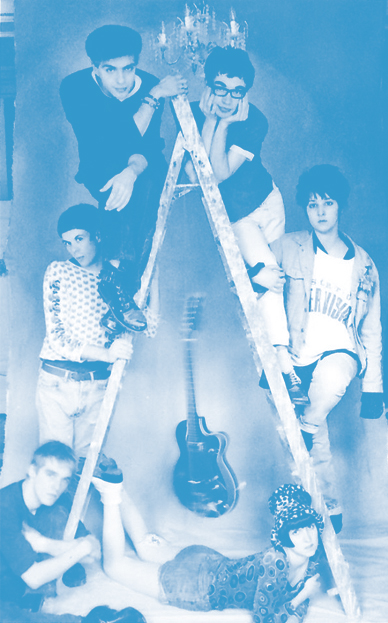
Thanks so much to Madelaine and Sarah for this interview! Some years ago I wrote a post about Fibi Frap and through many different channels eventually got in touch with them. You can’t imagine how happy I was! I always loved this band, since the first time I heard them, and I’m not exaggerating when I say they were among my favourites of that time period. And then I was even happier when they were up for doing this interview! It’s great to know a bit more about Fibi Frap, to give some context to the music, to the songs, especially after such great answers both Madelaine and Sarah have given me! Anyhow, please enjoy and discover (or rediscover) the fantastic Fibi Frap!

++ Hi there! Thanks so much for being up for the interview! Whereabouts in Sweden are you now? And are you still making music?

Madelaine: I live in Umeå, it’s about half way between Stockholm and Kiruna (650 km home, 650 km to stockholm). I am doing a master in fine art but, yeah I just started a new band before Christmas, we’re called Thir and I hope something can pop up soon, on the net, to be listened to. it’s a rock pop grunge noise thing 🙂

Sarah: I still live in Göteborg, where I have lived for the past 12 years. I am still making music, I’ve recorded a bunch of songs together with various friends ever since Fibi Frap ceased to exist. I’ve gone by a few different names; Iluvsera, Saragasso etc. I still make pop music, but a bit more lo-fi I guess. The latest recordings were inspired by Blade Runner though, one of my all-time favourite movies, so a lot of synthesizers.

++ How did you two meet? Was it immediate friendship? And when did you decide it was time to make music together?

Madelaine: Nah, we met at school, we went i guess for five years just as classmates but then finally we realized we needed each other, we wanted badly to play in a band I guess and we had a common reference: smashing pumpkins. I was really competitive at the time and i did everything i could to collect more EPs and singles and releases from them than Sarah had. I don’t think Sarah really cared. Anyway she tried to introduce me to Neil Young at the time, but I was really in to Swedish indie and didn’t understand this old man cowboy thing. took about ten years i guess, but now i love him more then most music. we tried different constellations with guys, never really worked out so we just decided to do a duo. much better, immediate success 🙂

Sarah: I think we must have been about 10 or something when we met for the first time. We were in the same class at school but never really started hanging out until in the 8th grade or so. And then it wasn’t until we were 15 or 16 that we really became good friends and started making music together. Both of us were into music and wanted to be in a band but couldn’t quite figure out how this was done, so we decided to start a band together. Our first songs were about an old boyfriend of mine that had continued on to wooing a friend, so I wrote songs about what an asshole he was. Great inspiration for punk music.

++ What instruments do each of you play?

Madelaine: synth, guitar, bass, stuff, and now I play the drums.

Sarah: I play guitar, bass, some synthesizer and you know, things I find. I wish I could play the drums but nah, I’m really not good at it.

++ Was Fibi Frap your first music adventure?

Madelaine: Nah, it came out of trying different constellations with guys, always me and Sarah and a guy, usually flirts/boyfriends to play the drums or solo guitar, but they were always so difficult to work with. idiots really, hehe. best band name was ‘Cat Woman Aid’, my boyfriend at the time Ralf Rotmalm always comes up with awesome band names, still.

Sarah: Yeah, we played a lot of music but it wasn’t until we had fired all out male friends from our bands that Fibi Frap was formed. And I think we were tired of being in a band with people who didn’t really care. So we decided that we were going to be the only members.

++ Where does the name of the band come from? Does it come from an encyclopaedia volume as I thought it does?

Madelaine: Yup. My next project was gonna be coco dies, also a band in the same encyclopedia.

Sarah: And I also wrote a song called Coco dies, which didn’t become a Fibi song but it had potential! Maybe we should record it? It’s a good song!

++ You listed a long list of influences in your old mypace: manga, picknix, Boris Vian, Paul Auster, Maurice Blanchot, Magnetic Fields, Will Oldham, Morrissey, Computer Vikings, Oski, Lifli, Brendan Perry, Neil Young and the guys, The Cure, Alma Cogan, Nina Simone and looove. This list makes me happy, I can only say great taste. But can I ask then, what were your favourite mangas?

Madelaine: This list of influences that you refer to, we were probably having some beers and having fun. Don’t remember so much Manga, me an Tobias was at one point looking at Chobits. Otherwhise I mostly liked Anime, but I think I didn’t know about the difference at the time. I like Miyazaki, and some other stuff but I’m not a fanatic.

Sarah: I am not a manga fan, that was never my thing. And so we just wrote down our favourite authors, philosophers, bands, friends etc. I still love Neil Young, Nina Simone, the Cure and Alma Cogan. I grew tired of Paul Auster constantly repeating himself, forgot about Magnetic Fields and Will Oldham. Still like the Brendan Perry album though.

++ You were from the northern part of Sweden, how is it there? But afterwards you were in between Stockholm and Göteborg. Is it much different? And where there any like-minded bands in town that you liked?

Madelaine: Kiruna is far from everything. But it’s weird and beautiful and our home. 20 000 people. When we grew up there was a real dystopian feeling in town. The future didn’t look good at all, it was said the mine was gonna close down in a few years and the military base where a lot of people worked closed down, and there were no jobs. People left their flats, keys on the kitchen table. Houses were being closed down, turned of the heating, left to rot. So the feeling was that of: get the hell outta here as soon as you can. Now, 15 years later, they found more ore, and the area is the strongest growing economical area in Europe kinda Klondike. Gold rush kinda situation. There is nowhere to live, and lot’s of jobs! Now they have to move the whole city because it’s slowly falling down in the mine hole. So it’s the last few years to see our home town as it was…

Sarah: But I still liked growing up in Kiruna because it was such a small town. However, when I was about 15 years old I started growing restless. I wanted to do stuff, see the world and discover new things (and meet new people!). But the atmosphere with the sun shining 24/7 during the summer and the constant darkness during the winter sort of form my music, and I still think that that sadness can be traced back to growing up in Kiruna. There were, however, no like-minded bands in Kiruna. At the beginning we were frowned upon, since there were no girls playing music in a band back then. But we decided to continue on and then we were accepted, I think. But not everyone liked Fibi Frap, some people thought it was just silly music for silly people. Being in a band meant that there was a bass player, a guitar player and a drummer of course. Otherwise it was just weird. And so we were weird. And we didn’t care.

Madelaine: Stockholm and Gothenburg is real towns. Lots of people, and stress, and stuff going on in every corner. We did not hang out with other bands. We didn’t really identify with them and didn’t really listen to that kind of music. I don’t know why we were invited to play all those gigs in those gangs. Maybe it was the synthesiser we used and the fact that we were two cute girls from the north making strange music. We listened more to rock and stuff I think.

Sarah: Yeah, we were always outsiders I think. Everyone was really nice to us and we got to play with a lot of band with great people, but it was never the kind of music we listened to. We grew up listening to Smashing Pumpkins and Neil Young and Van Morrison (I like older men apparently), or rock. It just wasn’t our kind of music, although I can see why other appreciated these bands.

++ And what were the places you loved to hang out in town?

Madelaine: In Kiruna? We sat at the café most of the days after school I think. Safari it’s called. The first café to serve sandwiches, rest of the world style, the founder was from Tunis. I guess we spent a lot of time studying too. I studied science and Sarah studied Humanistic studies.

Sarah: I don’t know if it was the first café to serve sandwiches, but it was a café that was famous for its sandwiches since they were huge. I didn’t study as much as I should have, although I still managed to have good grades. I preferred sitting at the café drinking tea or coffee and smoking way too much. There was always someone there who you knew, otherwise you’d just bring a book.

++ Did you play many gigs? Which would you say were your favourites and why?

Madelaine: A few actually. one of my favourites were at LAVA, in Stockholm, because it was the first time we had a female sound technician, she actually listened to us and did not pat us on our heads, like all guys always did when we were a duo of two really young (cute) girls. and she was impressed on how quick we were at setting up. other gig was at monsters of indie at Debaser, Slussen, in Stockholm. it was just so cool to get to play there. and at the festival Popaganda, in Stockholm too. but actually i have such fucking stage fright, so all gigs were really horrible for me actually. i was always shivering like a leaf and pale as a ghost and Sarah always tried really hard not to look at me at stage because then she became nervous too.

Sarah: We played at Lava twice, the first time was amazing, the second time was not. One of my favourite gigs was the second to last one, at Underjorden, in Göteborg. It was just around the corner from my apartment and a lot of people and a lot of friends showed up, plus we connected with the audience and yeah, I really felt present during that gig. In my mind that was our farewell gig, since the last gig was one of the worst ones we’ve played. It was at Join our Club in Göteborg and we hadn’t seen each other for some time and during the whole show, a drunk girl was standing right by the scene, telling (screaming) the person she was talking to on the phone that she was listening to the worst band ever. I really didn’t want to play and I think Madelaine felt the same way.

++ I want to ask about the Starke Adolf gig. How was that? I have this very idealized view of that club!

Madelaine: We tried to talk about this gig and no one of us remember anything. But we remember a friendly and nice feeling.

Sarah: Yeah, I hardly remember anything. I remember that a lot of friends were there and that it was really fun playing. People really seemed to appreciate us. But apart from that I don’t remember much. It was the only time I went to Starke Adolf.

++ And what about playing a festival such as Popganda?! That must have been quite big?

Madelaine: I was part of the group who arranged the festival and the rest of the group really liked fibi frap and wanted us to play, I have never been so nervous my whole life, I don’t remember anything.

Sarah: I really liked playing at Popaganda. I was so nervous before we entered the stage but after a song or two it felt better and it was really fun. But it was strange as well since we were used to playing on smaller stages.

++ At that time there were many fantastic indiepop bands throughout all Sweden. It was like a explosion of very underground but very creative bands. Did you feel there was some sort of scene, or you always felt like outsiders?

Madelaine: I dunno, Kiruna is so far from everything, and there people either played Metallica – music or in cover bands. oh, but that’s not true. there were many bands experimenting, sometimes towards the verge of performance art, and having fun, but almost always guys. I guess that’s where the outsider feeling came from. Most of them were quite a bit older too, I never dared to talk to them because I thought they were so smart and cool. little did I know. I know some of them now as we have grown up, and they are all rather humble and not too cool for school at all. The rest of the indie or twee scene I was not very familiar too before we came to play in the south of Sweden. And by then we had already our own sound. There was a scene I guess, but in the south everything was so intimidating, everyone had such cool clothes and sun glasses, and i guess i just got really nervous. But we came to know a band called Laakso and or Pello Revolvers and that made it all a bit less scary. They were a bunch of really nice guys. (still no girls though). But then I got to know of bands like first floor power and honey is cool, and finally there were some women to have as role models.

Sarah: Well, I don’t think there were so many bands that were experimental, there was this one band that was some kind of performance thing but it wasn’t that serious. I don’t think I thought anyone was cool in Kiruna. I always thought I was way cooler than anyone (the mind of a teenager), so I didn’t really care for impressing people or found things intimidating (and if I did I would never have admitted it). Laakso and Pello were friends of ours so they weren’t scary at all. Still, there was apparently a twee scene in Sweden where some people thought we belonged (we didn’t, though). In Göteborg I listened to the bands I liked, but it wasn’t pop music. However, they were really creative. So I think we bonded with creative people but not people belong to a certain kind of scene.

++ Were you involved during those years then in anything other than making music? Like, fanzines? radio? gig organizing?

Madelaine: I worked for four years with the popaganda festival, it was cool, got a really nice insight in the music world, and the dirt:
“The music business is a cruel and shallow money 
trench, a long plastic hallway where thieves and 
pimps run free, and good men die like dogs. 
There’s also a negative side.” (hunter s thompson)
and I also totally lost the wall between me and other artists, the magic was lost in a way, in a good way, and if I see a gig or meet an artist I can talk to that person freely no matter how much I love that persons work.

Sarah: I wasn’t really involved in other things during those years, I was a part of Union, a community where a lot of musicians and other creative people were involved; selling records, setting up a Union festival in Göteborg and so on. But that didn’t last that long, and then I just focused on the music.

++ Your first EP was released in 2002. What do you remember from the recordings session? Where did they happen?

Madelaine: They were really fun. took place at Tobias Asplunds flat, he had recording devices and he was a real friend. I don’t remember much other that it was completely without pressure.

Sarah: The sessions were wonderful. I remember them quite clearly. We recorded the songs at Tobias’s apartment in Kiruna, spending long days and nights at his place writing, playing, laughing…. I really did appreciate those days since it was so much fun and it was just about the three of us hanging out and being creative. And I think that comes through in the EP, you can hear us laughing in the background, cracking up due to our incapability of clapping our hands at the same time. We were both 20 years old, not knowing where our lives would take us and where we would end up. This was in March I think and we knew that after the summer we would leave Kiruna and move to Linköping and Stockholm. So those recordings meant, and means, a lot to me and I still enjoy listening to those songs.

++ After this first EP you appeared at P3Pop radio. How did that happen and how was that experience with Hanna Fahl?

Madelaine: Hanna Fahl was so warm and friendly, such a genuine music lover. It was fun!

Sarah: She was great, she was really enthusiastic and kind. I listened to the recording the other day and apparently the studio technician was the one who decided that “Longing” was going to be called…. “Longing”.

++ You also contributed some songs to the Alltid Hela Tiden label in Sweden, Robots and Electronic Brains in UK, as well as Popgun in the US. Did you contribute to any other compilations?

Madelaine: Oh, I don’t recognize half of those 🙂 I remember ‘My secret garden’ it was a label and Martin released some compilations.

Sarah: Nope, I think that’s it!

++ “How Fast is Your Heart Beating”, your second EP, was released by My Secret Garden Recordings. I interviewed Martin who ran the label not so long ago, and I feel he had a great ethos for running the label. How was your experience with him? And how did you ended up releasing this EP with him?

Madelaine: I don’t remember how we came to work with him. but he was really trust worthy and nice to us. also a real music lover.

Sarah: Well, I guess he contacted us since he wanted to release some of our songs, and we did, and he was a great guy.

++ What about the “Remember Being Born” release? I’ve never seen it. What was included in it?

Sarah: Well, those songs were never released, that’s why you’ve never seen it. We recorded the songs in Göteborg, just the two of us, and just “released” them at myspace. We thought about making an actual record but we never found the time. One of my favourite songs, “White beast”, is one of the “Remember Being Born” songs.

++ Are there any unreleased songs by Fibi Frap still?

Madelaine: I think there might be some, maybe Sarah knows more. there was a song called parking lot, wonder where that went!?

Sarah: Yeah, “Parking lot”! It was Madelaine’s song that we recorded in Stockholm with Johan, I think it was the same session when we recorded “Where’d you learn to kiss that way”. It’s a fun song about an ex-boyfriend of Madelaine’s. We also recorded one of my songs, which didn’t have a name, that was really catchy.

++ And among all of your songs which would you say are your favourite? And why?

Madelaine: Hollywood or Catherine. Sarah was so good at writing and it always get’s boring with your own stuff after a while. we wrote half of the material each.

Sarah: I like “Longing”. A lot. I like the way it was produced, leading up to a crescendo. And “To Make You Happy”, which is an oldie but a favourite. I always liked the way we wrote songs. I would come to Madelaine with a sketch for a song and say that it was missing something. She would come up with this great harmony and it would just be the missing piece I had been searching for. And the other way around. We completed each other’s skills in song writing, and we’d just get each other and know where the other person was going with her song.

++ When and why did you decide to call it a day?

Madelaine: I don’t know, did we really? I guess. I moved to Umeå because of love, it was too far. I am still here but love is no more. I guess I’ll be moving south again in a year or two. Malmö or Stockholm or even Gothenburg. If close to Sarah I’d say we’d probably play together again. I love her and our voices go well together.

Sarah: I’d say it started before Madelaine move to Umeå, I think the distance created problems for us since it was difficult and expensive (we were both students back then) to travel back and forth and it was also difficult to find the time. We would only meet when we were playing somewhere and that just wasn’t fun anymore. I hope Madelaine comes to Göteborg so we can play together again, I really miss that and I miss her.

++ Aside from music, what other hobbies do you enjoy doing?

Madelaine: I don’t have hobbies. I work. I work with Art and Music. I also work at a pub/club called Scharinska here in Umeå, it’s a great place. On my spare time, I travel and watch series and drink beer. I also love to go to my brothers cabin in Abisko, it’s in a national park called Sarek and I just sit there, and look in to the fire or walk in the mountains.

Sarah: I was going to say exactly the same thing: I don’t have hobbies, I work. But that sounds so depressing. I’m a high school teacher, which takes up a lot of my time but it’s also very rewarding. There’s a wrestling club in Göteborg called Gbg Wrestling and so I’ve become a wrestling fan. Other than that: writing music, go to clubs to watch bands play, drink beer and watch TV-series. I bought a nice camera a couple of years ago and really enjoy taking pictures. My father was a photographer and I’d like to think that I’ve inherited that part of him.

++ I’m going to be in three weeks or so in both Göteborg and Stockholm visiting. Can I ask for some tips? Maybe your favourite bars, or restaurants? If there’s any areas or sights that you like too?

Madelaine: I didn’t live in Stockholm for a long time now (8 years), but I go to Magasin 3, and Bonniers Konsthall to look at art or to the moderna museet. and I go to copacobana to have a snack. I want to eat at lao wai at some point because everyone talks about it. there was a great restaurant at the etnografiska museet a couple of years ago, but I don’t know if it is still there. I always went to debaser slussen but I have heard rumors about it moving now to Strand. Strand always have good gigs, saw buil to spill there in the autumn.

Sarah: In Stockholm I would go to Fotografiska (museum of photography) which is great, and maybe eat lunch at the nearby vegetarian restaurant Hermans.I would go to the pub Akkurat to drink beer and maybe even go to Boulebar and play some boule. The nicest area is still Söder, but anywhere near the water is great. And I would go to Grand Hotel to eat expensive but oh so delicious brunch. In Göteborg I would go to Haket Bar, The Rover, Tre små rum to drink beer. Haket is wonderful since the staff is really friendly (and they have the best sushi in town), Tre små rum is small but very cosy, and The Rover is easy going. Though, I suggest that you only go to Tre små rum if you’re really into beer since no Carlsberg is allowed (they actually have a sign that says so) and if you try to order it the bartender will give you the stink eye. I would try to stay near the water; buy some coffee and just look at the ducks and at people. There’s a great coffee bar called Bar Centro behind Nordiska Kompaniet (department store) and a restaurant called Dubbel Dubbel, where you can find great dumplings, that I would recommend. If you’re interested in gigs I would check out Skjul Fyra Sex or Koloni. Although these places could be hard to find and requires a bus ride.

++ One last question, will there be any chance in the future for a reunion gig?

Madelaine: I dunno, I could do it, I don’t now about Sarah.

Sarah: I wouldn’t say no, if we felt like it and felt that our music was still relevant and if we’d have fun playing together, then sure! And, of course, if anyone would be interested to come to that reunion gig (except our mothers and boyfriends).

++ Thanks again! Anything else you’d like to add?

Sarah: Nope!

::::::::::::::::::::::::::::::::::::::::::::::::::::::::::::::::::::::::::::::::::::::::::::::

Listen
Fibi Frap – Sadeyes

01
Apr

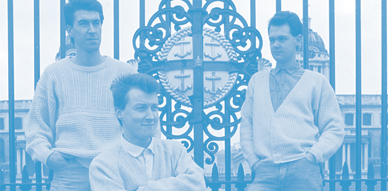
Thanks so much to Klaus Cornfield for the great interview! Throw that Beat in the Garbagecan! is one of my favourite bands ever, so it was quite thrilling to receive these answers! On top of it all this year the band is reuniting for a one off gig in Berlin and I’m so planning to go. I already have a concert ticket! Just missing the plane ticket! But yeah, it’s so exciting! There is more information about the event here if you are wondering. And you can buy the tickets here! Throw that Beat had a wonderful career, with many albums, EPs and singles, all of them packed with hit-songs, and many indiepop classics in my book. If you haven’t heard about them yet, well, maybe it’s time for you to discover them, and if you are a fan like me, I hope you learn a thing or two, or just enjoy the interview! Happiness!

++ Hi Klaus! Thanks so much for being up for an interview. First of all I have to say that I’m so very happy that you are reuniting for this one gig in September. Why did you decide to come back? And will there be more concerts or this is just a one-off?

I was about to become 50 years old and decided to ask Oli, Lotsi, Iwie, Alex and Ray to play once more, just for the fun of it. They jumped on the train all together quite happily – and it grew fast from the idea to play “a bunch” of songs to a whole 90 Minute Rock show. But we decided also to keep it cool. One big evening! No further promises or expectations.

++ I have never seen you live before, so for me this is going to be a great first time, so looking forward to it. Many German friends have told me that your gigs were so much fun back in the day. What can I expect in this gig? Is it going to be the full lineup of the band? Are there any unreleased songs that you’ll play? How many songs will you play? Bringing any special merch? Any little gossip will do!

Of course we printed a new poster and we will sell a few leftover XXXL shirts that were stored in my parents cellar for quiet a long time. Some rare records from another ancient box will be also waiting for our meanwhile loaded and grey haired fan people at our merch stand, along with our iconic merchandise girl Soosoo Sunbeam. We are very happy to announce that Lotsi will be back for this concert, which for me is the very exciting element in this whole enterprise. The fun will be there i suppose, the awkward announcements, Iwie’s silly hat, me stepping on guitar cables and falling over…I don`t think anything can change that in us…

++ So going back in time, and I know most of your German fans will know all these answers, but I think the English-speaking won’t, I want to ask about the early days in Nuremberg. How was it? Was Throw That Beat your first band experience? And if there were any bands in town that you liked at the time?

No, there was not one band in town that we liked when we got started. There were 3! The shiny Gnomes, the Truffauts and the Gostenhof Giants. Along with some other fine talent like the Kern brothers or Albi Illegal and his psychedelic hardrock group the Illegal State of Mind. And we had the Zabo Linde, a club in the south part of Nuremberg which introduced us to great small indie bands in the eighties, like the Feelies, the Go-Betweens, the Milkshakes, the Wedding present, the Television Personalities and many more. We were all the musical children of one man. Michael Demmler, who owned a small alternative record store and gave me my first very good record. My first buy was the Television Personalities live bootleg “live at Forum Enger” and “Jonathan sings” from Jonathan Richman. That was a new world.

++ And talking about cities, now you live in Berlin, and the gig will be happening in Berlin. When did you move? And whereabouts in Germany would you say you have the biggest fanbase?

I moved to Berlin 10 years ago. I don’t want to say it is the perfect place to be automatically, but for me it was. It’s a little bit like Piccadilly Circus in London. Everyone comes here once in a while. Some old friends who I know from all over Germany moved to Berlin as well. Since we used to play so many shows all over the land, we have a good chance to find many of our audience in the biggest and dirtiest city that’s available. Berlin. Anyway, no matter where we would do the concert, there will be a lot of people that have to travel for it. I only worry a little bit about the CO2 that will be released only for this one concert….ayayay…what a shame…

++ You took the name of the band from a B-52s song, but the whole band had great stage names, I always wondered where those names came from. For example, the Cornfield part. What’s the story behind that?

Lotsi Lapislazuli and Iwie Candy XO7 and their sister Soosoo Sunbeam. They invented fake names for themselves that were so funny that i got jealous and begged them to make one up for me. So they stuck their heads together for a minute and came up with “Kalle Cornfield”. Which i liked, except that i kept the Klaus from my real name. Oli changed to Polli, when we watched too much Monty Python sketches with dead birds. Pollunder means Pullover in German- Oli’s favorite winter clothing, So that resulted in Polli Pollunder. Lord Ray was always Lord Ray, don’t even know where that came from. When we looked out for a band name in 1986, we liked the words “beat” and “garbage” very much, and we decided to use the longest band name of all the bands on the planet.

++ Also by the end of Throw That Beat in the Garbagecan’s run as a band you shortened the name of the band to just Throw That Beat. Why was that?

After a few years the joke was used up and the records became CD’s and there was no way to print such a long name on those crappy tiny plastic things. We also thought that shortening the name would sound fresh and could help the audience to see us in a new light. Did it help? No.

++ You played so many gigs back in the day. What would you say were the best and why?

Brixton University, CBG`S, Open air in Barcelona, Heidelberg, Kotbus, Roskilde Green Stage, Tokio, somewhere in Shibuya on the 8th floor, Transfer in Erlangen, all those and many other concerts were just perfect moments for us i think. It really doesn’t matter so much how big the crowd was, but on those occasions I remember that it was packed and hot and I even remember that I collapsed once in Cologne, because I wore a fake fur hat on stage.

++ And how was the visit of The Fat Tulips to play with you in Germany? Any anecdotes you could share?

They loved to play the blues in the backstage room.They were just so adorable, and they let us stay at their homes when we toured in England.

++ Do tell me how did the first contact happen with them and Heaven Records? How did this friendship start?

That is so long ago, I can’t recall how and why we met them. I guess that someone wrote letters and then picked up the phone. Maybe a fax here and there…those were undigital times…yes…fax…can you believe it?

++ My first encounter with your records was here in the US, through Spinart. How did you end up signing with them? And why only two of your albums came out with them?

Spin Art did very good work. They discovered us a little bit too late to start releasing our records from A to Z, so they decided to make their own compilation. That went up to number 49 in the College Radio Charts, so don’t say we did not make it big in the USA. We saw the effort behind it and for a week we even experienced some kind of hype, especially when we played at the CBGB’s. The room was crowded only when we were on stage, I swear! It was almost frightening…maybe they were crowding up to beat us up…but no. They loved it as if the other bands were Poison and we were The Cure.

++ Most of your records came out on Electrola though. Who were they? And how was your relationship with them?

Robert Wolf and Monika Markowitz wanted to try something new and with us they did. After we got guaranteed in the contract that we would play the music the way we wanted to, we were very surprised, but we liked it!

++ You have so many fantastic songs, but can I pick two and you can tell me the story behind them? What about “A Choclatbar for Breakfast” and “Little Red Go-Cart”

When i was a kid I woke up early in the morning on the week ends and sneaked into the living room where my parents were hiding the chocolate bars. The song seems to use this picture to tell us something about a lost feeling that the author wishes to come back again. I wish I knew what I was really thinking…still. Little red go-cart was Lotsi’s idea while she heard me playing D A G A very fast on my old red Astro guitar. I adore the line “submarines just run ashore, people cry and go to war”.

++ And if you were to pick your two favourite songs from your repertoire, which would they be? And why?

“I dedicate my life to you” is my all time favorite. Its impossible to tell the second one, I think I love them all the same, but the one I call “my song” is the mentioned. First I was singing it to someone else, till I recognized is really about me – which made me cry a little bit, because suddenly it became so sad and still sounds happy.

++ You recorded also a bunch of videos. How was that experience? Who came up with the ideas for them? What was more fun, recording at the studio or filming videos?

For the videos we threw all our ideas together and Iwie would take care of the rest. Hiring a camera and sound man and editing. She still is working in that field and saved our tiny butts from looking stupid with her editing work. A kiss for Iwie! Recording music was a 10 to 20:00 job mostly. Later we recorded in huge studios, where Suzie Quatro recorded some hits and was reported to have thrown a cake on the ceiling. The cleaning woman told us this story from the seventies when she saw how well we behaved – except for the last day. I remember getting very drunk at least once when we finished the record and listened to the pre-mixes. Sooo drunk, I climbed on a lamp…and on a few other things I can’t remember properly. Recording new songs was one of my favorite parts of being in a band. Along with most of the concerts.

++ Something I also love about your records is the artwork, the photos you used, the imagery. Who was in charge of that?

We were lucky to have some talented friends who helped us with the photos, Billy & Hells for example, who I hung out with when we started. We even got Jürgen Teller for a shooting, because he knew Iwie from school. As a cartoonist I supplied a few comic strips, but the beautiful artworks of the albums and singles are made by Lotsi. You can’t beat Lotsi’s stuff.

++ About your songs, they are quite unique, so I always have wondered where did you get inspiration and who had influenced you to pen such songs? Also if you ever considered doing German songs for Throw That Beat?

We wrote one German song! “007 Sehen”. Iwie sings it. Kind of a test balloon. We loved it and were about to do at least one or two more. But we took so much inspiration (that’s how you call it) from English and American music, comics, films and TV shows, (not to mention Mr Kurt Vonnegut) that it felt very natural to us to use English. Gladly English lyrics by German bands were awfully dull in the eighties. And the rest of the world did not so much better with a few exceptions. All these boring clichés that were used made me sick, so we were proud do it a little bit funnier than the rest. We spit on the radio broadcasting and pressed things like “fuck” and other beep words on vinyl…just because we liked it better that way. The trick was to stay open for any subject to sing about. It may be a very small object that makes big sense. Once when we waited for Iwie to show up for our rehearsal and she did not show up, we wrote a song about waiting for Iwie. As simple as that. It ends with a long keyboard solo by Iwie, because she might have been late, but finally she came. It`s still one of my favorites. It seems to say so much more than it really does. The minor chords gives it such a sad and beautiful meaning. But there are a few crappy lyrics as well by me from the very first beginnings. I had to learn the hard way myself.

++ So when and why did you all decided to call it a day? What did you do all after?

That was after our last tour in 1997 I think. There was not much despair or anything. The end faded in very gently when when we drove over a dark autobahn from Switzerland to Nürnberg listening to “My name is Jonas” from Weezer. The workers are going home…that was my feeling.

++ Something I’ve always wondered is if there are still any unreleased songs by Throw That Beat? And if there are plans for any sort of reissues or new releases in the future?

There is a very charming and trashy fanclub tape that waits to get digitalized, and a few very rare covers and B-sides. We will make it available on our homepage soon.

++ And looking back to those days, what would you say was the biggest highlight of the band?

Our very own red Throw That Beat in the Garbagecan! Viewmaster with 3D Bandportraits that EMI made as a promotion gadget for the Cool Album.

++ I’ve been to Berlin before, but as you are a local now maybe you can give me some tips! What are your favourite areas to go for a walk? favourite German dish that I should try? And what about beer?!

Beerlin! If you like Beer, you will find enough variations – If you ask me, try Egernseer. Its hardcore. And eat currywurst, if you can find one. They died out almost in the last 10 years. They are even more hardcore. The best food will be Turkish food in Kreuzberg. Miammiau

++ Ah! and before I forget, favourite chocolate bar?

Ritter Sport Alpenmilch

++ And one last question, how many guitars do you own?

3 Guitars. A small acoustic nylon string from the thirties made out of maple wood and a red 1964 Astro (Instrumentenbau Stromer halfacoustic) and a 1974 Gibson Halfacoustic.

++ Thanks again so much Klaus, anything else you’d like to add?

Thank you for your patience! Feel free to correct my words in spelling and commas and dots and stuff. make me sound like i know what i`m doing please:-)

::::::::::::::::::::::::::::::::::::::::::::::::::::::::::::::::::::::::::::::::::::::::::::::

Listen
Throw that Beat in the Garbagecan! – A Choclatbar for Breakfast

07
Mar

Thanks so much to Martin Sernestrand for the interview! 2014 marks 10 years since My Secret Garden Recordings started as a label in Goteborg, Sweden. For us nostalgic people seeing the new Facebook page that Martin put together has brought many smiles and memories. You should all make yourselves fans! The label was a true DIY project, small runs of 25 to 50 CD-Rs for every release. All done with passion. Among the releases we remember bands like Evergreen Days, Everyday Sensations, Penny Century or my favourites Fibi Frap. It didn’t live long, but the legacy, at least for me, is really rich. Time for you to discover (or rediscover) this great label from the last golden age of Swedish indiepop!

++ Hi Martin! How are you? First thing first. It’s been already 10 years since My Secret Garden Recordings started. Looking back in time, how do you feel your releases have aged?

Hi! I’m fine, just a little bit cold. But it is getting better day by day. Yes, it is unbelievable. 10 years! Time just seems to fly away. I was actually listening through all the releases the other day. Overall I think they still hold up to the same standard as before. In my opinion they have aged well and are still relevant.

++ Where did the name of My Secret Garden Recordings come from?

It is a Depeche mode song. Taken from the album “A Broken frame”.

++ Was this your first label project? What about music, do you play any instrument, have you been in bands?

Yes, it was my fist label. I had ideas of starting a label before but this was the first time a sat my plans in to reality. I myself don’t play any instrument. But I have been in some bands when I was young. I played bass in a band when I was around 14 years old but when they realized I couldn’t play they made me the singer. But I couldn’t sing either so I got the sack. Lol! Some years ago I did some unlistenable electronic music under the alias J.Fryer (ie John Fryer).

++ What pushed you to start the label? And did you ever consider it doing it with more people, or was it always a one-man project since the start?

It all started with my fanzine No Disco in the early 00’s. Through that I got a lot of contact with bands and one day the idea of starting a label and releasing the music I liked came to me. It’s sort of grew on me. I didn’t thought about it too much. It just came naturally. I have always been a loner so to speak. Not that I don’t have any friends but I like doing things alone and I’m more comfortable doing projects like this alone. Maybe I’m a little bit of a control freak. I don’t know.

++ Most (if not all?) your releases were releases on CDR. Why the format? Did you burn them yourself, one by one?

It’s a perfect format. It’s cheap, fast and you can do almost everything yourself. I did everything together with the artists/bands. Layout, track list and even song titles. It was very diy.

++ Do you remember the sort of “infrastructure” of the label? Was it all bedroom based?

I guess you can call it bedroom based yes. As I said before. I tried to do everything myself but with some help from the artists/bands. The goal was to keep it as cheap and simple as possible. But the end product still should be something that people wanted to have, pay for or steal from me.

++ And who took care of the artwork for the label?

I did almost all the artwork. Sometimes the artists/bands had an idea but it was always I who did (copy and paste) the final product.

++ Are there any labels that you’d say influenced you in starting your own or influenced you in how to shape it?

Yes, of course. There were (and still is) a lot of labels (and people) that I adored back then. None mentioned, none forgotten. The whole diy ethics was very important to me. I wanted to have a close contact with both the artists/bands and the ones who bought the records and listened to the music. A lot of people wrote me letters and e-mails and the whole diy community was very nice and friendly.

++ Where you always based in Gothenburg? I was curious if you ever attended the famous Starke Adolf club and if you could share experiences of those halcyon days?!

I was born in a small town just outside Gothenburg. When I was 12 years old me and my family moved to Borås (about 70 kilometers from Gothenburg). Then in 2003 I moved back to Gothenburg and I still live here now. Of course I attended Starke Adolf. Many times! It was a blast. I look back very nostalgic about those years now. All those people, labels, fanzines and bands. It was fantastic!

++ Have you ever thought about you or anyone else releasing any of the stuff from your catalog? How would you feel about that?

Not at the time. Back then I was very stubborn. A lot of people wanted me to re-release stuff that was sold out but I decided not to do that. For me it was very important. All the stuff was released in 25 or 50 copies. I wanted it to be something…I don’t know…but I wanted it to feel special to have one of those releases. To hold them in your hands. But I know a lot of people, beyond my control, uploaded songs and made it digitally available. Which I always thought was cool.

++ How much of an impact would you say My Secret Garden Recordings had in the Swedish scene? At that time there were many small labels, wondering if at all you feel part of a scene then?

I’m the wrong person to say so or even speak about my own label in that way. But yes, there were a lot of small independent labels in Sweden back then. And still are. It was not only Swedish people I had contact with. I spoked with people all around the world. The diy community was (and is) very big and because of the internet you can very easily stay in contact with people from all different countries. 

++ Are you still in touch with the artists you released back in the day? What are they doing now?

I’m still in contact with some of them via Facebook and other social medias. But less and less over the years. Too bad.

++ There’s really not a full discography online for the label. Would you mind writing it down for me?

I have just posted it on the official My Secret Garden Recordings FB page (https://www.facebook.com/notes/my-secret-garden-recordings/discography/496466800464379?stream_ref=10). I can post here also if you want. Or?

++ Something about the label is how personal it was, there are these sort of pre-raphaelite and art nouveau influences in it. That’s something that caught my attention. How important and how planned was this aesthetic for your label?

Yes, you are very attentive. It was a style (and still are) that I liked a lot. And I think that a lot of the releases, especially the Evergreen days releases, was very well planned. I wanted the music and the lay out to go hand in hand so you can see and feel what it all was about. Me and Emelie Berg (ie Evergreen days) seemed to have the same thought about almost everything (regarding the artistic appearance) without actually talking too much about it.

++ And abroad, outside of Sweden, how was the support for My Secret Garden Recordings?

Really overwhelming actually. I got a lot of feedback and good response from all over the world. Good reviews and a lot of people writing about the label and the artists/bands. Especially in Asia, North America and some parts of South America.

++ How did it work for you to put out a release, from finding a band, releasing their records, organizing gigs, or promoting them? What was the best part of it all?

Most of the time I contacted an artist/band (sometimes the other way around) that I liked and asked if they wanted to release something on My Secret Garden Recordings. If they said yes they sent some songs to me. And then I decided what songs I wanted to release. Either they got an idea for the sleeve art or I made a proposal. After everything was done I pressed the actual release and sold it via my webpage. I never organized any gigs but I got some help promoting my releases via blogs and fanzines all over the world. Also sold some stuff via different online stores like Fraction discs (http://www.fractiondiscs.se) and so on.

++ I think the most regarded releases of yours are the ones by Evergreen Days. How beautiful are the songs. She was also your first release. How did Evergreen Days ended up in My Secret Garden Recordings?

I meet Emelie Berg (ie Evergreen days) through mutual friends and I had since before knew and listen to her other project called The Set Designers. After buying the seven inch single released with The Set Designers Emelie Berg sent me some new songs on cd-r. After hearing these songs I immediately asked if I could release these songs. And so My Secret Garden Recordings had started. 

++ Is there any Swedish band right now that you feel would have fit perfectly in your label? And what about back in the day when you were running the label?

A lot. But if I should mention a few I would say Action Biker, Paddington Distortion Combo, Compute, The Honeydrips and Strawberry fair.

++ I remember you collaborated with some other people like Robots And Electronic Brains. How did these come up?

I can’t remember exactly but I think Jimmy at Robots And Electronic Brains contacted me after hearing about the label. He had reviewed some of the releases and even some issues of my fanzine No disco. He asked me if I wanted to be included on the compilation and I said yes.

++ You were supposed to release one final compilation album if my mind is not playing tricks on me. I think I have good memory. What happened to that compilation and where the songs to be included are still unreleased?

Yes, you are correct. Back in the days I was supposed to release one last compilation called “This Was My Secret Garden”. It was supposed to be released late 2005 or early 2006 I think. But I got tired and lost the motivation to release it so it was never actually released. There are still some unreleased songs yes.

++ When and why did you decide to call it a day? Do you miss running the label?

Late 2005 or early 2006 I think. As I said before I got tired and lost the motivation. Sometimes I miss running the label. Sometimes not. I actually thinking of releasing some stuff for the 10 year celebration later this year.

++ And these days to what do you dedicate your time? Any other hobbies?

I work as a teacher. It takes a lot of my time. I still listen to a lot of music and still buy a lot of records. One of my hobbies is to collect different stuff (Depeche mode records, retro video games, comic books and Star Wars action figures).

++ And do you still follow the indiepop scene these days?

Sorry but no, not that much. Not like 10 or 15 years ago.

++ Looking back in time, is there anything else you’d have liked to do with the label that you didn’t have the chance to? And what would you say was the proudest moment of the label?

I would have loved to have released more stuff. But at the same time I decided to quit because I got tired and lost the motivation so I guess I can’t blame myself too much. It wouldn’t have been right to release stuff I didn’t liked or wanted to release. The proudest moment of the label?! Hmm, holding the first releases in my hands, hearing the songs on the radio, reading about the artists/bands in a fanzine or on a blog, getting hand written letters from people all around the world and so on and so on…

++ As a music person, that was involved in many ways, I want to ask you what’s your take about music in this age? Do you think physical records can survive a little longer?

Oh, I don’t know. But I hope so. I love to buy and listen to music on physical records. Any format is great. I just heard a program (on the Swedish radio P2) about cassettes and that people is starting to buy and listening to music more and more on cassettes. So who knows? But at the same time free digital music maybe would end a lot of unnecessary consumption that in the end isn’t good for the planet.

++ And one last question, what do you think is the most rewarding part of running a label? And if you’d recommend anyone to do something like it?

In my mind it is time well spent. You should know that it takes a lot of time. But it is fun and rewarding. Be sure to release music that you love and don’t care about what other people think or say about it. Unless it is good words, words that will make you feel good!

Peace out!

::::::::::::::::::::::::::::::::::::::::::::::::::::::::::::::::::::::::::::::::::::::::::::::

Listen
Evergreen Days – Tonight

04
Mar

Thanks so much to Graham Wakefield for this interview! The Primary Colours only released one 7″ in 1987, but what a great piece of guitar pop it is! Classic indiepop! These days the members of Primary Colours still go on making music under the name of Wily. You can become a fan on Facebook here. Now enjoy the story behind the music!

++ Hi there! Thanks so much for being up for this interview! So these days you are called Wily and in the late 80s you were The Primary Colours. When did you change names? And what would you say are the main differences between the two bands if any?

We had been playing and recording as The Primary Colours for about 8 years and had given it our best shot to make it professionally. We had received some interest and recognition through the single (Don’t Tell Me) and other demo recordings but had not had the break we were looking for. The live music scene was changing with many venues closing or putting on only tribute bands or Karaoke. We were becoming more disillusioned with the whole music scene and we were at a crossroads. We still wanted to play and record and so we decided to reinvent ourselves again but no longer ‘chase the dream’.

We started to write songs with different influences (including REM, Radiohead, Oasis etc)  but also add more 1960s covers to the set. We became Wily in March 1996…… the same personnel but with a different set and outlook.

++ How did this long lasting friendship start? When and how did you all meet?

Founding members Atheesan Arudsothy and Andy Jackson were at school together and started jamming when they were 13 years old. Graham Wakefield was at the same school but a couple of years below them. He started playing in a band with Atheesan in c1977. Simon Gillmore was playing the drums for a mutual friend’s band and we all at some point played in bands together, although nothing long term. When Atheesan, Andy and Graham decided to put a band together in 1980, they auditioned drummers without success. When they asked Simon to sit in on a rehearsal, the band ‘clicked’ and The Agent Orange was born.

++ I read that your first band was The Agent Orange. What kind of sound did that band have? And are there any recordings from that period?

In 1980 when The Agent Orange formed we were in the post-punk/NewWave era so our music was very influenced by this. The sound was dominated by two thrashing guitars and a driving rhythm. Everything was fast! There are some poor quality recordings from rehearsals around somewhere but we did make one proper demo in 1982 – by which time our sound was evolving and becoming more accomplished. The two demos were ‘You Are’ and ‘Immaterial Matter of Fact’, two of our strongest songs at the time.

++ After that you were involved in a band called The Neutral Zone that were described as The Buzzcocks Chainsaw Romantics. Would you say that this moniker was accurate? And how was the experience with this band?

The Neutral Zone was purely a name change because there was another band on the London circuit called The Agent Orange. The line-up and songs remained the same. One of the cover songs we played at the time was ‘Ever Fallen in Love’ by the Buzzcocks and with the effects pedals that Atheesan was using, the guitar sounded a bit like a grinding saw. This was at the time of the rise of the New Romantics(Duran Duran, Spandau Ballet etc). One promoter at a venue we played coined the term ‘Buzzcocks Chainsaw Romantics’ in an effort to describe our sound. We quite liked it and adopted it.

++ Soon after The Smiths were influencing you and you became a jangly pop act and you rechristened yourselves as The Mock Turtles. Shame was that almost at the same time another band with the same name was being successful in the charts. How did you take that? And just out of curiosity, how did you like the music of the other Mock Turtles?

When Atheesan left the band in early 1985, the sound completely changed (he had all the effects gizmos). We decide to carry on for a while as The Neutral Zone but soon realised that we had to change. The Smiths were a major influence on our writing and so we evolved again. It was when we teamed up with a local singer (Suzanne Murphy) that we decided a name change was appropriate and she christened us The Mock Turtles. We gigged under that name for about 18 months before we became aware of another Indie band with the same name in Manchester. They were having minor success and so we decided it was right to change our name to avoid any confusion. They released a number of singles before having their biggest hit in 1991 with ‘Can You Dig It?’ We liked them.

++ In 1987 finally you took the name The Primary Colours, a name that you would use for the next eight or so years. Who chose the name and what’s the story behind it?

Choosing a name for a band can be really difficult. You need to conjure up an image with a name that fits your music. We wanted something that said ‘Indie’, was light and ‘colourful’. The Primary Colours was the idea of drummer Simon Gillmore and fitted perfectly. There was no real story behind it.

++ For recording your first and only single, the great “Don’t Tell Me” you had to raise 1,000 pounds! How did you mange to do that?

We saved money from gigs and had to dip into our own personal savings. This was a gradual process. We first paid for the recording, then sorted the art work. Later we had enough money to press the single. It took us a few months to complete the project (it’s so much easier and cheaper today!).

++ And how was the experience of recording at Abbey Road Studios. Was it how you expected it to be?

The recording was made at another studio but it was the post-production and single pressing that was done at Abbey Road. We spent a day there and were very conscious of the heritage of the studios. Everyone we met was friendly and we were shown the studio where The Beatles recorded most of their material. We also walked across the famous Zebra Crossing! It was a great day out

++ Do tell me about gigs. Did you play many in this period? And which were your favourite ones?

During the late 1980s and early 1990s we were playing the London circuit. Looking back now it seems we were playing all the time but diaries show that there were 2-3 weeks between each gig (which was OK as we all had day jobs to keep). Our favourite venues were The Tramshed (a local venue) and The Cricketers. Both were regular venues where we were top billing and played with some really good bands.

++ About the single, care telling me a bit about each of the songs in it? What’s the story behind them?

‘Don’t Tell Me’ has two themes. One is the obvious break-up of a relationship (which is what most people get). However, it is also about (Graham’s) frustration with previous lost opportunities by youth culture down the decades i.e. the Hippies and the Punks. They started with great promise and desire to change the world but failed miserably: “Now the party’s over, you can walk away and leave me standing here to face another day”. Our songs often had a political subtext and ‘Happy All the Time’ was one of those – an anti-Thatcher song set to a jangly pop tune. People thought it was a love song but we were really being ironic.

++ From what I’ve read there were other recordings by the band like “Visions of Yesterday” or “When the People Come”. Why didn’t you get the chance to release more records?

Back in the 1980s and 1990s it was very expensive in real terms to make decent recordings and this was a major factor in not recording as much as we would have liked. As for putting out a single, without a sponsor, this was just too costly. Therefore, we used recordings purely as demos to get live work. We recorded about 30 demos in all.

++ And how many more unreleased songs of The Primary Colours are still waiting to see the light of day?

There are probably about 15-20 recordings that have never been heard other than by friends and followers who bought them (on tape) or by people at the gigs at the time.

++ From all your songs, which would you say make you the proudest and why?

That is a very hard question to answer because each is special at the time of recording. We made some really good demos (at least we think so) of which we are very proud when we listen back. Extracts of a couple of these are available on our website. However, our most recent work ‘Judy’s Smile’ is something we feel very proud of. ‘Mixed Messages’ is one track that we all like. It can be heard on YouTube.

++ I’m quite curious about the incident with Guy Chadwick from the House of Love. You used to call him Mr Potato Head, is that so?

We supported the House of Love in c1988. At the sound check the promoter and bass player approached us and asked if the band could use our bass amp as theirs had blown. We agreed. Guy Chadwick was playing pool and drinking close by. He didn’t hear this conversation. The promoter then asked us if there was any gear we needed to borrow. Chadwick heard this and without looking up said ’we don’t lend our gear to anyone’. We replied, ‘that works both ways’ and left the bar. The promoter and bass player came after us and pleaded with us to borrow the bass amp and apologised for Chadwick’s behaviour. We agreed to let them borrow the amp but said in so uncertain terms what we thought of Chadwick!  Close up he looked like Mr Potatoe Head and so that is what we discourteously dubbed him. He didn’t speak to us all night and got very drunk before playing. They were well below their par that night and we got a much better reception from the audience.

++ You joined the South East London Music Collective in 1990. What were the pros and cons (if any) of joining? With them you released two songs, “Chasing the Rainbow” and “The Lion’s Share”,  on a compilation CD. I’ve never heard these two songs sadly, so if possible, tell me the story behind them two?

There were no cons. It was getting increasingly difficult to get gigs in London as many venues were closing or charging bands to play. The Collective sought out venues and promoted gigs. It was a bands ‘self-help’ organisation. The Collective put on some great gigs, recorded a number of them and produced ‘live’ CDs. They also promoted member bands by putting together a couple of compilation albums to which we were asked to contribute tracks. ‘Chasing the Rainbow’ was about the realisation that our youth (and our dreams) were slipping away (Graham was on the eve of being 30 when he wrote it). ‘The Lion’s Share’ was, for us, an uncharacteristic song about a fractured relationship.

++ In 1995 you decided it was time to stop The Primary Colours and become Wily. What made you take this decision?

I think we cover this in the first question above. It was time to reinvent ourselves again. We wanted to keep playing but couldn’t carry on as we were.

++ Tell me about 2014. Are you planning any gigs this year? And any other future plans for Wily?

As Wily we play regularly. Our live set now consists of 1960s rock covers by The Who, The Kinks, The Rolling Stones, Jimi Hendrix, The Doors, The Velvet Undergound, The Stooges, Humble Pie etc. This music is timeless and appeals to a wide age group. People at our gigs range from their 20s to 60s.

In 2013 we completed and produced an album called ‘Judy’s Smile’. This was purely for our own pleasure and creative need and for people who still follow us. It has been received well by those who have heard it. We plan to release tracks from the album on line during this year. We also want to start work on another album and are thinking about themes and songs.

++ For you, what would you say has been the biggest highlight in all these years involved in music?

There has not been a single highlight really. We love playing music and each of our phases have brought different experiences. Abbey Road stands out, so too do some of the recordings we have made. Getting played on the radio and winning a ‘Battle of the Bands’ listener’s poll 3 weeks running on BBC Radio London was special. Headlining some of the bigger venues was also an experience.

We are enjoying playing now more than ever. We are playing for our own enjoyment and not trying to impress anyone and so there is no pressure. When we record, we are free from any pressure to fit into any genre and so this too brings a freedom to experiment and express ourselves. As musicians we have continued to develop and we are always learning new things.

++ Thanks again for this interview, anything else you’d like to add?

If anyone wants to find out more about our 30+ year history, they can go to www.wilytheband.co.uk and/or follow us on Facebook. Thanks for giving us the opportunity to tell our story!

::::::::::::::::::::::::::::::::::::::::::::::::::::::::::::::::::::::::::::::::::::::::::::::

Listen
The Primary Colours – Don’t Tell Me

24
Feb

Thanks so much to Mark Narkowicz for the interview! The Fish John West Reject were a fantastic band in Australia during the 80s! They started first in Tasmania and then moved to Melbourne to make a splash releasing a couple of albums and many singles. Before reading the interview I will point you all to visit their Facebook page where you can order by messaging the band the reissued “SWIM” album. Also you better become a fan of them there! Now that you’ve done that, sit back, read and enjoy!

++ Hi Mark! Thanks so much for being up for this interview. I guess the first question is pretty obvious, where does the name of the band come from? I’ve always been curious!

You’re welcome Roque. Very pleased to be on board. When we started, we were members of a Pentecostal church in Launceston, and our performances were very much (what was called) an ‘outreach’. We were trying to play a part in converting people to Christianity. So, when we were rehearsing as a 2-piece one afternoon in Mark Adams’ flat we were desperate to find a name because we had a gig coming up very soon, and we didn’t want to be called “Mark Adams and Mark Narkowicz”. Mark’s girlfriend Lisa was hanging out with us and she suggested the name “The Fish John West Reject” when a John West ad came on the telly. We were gobsmacked.

++ You have just reissued the “Swim” album. It was released in 1989 as LP and cassette and it’s not even listed on Discogs. Why the decision to reissue this particular album? o What’s Discogs?

Well, the SWIM album was truly an independent release and definitely what we were about in 1988. We had a collection of songs we wanted to release and we didn’t know where it fitted into what was happening in Australian music in 1988. ‘Acoustic Pop Thrashabilly was our guiding principle. We knew no one would put it out and we knew people would love it because we had a whole lot of people attending our gigs. When we recorded the album we were about to reach a peak and were definitely on a roll… it was a significant time in music. Recordings were being released on (1) vinyl (2) vinyl and cassette (3) vinyl, cassette and this new thing called CD – very exclusive to bands on major labels. So – we released our album on vinyl and cassette. We also made the good decision to purchase the multi-track tapes on which the album was recorded. A lot of moolah at the time for an indie band. So, it had never been released digitally…and the opportunity arose when an old friend (Marshall Cullen) suggested a digital re-issue.

++ There’s a pretty extensive biography on your Facebook page, so I’ll try to fill in the gaps with my questions. Before being in FJWR you were in a band called The Deaf Lepers. Who were they? Did you record or release anything with this band?

The Lepers were my first ever band. A cover band who wrote the occasional original number. We were testing the waters…we played in Hobart and were hooking into the voodoo psychobilly thing…doing covers by The Cramps, The Scientists, Hoodoo Gurus, Buddy Holly. All the brainchild of Tom Loncar, an old school chum who went on to do great things in the Sydney Garage scene with the Intercontinental Playboys – look them up! We made a few desk recordings which were put out on cassette. Our set included the first song I ever wrote, ‘Swampman’ which I play to my students now (I’m a Primary School Music Teacher). I left The Lepers because I moved from Hobart to Launceston to study. The Lepers were also part of an underground thing in Hobart…I remember it being exciting but scary. Goths and punks – y’know? But also Tom would say to me “Come and see this Andy Warhol movie called Flesh for Frankenstein” and he would introduce me to early 1950’s garage music. This was a huge influence on the Fish…

++ Then you met the other Mark, Mark Adams. How was that encounter? And did the band happened immediately after?

At this stage I had moved to Launceston – the second largest city in Tasmania. With Mark (aka ‘Warky’) I remember setting eyes upon him at a church I started to attend. I’d just been converted to Christianity in a Pentecostal sense. Mark was part of the same church – he was a youth worker and very mysterious. He had corkscrew hair like Marc Bolan and had a beautiful Maton acoustic guitar. When I heard him play harmonica I was captivated. I had never heard live harmonica before and Warky played it like he was speaking. Wark was older than me by a few years, so he was more mature in relationships and outlooks on life. He was very comfortable with relating to younger people and had a fearless approach to life. We hooked up on a number of levels including environmental / political issues which were significant in Tasmania at the time. Musically Wark had a background in the folk / troubadour tradition and I had been influenced by New Wave, Punk, Ska, Psychobilly. Through him, I was introduced to the music of Pete Seeger, Woody Guthrie, Sonny & Brownie and vice versa.

++ The band started in Tasmania and then moved to Melbourne. I know of many bands that crossed the strait as you. Definitely Melbourne had the bigger scene, but was there anything good at all about playing in Hobart?

Hobart is the capital city of Tasmania, so you always aspire to playing in the capital. Hobart had more venues to play in and definitely had a more eclectic, open-minded audience. Hobart had a vibrant university scene and this certainly helped us build our audience. It was much easier to get a gig in Hobart. We followed the lead of The Odolites and Wild Pumpkins at Midnight in deciding to move to Melbourne. It was an ‘all or nothing’ approach. We gave ourselves a time-frame and thought ‘let’s have a crack – see how it goes’.

++ This might be a strange question, but in your Facebook biography you mention the church and it’s connection helping you. It’s not that common to hear an indie band involved with the church. How was that relationship?

That is how we started. Tim (our first drummer) and Andrew (our bass player) were connected to us through Christian circles. Graham (our drummer) joined us through the same connections. Christian folk music was a huge part of what we were about. We wanted to play songs with a gospel message but we had an intense dislike for modern Christian music. We actively sought out folk / acoustic songs to play with a gospel / humanitarian message, so we were drawn to American folk music by Woody Guthrie, Johnny Cash, Sonny Terry & Brownie McGhee, The Weavers, Pete Seeger. Later on we were introduced to Violent Femmes and T-Bone Burnett…didn’t look back after that. The relationship with the church was difficult. We were advised to listen to music that was the Christian ‘equivalent’ to the bands we knew and loved. We had people in our ears all the time advising us to play this or that. We naturally separated ourselves from the church and did our own thing, because we never wanted to be part of the Christian’ Music scene. After the band broke up, I returned to Launceston to complete my studies. The very afternoon I returned, I was accosted in the Launceston Mall by a young girl who proceeded to tell me I’d made a wrong move and was going to hell, along with my buddies. Wrote a song about that later on!

++ You describe yourselves as Acoustic-Pop-Thrashabilly. Care to tell me more about this description? Who were the main influences for you guys?

‘APT’ was a term Andrew came up with and it was pretty honest and accurate because there was simply no other music like ours at the time. We took a blend of American folk, Australian folk, psychobilly, Blues, rockabilly, post-punk English pop and played it all in a busking style with acoustic instruments. Many of our songs were covers of old traditional songs but we also wrote a number of songs in this style. I guess the main influences were: Woody Guthrie, The Incredible String Band, Sonny Terry & Brownie McGhee, Violent Femmes, The Housemartins, The Cramps, Jonathan Richman and Orange Juice

++ Tell me about the recruiting process for the rest of the band? How did the original lineup of the FJWR happened?

In a nutshell…Tim joined on drums in the early days to make a 3-piece. Andrew joined on acoustic bass and introduced us to The Femmes and The Housemartins. After a break, we moved to Melbourne and Graham (The Odolites) joined us on drums. That became the classic line-up. Wark left and was replace by Martin. Andrew left to be replaced by Michael – hence the shift to power pop. Graham left to be replaced by Stan. I’m thinking “They all hate me” and then we split up. Of course, that is not the case…Wark, Andrew and Graham all love me and I love them.

++ You played a bunch of gigs, but I wonder, for you, what were the best and why? Best crowd? best venue? best supporting band?

So many gigs Roque…so many venues etc. But I guess the best for me all occurred on one night in Perth (Western Australia). We’d travelled for 2 or 3 days to get to Perth, the played at this joint called The Stoned Crow. Supporting us were ‘Something’s Come A Gutsa’, a 3-piece featuring the original AC/DC bass player, an electric guitarist playing killer licks and an outrageous singer who played a snare drum strapped around his neck. They played all original songs and were a bit like Talking Heads and Timbuk 3. The crowd was perfect – there were beautiful young women, lots of dancing, mulled wine…a beautiful welcome to The West. We returned many times to Perth and it was our favourite spot to tour. We reached #1 in Perth!

++ In 1986 you record “Canned”. This was released as a tape only. Any plans to reissue this one? As I’m not familiar with it, how was your experience recording it, and which songs were included?

Wonderful recording experience! Certainly my and Wark’s first experience. It was done in Boat Harbour on the NW coast of Tasmania, in a country cottage over a weekend…overlooking the pastures and the sea. My family goes there for holidays every year. All recorded on Tascam cassette 4-track. It was a full album of material, with mostly original songs and covers which included Dustbowl Refugee (Woody Guthrie) Muleskinner Blues (Jimmy Rogers) and Resting in Your Love (Iva Twydell, once a member of After The Fire) Definitely no plans to re-issue this one. There is a major cringe factor, but if anyone would like to release one of these songs on a comp, we would be happy to oblige because one or two songs actually scrub up OK. With this tape we made around 100 copies and did a re-press!

++ I read that during a festival in Canberra you met an Andrew that fed you with mixtapes songs by Aztec Camera, Orange Juice and more. Who is this mysterious character with great taste? 

This man of mystery is our bass player, Andrew Viney who is also familiar to you through his work with Tender Engines. He put us on a diet of Orange Juice, Aztec Camera, Housemartins, Violent Femmes, Jazz Butcher and Bluebells. Very sexy.

++ In 88 you record another tape, “Shy But Wild”. How was the process of making these cassettes? Where you copying them one by one? What about the artwork? And how many copies were you doing at that time?

The Fish were well and truly a full-time kick-ass concern at this time. We recorded a bunch of songs live during a stint in Adelaide at the Fringe Festival. We played 21 shows in 28 days and became pretty tight. We recorded Shy But Wild at the New Century Hotel on a Tascam 4-track. We put a few songs on Side B recorded as demos for the SWIM album.

++ Next year, in 1989, you release the Swim album. 5,000 copies are sold. For today’s standards for an indie band, that’s quite big! Who released this album? I assume you got good distribution, right? And how auspicious were the reviews? Were you happy with the end result?

The SWIM album was released on Vinyl and Cassette. It was a purely independent release. We funded it and the distributor was Musicland. Andrew Lethborg (The Odolites) worked for Musicland and he did a great job in getting our album into shops. We also sold a lot of albums at gigs. But the indie stores really did get our album out to the public. When the band split up, there were some pop connections in Japan (via Sweden) who picked up the SWIM album – kind of kept the fire burning. Kei Nakamura and Lars Wenker. BIG UP to those guys. I remember the reviews of SWIM being positive, fair, but not glowing. We were very pleased with the result because we did the whole thing in 3 days and it captured what we were about. We made the decision to spend money on a good studio and a good engineer. But it also meant we were exposed warts and all with our songs, our playing and our naivety. We also made the good decision to purchase the multi-track recording tapes – the wonderful thing about being independent. So, having the opportunity to remix after so many years has meant the album has been improved.

++ Same year the “Left” 7″ is released with it’s hand-drawn artwork. Who made the cover art?

Mark Adams did the cover art for Left / Childless Mother. We then organised an evening where friends of the band came around to Wark’s ‘cave’ to colour in the artwork with crayons and water colours. So, every single was individually coloured in…that happened as well with the re-pressing.

++ After this release you end up signing to a bigger label in Australia. Shock. How did that happen? Was it just a phone call or what?

Well, by this stage the band had changed line-up. Wark had left the band and went on to form Hurdy Gurdy / Slurper. Martin Witheford joined on guitar and Michael (brother of Martin) joined soon after when Andrew left the band. Shock was making a big impact in Australia with their links to Creation, Beggars Banquet, 4AD. They were in a good position to sign local artists and were willing to take a punt. They were champions of promoting new Australian music and we were lucky enough to be on their radar. Shock allowed us to release our 2nd album on 3 formats – CD, Vinyl and cassette…not to mention doing a 12” vinyl release. Doesn’t happen for an indie band these days! It wasn’t just a phone call – there was a mutual respect. Shock knew us in a local sense because there was a nice little bit of fuss about The Fish locally, and Shock was very much about supporting and nurturing local artists. We came to a nice arrangement – punky and very respectful.

++ With them as far as I know you released 2 7″s and the Fin album. How do you remember this period? Would you say that your sound has changed a lot from the first recordings? I read many fans weren’t pleased of a sudden chance to power pop

The change in line-up certainly meant a change in our fan base – but it brought new fans in, and we still managed to get amazing exposure through doing some really big support shows. Our album FIN was well-reviewed by the Australian and English music press. Now, the sound of the album is quite dated, but the songs are still really cool. The period was exciting and new, but also sad because Warky, Andrew and eventually Graham had left. The line-up completely changed. With the second line-up, we were very focused on melody and current sounds. Primal Scream, The Wonderstuff, Pop Will Eat Itself, Ride, Jesus & Mary Chain, Jesus Jones, The Pixies were all big influences

++ And all in all, with such a vast discography, what would you say were your favourite songs that you penned? And why?

Thankyou for asking this question about my songwriting. My favourite songs overall would have to come from the songwriting period with The Dunaways…who are also TFJWR as we speak. From the FISH period, as a young songwriter, I would say The Orchard – a 12/8 timing with diminished chords which managed to get us on to the telly. I liked this because it was heart-felt and written in a moment of desperation. Very quickly penned …then She’s In France which was a very Nikki Sudden (Jacobites) inspired thing. Nikki was a revelation because of his distinctive voice and his minimalistic approach. Terrible News on the FIN album was enjoyable because it was truly a songwriting collaboration with Michael Witheford in a Power Pop style. Lights Out Over Launceston was special because it mentioned our town. It also summed up our fast, pop, acoustic style. The lyric has a slight cringe factor but it is also a watershed moment for me where the lyric had a bit of ambiguity.

++ While on the Fish, you were also making music with the band The Outstanding Amount. Tell me a bit more about this project? What happened to it?

TOA happened with Michael Witheford (bass) and Rod Fulton (drums). It was an ‘hiatus’ thing where Michael was taking a break, and the (early) Fish were taking a break, Michael was a huge influence on me as a young feller because he had his own bands that I would go & see. He introduced me to countless songs, bands and styles. We formed a 3-piece that focused on very simple songs to please a student / alternative audience in a conservative Tasmanian town. It was a way to keep playing, experimenting and work with new collaborators, We played songs by The Femmes, the Beatles, The Cramps, The Box Tops, The Kinks…lots of “THE” bands. We also worked on revolutionising the gig…charging no particular amount on the door – rather, a donation depending on circumstances…”The Outstanding Amount” – I LOVE you have asked a question about this group!

++ But these days, looking back at the late 80s, how do you think your songs have aged? And what would you say were the biggest highlights for the band?

Well, I think the SWIM songs have aged pretty well, after having been through the re-mixing process. The songs were naïve then and they still are now. The remixing has allowed the acoustic charm to come through. Bottom line is, they are very listenable. The songs from the FIN album are fantastic – tuneful and well performed. However they suffer because of the dodgy production and we will never be able to fix that. Bummer…they are unlistenable!

Some of the biggest highlights for us were playing the opening support for some of our heroes – Violent Femmes and The Chills for example. We also opened for UB40 in stadiums – that was mind-blowing (but they were never our heroes – we got kicked off the tour!) Other highlights included the favourable press we received, good reviews in the English Press (Melody Maker & Sounds) launching JJJ radio in Hobart, reaching #1 in Perth (album and single at the same time) and the generous drinks rider at The Shenton Park Hotel in Perth. There are so many others.

Not to mention appearing on Countdown!!!

++ And so, when and why did you decided to split? And what happened after to the members of the band?

We decided to split because we had our lives to go on with. We decided to split in 1991. Interest from major labels had dried up and we always wanted to sign with a major. Plus, we had been through too many line-up changes…we were confused, our fans were confused and we had lives to go on with. Plus we were in debt and we’d had enough.

++ Then in 2007 you decided to make a comeback and play some gigs. What spurred this decision? And how was having all the guys back on stage?

Around that time we all found ourselves in the same city (Melbourne) again. We still liked writing songs, we were still friends and we liked playing together. We called ourselves The Dunaways and we did some lo-fi alt-country things. We became involved with a lovely local independent record label (Croxton Records) who were all about songs and tunes. Being back on stage was great and we felt a bit more grown up…but no pressure to succeed or impress. It was a far more organic venture. We all got along well too. Weirdly, there is a Christian band called The Dunaways in USA. So we get many mis-directed messages from people saying how much we have blessed their lives. With songs like ‘Country Drink Song”? No blessings there – only curses.

++ I feel I’ve asked too many questions! But there’s so much to cover, but two more, I promise! So you made a promo video for “Left”, how did you enjoy recording? and if you were to choose a song that didn’t get the video treatment, which one would that be?

You haven’t asked enough questions Roque!!! The vid for LEFT was awesome because it was our first clip, plus it was done on proper film – B&W super 8. Very grainy and in the editing was properly spliced with a splicing machine…it also captures Melbourne in the mid 1980’s – the cars, the streetscapes, the fashion. This video was literally’ lost’ for many years because in the days before digital trickery things were very different…we relied on some guy to perform the ‘film meets the music’ editing job, and he didn’t come through. Years later we were able to easily match the film to the music through digital means. The little girl (Bree) in the video clip was one of my students at a local primary school in 1988. She recently saw the video on Youtube for the first time and got in touch with us. She’s now 33 years old! If there’s a song that would benefit from video treatment? Geez mate…probably ‘Sick Inside’ from the FIN album…a well-produced Jesus and Mary Chain-esque ballad. We would have loved the big hair treatment, the eyeliner, the posing…Martin would have loved showing off his Gretsch White Falcon and the girls would have swooned over mysterious Graham with his leathers and locks and Michael’s pout.

++ And the last question is how was the experience of appearing on national TV on Countdown Revolution?? Was it how you expected it to be?

It really was superb and tinged with controversy! On this particular day the two presenters were taking industrial action against the ABC – they asked us to boycott our spot on National TV – we had a quick pow–wow and decided against it. We loved the effort that was put into our performance…the set that had been constructed, the video footage that had been shot. It was all very exciting indeed. The band was in an interesting stage then. Mark had left, Martin had joined, we’d just supported UB40 on a national tour and were about to support Violent Femmes. Andrew had left the band but he appeared in the video miming the harmonica and looking fantastic…a show of support from him. It was unforgettable Roque, and a moment to treasure. Thankyou for reminding us!

++ Thanks a lot Mark! Anything else you’d like to ask?

Well, there is a rock trivia quiz show in Australia called ‘Rock Wiz’…does your name ‘Roque Ruiz’ have any connection?

::::::::::::::::::::::::::::::::::::::::::::::::::::::::::::::::::::::::::::::::::::::::::::::

Listen
The Fish John West Reject – Left

10
Feb

Thanks so much to Anna Burley for this fantastic interview! I tried in the past to interview The Killjoys but now at last I get to know a bit more about this fab Australian band! I’ve been a fan for a long time now, listening to their debut album Ruby so many times! But of course, they released many more records, made many videos, moved to the UK for a while and even won what would be the Australian Grammies! So if you haven’t heard about them before, it’s time you do!

++ Hi Anna! I read that The Killjoys were born after the break up of a band called Wild Science. I’ve never heard about it, what did it sound like? did you release anything under this name?

Wild Science was really a bunch a kids just wanting to play music . We rehearsed more than played live and loved every minute. It was driven by a very talented songwriter called Buzz Hiscock. He wrote great melodic indie rock We never recorded properly but there were many practice tapes!

++ Why did you decide to break up that band and start The Killjoys? Who were the original members of the band? What was different between the two bands?

Buzz eventually decided that a four piece rock band was what he wanted so Craig (who played trumpet and guitar) and I were asked to leave so they could become Violet Town. And we immediately formed the Killjoys finally able to write and play our own songs. The original members were Craig, me on guitars and voice, Jeremy Smith on bass, Will Larsen on drums and Caroline Scwherkolt on vibes. We were very keen on having a unique sound and wanted unusual instrumentation. I was and still am a huge Go-Betweens fan so they were an influence. Violet Town was very indie punk sounding. I also decided to be quiet when all the bands around us were very loud.

++ How was the Melbourne indiepop scene when you started the band? Did you enjoy any of the bands back then? Maybe you were involved in other bands too?

There was and still is a very healthy music/band scene in Melbourne. There lots of bands and many friendships, shared houses and people swapping bands , even a strong connection with bands from Sydney who would share couches and gigs. The Honeys, Frente, Glide, Somerfields, Falling Joys, Plums, Clouds, and many others. I joined Deadstar as a rhythm guitarist for a year, and also joined Grant McLennan for his Horsebreaker Star world tour .

++ You started your own label for releasing your records, right? Why was it called Audrey Records? How easy or hard was to run an indie label in Australia?

I admit I loved having a label I enjoy all the creative parts, posters, cd covers, t-shirts design etc etc, and yes it was for our own releases which was easy to run. Later when I gave it a go releasing other bands I found it quite difficult, mainly trying to meet other artists expectations. It was very hard work and took too much time away from music. So it is just for our use again now. We teamed up with the legendary Popboomerang label for our most recent release. He is the master of indie labels.

++ I hate to admit that the only release I have and I have listened is the great Ruby album (and the Fall Around Me 7″). But, let me say this is a fantastic album and not surprised it won a prize for being the best independent album of the year! How did this happen? Who gave this prize and what was required for you to win? Was there some kind of ceremony?

The Aria Awards are Australia’s Grammies! We were very surprised and lucky to win with our first album. The awards were held in Sydney and I couldn’t afford to go. Craig and Caroline went to accept the award which she accidentally dropped in Sydney harbour from a boat party! There it remains despite paying several divers to try and find it. We’ve been nominated a few times since but no more wins… Yet… 🙂

++ The album included many, many instruments, from vibraphones to trumpets, from cellos to violins. How long did it take to record it? How easy was it for The Killjoys to make music?

We are lucky in being able to play quite a few instruments between us, and for having such a varied group of musician friends who love to come and play. We recorded Ruby at Sing Sing Studios which we saved for by playing gigs. I really can’t remember how long it took but being expensive probably no more than a week or two. We have always had a studio since then so making music is only restricted by time.

++ Why did you name the band The Killjoys?

Our original bassist Jeremy used to call me a killjoy for putting sad lyrics to joyous tunes and it just stuck..

++ I’ve been just watching the videos for “Michael Told Me” and “Beauty and Danger“. They are fantastic. Did you record more videos? If you were to choose one more Killjoys song to make it a video, which one will you choose?

There are a few videos, I post them on youtube/thekilljoysaustralia. We haven’t made a proper one in years mostly due to the cost. I love them but I always end up spend the money on making CDs etc I would have loved to make one for our last cd maybe for hey look at me now or pearl. I always have ideas haha.

++ You have quite a big discography, for a newbie like me, where should I start? Which is the record you are most proud of?

That’s too hard 🙂 They all have a story and like most musicians I m in love with the newest song/cd. We had a retrospective cd for a while but now you can buy any track on http://thekilljoys.bandcamp.com to make your own. As I get better at website stuff I hope to put more samples on our website for new people to hear.

++ For a while the band relocated in England. What differences did you find between the UK and Australia? Was it easy to get reviews or to build a fanbase there? I guess it was like starting again from zero?

The big difference living in Europe (we lived in England Ireland and Holland at different times over 5-6 years) was more availability of gigs. Larger populations and music seen as a career and not a hobby meant that when we got past the first few shows we worked a lot. We were pretty poor but it was a rather charmed time. We made a couple of records in England. Half the band eventually became homesick , I wanted to stay as we were getting big festival gigs by then.. But we came home.

++ When you came back to Australia you set up your own studio. What made you take that decision? Which bands have passed through there?

We wanted the ability to make records whenever we wanted without being beholden to record company budgets etc. Craig has made it very successful, recording many other bands and the occasional film, you can see a list at audreystudios.com.

++ If I had to visit Australia, what would you recommend visiting or doing in Melbourne?

Well if you like music and eating you d have a ball. There is still lots of great music played all over town and the town is a food Mecca , lots of different cultural influences . You could ride a tram around on a Sunday going from gig to gig like we sometimes do, have a meal in between . Most people visit Australia for the beaches outback and animals. We have all that not far from Melbourne too but I hear from visitors that Melbourne is great shopping, eating, and music

++ What do The Killjoys do today? You are still going, right? Any new release in the near future?

Yes we still play off and on, both as a band and as a trio. Most band members are scattered in other bands so it’s a juggling act. We put out a cd late 2011/2012 and we’ve started recording intermittently again so yes probably another record end of this year or early next. I had a country girl trio for a while just for fun and I played with Mick Thomas’s sure thing for a few tours , so we are always doing something in music.

++ Anything else you’d like to add?

If anyone wants to keep up with the band I write a short blog every month that you can subscribe to or just read on our website. Killjoys.com.au. Or Facebook facebook.com/thekilljoysaustralia.

::::::::::::::::::::::::::::::::::::::::::::::::::::::::::::::::::::::::::::::::::::::::::::::

Listen
The Killjoys – Michael Told Me

16
Jan

Thanks so much to Olaf, Gunnar, Siggi and Matthias for this great interview! The Groovy Cellar are an institution of German indiepop with many releases under their belt in classic labels like Marsh Marigold and Firestation. Actually they have just released their third album since starting as a band in 1991 on our friends Uwe and Olaf’s label Firestation. The new album is GREAT, I totally recommend it, and it’s called “Affordable Art for All”. You have to get it. In this interview we talk about the past, the future and the present of the band! Hope you enjoy it!

++ Hey! Thanks so much for being up for this interview. Just around the corner you have a new release. Your latest album! Tell me a bit about it. Would you say it’s any different to previous releases? And what are your favourite songs on it?

Olaf: Yes it is different in the way that it is more diversified.
And it has cover versions on it, something we haven’t done on earlier Groovy Cellar releases.

Siggi: Production wise it´s different to previous releases. I think it sounds a bit fuller and we even have a real brass section on a couple of songs.

++ Have you been playing much live lately? Are there any plans to tour or something else to promote the album?

Gunnar: We like playing a lot. Please invite us to Spain. We know you have a healthy Mod/Sixties/Indie scene there. I hear the Rubinoos where there a few years back and loved it.

Matthias: Cooper is great. Let’s go to Spain then.

++ The name of the album is “Affordable Art for All”. I like the sound of it. But I’m sure there’s a deeper meaning behind the title. I guess you are all for democratizing art, not just being a commodity for the filthy rich? And what’s the connection with indiepop, if any?

Olaf: A few years ago the British pop artist Sir Peter Blake issued his „I love London“ prints on recycled metal plates under the moniker „Affordable Art for All“. That was the idea behind it. The drawing on our LP is by an old friend of ours, the late Harald Fischer. It is called „Harold and Mod“, and if you want so, you can hang the record cover as a picture on your bedroom wall. Affordable art for only 14 Euros! And of course the title of the record echoes Dan Treacy’s 1980’s Whaam! compilation „All for art and art for all“ which made it even more intriguing for me.

++ The album is only released in vinyl, is that true? Of course you have put out a couple of 7″s before, and also CDs so I ask, is vinyl your favorite format? and why?

Olaf: Somehow the CD only format didn’t seem appropriate for me any more, as vinyl has seen quite a revival in the last years. But hopefully there will be a CD release of the record in 2014.

Gunnar: The combination of a nice big vinyl record with great (affordable) artwork and a download code is ideal. You can take something beautiful home with you and have something to carry around wherever you go. With a CD you can‘t do neither.

++ On this album you collaborate again with the Firestation label. How did you meet for the first time? And how has your experience being with them?

Olaf: We got to know each other around the time they were releasing their “19 Goldene Hits” compilation (pre Firestation). I remember playing on a festival together with Westway. Uwe, Olaf, Annikki and Jan have always been loyal to our music, so what else can I say than “thank you for your support through all those years”.

Matthias: Top guys, top label.

++ I have a couple of curious questions, is Mr. Magic from “Ask Mr. Magic” based in a real person? And what about “Emily Jones”? Also, “My Bavarian Town”, is that about any particular city?

Olaf: I used to be a Northern Soul DJ for many years. Almost everybody on the DJ scene of the 90’s used a pseudonym way back then. I decided on „The Magic Shoemaker“, the title of an LP by 1960’s psych band Fire, and because my family name is Schumacher. When I met my wife more than 10 years ago, she and some of her friends initially used to call me “Mr. Magic“. “Emily Jones“ is also a real person, but I won’t tell you who, as she didn’t want her real name to be used for understandable reasons. On the other hand I always wanted to write a song about a fictitious girl named “Emily“, as there are so many good examples in the history of pop music: “See Emily Play“ (Pink Floyd), “When Emily Cries“ (TV Personalities), “Emily Small“ (Picadilly Line), “A Rose for Emily“ (Zombies), “Emily Kane” (Art Brut) and so on. And then she should have an ordinary family name. Bob Dylan, Manfred Mann or the Bee Gees all sang about “Mr. Jones”, so I found it amusing to have a certain “Mrs. Jones” in a song, although I can’t quite remember if this unique idea was by me or stolen.

The Bavarian town is called Amberg, where I used to live with my parents a long time ago. I revisited it in 2008 for the first time after more than 30 years.

++ The band was founded in 1991 according to your Facebook page. How did you all meet?

Olaf: I met Siggi and my soon-to-become girl friend Claudia on May 3rd, 1987 at a Television Personalities gig in Berlin’s venue “Loft”. After the demise of my band Most Wanted Men we founded The Groovy Cellar. Following some change of personnel we recruited Matthias, who played bass in The Beat Godivas, loved the same bands as we did, and wore a Mod parka.

Matthias: There was that sampler I used to listen to back in the 80s, “Beat all the Tambourines”. Included a couple of songs by the Most Wanted Men. I really liked that early stuff, still do. “Hippie Girl”, “January” are real stunners. So I was quite thrilled to join the Groovy Cellar a couple of years later. I then persuaded that bloke I knew from the Artpress to join the band as a drummer, but that’s a different story …

++ You all have been involved with many other bands, care telling me in which bands you’ve all been during the years?

Gunnar: Matthias and me go way back to the 80s when we both were in The Artpress, a guitar power pop outfit which sadly only released one single in 1990. Ever since I have been trying to get away from him, but somehow it can‘t be done.

Matthias: Absolutely, Gunnar, the one who plays the sloppy drums, he sticks to me like glue. Sometimes it’s like that movie “Who’s Afraid of Virginia Woolf”, the scene when George confronts Martha with a gun. I even call him Martha sometimes.

++ Your sound of course is very 60s influenced. What would you say are your favourite records from that decade?

Olaf & Siggi: It’s too many to mention. Our record shelves are full of 1960’s records, so where to start?

Gunnar: My Girl by The Tempations, Walking in The Rain by The Ronettes, The Beatles • Rubber Soul, The Bee Gees • 1st, everything by Goffin/King and Mann/Weill

Matthias: Bobby Timmons Trio – Moanin’ , Lee Moses – Bad Girl, Willie Tee – Walkin’ Up A One Way Street, Little Richard – I Don’t Know What You’ve Got But It’s Got Me, Tommy Navarro – I Cried My Life Away, Timi Yuro – What’s A Matter Baby …

++ Though you also seem to have a liking for 80s and 90s indiepop. You’ve played with many of the indiepop bands of this period. What have been your favourite bands to share gigs with? And why?

Olaf: The TV Personalities were one of our main influences of the 1980’s. So of course we were very proud to have the opportunities to support them. It’s the same with the Cleaners from Venus. Claudia and I were invited on stage to sing the Hollies’ hit “Bus Stop” together with Martin Newell and Dave Gregory (of XTC fame) on guitar! By coincidence both groups had this cover version (and only this one) on their set list.

++ Tell me a bit about Berlin. What are the best places to play or hang out and have a beer? Any other good Berlin bands at the moment?

Siggi: One of our fave venues is the “Schokoladen”, where we also had our record release party. Good sound and decent beer prices.

Gunnar: for Bands: check out The Pikes or the Rythm & Beat Organisation who is doing regular shows always with different songs and singers and sixties related mottos

++ Would you say the scene in your city has changed much from the 90s to these days? When was a better time for bands in Berlin?

Gunnar: We hear the the late 80s‚ with Indie/Guitar Pop being largely popular in West Berlin. Nowadays the scene is very relaxed and we even get some new blood from young hipsters who seem to come out of nowhere.

++ The Groovy Cellar was a neo-60’s club of the early 1980’s in London. Did you ever get the chance to go there?

Olaf & Siggi: Unfortunately not.

++ Years ago you also released some records with Marsh-Marigold, one of the best indiepop labels ever, lots of quality stuff. How did you end up signing with them?

Olaf: I actually can’t remember how we got to know each other (sorry, Oliver). Signing is not the correct word, though. We talk about independent labels, man!

++ But the first 7″ was on Twang! right? I don’t know much about that label. Who were they?

Olaf: One of the first independent labels from Berlin that had a go at beat and psychedelic music. Without Twang’s Mike Korbik probably half of the 60’s orientated bands in the 1980’s and 1990’s wouldn’t have released a record at all. His importance for the Berlin music scene can’t be underestimated. He was our Alan McGee!

Gunnar: Mike is still doing a regular online-fanzine „Guitars Galore“ which you can find here: http://www.twang-tone.de. He also still does mail orders of almost all Twang!-Releases.

++ Talking about labels, was there ever any interest by any majors?

Gunnar: Nope

++ And do tell me, from all your releases, what’s your favourite song to play live?

Gunnar: For me right now: „Where have all the good Guys gone“ from the new album

Matthias: “Emily Jones”

++ So far, after many years as The Groovy Cellar, what would you say has been the highlight of the band?

Gunnar: This band is a permanent highlight … but seriously: there are many great moments when you know each other as long as we do.

++ And aside from music, what other hobbies do you have?

Matthias: Scooters

++ And so, one last question, in the future, what can we expect from The Groovy Cellar?

Olaf & Siggi: Playing the Madison Square Garden with Bono and Sting.

Matthias: Blimey!

Gunnar: not with Sting, no way. Did I mention we‘d love to play Spain?

Matthias: One of the rare occasions I agree with Gunnar.

++ Thanks again for the interview. Where can one buy your new record? Anything else you’d like to add?

Please find us and our older records here
groovycellar.com
www.facebook.com/thegroovycellar
and order the new album directly at
www.firestation-records.de

::::::::::::::::::::::::::::::::::::::::::::::::::::::::::::::::::::::::::::::::::::::::::::::

Listen
The Groovy Cellar – Emily Jones

07
Jan

Thanks so much to Håkan Eriksson for the interview! Rain Refrain was a Stockholm band from the mid/late 80s that played some sweet jangly pop! Their songs are just classic pop and one wonders why they weren’t more known! These days both Håkan and Per Tolgraven (also from Rain Refrain) play in a band worth checking out, The Tangerines, with whom they are putting out their third album out pretty soon! Here in the interview we talk about both bands and also about the Swedish scene of those days. Enjoy!

++ Hi Håkan! Thanks so much for being up for this interview! These days you play in The Tangerines, isn’t that right? And you are about to release a new album. Care to tell me a bit about it? I hear there’s going to be a Rain Refrain cover in it?

Hi Roque! Yeah, that’s right. The new Tangerines’ album – our third – will be out early 2014. We’ve just recieved the master, and we’re really happy with the result. We do cover of Rain Refrain’s “Girls’ Girls’ World” true to the original demo from 1986!

++ And yeah! Where can one buy it?

To start with, we will release it through CD Baby.

++ Rain Refrain was your band in the late 80s, and then it was only in 1996 that you started The Tangerines. In that time between both bands, were you involved in any other musical projects?

Not really, I played with some cover bands. When Per (also in Rain Refrain) and I teamed up again, it was just like starting over!

++ And what would you say are the main differences between Rain Refrain and The Tangerines if any?

None to be honest. The Tangerines are more or less the same thing – power pop, guitars, harmonies, catchy songs – only that we had a few years break! Oh, one obvious difference is that Rain Refrain were a band playing live while The Tangerines are a duo concentrating on recording.

++ With The Tangerines you have already released two albums as well. If you were to suggest were to start discovering the band, what songs should one listen? Which are your favorites and why?

I suggest “Leave Him Behind” and “Look like Angels” from the first album. The former has an ambitious arrangement, the latter is short song driven by 12-string jangle. From our second album: “Rock’n’roll Girl” and “Diamonds in the Dew”. “RnR G” was a happy recording with a spacy middle eight that we like; the more up-tempo “Diamonds in the Dew” is another Rain Refrain cover, and the flip side of “Girls’ Girls’ World”. You can find them all on Spotify!

++ Let’s rewind then, back to the 80s. Who were Rain Refrain, what instruments did each of you play, and how did the band start? How did you all get to know each other?

Rain Refrain were a classic four piece: two guitars, bass and drums, Per and Håkan on vocals. I played in a band called Helikoptern whose singer had just left the band and Per, who was a fan of the band, took his place. Helikoptern broke up shortly after and Per and I were left with a rehearsal studio, a growing friendship and a few good songs. Another band shared the same studio and we sort of took over their rhythm section Per (the 2nd) and Johan on drums. We have fond memories of recording during summer nights on a Tascam 244 in a gym hall with a fantastic reverb. It all resulted in a 6 track demo which we sent to the four biggest record companies. WEA Sweden went nuts over the demo and signed us without ever seeing us live.

++ Had you been in bands previously? Or was this your first experience in a pop band?

As I mentioned I was in the band Helikoptern. We were signed to EMI Sweden and made a single, with lyrics in Swedish. Per – the second half of The Tangerines – was also in smaller bands before joining Helikoptern.

++ Back in those late 80s, were there any other Swedish acts that you liked at the time?

Just a few. Come to think of it, in those days we listened more to the big hits of the time: The Bangles, Bryan Adams, Belinda Carlisle… We were all influenced much more by earlier bands like Dwight Twilley, Phil Seymour, The Records, Cheap Trick, The Bangles, Nick Lowe, Rockpile, Kirsty MacCall, Ian Gomm, Marshall Crenshaw, ELO… “There She Goes” by the La’s. And of course it all started with… The Beatles.

++ And where does the name of the band comes from?

It was just a play with words, or sounds. We always liked the word “rain”, a Beatles song of course (and a Status Quo one). Refrain as in “chorus”, and the rhyme sounded just right.

++ How was Stockholm back then? Was there some sort of scene? Were there many venues to play? What were the cool areas to hang? What were the best record stores?

Stockholm, late 80s… We were so busy rehearsing, used to hang out in the district of Söder. This was long before it changed to be a hipster paradise. Those days there were quite a few venues. I think we played them all.

++ As far as I know you only released a 7″, the fantastic “Girls’ Girls’ World”. So I have to ask, were there any more recordings by Rain Refrain that remain unreleased?

We made one more 7″ for WEA, a double A-side called “Hey Hey Michelle” / “Bad Luck”. It was recorded in 1987, released in Spring 1988 and got a decent amount of airplay.

++ And if it’s not much to ask, can you tell me the story behind the two songs on the 7″?

The songs came quickly those days. Per says the guitar riff on “Girls’ Girls’ World” just came to him on a bus or something. It took some time to complete the rhymes (it always does). The re-start at the end was an idea of our producer. The B-side “Diamonds in the Dew” came to Per in the middle of a stalled rehearsal. As you may notice none of them has a traditional chorus.

++ This record was released by a big label, WEA. A lot of indie bands struggle with big labels, though I’m not saying that was your case. But I wonder how was your experience with them?

It was a struggle. There were a lot of meetings with a lot of people. Everyting took a lot of time. The scene here at the time was totally dominated by male solo artists singing in Swedish. And here we came, a guitar band with pop songs in English. We’re not sure they knew what to do with us.

++ What do you remember from those recording sessions? Any anecdotes that you could share?

When WEA asked us to record, we asked who would be the producer. “No-one”, they said, “just do it like you did the demos”. So we found ourselves in this huge famous studio… young and nervous, and we failed miserably. It took a year until we got a new chance, and then we cut the first single – with the producer Niklas Strömstedt – and it all run smoothly. This time we used the EMI studio in Stockholm, inspired by the Abbey Road studios, where bands like Roxette recorded. A good memory, and – by 80s standards – a good recording. As for anecdotes… “Summer of 69” was a huge hit by the time. We loved the sound of the snare drum and wanted to have the same sound for the intro of “Girls’ Girls’ World”. Eventually the engineer just sampled it – and used it on the on the whole recording.

++ Gigs, tell me about gigs. Did you play many? Which were your favourites and why?

We played so many gigs. Big places, small places. After a while I think we became a really good live band. To replicate our records, we took in another guy, and for a while we were four singers doing harmonies (or trying to…) Highlights were a special live recording for Swedish radio, a showcase gig or WEA at the prestigious Ritz, and a large festival just south of Stockholm. After a while we became almost too well-rehearsed; looking at videos from the time we play the songs so fast.

++ So what happened to the Rain Refrain? When and why did you split?

We had an album and national tour in the planning, then our A&R man left the company, and it all stalled. We continued playing gigs but after a while Per left the band, though he continued writing songs, which eventually turned up on the Tangerines’ albums.

++ And are you all still in touch? What are you all up to these days aside from music? Do you enjoy any other hobbies aside from playing in the band?

Yes, we split amicably and see each other quite often. The other RR members are in their own bands today. The only guy we don’t meet is one of our bassists who went back to his native island Gotland setting up his own band. (Rain Refrain had an issue with bassists; they were our equivalent to Spinal Tap’s drummers.)

++ Looking back, what would you say was the biggest highlight of Rain Refrain?

Waking up hearing our single on national radio was a great moment. Playing a week-long engagement at the music pub Engelen in Gamla Stan (the old town) in the middle of summer was another.

++ One last question, Sweden seems to be the country that aside from the US and the UK, produces more pop bands, guitar pop bands, why do you think that is? Do you have any theory about that?

Interesting question. I think Swedish people have a sense of melody, and a fairly strong tradition of folk music. Also the kids get the chance to play an instrument from early years. And we are fast in adopting trends from Britain and the US, for instance we quickly got (locally) successful guitar bands here in the 60s. Maybe that’s part of an explanation.

++ Thanks a lot Håkan! Anything else you’d like to add?

Thank you, Roque! It was a pleasure walking down memory lane with you. We’ll keep in touch!

::::::::::::::::::::::::::::::::::::::::::::::::::::::::::::::::::::::::::::::::::::::::::::::

Listen
Rain Refrain – Girls Girls World