19
Mar

Thanks so much to Zisimos for the interview! One Night Suzan was one of the wonderful bands that were part of that wonderful first wave of Greek indiepop in the early and mid 90s. They released just one 7″ on the legendary This Happy Feeling label and appeared on many compilations. Now the band is about to release a retrospective compilation on the Greek label Make Me Happy which no one should miss. If you are not familiar with the band or want to know some more details about them don’t miss out this great interview!

++ Hi Zisimos! Thanks so much for being up for this interview! How are you? What’s going on with One Night Suzan? I hear there is a retrospective in the works? When will it be released?

Hello ! It’s nice talking to you ! Well, there is a compilation LP on the way, with songs recorded between 1990 and 1995. It will be released by Make Me Happy records in May, if everything goes according to plan…

++ Tell me a bit more about it. What will be the title for it? And what songs will be included? Does it include all your recorded output?

The title will be “ONE NIGHT SUZAN : 20-year hangover, a retrospective collection”. “20-year hangover” is actually the title of one of the 11 songs which will be featured on the lp. During the compilation process we tried to find a balance between unreleased tracks and tracks released on CD or cassette compilations, but never before on vinyl…(with the exception of “Is it true ?” because it wouldn’t be a retrospective without at least 1 song from our 7’’single). Some other songs included will be the previously unreleased “In my Dream” (which was one of our favourite opening tracks in our gigs), “No Guts” ( in its original version ), “Billy Liar”, “Reading Weekends” and “Mariaaah” (from 2 very rare Greek CD compilations) and more…plus a surprise cover of a favourite song…There is a lot more recorded stuff, which (who knows?) might be released in the future…

++ And what do you think of this great labour of love by Make Me Happy Records, releasing all these great gems of the Greek indiepop past? What other bands do you think should be rediscovered in the future?

The guys at Make Me Happy are doing a great job ! They’re full of energy and ideas, so they can introduce younger people to the sounds of 90s Greek indie-pop! As for the second part of your question, take a look at the line-up of their brilliant compilation LP “A sparkle from the past” and you’ll have your answer…

++ Of course you were also in The Crooner, and would love to ask you so many questions about that great band so maybe we can do an interview at another time. But I do have a question today, what would you say was the main differences and similarities between One Night Suzan and The Crooner?

I guess the main differences were the way we wrote and produced the songs : The creation of a ONE NIGHT SUZAN song was usually a joint effort, with the collaboration between George Kyriazis (the lead singer of O.N.S.) and myself. For example, I might have some lyrics and he would add the music, or vice versa…Then, the bass and drums were added by Thomas and Dimitris…So, we are talking about a group effort, in which each musician brings his own style and ideas, and the rehearsals are actually a process of “building-up” the songs… On the other hand, the music and lyrics of THE CROONER were mostly composed and written by me . Then I would play them in our home studio to Makis P., who would start proposing ideas about orchestration and rhythms, and then trying out different beats and sounds … in addition to guitars and bass, we used keyboards, computers and even sampling, as well as the female vocals of Eirini and Natasha ! So, the guitar-punk-pop sound of O.N.S. had evolved into a more “open-minded” electronic version of pop, mixing many more styles and elements.

++ Let’s go back in time. What are your first music memories? Do you remember what was your first instrument? How did you learn to play it? What sort of music did you listen at home while growing up?

My father is a pretty good guitar player, so I grew up listening to a lot of acoustic and classic guitar, as well as the Greek and International pop hits that were on the radio during the late 70s/early 80s… However, it was my older cousin who showed me the basic chords and generally taught me how to play “rock” music on the guitar!

++ Was One Night Suzan your first band or had you been in other bands before that? What about the rest of the members? If so, how did all of these bands sound like? Are there any recordings?

I was always interested in playing and writing music. During high- school, my best friend Dimitris Faris and me wrote and recorded our own songs In his parents’ flat, using primitive (but very creative) recording methods. Then we would sell these cassettes to our classmates !! At this point we called ourselves “THE TURN”, and some of the songs we recorded still sound amazing… Then, during the tenth or eleventh grade, I think, another classmate joined us. He played the bass, and he would eventually become the bass player of O.N.S. (Dimitris Kostandellos) a few years later…As a trio, I still remember playing live cover versions of some Fall and Cure songs at a school concert. Then at university I joined a short lived band, until I met George Kyriazis at a lecture…and we started hanging out together, especially after realizing we were born on exactly the same day and we both played the guitar!!This was the beginning of O.N.S.

++ Where were you from originally, Athens? How was your city at the time? Were there any bands that you liked? What were the good record stores? Or what about the pubs or venues to go check out up and coming bands?

Yes, I was born and raised in Athens. The city was really chaotic when I was in my early teens, and the majority of the people were more interested in politics than anything else…There were only 2 TV channels, and very few radio stations, promoting bad quality Greek music. As for the young people, the majority listened to classic rock or danced to dance hits in discos… the only Greek bands I liked were “dark wave” bands, like Yell-o-Yell and Metro Decay (there was a cult indie record label called CREEP who fortunately released singles from such bands) but of course they were completely underground. They used to play in clubs like Pegasus or Mousiki Apothiki, but I was too young to go to these places very often…(Greek parents were very strict in those days about going out on school nights or coming home after midnight…) The best record stores were Happening, Jazz Rock and some others, but the imported records were quite expensive in Greece until the late 80’s. That’s when more specialized record stores started opening (like the legendary Pilgrim Records) , bringing more copies of stuff we wanted, and therefore at lower prices …

++ When and how did the band start? How did you all meet? How was the recruiting process?

As I have already mentioned, the start of the band was when I met George at university. We started playing and composing songs with our acoustic guitars at George’s place…Then we recruited my old school friend and bass player Dimitris K. and another friend introduced us to Thomas Peppas, our drummer.

++ What’s the story behind the name One Night Suzan?

A university professor was giving a lecture about Pop Art and Andy Warhol…one of the stars in his movies was called One-Eyed Suzan, but George and I misheard it, and thought it was One-Night Suzan…then we realized that this name could have many more meanings and interpretations (for instance, it could be the beginning of a short story : One night, Suzan…). Plus we liked the sound of it, so we kept it !

++ How was the creative process for you? Where did you usually practice?

As I’ve already said, the songs were conceived in our rooms, on our acoustic guitars. Then we showed the songs and explained our ideas to Dimitris and Thomas at the studio where we used to rehearse (Backstage studios). Dimitris came up with a bassline, Thomas proposed some beat, and we gradually built up the rhythm and the structure of the songs…

++ And did you ever thought about writing songs in Greek for the band?

Never ! After all, both me and George studied English literature, and we loved English and American novels and music…

++ You were around at a time in Greece where there was a small but very creative scene of pop bands. Why do you think that happened at that time? Did you feel part of a scene?

There were already a couple of fanzines that raved about stuff like C86, or the Smiths, and tried to make the British indie music scene popular in Greece. When we started playing, these fanzines embraced us as the first Greek band who played something similar to their British “heroes”…and month after month, more similar bands emerged. So a pop scene started to build up.

++ And who would you say were influences in the sound of the band?

The Velvet Underground, The Smiths, The Cure, The Buzzcocks (we used to play ‘Love you more’ in many gigs) ,The Go-Betweens, Pale Fountains (probably the reason why we used trumpet on ‘UNTIL’), Television Personalities, The Jesus and Mary Chain, R.E.M., C86, Creation records (our favourite record label ), Sarah Records …and many more!!

++ Your one and only release was a 7″ on the wonderful This Happy Feeling label. How did you end up releasing with them? How was your relationship with the label? And how come there were no more releases? “Don’t Let Them Kill Our Taste…” was the title of the 7″? Tell me about it? I think you actually had a song that doesn’t appear on the 7″ with that name, right?

THIS HAPPY FEELING was, in way, the evolution of INNOCENT LABEL, a cassette-only label which was set up by Dimitris Emannouil and Vasilis Kollias (the creators of “In those days” fanzine), Christos Lalios (who had “Little Charmer” fanzine) and myself. That’s the label that released Suzan’s ‘Autumn Falls’, a 6-Track tape (our first “proper” release) in 1992. When this short lived label ceased operating, me and Christos joined forces with Makis P. (from Next Time Passions and, later, the Crooner ) and decided to make a label releasing 7’’ singles by our bands and other Greek pop bands that were gradually emerging…Christos was actually a brilliant graphic designer, so he was in charge of the artwork, while Makis and myself were responsible for the music part…”Don’t let them kill our taste” was a garage-pop song from the ‘Autumn Falls’ cassette, and, although it wasn’t as strong as the 3 songs of the single, we liked the message of the title, so we named the 7’’ after it.

++ The songs on your 7″ were recorded at Praxis and Backstage Studio. Why did you use two different ones? How were these recording sessions? Who did you work there with?

‘UNTIL’ was recorded in the studio where we rehearsed, and was also included in ‘Autumn Falls”, so it was recorded in 1991-2…When we decided to release the 7’’ with THIS HAPPY FEELING ( which was in 1993-4 )we decided we should include some newer recordings, so we recorded “IS IT TRUE “ and re-recorded “POSTCARDS” at Praxis studio. This was a better recording studio, where the sound engineer was a friend (and now famous electronic music producer) called Coti K. Also, these 2 songs feature another drummer, Petros , because our original drummer had been drafted in the air-force and was away for a year or so…

++ And do tell me about the rice paper insert that came with the 7″? What’s the story behind using that material?

I really don’t know! You have to ask Christos…

++ Even though you released one 7″ you did appear on many many compilations all around the world, Germany, Spain, the US, the UK… how did you end up appearing on them? Did you send tapes to these labels? Or did they contact you? How did it work back in the day, pre- email days?

The fanzines I told you about had many contacts with other fanzines and small record labels around the globe…they often exchanged tapes, so that’s how we became known overseas…then we used to trade 7’’ singles with some of these labels…so it was more like a form of exchanging music rather than sending demos…

++ The first appearance I notice was one from 1989, a tape called “ΑΝ- εξάρτητη Rock Σκηνή”. At that time your name was One-Night Suzan, with a dash, and I believe the songs were recorded at a club called AN? Care telling me a bit about this rare tape?

This cassette was a compilation of recordings from different bands and concerts at AN club (AN means “if” in Greek), which was the main live venue for underground rock bands in Athens….This was the place where we later gave most of our gigs, and organized a lot of pop parties…As for the “dash”, as I told you before, we realized that without it the name of the band could have more “ interprerations”…but the guys who released this tape obviously didn’t know about it !

++ One last question about compilations, there was a compilation called “Weapons of Happiness” where you appear with the song Die in Wonder. This was released by a Greek label called The World of Suzie Wong. I must say I know nothing about this label so I was hoping you could tell me who were they?

“The World of Suzie Wong” was another Greek fanzine, which was run by a good friend, Pierre Kosmidis. It operated between 1994-1995, if I remember well, and of course it supported Greek indie music and organized a couple of successful pop parties. They also released this compilation.

++ It is hard for me to pick a favourite song but I really like “No Guts”, was wondering if you could tell me the story behind this song?

It’s one of my favourites, too. The lyrics expressed perfectly my ideas about life at that time ( I could describe them as ‘post-teenage existentialism” or something like that !!) and I think the rhythm and music is a perfect blend of noisy pop and new wave…BTW, the forthcoming compilation will include all the lyrics, because they are such an essential part of our music…So you will be able to read them and see exactly what this song is about.

++ If you were to choose your favourite One Night Suzan song, which one would that be and why?

Sorry, I can’t make a choice. But most of them are included in the compilation by Make Me Happy !

++ What about gigs? Did you play many? All over Greece? And what were the best gigs you remember? Any anecdotes you can share?

Well, we played a lot of gigs, not too many though, because we also had to work or study at the same time…Most of them were in Athens, but also in other cities like Patras or Thessaloniki…One of the best was a gig organized by some pop fans in a remote village on a mountainous area on the island of Evia. It was literally a pop trip! Many fans and band members came by train or bus…some stayed in tents near a river…the venue where we played was a local bar built on the edge of a cliff, with an amazing view of the mountains…the bands that played were ONE NIGHT SUZAN , NEXT TIME PASSIONS and GROOVE MACHINE…it was an awesome experience !! Another unforgettable night was playing as a support band for the British band THE HEARTHROBS in RODON club, which was the best live venue in Athens, where we had seen so many of our UK and USA “heroes” performing the previous years…and here we were, playing live on that stage!!. We would return to the stage of RODON club 5 years later, at one of our last gigs, supporting THE DIVINE COMEDY …

++ And were there any bad ones?

The worst was during a gig in the city of Chalkida, where a small but loud part of the audience started insulting us and throwing some empty bottles, demanding that we should play HARDER, like MEN, and not “stupid pop music”. We got angry, there were arguments , and I think we finally told them to fuck off and left the stage.

++ When and why did One Night Suzan stop making music? Were you involved in any other bands afterwards?

As you know, during 1992-3 I started recording some solo stuff as THE CROONER, because I was slowly getting into other kinds of music, like bossa, jazz and soul…and after 1995, when I teamed up with Makis P., I got involved more with electronic and lounge music. So, I was gradually giving my attention to the Crooner project, as it felt more relevant to what I really liked at the time, and the music was generally evolving to a different direction…So, by 1997 there was no time for rehearsals and work with O.N.S., as I had so many things going on with THE CROONER and our more electronic side-project, HYPLAR…plus recordings for Elephant Records and Siesta Records with other side- projects, and more…

++ What about the rest of the band, had they been in other bands afterwards?

Dimitris has been the bass player for our good old band mates, NEXT TIME PASSIONS !! He’s been playing with them for the last 7 or 8 years , maybe more!

++ Has there ever been a reunion? Or talks of playing again together?

We are not the “re-union” types, if you know what I mean…but ,on the other hand, “never say never”…

++ Did you get much attention from the radio? What about the press? Did they give you any attention? Fanzines?

As you have guessed by now, only the fanzines paid attention to our “scene”…there were also a couple of radio shows, but nothing organized…as for the music press (actually, we’re talking about 3 magazines…) they promoted mostly Greek- speaking pop and rock music…there was no free press at the time, which helped a lot the underground bands, but this was after 2000…

++ Looking back in retrospect, what would you say was the biggest highlight for the band?

I really can’t answer that. But the first time I held OUR 7’’ single in my hands, it was a childhood dream come true for me !!

++ Aside from music, what other hobbies do you have?

Watching movies, reading literature and travelling.

++ I’ve never been to Athens, but I am dying to go, so I will take advantage ask a local for some recommendations! What are the sights one shouldn’t miss? Or the traditional food or drinks that you love that I should try?

Obviously, you should visit the Parthenon and The Acropolis Museum…and don’t miss out on walking around the areas of Monastiraki, Plaka and Psyrri, they’re full of surprises, great bars, hip shops and restaurants, and you’ll see a mix of the traditional and the modern. If it’s summer, you could also visit some nearby beaches, they’re not bad! As for food and drink, try to eat at small tapas restaurants (called OUZERI in Greek), where you’ll taste a large variety of delicious dishes, and drink TSIPOURO or RAKI, which are much better than the more “famous” OUZO…

++ Anything else you’d like to add?

No, it’s been a pleasure.!

::::::::::::::::::::::::::::::::::::::::::::::::::::::::::::::::::::::::::::::::::::::::::::::

Listen
One Night Suzan – No Guts

12
Mar

Thanks so much to Richard for the interview! Not so long ago I was interviewing Richard about the great band he is in these days (since the 90s actually!) The Relationships! But as I am a big fan of all the records The Anyways I realised I needed to ask him questions about his previous band and he was up for the challenge! So here are his answers, please sit back and enjoy!

++ Hi Richard! Thanks so much for being up for this interview! How are you? We were just talking about The Relationships some days ago, now it is time for The Anyways. How different or similar do you find the two bands?

Hi Roque, and many thanks for inviting me! I’m well, thanks, if a little deaf after many decades of amplified music. (Pardon?) The Anyways lasted from 1986-1994 and encompassed many different people and musical styles in that period. Meanwhile The Relationships have been going since 1994 (25 years old – how did that happen?!?). Again, there have been a few line-up changes, but maybe the musical feel has been slightly more consistent. The main similarity between the two is that I was/am the main songwriter in both bands. The main difference is that The Relationships – while influenced by a wide variety of acts including many fine American ones – has a more British approach. I admit it, I frequently used to sing in (my version of) an American accent in The Anyways, which I probably wouldn’t do now.

++ Was The Anyways your first band or had you been in other bands before that? What about the rest of the members? If so, how did all of these bands sound like? Are there any recordings?

The Anyways wasn’t my first band. I’d done cover versions in a school band, then had a one-gig punk incarnation in 1978 (Dick Terminal and the Deathbeds, no less). Things really got going when I joined a local Oxford band called Discontinued Lines, which morphed into Ward 10 in the early 80s. After the demise of that, Pete Lock (the drummer from those two bands) and I got together with Angus Stevenson, Peter Momtchiloff and Valerie Howell – Here Comes Everybody was the result. It was kind of a springboard for Angus joining Razorcuts, Peter M forming Talulah Gosh with Amelia Fletcher, and Pete L and me starting up The Anyways. As for recordings, I believe there might be one track by Here Comes Everybody on a MySpace site if you can still find it! There is also some footage in Jon Spira’s 2009 Oxford music film, Anyone Can Play Guitar.

++ Where were you from originally, Oxford?

No, I was born in Woking, Surrey, home of Paul Weller and The Jam! I came to study in Oxford and stayed on.

++ How was Oxford at the time? Were there any bands that you liked? What were the good record stores? Or what about the pubs or venues to go check out up and coming bands?

There was quite a polarised scene in Oxford when I first arrived here. On the one hand there was a hard rock basement venue called The Corn Dolly – I went there once, but didn’t have a dirty denim jacket, so didn’t feel at home! I preferred The Oranges and Lemons, which hosted punk bands. But I wasn’t really punky enough to fit in there either, so didn’t go very often! There was a tremendous chain of record stores called Music Market, which I used to hang around in. Later I used to go to The Cape of Good Hope and the Caribbean Club, both to see other bands and to play gigs with my own groups. Good local acts? The Stereotypes, Strange Fruit, the Leather Fish, The Communists, The Mistakes.

++ When and how did the band start? How did you all meet? How was the recruiting process?

In 1986 I recorded some of my new songs – literally in my bedroom – with Pete Lock and a guy called Ste Nunn who played amazing orchestral keyboards. Ste was staying there temporarily, having moved up from a house-share in Bristol with one of my friends. He was involved in making videos for the Jesus and Mary Chain, and wasn’t up for forming a band, so Pete and I started looking around. We met Alan Buckley through HCE fans who’d become friends, Chris Hill and Tim Breadin, at a gig in an old converted church in Oxford. Alan played bass and really liked the Velvet Underground – so he was in! Then my friend Susan introduced us to Jennie Crisp and Trudy Aspinwall – who joined on keyboards and vocals/tambourine. Our first gig was a kind of a warm-up, just to the members of an Oxford college. Trudy stayed in the audience – she wasn’t quite ready to perform yet! Later she became an enthusiastic onstage presence, and she used to bring along quite a following to gigs!

++ Were there any lineup changes at all?

Jennie – who started dating a member of Talulah Gosh – left after about a year, and Ali Day joined on keyboards. Lead guitarist Hamish Ferguson joined a couple years later, then Karen Cleave came in on keyboards when Ali and Trudy left. The final incarnation saw Mark Price on lead guitar after Hamish and Karen left to form their own country band! Pete, Alan and I were the constants throughout.

++ What’s the story behind the name The Anyways?

I suppose it was a word I liked, and it seemed to convey the slightly amateurish nature (in a good way) of what we wanted to do!

++ How was the creative process for you? Where did you usually practice?

I enjoyed – and still enjoy with The Relationships – the whole phenomenon of bringing a song along to the rest of the band and seeing what they do with it. We rehearsed mostly in the same place where The R-ships still rehearse – South Oxford Community Centre!

++ You were around in the late 80s and early 90s in the UK and there was an ebullient scene of pop bands and labels. Why do you think that happened at that time? Did you feel part of a scene?

As an older pop/rock fan [puts on tweed cap and puffs at briar pipe], I think that there seem to be waves of creativity in the world of music. Or at least used to be in the late 20th century… about every ten years. The late 60s/early 70s revolution was one. Then the punk phenomenon in the late 70s/early 80s. Then the indie explosion in the late 80s/early 90s. Yes, we felt like part of a scene – certainly at first, playing at the Black Horse and The Falcon in Camden, chatting to Bob Stanley when he still ran a fanzine (long before St Etienne), receiving advice from Bobby Gillespie about having more guitar solos in the band!

++ And who would you say were influences in the sound of the band?

Hmm, let me answer that by telling you some of the songs we covered at gigs during the days of The Anyways. Sweet Jane by The Velvet Underground. See My Friends by The Kinks. I’m Free by The Rolling Stones (long before the more famous chart version by The Soup Dragons!). Call On Me by Captain Beefheart. Codine as interpreted by The Charlatans (original American ones). Circle Sky by The Monkees. The Beatles’ If I Needed Someone. The Bangles – Going Down to Liverpool. I Can See For Miles by The Who. Robert de Niro’s Waiting by Bananarama (with Amelia Fletcher on vocals).

++ Your first release dates from 1987, the “Confession” 7″ that was released by Notown Records. I have never heard of this label, other than on your release. Was it your own label? Or who was behind it?

After our low-key college debut, our first ever public gig earned us a review in Sounds, a national music paper! We were supporting Talulah Gosh at the Jericho Tavern, Oxford. The reviewer, Roger Holland, later set up Notown Records. He released our 7” Confession/Now You Are, followed by a 7” by another Oxford band, Shake Appeal (who later morphed into Swervedriver), a few months later. Then he ran away to Bologna with an Italian waitress he’d met – so that was the end of Notown Records!

++ The two songs on the record were recorded at Union Studios in Oxford. How was that experience? Was it your first time at a proper studio?

It was very, very exciting. Yes, first time in a proper studio. (Actually in the basement of a terraced house in East Oxford, a few streets away from where I lived). There was a squeaky door at the top of the stairs. As I finished my vocal take on Now You Are, someone opened the door. You can hear it at the end of the track. Hence also the message scratched on the run-out groove of the 7”.

++ I suppose you did release demo tapes? I saw one on Discogs with “Some Psychedelic Song”, “Painting the Desert” and “Silver” on it. A green cassette. Was this the only one? Or were there more? Did you sell them or were mainly for promoting the band?

We did some more recording for Notown at Union Studios, but then Roger the Notown man disappeared off to Italy. We eventually released three of those songs on that green cassette – just on sale in local shops and at gigs. Meanwhile we appeared on an Oxford compilation album, The Jericho Collection, in 1988. Dave Newton who later became Ride’s manager was behind it. Shake Appeal and The Anyways had a track each on the album proper, and were also featured on a free single given away with the album. Some more recording followed at Union Studios, including a session engineered by Tim Turan – who now drums for The Relationships! Then we recorded a whole lot more – at Dungeon Studios, out in deepest rural Warwickshire – with the Hamish/Karen line-up. Only one song from those sessions got released at the time, on Revolution No 9, a charity Beatles compilation which also featured my fellow Woking-ite Paul Weller!

++ Then it took 5 years for your next release, the “Sunshine Down EP” on Marineville Records. Why did it take so long? And how did you end up signing to Marineville? How was your relationship with them?

I suppose it didn’t seem that long, given all the line-up changes and recording sessions and compilation and cassette releases in between! The lead guitar player in our final incarnation, Mark Price, lived in Brighton. I can’t remember how he came across Marineville, but they were based down there too. The Marineville guy was nice, and worked as a baker! I only met him a couple of times, and we exchanged some cassettes of music we liked. I recall he was very into obscure glitter rock – the kind of stuff later compiled by Bob Stanley on his ‘junk shop glam’ albums.

++ Tell me a bit about the photo on the sleeve. Is that you all? Where was it taken?

Yes, that’s the final line-up. You know what – I have no idea where it was taken. Probably outside the South Oxford Community Centre (like the picture on the Confession/Now You Are sleeve).

++ Then the next year your album “Older than Yesterday” was released. It took me a while to find a copy 10 years ago or so, because I think only 400 copies were pressed. Why so little?

Thank you for your kind words about Older Than Yesterday! Yes, it was a compilation of recordings from 1987 to 1993, which we put together in the final days of the band. Mastered, incidentally, by Tim Turan (R-ships drum dude!). It came out after the band was over. That fact plus financial considerations meant only 400 were produced.

++ Tell me about the photo on the front. Is it Marston Street in Oxford? Does it have any particular meaning?

The little girl pictured is Helen, daughter of Pete Lock. Yes, Marston Street is in East Oxford – it’s where a few of us lived at different times, in a legendary shared house which I moved into in my final year as a student (Amelia Fletcher, Peter Momtchiloff and Chris Scott from Talulah Gosh spent some time living there too). It was unofficially known as Indie Central for a while in the late 80s! The cover shot has no particular meaning – just a fun image.

++ It is hard for me to pick a favourite song but I really like “Silver” and “Sweet Marie”, was wondering if you could tell me the story behind these songs? Was Marie a real person?

Oh thanks. Silver was kind of a reaction to seeing My Bloody Valentine play at The Wheatsheaf in Oxford. Maybe the first time we tried mixing the vocals way down low, so they just peeped out of the guitars. Modern psychedelia! Sweet Marie was influenced by the Country Gothic end of what was going on in American alternative music at the time – Violent Femmes, The Gun Club, later stuff by The Dream Syndicate. I’d like to say Sweet Marie was a real person… maybe she was Sweet Jane’s country cousin!

++ If you were to choose your favourite The Anyways song, which one would that be and why?

It changes from week to week. Special One had a real enthusiasm to it – possibly the best interplay between Trudy and me on vocals. I think it was the first session when we were really well recorded by someone who ‘got’ the band. (Stand up, Mr Turan!) Then Tower of Fools had a beautiful feel to it – loved that drum intro from Pete (later used again, shamelessly, at least once!), and all the shimmering layered guitars and keyboards. The late great Hamish Ferguson did an absolutely amazing 12-string guitar break on that one – makes the hair stand up on the back of my neck. But this week maybe I’d have to say The Way I’ve Found. Another example of that Country Gothic style I was talking about earlier. Lovely tone on Alan’s bass in the intro. More of those layered guitars and keyboards. Splendid backing vocals courtesy of Pete Lock, with Karen’s housemate Selina. I even like the hilarious impersonation I do of Mick Jagger on the middle eight!

++ What about gigs? Did you play many? All over the UK?

Yes, a lot – Oxford of course, but also London and surrounding area, Brighton, Bristol, mid-Wales. Pete Lock was heroic driving us around in a van! We used to think nothing of getting home at 2 or 3 in the morning, then going to work the next day, young tykes that we were!

++ And what were the best gigs you remember? Any anecdotes you can share?

We played at a Hindu wedding in Hendon (London outskirts). When we inspected our set-list, all the songs were called things like Love Gone Bad and Cold & Blue. Not exactly wedding-y. They seemed to enjoy it anyway. We also did a rather notable set supporting One Thousand Violins at this club in Aldershot, Hampshire. Aldershot is a big army town, and the audience were all military kids, we reckoned. They came in to see all the bands, clapped and whooped enthusiastically, then all filed out in orderly fashion to the bar area in between bands. Otherwise our gigs in Jeff Barrett’s clubs in London were always a blast – the Black Horse and The Falcon. (Though one of the ones at The Falcon featured a terrible smell – the pub cat had come in and disgraced itself in the gig room before sound-check!) We did a couple at the 100 Club in London, organised by Dan Treacy from the Television Personalities. It felt absolutely like being in a film, playing at this legendary London venue with this punk/indie legend promoting!

++ And were there any bad ones?

Hmm, there was the one where Jennie knocked over her fizzy soda and it shorted out the keyboard – oops! Oh, and the one we did at the Fulham Greyhound. We got a terrific crowd along… but when we went to get paid, the tough-guy promoter informed us there was no money. He had burly mates with dogs… we didn’t argue! But for the most part they were pretty good gigs, though maybe that’s the rose-tinted spectacles of nostalgia! Most of the acts we shared bills with were really nice people, which helped. For example, I had terrible stage fright for a while. We supported Jonathan Richman at the Jericho in Oxford, and he was extremely kind and understanding and talked me out of my nerves. So it all came good in the end.

++ When and why did The Anyways stop making music? Were you involved in any other bands afterwards?

Things changed in people’s lives. Alan, Pete and Mark wanted to do more of their own songs. Pete wanted to move out from behind the drumkit and develop his singing and guitar-playing. I had some new song ideas which maybe suited a new vehicle – which became The Relationships.

++ What about the rest of the band, had they been in other bands afterwards?

Yes, Pete, Alan and Mark formed a band called Blue Kite, which later turned into Moiety when Alan left to become a performance poet! Meanwhile Angus, Pete and I started putting The Relationships together.

++ Has there ever been a reunion? Or talks of playing again together?

The Anyways got back together for various different reunion sets in 1998, 2008, 2009. Plus one song in 2015 at a birthday bash for Pete!

++ Did you get much attention from the radio?

Our most exciting radio play was on John Peel’s show in 1987! Just one play of Confession. The late great Mr Peel commented on and chuckled over the name of the label, Notown Records, and said in his distinctive lugubrious voice, ‘I don’t know where this lot are from’. I had it taped off the radio on a cassette… but then, unbelievably, I recorded over it by mistake!

++ What about the press? Did they give you any attention?

As previously mentioned, our first ever public gig was reviewed in a national paper, Sounds, and Melody Maker did a couple of short pieces about us too. We had some good press in Oxford music papers – Local Support, Curfew and Nightshift. I remember the Oxford Times gave us one good review and one bad one. A load of local fans wrote in to complain about the less positive review, which was gratifying! Ronan from Curfew and Nightshift has always been very supportive. (He does an amazing job, by the way –  Oxford would be a far less exciting place without his tireless efforts as a chronicler of the local music scene).

++ What about from fanzines?

Bob Stanley’s fanzine – Caff, I think it was called – gave us a nice mention in 1987.

++ Looking back in retrospective, what would you say was the biggest highlight for the band?

Hmm, I can’t pick one. But… all those ‘for the first time’ things, I suppose. Playing to a packed Jericho Tavern with cheering people hanging off the walls. Being reviewed in a national music paper. Being offered a record deal. Going to a real recording studio. Being played by our hero John Peel on the radio.

++ Aside from music, what other hobbies do you have?

My girlfriend and I like to go for walks and eat nice roast lunches. We both read quite a lot. Otherwise old movies are pretty popular. For example Whistle Down the Wind, with Hayley Mills and Alan Bates. Brilliant combination of funny/sad, realistic/fantastical, child’s-eye-view/cynical.

++ I asked this same question to Angus in the Relationships interview, but would love your take on it. I’ve never been to Oxford so I will ask a local for some recommendations! What are the sights one shouldn’t miss? Or the traditional food or drinks that you love that I should try?

Try the Prince of Wales in Iffley Village (on the outskirts of East Oxford) for a traditional British Sunday roast lunch!

++ Anything else you’d like to add?

It’s been a pleasure talking to you, Roque!

::::::::::::::::::::::::::::::::::::::::::::::::::::::::::::::::::::::::::::::::::::::::::::::

Listen
The Anyways – Silver

26
Feb

Thanks so much to Nick Potter and Sean Bergin for the interview! I wrote some months ago about the brilliant Moss Poles on the blog and was lucky that Nick got in touch and that both him and Sean were up for answering all my questions! The Moss Poles released a few records in the 80s, mostly on the Idea label, leaving classic songs like “One Summer” or “Underground”. Sadly their 2nd album remains unreleased and I wish so much it sees the light of day in the near future! Now, time to rediscover them!

++ Let’s go back in time, let’s go in chronological order. What are your first music memories? Do you remember what was your first instrument? How did you learn to play it? What sort of music did you listen at home while growing up?

NICK: I grew up on punk with bands like The Clash and the Damned.  I always wanted to play guitar, but was never particularly competent – still not.  I still can’t get too far past a nice distorted guitar even if the song is marshmallow.

SEAN: punk band in Stafford Sensa Yuma lent me a bass then kicked me out after first gig /older brother raised me punk/mum and dad Ray Charles /Rretha and Beatles

++ I believe some of you were in the V8s before being in The Moss Poles, right? How did they sound? Were there any recordings?

NICK: The V8s were a very early version of the Moss Poles with Sean, Michael Kemp, myself and a drum machine.  My recollection is that we just morphed into The Moss Poles when we got a drummer.

We kind of left Michael behind at the direction of MCA who first picked us up.  Absolutely horrible situation – we were just friends having fun in a band, but effectively being offered a deal if we dropped the guitarist.

SEAN: Mick wanted to finish his degree

++ And aside from The V8s were you or any of the members involved in other bands before being in The Moss Poles?

NICK: I was in a punk band called The Wasted (for not too subtle reasons) with Jebs, Steve and Jamie.  I think I have a really bad tape somewhere.  The World is Full of Happy Little Oranges; Beyond the U, This is the End – songs that never got past the local village hall!

SEAN: one gig with Sensa Yuma then Moss Poles

++ Were you all originally from London?\

NICK: I am from London, but grew up in Bedford, then went back to London.

SEAN: Stafford

++ How was your city at the time? Were there any bands that you liked? What were the good record stores? Or what about the pubs or venues to go check out up and coming bands?

NICK: London was great for music and student life. Cheap beer, always something to do.

SEAN: lots of gigs and people who talked very nice

++ When and how did the band start? How did you all meet? How was the recruiting process?

NICK: Sean and I met whilst working over the summer at UCL.  I had hardly ever written a song before, but we somehow just complemented each other.  I think One Summer was one of the first songs we wrote together.

Michael was also working there behind the bar.  We kinda all just got on.

I also met my wife – Allison – who was on a placement from Glasgow Catering College (or something like that).  It’s fair to say that she is behind a few of the songs!

SEAN: nail on the head good times

++ You were in the University of London at the time, right? What year were you in in your studies? And what were you all studying when you started The Moss Poles?

NICK: I was studying Philosophy.  Same year as Paul Breuer who was in a band called Kill Devil Hills and then went onto form another band who I believe were reasonably successful, but I can’t for the life of me remember their name.

SEAN: I was on placement like Allison but from Stafford sixth form my mate crutch had done it year before and met Nick told me someone who liked Gun Club at the time unknown

++ Were there any lineup changes?

NICK: We had about 8 drummers with Dave Kirk the main man playing on the album(s) and singles.

I guess the core of the group was always Sean and myself, with Michael there at the start.  Sean and I split up after the third single was recorded, so Paul Breuer played bass on the second album – it wasn’t the same although there are so great songs on there that never got any exposure.  What could have been if we’d stayed together – sigh…….

I recorded a third solo studio album, but by then it was really all over.

SEAN: Dave Bickley drummed on one summer his band The Big Boat are worth a look /and later The Skinny Millionaires did some cool stuff but Dave Kirk was the man really for the tour and album then Jim? seem bit Star Trek related

++ What’s the story behind the name The Moss Poles?

NICK: We couldn’t agree on a name, but sitting in the front room one day, Allison said ‘Moss Pole’ – it was the first name that we all didn’t hate, but I don’t think I would go there if I had my time again!

SEAN: shit name last of the V8s was far less catchy

++ How was the creative process for you? Where did you usually practice?

NICK: Usually drunk sitting around a four-track recorder just smashing things out.  I remember it being very productive and creative even if a bit crude at times.  Sean would write songs, I would write songs and sometimes we worked things out together.  Michael also wrote some classics – Don’t Worry is one of my favourite songs ever!!

Sean has a gift for lyrics and songwriting.  He is also a tremendous bass player.  I remember thinking it, but not always saying it.

We usually hired a rehearsal studio when we could afford it.  Looking back, I don’t know how we managed to pay for things – strings, petrol, cigarettes, studios – we were pretty much broke all the time.

SEAN: yeah get drunk spew it all out /pretty organic /finish each others songs /even crap sounded good when we were in the right mood

++ You were around in the late 80s and in the UK there was a great explosion of guitar pop bands, why do you think that was? Did you feel part of a scene?

NICK: I don’t honestly know.  If anything I remember feeling that we were out of phase and had missed the wave.  I don’t think we were what we were because of what was happening around us – I think we just played what we thought sounded good and that happened to be guitar-based, melodic love songs for the most part

SEAN:pop music with guitars is always great/never felt part of a scene

++ And who would you say were influences in the sound of the band?

NICK: I don’t think we consciously were influenced by a particular band, but were a blend.  We were described as a mix between The Beatles and Jesus and Mary Chain.  I like that, but it wasn’t deliberate.

SEAN: everything that went before us

++ Your records came out on Idea Records. Who were behind this label? How did you end up working with them and how was your relationship with the label?

NICK: We were first picked up by MCA, but after a failed attempt to record a demo of One Summer with them, somehow we got passed over to Jeff Chegwin who became our publisher.  Geoff put us in touch with Harry Barter who became our Manager.  Harry was well-known in the business and managed Johnnie Walker (Radio 1 DJ), Roger Cook and a few other big names that I now forget.

We got a recording deal with IDEA who were a development label owned by Warner Chappel.  They had a studio near Marble Arch where we recorded the album and first two singles working with Andrew Fryer as producer.

We didn’t really know too much about how it all worked at the time, but were just blown away to be taken seriously.

We were signed to Mayking records for the third single (10,00 Miles) and second album, but they went belly-up so the tapes were seized and that was that.

SEAN: Jeff was a nice bloke  don’t think there was a carreer plan to be honest

++ Your first 7″ was the brilliant “One Summer” that was released on both 7″ and 12″. This is a terrific song and I’ll ask you about it later. But something that always caught my eye about this release was the artwork, which is very different to the other two releases of yours. Who made it? And how important were the aesthetics and look of the band?

NICK: I remember the guy who designed it was called Paul – he was somebody known to Jeff Chegwin I think.  I don’t remember too much about how / why we chose that particular design, but it seemed to fit the song.

In terms of overall aesthetic, I think Sean was the only one who looked good.  I used to struggle not to look like ‘the Man from Millets’ as I was once labelled by a journalist!

SEAN: we had custard creams and tea from Mari Wilson /top eighties singer and her man husband was graphic designer for one summer based on me wanting it to be childlike pic thought he dd a great job

++ I want to ask the story behind at least one of them. So if it is not much to ask, in a few sentences, what inspired the fantastic “One Summer”?

NICK: Sean had written the song with a different verse.  I had a verse that worked with his chorus – happened really quickly.  They are Sean’s lyrics so he’d be best placed to explain what they are about.

SEAN: met Laurie at uni where the band all met she was visiting from America /spent one night chatting sharing souls blah blah wrote song /hope shes heard it

++ This first single and the next were released on 7″ and 12″. I always have the thought that if a label released a record in both formats it must mean they had big expectations in the band. Was that the case?

NICK: We were absolutely on a roll and were getting a lot of attention when we imploded.  The songs were getting better and better, but we blew it.  I know that the people around us – record label, etc. were pretty upset at events, but we weren’t the first and won’t be the last.

SEAN: I remember Jon Fat Beast not talking to me cos I left The Moss Poles. I didn’t know anyone cared that much. Sweet naive youth

++ This second single was the great song “Underground”. Would love to ask you again what is the story behind this song!

NICK: Another Sean song!

SEAN: Sean song arranged by Nick. I would still rather play or see a band in a small venue than a cavern, although Morrissey at a big place in Brum was excellent

++ This single and the album had for the artwork photos of you two. Who took those photos?  Where were they taken? Are they from the same session?

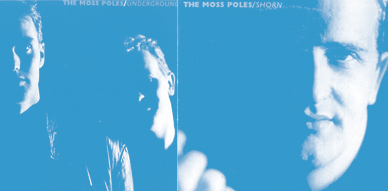
NICK: They were taken by a neighbour – David somebody (who lived with Elissa, who’s name we stole for our first daughter). The only serious photo session we had at that time.  There are hundreds of shots, but all pretty much the same – me and Sean looking moody with a white a background!

SEAN: I think the record company thought we were sorting out covers but come deadline we were asleep

++ Then came out the album “Shorn”. I always thought it was an original name for an album. On this record you got the help from Dave Kirk and Andrew Fryer. What did they bring on the table for the band?

NICK: Dave was our longest standing and best drummer.  He played in another band as well – the Groovy Chainsaws.

Andrew was the house producer / engineer for Warner.  He also played a few keyboards on some of the tracks.  Top guy!

SEAN: top studio /top guy /top session /Andrew had recorded Bolthrowers debut the week before so I brought it after /in battle there is no law/ gave it to someone who appreciates such aural violence

++ And how different was recording the album compared to the singles?

NICK: Shorn and the first two singles were pretty much recorded at. The same time and in the same studio.  10,000 Miles was recorded somewhere in Wales.  That was pure fun – a weekend away in the country with beer and amps!

SEAN: thought the album was Wales where damned recorded Black Album /bugger

++ I read that “10,000 Miles” should have been a 3rd single. What happened? Why wasn’t it released?

NICK: As per above – the record company went bust and the studio seized the mater tapes. Nightmare!!

SEAN: don’t remember

++ And what about the 2nd album? I believe it was fully recorded, right? What songs were in it? Where was it recorded? Why didn’t it come out?

NICK: The unreleased second album was recorded in the same studio in Wales as 10,000 Miles but with Paul Breuer on Bass. Corny, but true, the playing is tighter and Paul was a great bass player, but it was never the same as bashing out stuff with Sean.

++ As far as I know you only appeared on the compilation “The Idea Compendium”. Is that all or were there any other comp appearances by the band?

NICK: Not at the time, but Cherry Red released One Summer and 10,000 Miles on their C88 and C89 compilations over the last two years.

SEAN:.Nick just sent me copies /nicely done but one summer seems slow to me /could be my record player

++ Aside from the 3rd single and the 2nd album, both unreleased, are there any other songs that are still waiting to be released? Perhaps songs in demo form? Or other studio recordings?

NICK: There is the Soundcloud site where I’ve posted a few recently recorded songs – some of which are just rubbish but some of which I’m really happy with.

https://soundcloud.com/nicky-moss-pole

There are also a few Youtube videos.

SEAN: “Loop” should ve been second or third single /rehearsal with Mick on youtube /sad as shit

++ If you were to choose your favourite The Moss Poles’ song, which one would that be and why?

NICK: So hard – maybe “Don’t Worry” or “More and More”.  I think they are both naïve, but honest. Great melody, corny lyrics, but pure emotion.

SEAN: “Take it or leave it”, “Little prince”, shit songs didn’t really make the cut

++ What about gigs? Did you play many? What was the farthest you played from London?

NICK: We played a lot around London – most weekends I remember.  We had a national tour being driven around the country in a van as is the way.  Can’t remember all the locations, but I think we went to Lancaster, Nottingham, Retford (the worst), Andover, Hull, Peterborough, Manchester (tough crowd) and maybe a few more.

SEAN: Sir George Robey with extreme noise terror (Mickey Harris from Napalm Death on drums) and Cud was a great gig Micks true love Janet told me off for shouting shake your tits to this song (“Little Prince”) I was on a massive learning curve /and the bassist said we were alright after taking the piss all night cos we had a manager

++ And what were the best gigs you remember? Any anecdotes you can share?

NICK: Hammersmith Palais in front of 3,000 teenagers.  We got hired to play at some end of school party – or something like that.  The main memory I have is of Allison tipping an ashtray over some 15 year-olds’ head to stop him groping some poor girl.  There were huge amounts of hormones in the air that night – it was like Caligula.  Even the bouncers were struggling to keep the lid on things and it was supposedly a no alcohol event!!

SEAN: see previous /the Palais night my wife poured beer over someone they were scum probably our current government

++ And were there any bad ones?

NICK: Retford stays in the memory, not because we played bad – actually I think we were pretty good that night.  The problem was we were supporting 999 who still had a skinhead following.  After we played we couldn’t get out of the club – I think they had shut the lift down or something.  We had to spend an uncomfortable night dodging angry skinheads and a generally unpleasant bunch of people before we finally got out at something like 2 in the morning.

++ I read at some point Steve Lamacq followed you on a tour in his van. What year was it? Did he go with you to every single gig? How did that happen? What anecdotes do you remember from that time?

NICK: Yes – Steve Lamacq followed us around on tour in his Mini.  He interviewed us along the way and recorded the gigs.  He made up a tape and I think I have it somewhere.  It’s embarrassing stuff though!

SEAN: the live tape (besides the interview ) is great and accompanies the album swell/ Retford was shit /Manchester Boardwalk same

++ When and why did The Moss Poles stop making music? You moved to Australia, right? Were you involved in any other bands afterwards?

NICK: Sean and I had a big row one night after playing at the Rock Garden in Covent Garden. Stupid waste really. We tried to pick up again, but when it’s stopped being fun, it’s really too hard to keep going.

I moved to Edinburgh for 10 years and then to Australia.  I never really had an appetite to keep playing after the Moss Poles.

SEAN: don’t remember the row /but we met blossomed and died very quickly I think a natural thing /music is very personal but its gotta be fun

++ What about the rest of the band, had they been in other bands afterwards? I ready Sean was in a punk band?

NICK: Never really kept in touch so not sure about the various drummers. I haven’t played music for many years until maybe 2 years ago, but solo stuff using Pro Tools.  I know Sean has kept busy though.

SEAN: always played but never Moss Poles stuff  until recently some mates did “One Summer” it was horrendous. Flyboy and Painsville have stuff out there somewhere. With Nick I have three ex bandmates in Oz, I must be someone you’ve really gotta get away from

++ Has there ever been a reunion? Or talks of playing again together?

NICK: Never. We lost touch until maybe 2 months ago.  I managed to get in touch with Sean to share the royalties from the C88 and C89 CD’s.  I would love to, but it’s just not going to happen. What’s done is done.

SEAN: no we need a Moss Poles tribute band

++ Did you get much attention from the radio? or TV? Were there any promo videos?

NICK: We sure did.  Plenty of exposure on Radio 1, a live session on Greater London Radio and a few other things.

We recorded a video for “Underground”, but gave away the only copy we had to a French TV Channel.  It was pretty frickin cool though.  I’d love to see it again.

The only other video footage is on Youtube – we were filmed at an early gig in Dingwalls by some people from France.  At least it’s something.

SEAN: would love to see the “Undergound” promo

++ How did the Janice Long session come to be? How was that experience?

NICK: Janice Long is Jeff Chegwin’s sister so we had a bit of inside help to get that session.  But, to be fair Janice was a big fan and genuinely liked the band. Again, we don’t even have a copy of the session – we couldn’t afford to pay the BBC for a copy.

I was in awe at being in Maida Vale Studios – overwhelming!

SEAN: don’t think ive heard the session since

++ What about the press? Did they give you any attention?

NICK: We had a lot of press after a while.  Helen Meade from the NME gave us a page and a half and we had a lot of smaller articles in the Melody Maker, etc.  I do have all of those tucked away in the cupboard.  I think we were named on the cover next to Ziggy Marley and the Stone Roses!

There was also a story in the Daily Mirror about me being George Michael’s gardener – which was true.  However, they were after his new address as he had just bought a house in Hampstead.  They offered us a large piece if I told them where he lived.  I didn’t do it, but they still ran a small piece which is 50% accurate, but mostly exaggerated nonsense.

SEAN: remember a page in one of the weeklies

++ What about from fanzines?

NICK: None that I can remember.

SEAN: I read Steve :amacq did a fanzine with the tape of the tour but I never saw it

++ Looking back in retrospective, what would you say was the biggest highlight for the band?

NICK: Without doubt for me, the first album and being so proud to have been able to record songs that I / we loved and to then get that buzz when we made the charts and started to get noticed. Being in a band was all I had ever wanted to do when I was growing up.

++ Aside from music, what other hobbies do you have?

NICK: NOTHING!

++ I’ve been to London many times, but it is always good to hear from a local for some recommendations! What are the sights one shouldn’t miss? Or the traditional food or drinks that you love that I should try?

NICK: I’ve not lived in the UK for 18 years so not sure I’m afraid

SEAN: my daughter lives in London now and it is so different from the 80s /which is as it should be /always find it out for yourself

++ Anything else you’d like to add?

NICK: It was what it was – I would change a few things if I could, but I can’t.  I’m truly grateful for at least having done what we did.

SEAN: we were good I think and its not a bad album still

::::::::::::::::::::::::::::::::::::::::::::::::::::::::::::::::::::::::::::::::::::::::::::::

Listen
The Moss Poles – One Summer

14
Feb

Thanks so much to Tatsuhiko Watanabe for the interview! The Penelopes have many albums and singles under their belt,  and many compilation appearances. They are definitely one of the most important Japanese indiepop bands but I noticed very little is being written about them in English for some reason. So I wanted to set things right and got in touch with Tatsuhiko who has been kind enough to answer all my questions! Hope you enjoy this great interview!

++ Hi Tatsuhiko! Thanks so much for being up for this interview! We’ve been friends on Facebook for a long time, but first time I’m going to ask you some questions about your music, so I’m pretty excited. How are you? Are you still making music?

Thank you very much for remembering me! I’m fine.
We are planning to release the new album next year, which have been finished 3/4. But actually, as caring for my parents in their mid 80s is now at more difficult stage than before, I have almost no time to concentrate on finishing some tracks these days. But I don’t give up its release. And when I have a little free time, I record bits and pieces of melodies and take notes for lyrical ideas or song titles.

++ Let’s start from the beginning. Are you originally from Tokyo? What are your first music memories? Do you remember what was your first instrument? How did you learn to play it? What sort of music did you listen at home while growing up?

Well, I’m not from Tokyo. I’m from Takarazuka, Hyogo and still live there. It is located in the west part of Japan, 45 minutes by train from Osaka. A very quiet and comfortable place to live in, which I’m sure has had a huge influence on my making music. The town is also famous for Takarazuka Revue,  whose long history has  I think made this town very beautiful and sophisticated, which also gives me some inspirations.

I was born in 1965, so my first musical memories are from a lot of Japanese tokusatsu/anime TV shows in the 60s, such as Ultraman, Ultraseven, Mighty Jack, Kaiki Daisakusen (Operation Mystery), W3 (Wonder Three), and Sasuke etc… I believe they have become my flesh and blood.

I started playing the guitar ( by sneaking into my brother’s room ) when I became aware of rock music, but my first instrument was not the guitar but the “electone”, which I met in Yamaha kids electronic organ class when I was six, which didn’t last long though.

As for the guitar, I started touching as mentioned above when I was sixteen or something. My brother also had a huge cassette tape collection in the late 70s to early 80s. Naturally I had so many accesses to 60s – 80s that I got exposed to “rock music”: from Motown classics, the famous big names like The Beatles,  The Kinks, The Who, Led Zeppelin, Thin Lizzy, , Steely Dan, Bruce Springsteen, Bill Joel to the New Wave greats at that time such as Elvis Costello, XTC, Squeeze, The Jam, The Clash, The Boomtown Rats, Joe Jackson, Graham Parker, Ian Dury, Nick Lowe, The Police,  The Knack, Cheap Trick, Cars, PIL, Pop Group, The Pretenders, U2, Echo and the Bunnymen, Madness, Culture Club …and many more. And then I got fascinated with more sophisticated New Wave pop of the era – Synth Pop (OMD, China Crisis, Depeche Mode etc) and Guitar Pop so-called Neo Aco (Aztec Camera, The Pale Fountains, The Bluebells etc). That is the way I was growing up and they made the core of The Penelopes.

++ Were you involved in other bands before the The Penelopes? 

Except for joining one studio session for my brother’s band The Sound Mirrors, I had never been involved in anybody’s bands before The Penelopes.

++ How was Tokyo back when you started the band? Were there any like-minded bands that you were friends with? What were the good record stores? Or what about the places or venues to go check out up and coming bands?

As I mentioned above,  I was not in Tokyo when indie pop was starting to catch on in the late 80’s, so I didn’t know how ‘the scene’ was, even didn’t know it existed!  In the early 90’s, I came to know there was a “neo aco scene” in the big city with the rise of Flipper’s Guitar. But for my part I only went to buy many UK New Wave/indie pop records in Osaka or Kobe, and sometimes happened to find Japanese guitar pop’s tapes too, so I couldn’t find any ‘scene’ and didn’t come to become friends. It was not until contacting Boshi Label in Nara that I found many indie pop artists in Kansai area too by listening to their compilation tape. It was 1990.

++When and how did the band start?

As you know, The Penelopes is originally a solo unit that I started. I had started to engage in music seriously since around 1986, making some demos by 1989 when I used pseudonyms such as The Love Parade (after The Undertones song) and Sunnyside (for my love of the Sara Label’s image). With these imaginary band images, I started to send the demos to both Japanese and overseas labels. Of course I had no reaction at all, except for Boshi Label in Nara, writing me back, which really encouraged me. So I became more serious, and I thought I should make more decent demos. And then more and more helping people were coming together. This is the way The Penelopes hoisted a sail.

++ The band has always been mostly you, right? But was there a classic lineup for the band? How many people have played in the Penelopes and how did you knew them?

It was basically my solo unit, but in the very early recording and playing live, I was pursuing “the sound of The Penelopes” with the help of other members. I had a session with my younger brother Satoshi (a huge fan of The Smiths and REM)on guitar and another guitarist named Yoshiji Awatani (also a fan of The Smiths), who I came to know through the ad he put out on a music magazine called Rockin’ On  in early 1990, and after that I started to use the name The Penelopes. I made some demo tapes with Satoshi between 1990 and 1991, which brought us the offer from Por Supuesto Records. So I recruited two more members – Tadashi Naoyama (guitar) and Satoshi Nishide (keyboard) for gigs and recordings. They contacted me through a tiny ad on a magazine called Player. So the lineup for “Evergreen” recording in late 1991was me, Satoshi, Tadashi N, and Satoshi N.

And after Satoshi and Tadahi leaving, Yoshiji, Satoshi N and I went into Studio 8 in Ashiya, recording the debut album “In A Big Golden Cage” in 1992. Shortly after the release in 1993, Chigusa Miyata (bass) joined us and recorded the 2nd “Touch the Ground” in Studio YOU during that summer, Osaka. She has supported The Penelopes sound since then.

So, many people have come and gone for more than 25 years, but as those who played both 1st and 2nd helped to build the “fundamentals” of The Penelopes, they are definitely the classic lineup I think. In addition, Kazuki Nashimoto , the drummer for “Eternal Spring”, was also a great player who grasped my music well. Though I couldn’t record his drumming well on the album, he should be also one of the lineup.

++ There were a few lineup changes too, right? 

Almost all the players on the songs since the 3rd album “Kiss Of Life” were guests except for Chigusa and Kazuki (on “Eternal Spring”), so there have been almost no lineup changes since “Kiss Of life”. That’s because I have come to understand what The Penelopes sound is.

++ Why the name the The Penelopes? 

“The Penelopes” were named after the 60’s TV show The Thunderbirds, where appears a female London agent named Lady Penelope. I felt a great yearning for the 60’s atmosphere that the show symbolized. I would often be asked if it came from Felt’s “Penelope Tree”, but it didn’t.

++ How was the creative process for you? Where did you usually practice?

The process is numerous. Sometimes melodies come to my mind first. Sometimes I think of a nice song title first. Sometimes they come altogether. And sometimes nothing comes but chord progression etc … the ways for rough ideas to become a song are countless. For my part I usually make a song demo with a basic format (guitars/ bass/organ/drums) by myself, and then other members hear the demo and add their own seasonings.

As for the “Cage”(1st) and “Touch”(2nd) era, we usually practiced in the studios we recorded the albums. Between “Kiss”(3rd) and “Light”(5th), we didn’t practiced in studios at all. In the “Eternal”(6th) and”Summerdew”(7th) era, We would often practiced in the studio in Nishinomiya (next to my hometown Takarazuka).

++ Most of your output happened in the 90s and I feel it was a pretty good time for Japanese indiepop, with many labels and even more bands. Did you feel part of a scene during that decade? If you were to make a top-five of the best bands in Japan during the 90s, who would that be?

The 90’s flew too fast for me, and were also hard years. Of course there were enjoyable moments as well… But as I started my own label and had to find distributors, to promote my new album by myself, which meant I had to see the business side more seriously. Shibuyakei was colourful but in a sense pretty biased and difficult time to sell the music I wanted to play actually.

So I still can’t regard and recollect the 90’s as ‘good old days’ nostalgically. I still can’t afford to feel like “oh, I was part of Japanese indie pop scene!”. I just remember I tried best to make good music heart and soul, and failed in vain.

And many bands seemed like rivals to me, not like friends in those days. I wanted the labels to promote my music more and wanted to sell mine myself.
But looking back now, I know we all felt the same, and I really regret that I couldn’t afford at all then.

So this is the ‘if you are out there, please listen. I loved your music…’ list. They are all Japanese indie bands in the 90’s that played near us, some of who still remain active.

1. The Roof
2. B-flower
3. Christopher Robin
4. Chelsea Terrace
5. Blueberry, Very Blue

++ And who would you say were influences in the sound of the band?

To cut a long list short, these are the tree main masts of The Penelopes:  (1) XTC, Elvis Costello, Squeeze, The Jam etc., so called early new wave , power pop and neo mod in the late 70’s (2) The Pale Fountains, Aztec Camera etc., jangly guitar pop in the 80’s (3) The Beatles, The Kinks, The Who etc., 60’s greats.

++ Your first release actually happened on one of these very fine labels, ¡Por Supuesto! Records. It was the “In a Big Golden Cage” album. How did you end up signing with this label? How was your relationship with them?

I think Boshi Label ( I mentioned above) had a compilation plan, and then it drew attention to a bigger label, ¡Por Supuesto!. Actually it
was established under a Japanese major label, Toshiba EMI. After the success of Flipper’s Guitar, many major labels were trying to find young new sounds. One day the label producer called me and told The Penelopes to take part in the label’s sampler, which became “The Birth Of the True” in 1992. When we were recording “Evergreen” in the studio in Osaka, I asked him if we would have a possibility to release an album. And he allowed us a small budget for it. Maybe that was the finest moment in the ¡Por Supuesto! years.

The relationship between them and us was literally minimum. While I was in Kansai, the label was in Tokyo,very far off place. As the early 90’s were the era of no Internet, the mutual communication tended to be deficient.

Though a famous music critic who was familiar with this kind of music got engaged in the recording as a producer, he was also not in Kansai and so busy he couldn’t come all the way so often to see us recording. I remember I alone, or in some cases two or three of the band attended the recording doing trial and error in the studio in Ashiya. While we had such a good time there, I was always feeling disappointed with the lack of the heat from the label. I didn’t know how to get along with the label , and had an impression that they were puzzled how to sell our music. When I visited their office in Tokyo, they had almost no promotional staff about The Penelopes, which really made me want to cry. So, I wrote to them that we would provide various kit for promotional use, would attend the meeting if possible, but had no reply. After all, I think “guitar pop” wasn’t mature enough to become a big movement at the stage of 1993.

Therefore, every time I call up the relationship then, I’m really caught in the mixed feelings. It is true that I was so lucky in terms
of the way we got known, but I always had dissatisfaction that we didn’t get enough promotional support from the label.

++ Was this your very first record? Or had there been other recordings previously?

Apart from the vinyl recorded at our junior high school’s choral competition in 1980, “Evergreen” was my first recording, which was contained on the 1992 compilation “Th Birth Of the True”.

++ Two of the songs that appear on this first album were to be released as a 7″ single by the Spanish label Elefant Records. How did your music, before the internet, crossed the continents and ended up in Luis Elefant’s ears? Was there any chance to continue releasing music with them?

Circa 1991, there was a grass-root indie pop community in Western Europe
consisting of the people who love the underground guitar pop bands sounding like those from C86 to Sarah records at that time. Through several cassette tapes I made, The Penelopes seemed to be heard by some of those people. Communicating with Red Roses For Me (UK) and some French labels developed into their compilation tapes, which I suppose reached to Elefant’s ears. To tell the truth we had an idea of making one more single from the 2nd album “Touch the Ground”. For my part, I wanted a song called “Good music” to be a new single, so I wrote to Elefant  to do so, with a design draft for the sleeve I drew. But it went up in smoke unnoticeably.

++ And just out of curiosity, did you ever meet with the Elefant people? Ever go to Spain?

No, I ‘ve never been to Spain unfortunately. I’m sure it’s Chigusa the bassist that has been there, because She also plays for a mod garage band and they were invited to a music festival there some years ago.

++ Both of the songs on the 7″ are beautiful. It was actually how I discovered your music, through them. So was curious if in a few lines you could tell me what inspired them?

I think “It’s Not You” aimed at the world  the 80’s guitar pop bands such as The Pale Fountains and The Railway Children have expressed, while “Please Listen To Me” was strongly influenced by Shoes ( power pop fame in America) and early Elvis Costello. “A Place Called Home” (early version) was, with deep reverbs,  mixed more atmospheric than later one, because I would often listen to The Smiths and McCarthy in those days.

++ Your second album came out in 1993 and it was called “Touch the Ground”. Something that caught my attention was the art on the back cover, where a diagram explains how to “touch the ground”. What was the idea behind that?

Our 2nd album “Touch the Ground” came out in 1994 ( “In A Big Golden Cage” In 1993). The whole sleeve idea was come up with and created by Mitsunori Saski, who was the singer for the band The Roof (above mentioned), and he passed away many years ago, so I don’t know what he tried to imply. At that time, I was just happy and excited to see someone make mysterious sleeve designs based on my music. More than that, I was worried about the front sleeve, because I thought it resembled “Frank” by Squeeze.

++ Then Discogs lists a 1994 tape album called “Power of Music”. Was this a proper release? I’m not familiar with that one at all. Care telling me a bit about it?

Maybe someone who made our discography on Discogs was wrong… “Power Of Music” was a cassette album released in 1995, and also “Magic Circles” in 1996. The only release in 1994 was a two track cassette “Chocolate Train (Part 1)”. They were all sold (except for “Chocolate Train”) through nationwide record shops then such as Tower Records and Wave, so “Power” was a proper release. I remember we took part in my friend’s cassette compilation as well , but this “cassette fad” in the late 90s is unknown, because the major labels imitated our ways at a lower price (sometimes for free), and it went outdated immediately. And then around the year 2000 the shops above mentioned started to stop selling the music from the labels with true indie /DIY attitudes. We were driven out.

The aim of these tape releases were all my self complacency. As I wasn’t sure when we would have our next CD out, I couldn’t wait. The sound quality of them was so low, but that was OK for me. I was really really starving to put out my works in those days.

++ The next, and following releases by The Penelopes were all on Vaudeville Park Records. Who were Vaudeville Park Records? Was it yourself?

Vaudeville Park Records is a micro indie label run by me alone. It started in 1996, when I had finished the 3rd album “Kiss Of Life” but the release was delayed. I got mad. So, I opened an extempore tiny shop to sell the next album, but It’s become my final abode. The name derives from the album by The Jet Set, an outfit led by Paul Bevoir, a great British songwriter I do respect.

++ I notice on one of the songs, “Today”, there is a another Watanabe doing backing vocals. Who is he? 

The lead singer on “Today” is not “Satoshi”, my brother (early member of The Penelopes). But who is doing backing vocals… isn’t it me??

++ I start to notice that the band was more of an album band rather than an EP or singles band. Do you agree? Was it intentional? Why do you prefer this format? 

I guess maybe you think so because The Penelopes has come out only few singles, compared with many albums released. The reason why our singles are only few and we have many albums is that simply I have written many songs and financially the format we can release many songs on at one time is album. Not for my preference but for convenience. Personally I love 7 inch singles, so if we have a chance to come out 7 inch, I’m really interested…

++ The “Inner Light” was your next album, released by the end of 1999. This was a very long album too, 19 songs! It was perhaps your most prolific moment?

The reason why I made a 19 song album was that I was obsessed with the idea that every band that started releasing albums is supposed to make a big album at some stage – at the fourth release or something – like double album or concept album. At least the artists I respected did so… The Beatles, The Who, The Kinks, XTC, The Clash…Elvis Costello who even put 20 songs on one LP! I think I followed the general principle.

So, I don’t think that period was my most prolific moment. I have more ideas about song writing than that period, but I take such long time to finish songs and I’m too busy these days.

++ And what about Lemonade Factory studios? That’s where you used to record a lot, right? Where was it? Does it still exist? Any anecdotes you could share from your recordings there?

Lemonade Factory is a room I used for recording, not really a ‘studio’. This is just a joke. The name came from a lemonade maker called “Wilkinson Tansan”, which our family had been involved in since my great grand father. The factory was sited by Muko River, which runs near my house, but the brand name was sold and the company was closed down in the early 90s, so when I started The Penelopes, the factory had been gone already. I wanted to remain the memory forever.

++ After 3 years of silence, you returned with another top album “Eternal Spring”. Here you got él Graphics to do the artwork. And that is super cool! Were you a big fan of the él Records designs? What about the music? What would be your favourite él Records?

I feel so flattered to hear you listen to “Eternal Spring” because I seldom see it praised (especially in Japan).”Eternal” and “Summerdew Avenue” were really unfortunate works that were completely ignored by
the world. Despite those wonderful artworks (and some songs I thought to be my best works), they met with adversity and went to the bottom, which I felt really disappointed with. Great sadness still prevents me from listening soberly.

When great Mike Alway contacted me, I thought I was dreaming. This is someone different with the same name, or someone impersonating him! As for él Records, though I was not such a huge fan as to collect the whole catalogue of the label, I always paid attention to the stylish artworks and music full of technicoloured images of swinging 60’s London, and first of all, he was the “father of Shibuya-kei”. I really liked many of
their works, of which my personal favourites were the “London Pavilion Volume One” compilation and several well crafted pop singles such as “You Mary You”, “Guess I’m Dumb” by Louis Philippe and “Reach For Your Gun” by Bid.

Along with “25 O’clock” by The Dukes of Stratosphear, their enthusiasm over the 60’s culture shown in the 80’s provided a spark for me to break free from New Wave things in a sense. It was a blast for a youth of 20
or so.

++ Your last album was the 2006 “Summerdew Avenue”, which I hope is not the last one. This might be a difficult question, but comparing this album to the first one you released, do you see an evolution of the band? Do you think your music changed much during these years? 

Of course “Summerdew” is not the last album. Actually we have continued the constant releases such as mini albums “Sweet Amazer” and “Spellbound” for the last decade. I promise you I will keep on writing songs and putting out works , as long as I live. In terms of songwriting, my music has made progress and got sophisticated to some extent I suppose… because I have written for 30 years! As I was forced to do home recording financially, the sound quality had a sharp drop in “Kiss Of Life” and then hasn’t changed so much since then, but I tried to improve the song quality with the ideas to overcome it, We couldn’t chase something like perfect band ensemble, but I knew those who run after two hares will catch neither… so I focused on songwriting anyway.

But well, that is something listeners judge though…

++ But then, I’m not sure about it, but I found on Youtube that there was a mini-album called “Spellbound” released in 2015? I couldn’t find much information about it, is it available somewhere? Or is it only digital? What songs are in it?

Yes that is the latest release by us The Penelopes. The 8 song mini album was released online only on Nov. 20th 2015. Unlike the previous releases, of the eight songs penned by me, the four tracks feature three
female lead vocalists this time. Of course it is still available at iTunes Music Store, AmazonMP3, Mora and Recochoku. The songs are as follows:-

01 The Penelopes – Here Comes the Light
02 Nana Ishii and The Penelopes – Shangri-La Green
03 Splendidville – Eye Of A Needle
04 Marilyn Lo and The Penelopes – Fundamental Thing
05 The Penelopes – All That Glitters
06 The Penelopes – Hello New World
07 Splendidville – Back In Time
08 The Penelopes – Carry On

I arranged different types of singers and songs crafted according to each style and taste – 60’s Motown / girl groups (Nana Ishii), 70’s mainstream pop (Marilyn Lo) and 80’s New Wave/Powerpop (Splendidville,
a collaboration with Marsh Branch). The other four songs are sung by me. This is truly a collection of the songs full of The Penelopes’ essence I think.

++ Aside from all the albums you appeared on many compilations, on so many labels. But one that I thought was odd and interesting one was the one “The First Triangle” was included. It was for an Auto Guide? 

Auto Guide was an indie label in Tokyo established in the early 90’s and I’m not sure what happened after that, but anyway that compilation was their first work I think. I remember three bands bringing two songs and The Penelopes offering “Except Her Eyes” and “Tiny Tree House”. It was the era when something exciting was about to happen.

++ Also you contributed to two very fine Japanese magazines like Beikoku Ongaku or Cookie Scene. How important do you think these two magazines are for the Japanese scene? Are there any other Japanese magazines you would have loved to collaborate with?

They were two greats that tried their best in the lead at the grassroots level, because no other musical magazines had comparable quality to them. Not in the sense they achieved a great success or made their own tall building, but they played a sort of thankless role – like amateurs doing supercool. But I believe they built the foundation in certain fields of Japanese music culture.

++ And just wrapping up all these “songs and records” question, if you were to choose your favourite song from the whole Penelopes’ catalog, what would that be and why?

In general, songwriters are likely to be satisfied with and care for their latest tunes, because the songs reflect what they do want to express these days. For my part, I really like “All That Glitters” and “Carry On” from the latest “Spellbound” album in 2015. Though “Sweet Amazer” (from the 2013 mini album with the same title) and “Honeymoon Is Over” (from the single in 2012) are also my favourite but the way they were mixed is unsatisfactory to me, so I will put them together on next album. Before that, “Love Is” (from “Eternal Spring” in 2003) and “1983” (from “Summerdew Avenue” in 2006) are the songs that I have a special fondness for. As for the first five albums, I have so much to reflect on… In time they may sound nostalgic, they may be fond memories though.

++ Was there any interest in your music by any other labels that for a reason or another it didn’t work out? Perhaps big labels?

I have several tiny episodes: – someone from a major label came to see us play once, a well known music writer who also was a radio DJ picked up our song, or someone famous in the music business praised one song from “Eternal Spring”etc…but it didn’t necessarily lead to a wider acceptance, maybe because of my appearance, performance, or my poor responses to their praises.

++ What about gigs? Did you play many? What was the farthest you played from your town?

Not many at all. The farthest place we have played is Tokyo. Played twice. The rest are all in Kyoto and Osaka. As a guitarist of Rhythm Fantasy (a female duo whose two mini albums I recorded and produced), I have played in Shiga too.

++ And what were the best gigs you remember? Any anecdotes you can share?

The best gigs I remember are the events hosted by those who loved the same kind of music. One was “Neo Aco / Guitar Pop Night” (though I don’t think it was the correct title), where we played The Pale Fountains’ song. And the other was a record shop’s 15th anniversary all night party. We played around twelve at midnight, but no one threw things at us because they were drunk, but really welcoming, warm atmosphere was there. Nothing makes you feel greater than playing in front of smiling faces.

++ And were there any bad gigs at all? 

I couldn’t enjoy some gigs in our early days where four or five bands that I don’t care for or have nothing to do with musically gathered and the audience had no interest in our music. I think I tend to take interest in various music, but it was quite painful to play with typical J-rock cadets with conventional attitude, or songs with no enchantment where players are eager to show off how skilled they are… Why are you going to all the trouble of falling into a trap? The more I wondered why, the less I could concentrate in my performing.

++ So what is in store for The Penelopes, are there going to be any new recordings or releases soon?  

I’m planning to put out a 12 song album consisting of half new materials and half remixed versions of old songs (released during 2012-2015). And then all new song album will come out. I’m also thinking of an album by renewing my earliest songs before the 1st album (written and recorded as demos between 1987 and 1992). These three are my main plans.

++ What about the rest of the people who have collaborated with The Penelopes, had they been in other bands?

Each female singer who collaborated with The Penelopes on “Spellbound” had been working solo, or with her own unit. Marilyn Lo was from a female duo Rhythm Fantasy, which is going to reactivate live and recording after a long time. Marsh Branch, who worked with me under the name of Splendidville, is in itself a solo unit by a singer/songwriter in vigorous activity in Tokyo. Nana Ishii is also a solo singer, who sometimes sings in her local area, As for the past collaboration, Kaoru Masui who took part in “Inner Light” was a lead singer from Bluevery, Very Blue since 1990’s , which has revived in recent years, and Mark Richardson who participated on “Summerdew Avenue” still is working as a singer of Age Of Jets.

++ Did you get much attention from the radio or press?

As a whole, we got quite modest attention actually. The first two albums’ distribution was almost equal to the major label’s, which gave us a lot of opportunities to be published on many musical magazines, and even to be invited to a radio show. But since the late 90s, we had got downgraded extremely. Especially since we started releasing through our own label in 1997, my biggest issue has shifted to let people know our new release. The two decades of struggling! Those decades were also the time when the way Japanese media treat indie labels has drastically changed. I think that is one of the main reasons why The Penelopes are almost unknown to the thirties and under.

++ What about from fanzines?

As far as the 90s is concerned, various fanzines wrote about The Penelopes. And since around the year 2000, Intenet has become predominant , and many of the netzines have reviewed our albums. But as you know there were quite few who kept on treating indie pop music out of pure love and lasted so long.

++ Aside from music, what other hobbies do you have?

Well, I quite like music actually… but apart from that, I really like watching, researching and in some cases collecting the items related to the following things… Japanese professional baseball (NPB)staff – Hanshin Tigers in particular, wild birds, sea shells. space, picture books, Paul Klee’s artworks etc.

++ And what do you think of the Japanese team in this year’s World Cup? Do you follow any team in your country?

As for football. I had been digging the Japanese team seriously by 2002 World Cup, but now….I have no interest at all. I’m sorry. The World is too small to dream of … I know the players really made greater progress than two decades before, but they don’t have any taste…

++ Looking back in retrospective, what would you say was the biggest highlight for the band?

In fact I believe that the highlight as a musician has not come yet, that I’m still on the upgrade. But, reconsidering when we belonged to some sort of “scene”, the days of recording and playing live during 1993 and 1994 always cross my mind… I cannot be satisfied with the results at all, but probably those were the youngest and brightest moments in the whole Penelopes activities, I can clearly say it now. Such moments will never happen again.

++ Never been to Tokyo, or Japan.  So maybe I can ask for some suggestions? Like what are the sights I shouldn’t miss? Or the traditional food or drinks that you love that I should try?

Well I do not visit Tokyo so often I can’t recommend with confidence, but you should pop in the old buildings such as temples and shrines, and the spots where you can enjoy traditional cultures like food, clothes and music. Especially music lovers should go to Shinjyuku. Tokyo is an extremely changing city, while there are lots of places in some small towns and the suburbs that stay the same. I really recommend you to try such places. Please enjoy yourself!

::::::::::::::::::::::::::::::::::::::::::::::::::::::::::::::::::::::::::::::::::::::::::::::

Listen
The Penelopes – A Place Called Home

31
Jan

Thanks so much to Skippy for the interview! I wrote about his band The Autumn Teen Sound on the blog some weeks ago and was happy to get in touch with him. The band released just a 7″ and appeared on a few compilations but it is also worth noting that Skippy used to run the very good pop label March Records! So we talk a bit about that (hoping to interview him later on about the label) but mostly about his band!

++ Hi Skippy! Thanks so much for being up for this interview! How are you? Are you all still in touch? Still making or releasing music?

Who is all? I keep in touch with so many people from the 90s March Records scene, but I’m not really releasing music. The whole AUTUMN TEEN SOUND thing was just me goofing around with my home studio.

++ Let’s go back in time. What are your first music memories? Do you remember what was your first instrument? How did you learn to play it? What sort of music did you listen at home while growing up?

I remember my father putting huge 70s headphones on my head to listen to Roundabout by Yes. I learned piano early, we had one in the house and I often got bored and just taught myself. I listen to mainly 45s I’d pick up from the Bradlees. Anything Top 40. Gilbert O’Sullivan, Sweet, Seals & Crofts…

++ Was The Autumn Teen Sound your first band or had you been in other bands before that? What about the rest of the members? If so, how did all of these bands sound like? Are there any recordings?

I was in bands in high school, mostly cover bands, but I got into the music business when I was 18 and forgot about creating music until 10 years later when I started messing around with all the instruments I’d accumulated. Oh, when I played The Autumn Teen Sound live, maybe 2 or 3 times, I recruited a band I had put on Pop American Style called Igloo. They moved in next door to me in Chicago and helped me pull off shows at Lounge Ax and Empty Bottle. They were great, me not so much.

++ Where were you from originally?

The Jersey Shore but I lived in Chicago in summers and after high school.

++ How was your city at the time? Were there any bands that you liked? What were the good record stores? Or what about the pubs or venues to go check out up and coming bands?

In high school I got addicted to WHTG, a local radio station that maybe reached a 40 mile radius. I loved local bands like Spiral Jetty and Private Sector and The Feelies and Screaming For Emily. All totally different, but local nonetheless. I would go to City Gardens in Trenton or the Green Parrot in Neptune almost every weekend. I was often the sole winner of the free tickets that WHTG would give away and those were for shows up at the Ritz in NYC, etc. I would say I spent the majority of my last year or two of high school in NYC, Hoboken, New Brunswick, there wasn’t anything going on in my hometown.

++ When and how did the band start? Was it a one man band? What about when playing live?

I just started writing and recording songs in my basement in Chicago in the 90s as a goof. I was releasing records on my label and at night, I would either go see bands or stay home and record. I only used what I already had. No guitars, maybe a real bass sometimes. Mostly Casios, Farfisas, Moogs, weird off brand string machines. It was just fun to discover what everything could do and to see if I could actually document what I was doing.

++ What’s the story behind the name The Autumn Teen Sound?

I saw it printed somewhere, some old magazine, maybe it was part of a 60s psych scene or something. I just liked the way it sounded, I didn’t think about it too much.

++ What about the name you used for the band members, Lord Butterscotch, Queen Josephine, Leo Con Brio and DJ French Toast? Where do these names come from?

THAT part was very intentional. Since I knew this was a one man band situation, I referenced the Silicon Teens’ Music For Parties LP. I wanted to hide behind a fake band so I just conjured some characters out of thin air. The funny part is that I still use DJ French Toast sometimes when I spin records at clubs.

++ How was the creative process for you? Where did you usually practice?

I felt like I was really growing as a songwriter, the more I put myself into it. But, like I said, I had a 70 hour a week job, sometimes March, sometimes other labels concurrently. It was hard to find the time, it came in spurts. Practice? Hahahahaha.

++ You were around in the late 90s in the US and there was an ebullient scene of pop bands and labels. Why do you think that happened at that time? Did you feel part of a scene?

I think was happening way before I started my label in 1992 and I think there were labels that were much better at cultivating a scene. I adopted Cuddlecore after I heard Cub reference it, but to be honest, it was selling some of the bands on March short. Pee wasn’t cuddlecore, whatever that was. It was ambiguous, but it’s like twee, people tend to have opinions before they’ve heard the music. Even though it was a struggle, I look back on those days with fondness. I didn’t know I was part of any scene until much later when the label was sunsetting. It was a glorious time and I cherish the friendships I made even though no one made a great career out of it.

++ And who would you say were influences in the sound of the band?

Mostly I used whatever I had, so Casio maybe, ha! In the beginning, I was actually covering Holiday, a band that I released on March. There was a 2CD set that the members of an indiepop list had all contributed to, regardless of musical talent. It gave me license to maybe put a song into the world without harsh judgment, the indiepop listers were fairly passionate and accepting people. Other than that, when I was creating music, I often was subliminally referencing A Broken Frame-era Depeche Mode, Silicon Teens, OMD, etc.

++ Aside from the band you were also involved running March Records, which would be a fantastic interview too if you are interested. Was wondering if you were to say how much time did you give the label and the band, what percents would that be?

99.5% March, .5% ATS. I ran that label for the better part of 12 years and tried my best to pull off some miracles, but in the end, it wasn’t meant to be. We never had that big Arcade Fire type break out that would sustain any employees or anything.

++ And how come you didn’t release yourself on your label?

I don’t like myself 🙂

++ Your only release came out on the Paris Caramel label. I have most of their releases but I must say I don’t know much about this label. Who were behind this label? How did you end up working with them? And how was your relationship?

This was Mario from Ciao Bella (a band I put out) and a friend named Mark, all pals from Oakland. They released an amazing Bart Davenport album. I remixed a Ciao Bella song for the album they released with me and after that I likely sent them some demos which they released as a 45. Bonkers really, who puts their money where their mouth is? You asked if I didn’t release myself on the label, but I sang on the Holiday record, remixed Ciao Bella, remixed Barcelona and I played live in Takako Minekawa’s band and Club 8, so there’s that!

++ This 7″ included a Poison cover on the B side. That must have surprised many popkids I suppose. Any particular reason you chose to include “Talk Dirty To Me”? Did you use to do other covers? Well, you did OMD in a Shelflife tribute compilation, right?

In hindsight, I would’ve picked something way more metal, but I thought it was appropriate. It’s bubblegum and silly, which I thought ATS was. I think I had a version of 18 & Life by Skid Row worked up, but this one ended up being so easy. Yeah, I think there’s an OMD cover out there. I didn’t release a version of “Shoe In” by Secret Stars and “Sight Of You” by Pale Saints, I guess I just loved those songs SO much that I didn’t have the nerve, even if the recordings came out kinda sweet. Oh, there was “Permission Slip” by Holiday which ended up being the first thing I ever let people hear I think.

++ There are also a few compilation appearances, “Seven Summers international Pop Volume 2”, “Pop American Style” (Japanese version), “Christmas in Stereo”, “Millefeille” and more. Did being in a label help people contact you? Or were they well aware of your band and requested songs?

I never really told people about ATS, they just already knew and some of the labels would just ask for a song, sight unseen(heard). I guess that was the way back then. We didn’t over A&R anything, we just accepted demos from our friends and released them. Some of those songs, I cringe, but….it was fun. Paris Caramel ended up doing a 4 song seasonal CD sampler and I wrote a ‘winter’ song, which I think I’m the most proud of. Sprites ended up covering it on one of their records which I thought was so fucking super cool.

++ What about the compilation “Dreams are Free (With Purchase)”? I have no clue whatsoever about the label Dark Beloved Cloud, who were they?

Douglas Wolk, the illustrious music writer. He put out a bunch of cool stuff in the 90s.

++ There is a compilation I’ve always been curious about, one you put together within the indiepop-list, “The Family Twee” compilation. Your band appears here too. I hope to listen to it in its entirety one day. How many copies did you make? And how long did it take to put together? What are your favourite songs on it?

From what I remember, everyone was asked if they wanted to contribute a song and if so, throw like $40 at the pot so we can press up the minimum (1000 CDs)? CDs were super expensive back then and I remember it being a bit of a fiasco because I was chasing down half the bands to actually pay. If PayPal had existed, man, that would’ve been great. I think it took over a year, members of that list were located EVERYWHERE around the world. Indonesia, Sweden! I think we finally pulled it off, but I don’t remember it being a fun project. What looks good on paper…. that said, I met my girlfriend through doing that thing, so that was nice side effect.

++ Do tell me a bit about The Tiger Trap studio. You mostly recorded there. How were these recording sessions?

I think that’s what I called my room in Hastings On Hudson. I used an old DMT8 for ALL the ATS recordings. I had no idea what I was doing to be honest and didn’t have a lot of outboard effects or anything.

++ It is hard for me to pick a favourite song but I really like “Say Something”, was wondering if you could tell me the story behind this song?

I think it was about an ex who didn’t really know how to tell me things until it was too late. I think it’s probably a common thing in relationships, one person or the other isn’t communicating for whatever reason or another. You have to change and/or say something otherwise it all stays the same, doesn’t it?

++ If you were to choose your favourite Autumn Teen Sound song, which one would that be and why?

Winter Coat. I just felt like it was the most mature version of ATS and likely the last song I recorded.

++ What about gigs? Did you play many? You played a Popfest, right?

Maybe 2 or 3 in Chicago and yeah just that one in Athens. I had the Howard Jones thing going. Everything was tracked except a Moog and a Casio and vocals. Oh man. Olivia Tremor Control and Neutral Milk Hotel were on those shows I think. What was I thinking??!

++ When and why did The Autumn Teen Sound stop making music? Were you involved in any other bands afterwards?

I just didn’t have the time. After the label folded around 2002-2003, I didn’t know what to do. I opened a bar/music venue in Park Slope, Brooklyn which ended up being my calling really. The only band I’ve played in over the last 15 years was a cover band for my daughter’s parent-teacher talent show recently. I played bass on Surrender by Cheap Trick.

++ What about the rest of the band, had they been in other bands afterwards?

I’d love to know what Igloo are up to. Scott & Jenny. They were super nice.

++ Has there ever been a reunion? Or talks of playing again together?

I can truly say that won’t happen. There’s a better chance of getting me to sing karaoke.

++ Did you get much attention from the radio?

Wow, I really wouldn’t know, I don’t remember any radio play, but I imagine college radio?!

++ What about the press? Did they give you any attention?

I think there was a review or two on the Paris Caramel 7″. It’s hard to know because the internet wasn’t a thing in 1998 and it seems like the indie 90s have long disappeared from the radar.

++ Looking back in retrospective, what would you say was the biggest highlight for the band?

I think just being able to get ON a vinyl record was cool. I wouldn’t have done it for myself, so it was nice that other people were interested. There was a cool 7″ compilation of 4 bands on Motorway in Japan that I was on, that was cool.

++ Aside from music, what other hobbies do you have?

Currently, I’m plotting a ski trip, a trip to see my beloved Chicago Cubs, finishing a pool, and helping my kids with their homework 🙂

++ Anything else you’d like to add?

I can’t believe anyone knows about the Autumn Teen Sound!

::::::::::::::::::::::::::::::::::::::::::::::::::::::::::::::::::::::::::::::::::::::::::::::

Listen
The Autumn Teen Sound – Say Something

29
Jan

Thanks a lot to Boris, Dragan and Andrej! I wrote about the superb Serbian band Mizu some time ago and was lucky to get in touch with the band members afterwards. I knew very little about them then. I was aware they recorded and album with a bunch of great songs that for some reason or another it wasn’t available anywhere. I had so many questions. Happily today they all got answered!

++ Hi Boris, Dragan and Andrej! Thanks so much for being up for this interview! How are you? Are you still based in Bečej? Still making music?

Boris: We have a half-and-half situation. Two of the four members of Mizu are still based in Bečej (Marko and Igor). Dragan moved to Novi Sad (some 50 km south).
I have uprooted and moved Becej>Novi Sad>Belgrade>Chester, UK. We are all still making music, more or less. And we all know that less is more.

++ How was Bečej in the late 90s? Where did the Mizu gang used to hang out? Were there any like-minded bands? Any good record stores? Has it changed much compared to today?

Dragan: Late 90s in Bečej, as in all backwater Serbian towns back then, were slow and dead. If you wanted something to happen, you had to make it happen. So, it just so happened there were a bunch of people liking pop music. Some instruments floated around along with a substantial amounts of zeal and dreams of youth, so various bands popped up, sparked by Eva Braun, of course, who proved you can actually make some good songs and record them. Noone really thought about a next step, it was just out of bounds for us; a song recorded was the ultimate goal.
Yes, it felt like something was going on, a movement of sorts. Bands were forming and evolving, people rehearsing in same rooms sharing equipment, gigging at the same places, writing songs, helping each other out in various ways. Looking back, it seems that the focal place where all the mingling happened was a pub-bookstore on a town square called Libero, where all the new music was played, where all the art and social and political issues were discussed, different views shared. A feeling that we were all part of the same torrent still remains vivid to this day.
In the meantime life happened, and I’m absent from Bečej for more that 15 years, so I really wouldn’t know what it’s like today. Rare visiting occasions are just not enough to get even a rough picture of what’s going on there.

++ What would you say are your earliest music memories? What sort of music did you hear at home while growing up?

Dragan: My older brother had EVERY Beatle album. Even ‘My Bonnie’ single with Tony Sheridan. I was marinated in them before teens even began. Later on it gets hazy, then there was a short punk period, and then The Stone Roses and Pixies and the likes emerged. It was then the music really got to me.
Boris: Rather than focusing on earliest music memories, I would point most inmportant one. Back in early 90s I’ve got cassete from my older sister, on one side it was Teenage Fanclub “Bandwagonesque” on the other Mazzy Star “She Hangs Brightly”.
I had that one on repeat for a long time and from that moment onwards I’ve been on amazing journey.

++ Had you been involved in any bands before being in Mizu? What was your first instrument and do you remember how did you get it?

Dragan: Yup, there was a punk band obnoxiously called Sniffin Glue, then there was Cricetus Cricetus which evolved into Vini Pu, later on it was My Melody Dreams. Somewhere in between was a band called Marry Popins.
I got my first drum set when I was 17. It was a yellow no-name set with make-shift and kludged parts which I bought for 400 Deutche Marks. I got them by convincing my dad it was a “very good investment in my future”. I still, to this day, don’t know how I pulled it off.

Boris: Yes, I’ve started to play with Dragan and my firend Vasko in the band we called My Melody Dreams, later evolved in Mizu. I’ve got first cccoustic guitar Melodija (copy of Ovation guitar) back in ’87 or ’88 and around ’93 I ‘ve got my first Squire Stratocaster guitar as birthday present from mom and dad.

++ When and how did Mizu start as a band? How did you all know each other? Was there any lineup changes?

Boris: As previously mentioned Dragan and I played in My Melody Dreams and later on our friend Srđan Čiplić (Čipa) joind us. Unfortunate event when Čipa suddenly passed away, My Melody Dreams stopped working.
It was quite some time later that Dragan and I joined some friends from Vini Pu (Igor Batinić and Saša Ajdanov) to form Mizu. Later on Marko Vujkov replaced Saša on bass and Saša remains spiritual guru of the band.

++ What’s the story behind the band’s name? Is it true that it comes from an Eggstone song?

Andrej: It is true. One of the early band members and one of the scene’s key protagonists Saša Ajdanov was always on the lookout for great new music. At the time we were all particularly interested in what was going on in Sweden, and Eggstone had a small cult following in Bečej. Saša got hold of the April and May EP and was instantly smitten by “Mizu”. He became so connected to the song that people around town even started calling him Mizu. After he joined the band — which was then in-between names — it somehow transcended his own persona and was imediately adopted by the four guys.

++ What bands would you say were influences in the sound of Mizu?

Boris: Eggstone obviously, but equally Ride, Stone Roses, Oasis, Supergrass etc. I am sure each of us would put a long list.

++ How did the creative process work for Mizu?

Boris: There were three songwriters in Mizu, each with a somewhat distinctive style and aproach. But we worked on each and every song collectively, arranging and re-arranging them until they seemed just right. I think that in the end we managed to make an album of seamlessly connected songs that reflected the inner dynamic of the band.
By the way, this is how Andrej describes it as being close to Mizu throughout it’s creative and recording phase.

++ What do you remember from the recording session for the self-titled album? Where was it recorded? And how much did Dušan Ševarlić from Eva Braun add to it?

Dragan: Looking back, I’d say we as a band didn’t know exactly what we were doing and were fortunate to have Ševa guiding us. He and Slobodan Misailović have recorded, tweaked the sounds and arrangements if needed, gathered additional equipment and people, took care of technical matters, even played on some of the songs. In a word, they performed one hell of a babysitting and had a tremenduous amount of patience with us.
Boris: to add to Dragan’s points above, it was really long recording, due to studio availability limitations. We also had a lot of friends joining/participating, so pretty cool party that lasted over a year.

++ Your album was supposed to be released in 2000 by the Automatik label. What happened? Why didn’t it come out?

Andrej: To be frank, the case of the lost Mizu album is still a bit of a mystery to us. Automatik Records at the time was a fairly successful label ran by the infamous Slobodan Nešović Loka. He played guitar in a couple of bands during the Belgrade New Wave but remained a bit of a footnote in the music history. During the 1990s he became an enterpreneur, and as it seems his enterpreneurship was of a specially exploitative kind. By the end of the millenium the indie pop scene in Serbia probably turned out to be less lucrative then he expected. And our album was recorded just as the time was ripe for him to start cutting costs. We’ve actually signed a contract with Automatik. Everything was ready for the publication. Then Loka insisted on minimizing the layout of the CD cover, to what we grudgingly agreed. And after that… It just never happened.

Boris: Once again, Andrej put quite good reflection of situation at that time, however I would like to add that in our case Loka was a proper prick. He was playing role of some record label mogul. He got fully recorded/produced album and video for the song 22 without investing single dinnar. Never understood why he did not release the album. if we only had soundcloud at that time.
Partly he done us a favour. By not releasing the album, it became rare piece of work not everyone could get hold of.

++ Some promo copies of it did get out, I guess thanks to them I got to listen to it in the early 2000s. Do you have any clue how many of those promo copies were made? And where did these copies go?

Andrej: The fact that the album had not been published was really painful. The band was practically shut down. There was the single (which in Serbia was the euphemism for the video), there were some gigs, some radio play, but this major thing that we worked on really hard was simply silenced. And we knew the album was good enough to be published. To hell with it, we knew it was much, much more than just good enough. So we took what we had – the CD of the album before the final mastering — did some in-house tweaking, digitally printed the covers and made some copies. Guerilla warfare it wasn’t, but at least a few people got the album in the form it was meant to be published in.

++ Eight years after, in 2008, the album was finally released as an MP3 release on Label Star. What made you make that decision? Who were Label Star? And how did it go?

Andrej: Label Star was a short-lived small label formed by Milan Glavaški, the man behind the band Rebel Star (and a former member of Eva Braun and Popcycle). We are friends (to say the least; I (Boris) played in Rebel Star for a while), but I think that his idea to publish the album was based on something else. It was an honest attempt to do at least some justice to this unfairly discarded product of our joint work, hopes and dreams.
Boris: Sptify just opened option to upload own albums. Finally in 2019 plan is to get in on spotify where it belongs.

++ And were the versions of the songs different from the Automatik album and the Label Star album?

Boris: No. Same songs. However we did not like post production of the album and left it with Dragan Bašić to do it again. Believe, only for us, music geeks to hear difference.

++ I love the song “Dobar Dan”, I think it is brilliant. If you don’t mind, care telling me the story behind it?

Dragan: THX. It was brought to a rehearsal, band gave it thumbs up. Igor surprised us with an excellent solo he came up with. While recording, Ševa and Vladimir Kolarić (Veliki Prezir) had an input with backing vocals; Ševa also pushed us in the right direction with the middle section; originally, it was ment to be more like one of the Dodgy Mid8s.

++ A song from the album, “Dvadeset i Dva“, had a promo video. When and where was it recorded? Did it take many days? And did it get much rotation on TV?

Andrej: The video was recorded in Belgrade, at the beautiful building of the department store of the now defunct textile manufacturer Kluz. Trivia says that the place is now a chinese store. Anyway, the focal point of the interior of the building is this huge crystal chandelier that you can see throughout the video. What is now obvious is the mercantile take on pop music that surrounded the scene at the time. We were filmed playing the song “Dvadeset i dva” inside a (stylishly post-socialist) department store, Mizu represented as a brand, there was even a female model stripped down to a bikini, for crying out loud. I guess that the whole commodification spiel perfectly represents the idea behind Automatik Records.

++ I notice that the band had a logo, which appears on the album cover as well as on your t-shirt on the video. Who made that logo? And were these t-shirts sold at all?

Dragan & Andrej: It was made by Dragan and Andrej Dolinka (who later designed the CD cover for the album in collaboration with Aleksandar Maćašev) at Saša Ajdanov’s home, on his PC, while waiting for a water to boil for their coffees. The approach was so hands-on that the logo was made with what was luying around. Believe it or not, it was designed in Microsoft Word! It was later applied in different ways. We only made a limited edition of the t-shirts and pretty much gave them away to friends and family members. OK, and some fans.

++ Do you think someday there will be a physical release for this record? I think it does deserve it!

Boris: I will make sure digital version remains available on Soundcloud &/or Spotify or similar. I would like to have an LP record of it one day. Who knows, maybe only few copies to keep it rare.

++ Did Mizu appear on any compilations?

Boris: Honestly, can not recall.

++ Are there any unreleased Mizu songs?

Boris: I do not think so, but there are unreleased My Melody Dreams songs that were later recorded on Mizu album.

++ From all the Mizu songs, what would you say was your favourite and why?

Dragan: I guess it is “Kraj”. Boris wrote it. I love it for a bunch of reasons, but the main thing is: it always came out right, from the first time we played it. Btw, I was always driven by the melody of Igors solo in it to hit cymbals and insert fills here and there; as I couldn’t be bothered to remember the pattern, poor Igor had to play a solo for me when drums were recorded. And that wasn’t done in a first take either.

Boris: Korpa Cveca, for the reasons that are difficult to explain apart from 2 chords song being my favourate structure.

++ Did you play many gigs? Do you remember which cities you played? And what would you say are the best Mizu gigs and why? Any anecdotes you could share?

Boris: We have played quite a few gigs around Serbia, mainly as opening band for Eva Braun, Popcyle or Veliki Prezir. Actually in my memory, travelling (Saša Ajdanov used to drive us in his Zastava 101 listening great music) and hanging before/after gigs with friends was the best part.
There was a live show at NS Plus TV (Andrej might be able to help as show is still available somewhere on the net) which I remember as great expereince.

++ Did you get much attention from the radio or music press? What about internationally?

Boris: We have mostly been present in local press, radio and TV stations. No international reach.

++ You appeared on TV on a live session for NS Plus. Who were NS Plus? How was that experience? Was that the only TV appearance by the band?

Boris: NS Plus was part of Radio Television Novi Sad and Nikola Šujica had his live show. We’ve been invited to play live and it was only TV appearance we had.
It was really kind from Nikola, we’ve been treated like stars.

++ Then what happened? When and why did you call it a day?

Boris: As Dragan previously mentioned, life happened. It was difficult to progress without having record out and we’ve invested everything in first album. It was just tiring.

++ What did you all do afterwards? Did you continue making music?

Dragan: Boris, Andrej Dolinka and me came together as Super Studio. I still feel I’m a Super Studio member, although this hiatus lasts a fair number of years. Generally, I get stuck at the first base, ie, fooling around with an instrument at home.

Boris: I’ve been playing with Milan Glavaški (ex. Eva Braun and Popcycle) in Rebel Star and as Dragan mentioned we started Superstudio (can be found on soundcloud) I am extremely proud of. As it is formed as very spontanious low fi music expression of 3 friends, I expect some ocasional, unpredictable surprises to continue form different parts of the world.

++ Are you all still in touch? Is there any chance of a Mizu reunion someday?

Boris: Every year around Christmas with few bottles of local spirit, there are big plans. I am more believer it was always meant to be music for family and friends, but who knows….

++ And today, aside from music, what do you do? What other hobbies do you have?

Dragan: You got me thinking now – I’ve got no other hobbies. Aside from making my own wooden shelves or some other simple piece of wooden furniture if I need one. It always turns out ugly, but gets the job done.

Boris: Taking advantage of living in the UK to see some great bands/gigs.

++ I’d love to visit Serbia one day, and why not Vojvodina and Bečej. Wondering if you could tell me what are the sights not to miss from your town, or the traditional dishes or drinks one shouldn’t miss? And if there is a good band there these days, recommend that too please!

Boris: You are more than welcome, but would suggest you plan/visit to Belgrade. In any case, I would be more than happy to organise you visit/stay and to meet/see some amazing bands.

++ One last question, looking back in time, what would you say was the biggest highlight for Mizu?

Dragan: Being interviewed by a fan from Peru, there’s no higher light than that.

Boris: nothing to add to Dragan’s point.

::::::::::::::::::::::::::::::::::::::::::::::::::::::::::::::::::::::::::::::::::::::::::::::

Listen
Mizu – Dobar Dan

24
Jan

Thanks a lot to Angus and Richard for the great interview!! The Relationships hail from Oxford if you didn’t know them. Their band members have been in classic indiepop bands like the Razorcuts and The Anyways. They’ve been around since the 90s and have produced 4 top albums of jangle pop. They are still going and they have 4 new brand new songs on their Bandcamp. Now, if you want to learn more about them, which I think is a good idea, read this interview. Also make sure to visit their website!

++ The Relationships continue making music till this day. What is coming up in the future for the band? Is there a new release under way perhaps? Gigs?

Angus: Yes, if we’re spared! We’ve had so many interruptions and problems the last couple of years, with people being ill and parents dying. I’m not saying that we’re cursed or tragic, these are the sorts of issues everyone goes through when they get a bit older. But we still love playing and have so many great new songs to play you. Hopefully a new album and some gigs and festivals over the next year or so.

+ How much would you say has the band changed since the late 90s when the band was formed?

Angus: That’s a good question. Maybe I could say that we’ve come to sound more and more like ourselves! I don’t think you could tell in which year our more recent stuff was recorded. Richard’s songwriting has created a mythical Surrey of the 60s and early 70s.

++ Let’s go back in time. What are your first music memories? Do you remember what was your first instrument? How did you learn to play it? What sort of music did you listen at home while growing up?

Angus: My first rock memory was seeing David Bowie doing Starman on the TV show Top of the Pops – the one where Mick Ronson puts his head on Bowie’s shoulder. So many people have this as their first musical impression! I was just too young to have been a hippy or prog fan and so was just starting to find out about that music when punk happened, which made for an interesting mix. Then I was really into new wave and post punk, and early indie like Orange Juice and Postcard records. At the same time I was going back and finding out about the 60s, the Byrds, people like that, which of course led naturally into the C86 indie thing. That was one of the few times when my tastes coincided with what was going on at the time!

Richard: Beatles on the radio. First instrument: keyboards. 60s pop, psychedelia and early prog

++ Prior to The Relationships you had been in the Razorcuts. What were the highlights for your time in the Razorcuts and how would you compare both bands?

Angus: I was so excited to join Razorcuts and it was wonderful meeting all the other bands of the time like Primal Scream, Felt, and Hurrah, playing some pretty good gigs, being interviewed in NME, and of course doing proper recording for the first time. It was what I wanted to do and I’m so glad I got the chance. But really I don’t think Razorcuts were a very good band when I was with them. They had some decent songs but we never practised and everything was always done in a rush.

++ And what would have been your first band? And what other bands had you been involved with other than the Razorcuts and The Relationships?

Angus: Before Razorcuts I was in Here Comes Everybody with Richard, original R’ships member Pete Lock and also Pete Momtchiloff, who formed Talulah Gosh and then Heavenly, the Would-Be-Goods, and many others. Richard and Pete Lock then became The Anyways who were together for a few years and were kind of local heroes. Here Comes Everybody were one of the first indie bands in town, I think – there had been a punk scene but Oxford was mainly just blues and covers bands by then. Since then the scene has exploded and of course all the bands like Ride, Radiohead, and Supergrass have appeared.

++ Were there any lineup changes at all?

Angus: Me and Richard are the ever presents. We’ve had two drummers and a few exploding bass players, but current bass player Andy is the new boy and he’s been a member since about 2001! Our drummer Tim is an original punk but is also a top sound engineer who loves Frank Zappa. Andy was in a band called The Bigger the God that did two albums in the 90s.

++ What’s the story behind the name The Relationships?

Richard: Shorter than The Meaningful Relationships (original, not entirely serious suggestion)

+ And who would you say were influences in the sound of the band?

Richard: Beatles, Byrds, Love, Syd Barrett, Yes, Stranglers, Kevin Ayers, Caravan

++ Your first releases didn’t come out in the UK but in the US on the Twee Kitten label. How did this connection happen? Did you ever meet the people behind the label?

Angus: We didn’t meet them. I think I just sent a tape out, actually. It was great to have a release out on a label from California!

++ After your album “Trend”, also on Twee Kitten, “Scene” came out. This was released by Trailer Star Records. Who were they?

Angus: a mad beatnik poet we knew, who had done cover art for the Weather Prophets. Great guy but sadly not really a businessman or promoter!

++ Afterwards your next two album, “Space” and “Phase” were released by Big Red Sky, I am guessing this is your own label? Or who were behind it?

Angus: Big Red Sky is a guy we know in Oxford, he’s a great musician and engineer who has put out quite a few local releases and does a lot of promoting and recording in town. We’ve not had much luck with the more established indie labels, maybe because we don’t have a sound that is easy to categorize – it’s not the classic Sarah or C86 sound. At one point we were going to sign to Vinyl Japan but then the main guy came to see us and was put off by how loud and raucous we were!

++ I start to notice that you like album titles that are just one-word, is that right? Why is that?

Angus: At first it wasn’t deliberate but then we noticed it and decided to stick with it! They’re all one-syllable words with five letters. I guess we were maybe influenced by the way the Go-Betweens’ album titles always had a double ‘l’.

++ I read someone describing your music in this album (though I think it can be said of all of your records) as a mix of sixties and c86 inspired pop nuggets. You think that’s a good way of putting it?

Angus: Yes, those are among our influences, but we also have post punk and early prog threads! C86, not really so much – we listen to some of the same stuff as the C86-ers such as the Byrds and Love, but don’t really do the ‘twee’ thing. We’re mature men and Tim is the loudest drummer in town, and covered in tattoos! We feel we have stuff in common with people like XTC and Robyn Hitchcock, which people don’t generally pick up on. Richard went to the school that Robyn had been at and we once supported him.

++ On the “Scene” album you can find “Mediaeval Day” a song I’ve always been curious of as I love all sorts medieval I must say. I am wondering what inspired you to write this song?

Richard: A walk on Port Meadow, cathedral bells, swifts

++ One of the songs from “Space” got a promo video for the song “Space Race”. It was made by Jon Spira. Where was it made? Was it your first promo video that you made? How was that experience?

Richard: Yes, first and to date only R-ships promo. Various band members had featured in Jon’s Oxford music scene film, Anyone Can Play Guitar. He offered to do a vid for us.

++ I got “Phase” just a few days ago and it sounds gorgeous. So many good songs in it. How was recording this album? Did it take long? Where was it recorded? Any anecdotes you could share of these sessions?

Richard: Thanks! Glad you like. We did it at Evolution Studios, which was new at the time. (We were the first band in!) . It’s run by Nick Moorbath who’s been in a million bands and sometimes plays keyboards live with Ride. One day we ran out of studio snacks!

++ I found on Discogs a few compilation appearances, on the “Eine Kleine Nightshiftmusik” tape, “Pop Goes the Weasel Vol. 2”, “Popular World” and “I Am a Victim of this Song” CDs. Are there any missing that you can remember?

Angus: You probably know more about these than we do! Eine Kleine Nightshiftmusik was an Oxford thing, there’s a music magazine called Nightshift that put this together. The others were random and worldwide! Japan, France, maybe more. I think people heard us because we were on Twee Kitten. We’ve always had more appreciation from outside the UK, for some reason, which is odd since people often say we are so ‘English’.

++ And what about these four songs that are available to stream on Bandcamp? Care telling me a bit about each of them?

Angus: Yeah these are our latest recordings. They are getting deeper into Richard’s childhood and the mythical world of old Surrey, where guitar heroes like Robin Trower and Gordon Giltrap play golf with each other. Soundwise maybe they’re simpler, more direct than some of our earlier stuff, but at the same time quirkier, more individual. Someone once said we were ‘tweedy psychedelia’ and we like that. Also we like the chord of ‘M’ which Richard discovered, or maybe invented. Or perhaps Edwyn Collins or Arthur Lee could have first constructed that. For me personally I am very happy to play the twelve string guitar which is very jangly and not something you hear enough of. I hope these songs will be the basis for our next album which would be number five.

Richard: Mike Oldfield is about an unnamed (but real) band recording at The Manor studios near Oxford in 1973 [this was the first Virgin studio, owned by Richard Branson – before our time!]. Angus invented some new notes for the instrumental of this one.

Fairgrounding is set at St Giles’ Fair, which happens every September in Oxford

Guitar Heroes at the BBC takes its title from a long-running music clips series on BBC4, and lists various favourite guitarists from the 1970s who might have appeared on The Old Grey Whistle Test.

Strange Archaeology involves a stretch of Surrey countryside which was dug up for the North Sea Gas pipeline during Richard’s childhood

++ If you were to choose your favourite The Relationships song, which one would that be and why?

Angus: I like Well, from the first album, and English Blues from the second. Also Medieval Day is up there.

Richard: Clockwork Toy and Victorian Séance from Space, Ghost Child from Phase… plus the four Bandcamp ones (newest recordings!)

++ What about gigs? Did you play many? All over England?

Angus: Not enough! Mainly just around Oxford

++ Aside from music, what other hobbies do you have? Do you follow any football team?

Angus: yes, Oxford United, they’re a sort of ‘indie’ team who never get too mainstream or successful. I go with original R’ships bassist Ian.

++ I’ve never been to Oxford, so I’m hoping to hear from a local for some recommendations! What are the sights one shouldn’t miss? Or the traditional food or drinks that you love that I should try?

Angus: just take a walk around the centre, the ancient university buildings are all around you. Then head up north to the historic Jericho Tavern where the Relationships and so many bands started, have a traditional English pie and a pint, then go for a walk on the wide open spaces of Port Meadow.

++ Anything else you’d like to add?

Angus: thanks very much for having us!

Richard: Yes, thanks and take care!

::::::::::::::::::::::::::::::::::::::::::::::::::::::::::::::::::::::::::::::::::::::::::::::

Listen
The Relationships – Mediaeval Day

22
Jan

Thanks to Dan so much for the interview! After writing about the Japanese band Peatmos, who released a 7″ on his label, Dan got in touch with me. I didn’t know much about the label aside from the few releases they put out in the 90s, mostly featuring Japanese bands, so I thought it was a great opportunity to learn more about his label and his love for pop music. Was very lucky indeed that he was up to answer all my questions!

++ Hi Dan! Thanks so much for being up for this interview! We got in touch through the Peatmos post and the Pop Jingu releases but there’s a lot of questions I have!  But let’s start with “today”. Are you involved in any music projects at the moment?

I haven’t been involved in any music projects since the Sonorama Records label wound down in late 1997.

++ You were active in the mid 90s with Sonorama Records. I wonder though how did you get into music, into indiepop in the first place?

In the late 80’s, I did a radio show for four years at KCSB, the college radio station at UC Santa Barbara.  It was probably in late 1987 that I was introduced to the C86 compilation and all the music that was later known as indiepop.  Unfortunately, there was only so much we had available in the stacks of records at the station and available in L.A. record shops.  So when I ended up in London for a week in the Summer of 1988, I had a great time stocking up on so much great music on labels such as Sarah, Creation, Subway Organisation, 53rd and 3rd, etc. Among my favorite bands at the time were McCarthy, Pop Will Eat Itself, Close Lobsters, This Poison!, Sea Urchins, Groovy Little Numbers, etc.  

++ Were you ever in a band?

No — I’ve never had any musical talent whatsoever!

++ Your first release was a 7″ by the band Kactus. I don’t know much about this band, so was hoping you could tell me who were they and how did this relationship start?

My friend Rich, who I knew from my time in college radio, was living in Japan at the time and was part of Kactus.  Masato, the drummer for Kactus (and guitarist for Peatmos), ran Clover Records.  So when I decided to start the label, I asked Rich to send along a Kactus demo tape.  He sent me a handful of cassette releases from Clover, which included earlier versions of some of the tracks included on both the Kactus and Peatmos 7”s.   

++ What inspired you to start a label? Would you say there were any other labels influence in Sonorama?

1995 was a great year for me, very successful with my IT consulting company I had started the year before. Despite all that, during that time, I had a handful of friends doing work that looked more exciting than mine, one running a small label and a fanzine, another working at a larger indie label, etc. In early 1996, when I had more free time available between consulting jobs, I thought I could to that, too, and it would be something more exciting than my real job.

++ Something that strikes me when seeing the records you put out is that it seems you had a lot of interest on what was going in Japan. Why was that? How did that interest come about?

A year or so before I started label, I knew almost nothing about music in Japan. I was into indiepop and a lot of the lo-fi music that was happening at the time. I probably became aware that there were some interesting Japanese indiepop bands after hearing releases I picked up on the Sugarfrost and Por Supuesto labels. I also had a few friends who were really into the whole Shibuya-kei scene in Japan, so I learned a lot about Flipper’s Guitar Cornelius, Pizzicato Five, etc. from them.

++ Before you started Sonorama, had you had any experience working in a label? Or perhaps putting out any releases?

I had a couple internships, each lasting a couple months, one at a major label and another at a larger indie label.

++ And yeah, why the name of the label?

Here’s the answer that I had on the Sonorama website back in 1997:

…the name Sonorama was lifted from Esquivel, the brilliant lounge bandleader from the 50’s and 60’s. It was Esquivel that Stereolab was paying homage to when they named their 1993 ep “Space Age Batchelor Pad Music”. Sonorama was the term he used to describe his own music and some of his records were released as “Juan Garcia Esquivel and His Sonorama Orchestra.”

++ What about the infrastructure for the label? Was there perhaps an office? A deposit? Or was it a bedroom label? How many copies did you use to press more or less?

It was definitely a bedroom label.

For the 7”s I pressed 500 and for the CD’s I pressed 1000. I think I recall pressing an additional 2500 for distribution of the Pop Jingu CD in Japan.

++ Where in the US were you based? California? How was it back then in the mid nineties? Were there any good bands you liked in town? What about record stores?

Los Angeles. I wasn’t so focused on local bands at the time, though Aberdeen, who were on Sarah, were from L.A. At the time, we had some great record stores that I spent far too much time at: No Life Records, Rhino Records, Aron’s Records and Tower Records on Sunset.

++ And how come no American bands in your catalog?

There were a lot of labels doing American indiepop and doing it very well. In fact, when I envisioned the Japanese pop compilation that later became Pop Jingu, I was thinking I wanted to do a Japanese version of “Pop American Style,” which had recently been released on March Records.

++ What about the artwork for the label? Did you take care of that part as well?

For the Kactus 7” and the Jordans CD, the artwork was handled by the bands. For the Peatmos 7” and Pop Jingu CD, I was sent the photos and I handled the rest, including liner notes.

The Sonorama label art was based on the design from some really thick 80rpm (not 78!) records from the 1920’s on the Edison Records label I found at a thrift shop.

++ And was it easy to distribute your records?

No, that was one of the downfalls of the label. Distributors would pick up 5 or 10 copies, which never seemed to move.

++ Did the label get much support from the press or radio?

Yes, somewhat. I mailed the releases out to college radio and also to numerous magazines and fanzines and there were a number of reviews both online and in print. I would say I was somewhat successful, with Pop Jingu charting on the CMJ Top 200 as high as 96 in July 1997, which, for me as a former college-radio DJ, was pretty exciting and an accomplishment since I was running the whole label out of my apartment.

++ Your second release was a 7″ by Peatmos. You were telling me the band had to change their name to Pervenche for some legal reasons. What happened?

I won’t mention the individual’s name or record label here, but in December 1997, I received a call one evening from someone who ran a label and claimed he was completing a major label distribution deal for the American band Peatmoss.

He threatened me with a lawsuit if I continued to advertise for the Peatmos 7” or continued to include them on the website.

By the time this happened, I had already decided not to continue with the label, so it was easiest just to pull them off the website and not risk a lawsuit over a 7” that cost a few hundred dollars to produce. In the end, the bulk of the remaining 7”s were shipped off to Japan, which is why, when you look for people selling used copies, they are all outside the U.S.

In 1998, the band began using the name Pervenche. By 2002, when Pervenche released their “Subtle Song” CD, most of the band members had changed since the releases on Sonorama. Subtle Song is worth checking out, it includes updated versions of a number of songs that were released earlier as Peatmos and a nice cover of the Field Mice’s “September’s Not So Far Away.”

++ Afterwards you put out the fantastic Australian band The Jordans, who I have actually interviewed in the past. I believe he sent you some songs hoping to put out a 7″ and then you wanted all of them and ended up putting out an album! How did this contact with a rather obscure Australian band happened in the pre-internet days?

Well, it wasn’t pre-Internet days for me and for a lot of people I knew, but then again, my day job at the time was building corporate email systems. I subscribed to the Indiepop mailing list in October 1994, soon after it started up. I knew about Adam from the Sugargliders “Trumpet Play” single on Sarah and also the first Steinbeck’s album, both of which were among my favorites at the time. So when Adam posted on the Indiepop list in 1996 about having some songs he recorded as The Jordans, I asked him to send me a tape.

I loved the music and couldn’t decide on 2 or 3 songs for a 7”, so after he recorded a few more songs, they were released as a CD from The Jordans, katydid.

++ Then the “Pop Jingu Volume 1” compilation was released in 1997. This was a co-release between you and Clover Records, right? What relationship did you have with Clover and what was the deal? Was it as simple as you got the US and they Japan?

I recall it at least starting off primarily as a Sonorama release (with a lot of help from Clover) and I sent each band 5 copies of the CD and additional copies were sent to Clover Records that they could sell to record shops and at gigs. Just a couple months after the initial release, it became more of a co-release since Clover was able to secure distribution by a company associated with Sony in Japan and the CD made it into stores like Tower Records in Japan.

++ And are the Japanese CDs and American CDs the same?

Yes, all the copies of Pop Jingu Volume 1 were produced by Sonorama in the U.S. The ones with a Japanese wrapper were printed in the U.S. without a cellophane wrapper and sent to Japan so they could finish the packaging.

After Sonorama Records shut down, Clover Records continued with volumes 2 and 3 of Pop Jingu, both of which are worth checking out.

++ On the credits I see that the record was compiled by Masato, Rich and you. How was the process to compile these bands? Were there any bands that you would have wanted and didn’t end up in it?

It was pretty straightforward. Masato and Rich got the word out to the bands. Due to language issues, they handled most of the coordination, though a few bands that had members who felt comfortable communicating in English coordinated via email directly with me. The tapes were sent over to me and I coordinated everything else.

Bands that didn’t end up on it? My absolute favorite album that year was Cornelius’ 69/96 album. I remember asking a bit how we could get in touch with the band, but I had no clue where to start and knew the chances would be slim. Forget that the sound wouldn’t have necessarily fit with the rest of the CD.

++ So as far as I know these were the only four releases on the label. Why didn’t you continue putting out records? Were there any plans for other releases?

Bands from Sweden and Japan were in contact with me, there was some great music, but the talk was always around US-only album releases. In one situation, I was asked to provide a hefty outlay of money to fund the recording, which a real label would have had no problems with, but I still viewed Sonorama as a fun hobby. With the exception of the scene in Japan, much of the excitement around Sonorama was with people on the Indiepop mailing list (who were scattered all over the globe). US distribution being as challenging as it was, it didn’t make sense to do US-only releases.

I could have fallen back and just done a bunch of 7”s, but with the amount of money I was spending and not being very successful with distribution, I was increasingly asking myself “why am I doing this?” At that point, in late 1997, I was making a lot of changes in my life and it made sense to end it at those 4 releases.

++ You have recently added all songs of your catalog to Youtube. And that’s not all, you have also transferred from VHS live footage by many Japanese bands like Kactus, Drum Solo, Lucy Van Pelt and Peatmos! How cool! Where do these recordings come from? Did you record them? Will there be more of these in the future?

The live recordings were on VHS tapes I had been sent while the label was active. Everything that I have is now out there.

++ Looking back now, what would you say was the biggest highlight for the label?

The biggest highlight was easily when I visited Japan a few weeks after the Kactus 7” was released. I was at the club where the Kactus, Peatmos and Drum Solo sets were filmed in the September 1996 video clips that are now up on YouTube. The gig started after midnight Saturday night and went until 5am, when the trains started running again. It was a small club and the crowd was tiny since a typhoon rolled in during the evening. Fortunately, I had gotten into Japan a couple days earlier and my body was still on L.A. time, so midnight to 5am felt like daytime to me!

++ Aside from music, what other hobbies do you have?

Bike rides to the beach, trail running up in the mountains, skateboarding along the beach bike paths.

++ Anything else you’d like to add?

Thanks for your interest in Sonorama, it’s been a long time since anyone has asked me about it and it’s also reminded me how much fun some parts of running the label were.

::::::::::::::::::::::::::::::::::::::::::::::::::::::::::::::::::::::::::::::::::::::::::::::

Listen
Peatmos – D’yer Wanna Dance With Kids?

03
Jan

Thanks so much to Tim for the interview! A few weeks ago I wrote about Splendour in the Grass on the blog and happily Tim got in touch! So I didn’t miss out the chance to ask him a bunch of questions and learn more about his band who only got to release a shared flexi with the 14 Iced Bears back in the day!

++ Hi Tim! Thanks so much for being up for this interview! How are you? Are you all still in touch? Still making music?

Hi there. It’s my pleasure! I’m all good thanks. I’m afraid that I’m not really in touch with any of the original band members. One of those things – we all sort of went our separate ways and kept in touch for a few years but then drifted. I do still pick up a guitar every now again, but I’m not writing music any more.

++ Let’s go back in time. What are your first music memories? Do you remember what was your first instrument? How did you learn to play it? What sort of music did you listen at home while growing up?

My first musical memories…. ooooh, erm…. Probably my parents listening to jazz records and my older brother with his dub reggae record collection (not quite sure how this led me to indie music at the time, but it did!) My first instrument was actually the guitar. I taught myself back then, usually learning the chords of my favourite records in my bedroom. We were all heavily into the indie scene, apart from Christopher, who was more into heavy metal for some strange reason.

++ Was Splendour in the Grass your first band or had you been in other bands before that? What about the rest of the members? If so, how did all of these bands sound like? Are there any recordings?

Splendour In The Grass was my first band, and also for the other guys in the band too.

++ Where were you from originally, Croydon?

We were all from Croydon, yep.

++ How was your city at the time? Were there any bands that you liked? What were the good record stores? Or what about the pubs or venues to go check out up and coming bands?

Croydon was a strange place at the time. There were lots of small minority music scenes going on at the same time – indie, goth, rockabilly, and metal. Weirdly enough there were a few local venues around Central and West Croydon that used to put on bands, but to be honest we were more interested in seeing bands at the time in places like the Croydon Underground than putting on a gig ourselves back then. One thing that probably fuelled the vibrant music scene back then were that we had three really great record shops – H&R Cloakes and 101 Records – which catered for all of the indie record buying people back then, and also Beanos – which was the largest second hand record shop in England I think at the time. So were were kind of spoiled as to where to listen to and buy new music. I’m afraid that these have all closed now.

++ When and how did the band start? How did you all meet? How was the recruiting process?

The band started in 1987 when we were 15 years old. Me and James went to one school in Croydon, and Nic and Christopher went to another school, but we used to see each other when we’d get the bus and the train to London when we used to go to the same gigs most weeks up in London or Brighton. So we knew we liked the same sort of music, and then we started hanging out and from there it was natural for us to start our own band. Once we’d agreed to start the band, it was pretty easy to work out who was doing what – Christopher had a bass, James had a guitar, and I had drums and a guitar – so that we me and Nic sorted!

++ Were there any lineup changes at all?

This version of Splendour In The Grass kind of split up in 1988, but I did carry on the band with Nic and some new members – Dan, Chris, and sometimes Jonny – who strangely enough, we also used to see on the bus and train going from Croydon up to London to go to gigs. We didn’t release anything else, but we did a few gigs around Croydon and did record a rather good DAT in a studio around 1990, but as I say, we never released it.

++ What’s the story behind the name Splendour in the Grass?

The name came from the classic black and white film with Natalie Wood. It seemed to fit at the time, and the other guys in the band were happy to go along with it.

++ How was the creative process for you? Where did you usually practice?

In the beginning, we used to practice in Christopher’s parents garage at his house. I remember our first practice session and I was actually singing and playing the guitar – and I’m afraid to say that my singing wasn’t quite up to much, so we decided to let Nic have a go, so I took his place at the drums, and Nic started singing. Which kind of worked out for the best at the time really – Nic was a much better singer than me…! Up to that point, I was writing the songs (including Twist Me), but when I moved on to drums, Nic took over with the lyrics and the rest of us wrote the music.

++ You were around in the late 80s and in the UK there was a great explosion of guitar pop bands, why do you think that was? Did you feel part of a scene?

There really was – and that was the reason we wanted to be in a band! We all used to go to gigs up in London and Brighton when we were 15, and because the scene was so small and accessible, it was easy to get to know the bands that you loved! We never really gigged a great deal, so we were never really part of a scene in that sense.

++ And who would you say were influences in the sound of the band?

At the time, we all loved listening to The Velvet Underground, The Byrds and the Rolling Stones, but I would say that we more influenced by what was going on at Creation records, Subway records and early Sarah records releases.

++ As far as I know your only release was a flexi that was shared with the 14 Iced Bears. This was released by Penetration Records. Who were Penetration Records and how did you end up working on this flexi?

We actually set up the label Penetration Records ourselves! And the release with The Bears was actually the only release that Penetration put out. The idea behind the flexi came around through my friendship with Rob from 14 Iced Bears. I mentioned to him that we were looking to do a flexi and asked if he had a track he could let us have – and he gave me the tape for the different edit of Lie To Choose. Funnily enough, I seem to recall that when Christopher went up to the flexi plant to get the flexi pressed, he was asked what the label was called – which we hadn’t given any thought to – so he just made up the label name as Penetration Records on the spot.

++ And you were friends with the 14 Iced Bears, right? How did that relationship happen? Did you play many gigs together? With which other bands in town you had also a good relationship?

I was friends with Rob from 14 Iced Bears, yes. So firstly, I was a massive fan of their first two releases they’d had at the time and went to their gigs as much as a 15 year old could. Then one day I saw an ad for a drummer in the back of the NME (which back then was how bands recruited new members). Anyway, I called Rob and went down to Brighton to meet up. It didn’t work out with me joining the Bears, as I was still at school, and they had been used to better drummers than me in any case – my drum set up was just two drums (like Mo Tucker from the Velvets and Bobby Gillespie from the Mary Chain). Anyway, we stayed in touch and when we were thinking of putting out the flexi, I asked Rob if he had a song that we could use, and he gave us the version of Lie To Choose that you hear on the flexi. We were from Croydon, and so were Loop, so we got to know them a little bit – Robert Loop formed Main with our friend Scott. The indie scene was so small and welcoming, that you’d always end up chatting to bands at their gigs, and I also got to know The Field Mice as they were from Croydon too.

++ The song “Twist Me” was included in it, I was wondering if in a few sentences you could tell me the story behind that tune?

I think I wrote it about a girl who had just split up with me, but then kind of messed with my emotions afterwards – pretty much standard reference for songs back then!

++ Where was the song recorded?

The track was recorded at James’ bedroom – his dad was a vicar and he lived in a vicarage in Croydon. James basically had the biggest bedroom out of all of us.

++ I looked at the credits on the sleeve and I see that you thank a Laurence for the gear and Robert Black for living. I thought these were odd, or enigmatic thank you notes. I don’t know if you could tell me a bit about it?

Haha. Lawrence lent us some equipment, and perhaps something else that we used when we rehearsed…, and Robert L Black was just a friend that used to hang around with us.

++ Why didn’t you get to release any proper records?

I’m not sure really. We didn’t really gig enough or generally try very hard if I’m honest. It’s a shame looking back, as we certainly had the creativity. Later on, when it was me, Nic, Dan and Chris, I do believe that our music could have got released, but Chris went off University and we just carried on rehearsing with no real aims for a gig – we’d go to a rehearsal room and have a bit of a party instead of going to the pub.

++ Was there any interest by labels to put out your records?

Not for us, no. Like I say, unfortunately we were too lazy and didn’t do enough to push ourselves.

++ And did you appear on any compilations?

Again, I’m afraid not.

++ I suppose you must have many unreleased songs, is that so? Maybe in demo form or perhaps studio recordings?

We do have quite a few tracks – certainly a few as demos which are probably in a box in someones house somewhere. The DAT tape did contain the other studio recordings that we did – 4 songs from memory.

++ If you were to choose your favourite Splendour in the Grass song, which one would that be and why?

Apart from Twist Me, as it was the only release we ever made, I’ve always had a soft spot for the track we did called Razors Hutch – which was written about a friend we had back then.

++ What about gigs? Did you play many? All over England?

We did play a few gigs, but these were only ever in the Croydon area.

++ And what were the best gigs you remember? Any anecdotes you can share?

I do remember that at most of our gigs we liked to turn up the volume – so there was always this competition between band members about who could get the amp volume the highest – not the most professional I’m afraid, and usually with the venue threatening to pull the plug on us unless we turned the volume down…

++ And were there any bad ones?

At a very early school gig that me Dan and Jonny did, (when I was singing) I remember having to encourage Dan to come out from behind the curtain where he was playing – Dan was a bit shy back then!

++ When and why did Splendour in the Grass stop making music? Were you involved in any other bands afterwards?

As I said earlier, when Chris left for University, we carried on with the rehearsing, but it was generally just a bit of a party in the rehearsal room with our friends – with no real agenda to record anything else or play out live again. I did audition to be the Field Mice drummer a few years later, but the chose to stick with their drum machine…

++ What about the rest of the band, had they been in other bands afterwards?

Im afraid not – we all kind wasted our opportunity and as far as I know, none of the others have been in any bands since.

++ Has there ever been a reunion? Or talks of playing again together?

I am still friends with Dan, Chris and Jonny, and we did do an acoustic set to some friends a few years back. It was totally unplanned, and it was surprising how much we could remember of the old material.

++ Did you get much attention from the radio?

Afraid not. Again, we didn’t really push ourselves enough so the radio probably never even got to hear about us.

++ What about the press? Did they give you any attention?

Only really by the association with 14 Iced Bears. The Bears really should have got better recognition for their records – even though they had records out and did gig a lot, they were massively under appreciated for what they did.

++ What about from fanzines?

I don’t remember any fanzines showing an interest – but if they did, I’d imagine it was because we had the Bears on the flexi with us!

++ Looking back in retrospective, what would you say was the biggest highlight for the band?

Releasing the flexi – quite an achievement for a 15 year old to get a flexi out with their band on their own label, and also with an unreleased song by one of their favourite bands.

++ Aside from music, what other hobbies do you have?

I’ve always loved old campervans – and have just set up a business to rent out vintage VW campervans.

++ I’ve never been to Croydon, close though, to Brighton once, but it is always good to hear from a local for some recommendations! What are the sights one shouldn’t miss? Or the traditional food or drinks that you love that I should try?

Croydon is a bit of an odd place really. It’s all a bit non descript. Probably the same as a lot of other town centres I’d imagine. I know that there’s been a pretty decent underground dance scene going on there for a few years.

++ Anything else you’d like to add?

No, just that it has been nice to answer your questions!

::::::::::::::::::::::::::::::::::::::::::::::::::::::::::::::::::::::::::::::::::::::::::::::

Listen
Splendour in the Grass – Twist Me

20
Dec

Thanks so much to John for the interview! A few weeks ago he got in touch through the blog and I didn’t doubt a minute to ask him if he’d be up for an interview about his old band Peppelkade 14 who released a wonderful 12″ EP back in the 80s. There is very little information about the band on the web so I’m very happy to have learn many more details about this obscure band who was also part of the legendary compilation “Manchester North of England”! Time for you to discover them!

++ Hi John! Thanks so much for being up for this interview! How are you? Are you all still in touch? Still making music?

I’m good thanks, sadly I’m no longer in touch with any of Pepplekade 14. I’m still making music when I get the chance my last recordings were under the moniker of Giant Star. Our most recent track ‘Head‘ can be seen on youtube.

++ Let’s go back in time. What are your first music memories? Do you remember what was your first instrument? How did you learn to play it? What sort of music did you listen at home while growing up?

My first musical memories was the stuff my mum and dad played ranging from the Drifters, Abba, Johnny Cash and Jerry Lee Lewis. I got into the Beatles, the Specials and the Stray Cats when I was about thirteen which made me want to learn the guitar. I had a few lessons but also picked a lot of it up myself by hours of listening and experimenting.

++ Was Peppelkade 14 your first band or had you been in other bands before that? What about the rest of the members? If so, how did all of these bands sound like? Are there any recordings?

My first band really was a psychobilly band called the Toy Town Trio we released a couple of tracks on a Lost Moment Records compilation in about 1985 when I was about 17. Mick Carroll was the singer and Bass player in that band and we went on to form Pepplekade 14 in about 1986. We added Nick Redshaw and Darren Pemberton releasing a track called Uptown on the Manchester North of England compilation album that has become quite a landmark album in many ways.

++ Where were you from originally, Manchester?

All the members of Pepplekade 14 are from Manchester.

++ How was your city at the time? Were there any bands that you liked? What were the good record stores? Or what about the pubs or venues to go check out up and coming bands?

This was just before the Madchester scene so the place was grey and dreary but there were great clubs and venues. The Berlin club on King street West, Cloud 9 just off Cross street and venues like the Band on the Wall, The Gallery and the Boardwalk where you could play gigs. There was even gigs at small bars like Corbierre’s I remember we played there and also seeing the Waltones there a couple of times.

++ When and how did the band start? How did you all meet? How was the recruiting process?

The band started around 1986. As I said me and Mick Carroll were in a Psychobilly band together and although lots of fun, musically the genre has limitations. We decided to start a new band and I met Nick ‘Reggie’ Redshaw in Corbierre’s bar and he happened to be a drummer and knew a bass player called Darren Pemberton so that really formed the band. Mick on vocals, myyself on guitar with Nick and Darren on drums and bass.

++ Were there any lineup changes at all?

No not really Sarah Marion joined briefly to play keyboards and do backing vocals but she left when she went off to university.

++ What’s the story behind the name Peppelkade 14? Does it have to do with a road in Houten, Netherlands?

Ha ha apparently it is the address of a brothel in the Netherlands where one of Reggie’s mates left his jacket on a particular night. We were struggling for a name and the story came up about the brothel I think he wrote to them to get his jacket back and someone suggested the address would be a good band name and nobody came up with anything else so it just sort of stuck.

++ Having a Dutch name, I would love to know if you played or visited that country? Or is it still in the bucket list?

No we didn’t your previous question is the only Dutch connection we had.

++ How was the creative process for you? Where did you usually practice?

Myself or Mick would write the songs we would then rehearse in the cellar of a pub near the Cathedral in Manchester called the Pie & Ale House. The landlord didn’t charge us and we did the odd gig there as a thank you.

++ You were around in the late 80s and in the UK there was a great explosion of guitar pop bands, why do you think that was? Did you feel part of a scene?

I suppose there was a bit of a scene but nothing too definable compared to what followed in 1989 in Manchester. We were all influenced by very eclectic tastes. Personally I loved everything from Northern Soul, Reggae and Jazz to the Smiths, the Clash and Talking Heads. I was really influenced by the clubs we used to go to I would often here a song and go and ask the DJ what it was then make it my mission to get a copy of some description. Tunes like Keep on Keeping on by Nolan Porter and Here I come by Barrington Levy I discovered that way. I still play them all the time today.

++ And who would you say were influences in the sound of the band?

The Smiths as we were always accused of trying to sound like them when really Mick just had a lot of the inflections and tone in his voice that Morrissey had. I think he got that sick of it he tried hard not to sing that way. But lots of stuff I liked the Ska and Mod things, I remember Reggie listening to Big Audio Dynamite a lot. Martin Stephensons’s album “Boat to Bolivia” was also very influential on us at the time.

++ As far as I know you only released one record, the “Time Flies” 12″ which is fantastic. I do have a bunch of questions about it. For example who where Top Shelf Records who put the record out? How did you know them? And how was your relationship with them?

We put it out ourselves Top Shelf Records was just a name we came up with based on drinking from the top shelf of a bar i.e. the optics.

++ I couldn’t find any other releases by them but then your catalog number was 031! You know why?

We recorded it at Cavalier studios and it was the 31st vinyl they had released from that studio that’s where the number came from.

++ Who made the illustration for the cover art? Do the drawings depict the band members?

It was Darren the bass players dad who drew the cover based on a photograph of the band. I think the drawing is great but was always felt it was a bit corny as a record cover.

++ Where were the songs recorded? What do you remember from the recording sessions? Any anecdotes that you could share?

Recorded at Cavalier studios in Stockport in all honesty I can’t remember too much about it I’ve been in too many studios for too many years I guess.

++ I definitely want to ask too what’s the story behind the title song, “Time Flies”? It is such a brilliant song!

Mick wrote that song I think he was a few tears older than us and I guess he was approaching 30 and felt like time was whizzing by and he needed to get to his destination in life as fast as possible. But that’s just me surmising.

++ You appeared on the great compilation “Manchester North of England” that came out on Bop Cassettes. This record included bands like The Railway Children, The Waltones, Bradford, etc. How did you end up on it and where you friendly with any of the bands on it?

Sarah Champion the M.E.N music journalist at that time heard our demo tapes and asked us if we would appear on the album. Of course we jumped at the chance. We met a few of the bands and generally got on well with everyone I think we had a few shared gigs with some of them.

++ And did you appear on any other compilations?

No that was it really.

++ I suppose you must have many unreleased songs, is that so? Maybe in demo form or perhaps studio recordings?

I have some tapes somewhere of a few songs we wrote a lot more then we recorded.

++ If you were to choose your favourite Peppelkade 14 song, which one would that be and why?

Probably a few songs. Uptown off the Manchester North of England compilation I always liked that track think it was quite unique. Plus two other songs called ‘The Boy’ and ‘Collete’ I have them on cassette somewhere great songs though.

++ What about gigs? Did you play many? All over England?

Mainly in Manchester we did a few in London and a few record company auditions.

++ And what were the best gigs you remember? Any anecdotes you can share?

I remember supporting James at the green room in Manchester and supporting They Might be Giants at the Boardwalk where they were quite horrible towards us prior to the gig which our mates got to hear about. As it was a Manchester gig the crowd was full of people we knew I remember us getting a rousing reception anf They Might Be Giants were roundly jeered because of how they treated us.

++ And were there any bad ones?

Many bad ones the Sound Garden in Covent Garden London was terrible I seem to remember we were accused of stealing their drum kit and the police called over to check our equipment. I think they thought it was us because we were Northeners.

++ When and why did Peppelkade 14 stop making music? Were you involved in any other bands afterwards?

I genuinely can’t remember. Mick left the ban and I don’t know why. Me, Reggie and Darren started a short lived band called No Prisoners with a guy called Paul Maher. We had one release on a compilation album on Imaginary Records called through the looking glass with a cover version of Paint it Black by the Rolling Stones. I then went off and opened a recording studio myself and started making more soul influenced music with my friend Barrington Stewart.

++ What about the rest of the band, had they been in other bands afterwards?

I’m sure they have but I sort of lost touch with them all around about 1994 so I don’t know the details.

++ Has there ever been a reunion? Or talks of playing again together?

It would be fun to do but I’m not in touch with any of them If they read this then you never know.

++ Did you get much attention from the radio? what about TV?

John Peel played the Time Flies E.P. a lot which was great for us.

++ What about the press? Did they give you any attention?

Local press yes I remember Mick Middles giving us a great review of a gig in the Manchester Evening news.

++ What about from fanzines?

Not that I’m aware of but I never used to read them.

++ Looking back in retrospective, what would you say was the biggest highlight for the band?

I always love recording so much so I opened my own studio and still have one today in my house. So for me recording and the night we supported They might Be Giants when we blew them off the stage.

++ I read that one of you went by the name Bombo? Who is that? And that he was a big Manchester City fan. What about the rest? Which teams did you follow?

That would be me. The other three were United fans although I do remeber Reggie attending the Man City v Huddersfield game with me when City won 10-1 because he was at a lose end. He nearly turned that day!

++ Aside from music, what other hobbies do you have?

Follow Man City and music that’s it really for me. Love to travel when I get the chance.

++ I’ve been to Manchester once, but it is always good to hear from a local for some recommendations! What are the sights one shouldn’t miss? Or the traditional food or drinks that you love that I should try?

Band on the Wall or Matt & Phreds for live music always love it there. Corbierres bar I still love their jukebox introduced me to so much music in the 1980’s like Gil Scot Heron and Dave Brubeck that I still listen to today.

++ Anything else you’d like to add?

Yeah, thanks for taking an interest in a long forgotten band. Also check out Giant Star on you tube we have a few songs on there such as “Head”, “Happy Pills”, “Year of the snake” and “England’s Burning”. The Giant Star album Year of the Snake is on iTunes and a new album fields will be released next year on vinyl as I’m starting a vinyl only record label.

::::::::::::::::::::::::::::::::::::::::::::::::::::::::::::::::::::::::::::::::::::::::::::::

Listen
Peppelkade 14 – Time Flies