20
Feb

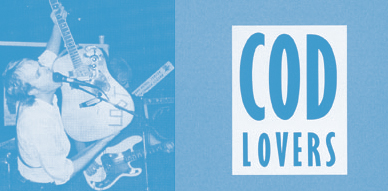
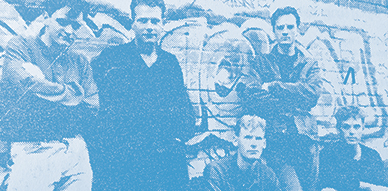
Thanks so much to Niklas Barwe for the interview! Wrote about the Cod Lovers some time ago on the blog and luckily Niklas got in touch and was up for answering all my questions! The Cod Lovers were part of that first wave of Swedish indiepop that released records in the late 80s and early 90s on labels such as Ceilidh Productions or A West Side Fabrication. They were part of legendary festivals as Hultsfred or Emmaboda and left wonderful albums and singles to prove it!

++ Hi Niklas! Thanks so much for the interview! How are you? What have you been up to? Have you been making music as of late?

Hi Roque! Everything is fine here. I still play music, it’s in my veins, I can’t quit you know. Nowadays I play with a group called Northern UpBeat and we play soul songs like ”Higher and Higher” and ”Tainted Love”, but also some tunes from Dexys Midnight Runners.

++ What are those first music memories of yours, what sort of music did you listen at home while growing up? And what do you think inspired you, made you want to be in a band?

For me it all started quite late in life (I was 11-12 years old) with the Beatles. The red album & the blue album and then some Elvis records and ELO. I remember I started to like melodies and songs.

Then the punk-scene came along. Bands like Blondie, Ramones, Sex Pistols, the Clash, The Jam, Stiff Little Fingers and the Swedish punk band Ebba Grön and that sorts of groups, plus the Ska-scene with the Specials, Madness and so on, inspired me to start to play myself and be in a band.

++ What was your first guitar? And how did you get it? Did it take you long to learn how to play it?

The first guitar was an acoustic Spanish guitar that I bought from local music store. I sat in my room and tried to learn how to play, while listening to records. But the first electric instrument I learnt was bass, and I learnt it from a guy who was a musician.

++ Had any of you been involved with any bands before being in Cod Lovers?

I started my first group at the age of 15 with Johan Wallin from Cod Lovers. He was my friend and already a great guitarist and the one who I learnt to play the guitar from. We played all sorts of new wave and punk inspired music in the beginning of the 80´s, and then we evolved to a post punk band called Sista Vintern with lyrics in Swedish. We released a 7” ”Min vän” on Ceilidh Productions in june 1988.

++ Tell me how did the band start? Is it true that it started as a joke, that you were only planning to play the one show on Christmas 1988? Who were the members and how did you all know each other?

It was sort of a musical movement in Norrköping that emerged around -86. A creative environment where musicians got together around the label Ceilidh Productions and the founder Ola Hermanson. Ola is a friend and a very talented songwriter and nowadays he plays with his band Sonic Surf City and travels the world around in his work as associate professor. It was groups like the Persuaders, Sister James, 23 Till, The Great Gypsy Rockers, Sonic Surf City, Saturday Kids – all from Norrköping. And also Sound Affects the music magazine was very important in this movement.

The Cod Lovers formed in 1987, during the time me and Johan Wallin also were playing in Sista Vintern. It´s not true it started as a joke. It was more good songwriting and that we were already friends and common musical influences that got us started. But its true the plan was to play just one show.

The singer Johan Hallgren played in one of the first punk bands in Norrköping called Aggressiva Kostymer (Aggressive Suits) and I remembered I had seen him on stage, and he made a great impact on me back in the beginning of the 80´s. Later on we were in the same crowd around the label Ceilidh and became friends. Johan gave me a casette with a bunch of demo songs, and I was impressed of how awesome songs he´d written. We started to rehearse with various musicians. Then a party was planned in Christmas 87-88 at the local rock club Rockslottet, and we were offered a gig. Now with the gig the band took form with the original members. Me on electric guitar, Johan Hallgren on vocals and acoustic guitar. We also recruited my friend the multi talented Johan Wallin from Sista Vintern on drums, and my high school mate, the jazzy Beatles fan Johan Skaneby on bass.

After the gig we felt like WOW, this was fun! And we all decided to continue to play together.

++ What sort of music were you into at that time?

I remember we all got blown away when we saw the Hoodoo Gurus at the Roskilde festival in Denmark summer -87. We were into the contemporary Australian scene with bands like Hoodoo, The Go-Betweens, The Church (Under the milky way). More influences was Loyd Cole and of course Lou Reed and the V U. Maybe the Velvets was the group that we all were into the most. We also liked The Jesus and Mary Chain, The Cure, The Godfathers and the bands from Manchester; the Smiths, Joy Division/New Order, Stone Roses, Happy Mondays. We took up the old saying from the city’s industrial days; Norrköping – Sweden’s Manchester

++ And what would you say are your favourite all-time Swedish pop bands?

Well from the Swedish indiepop scene my favorites are

Eggstone, Popsicle, Wannadies, Dolkows

++ Why the name of the band? Big cod lovers I suppose? If that’s the case, what would be your favourite cod dish?

We quickly needed a name of the band when we got the first gig.

Singer Johan liked very much The Modern Lovers. So we made it a bit silly and the word Cod emerged. We meant it like ”Cash On Delivery Lovers”, but among friends and so it became Cod the fish.
The favortite cod dish is of course Fish & Chips with danish Remoulade sauce, made in a proper way by a real chef 🙂

++ Cod Lovers were based in Norrköping is that right? Are you there still today? Has it changed much since those days?

Yeah that’s right we were based in Norrköping. Johan Skaneby and myself did move to Stockholm in the beginning of the 90s, but now since a few years I’m back in Norrköping. The other “Johans” still live in Norrköping too. The town has changed very much since those days. As I said we called the city Norrköping – Sweden’s Manchester. And that was not only because we saw it as a homage to allt the bands from Manchester. It was also because the similarity between the citys as working class citys in change. The factories had shut down and something new had to grow. And Norrköping has changed very much since the end of the -80s. To the better luckily. It was much more unemployment back then. And the bars & clubs and restaurants are nicer now, and there are a lot of them nowadays. 🙂

++ What were the cool places in town? Like what was the record stores you frequented or the venues to check out up and coming bands? Were there any like-minded bands you were friendly with?

Perhaps not so cool but a place called Olympia had live conserts. Another place was Ritzo. But it was more a ”do it yourself” thing back then. A friend of mine started the rock club ”Rockslottet” in -86, where you could check out up & coming bands. The record store was ”Pet Sounds” at Nygatan where you bought the records, also run by a (another) friend of mine, they also did live concerts like Stone Roses at Olympia in Norrköping 1985. And as said Ola Hermanson started Ceilidh Productions so there’s was a record company that released high quality records with The Persuaders, Sister James, Sonic Surf City and Happy Dead Men from Stockholm and of course Cod Lovers. And the bands members were all friends.

++ And being so close to Stockholm, I suppose you used to go there a lot to quench your music thirst as well? Was there a good music scene in either town you’d say back then?

Yes its close to Stockholm and often we travelled there to go to concerts, I remember I saw the Clash and bands like U2 in the beginng of the 80´s. The music scene were alright in both towns, but nothing compare to nowadays when you can go to several concerts a week in Stockholm. In Norrköping its more like several concerts a month.

++ Why did Stefan Hubner join to play drums and Johan Wallin moved to keyboards and guitar instead of drums?

When we put Sista Vintern at halt, Staffan Hubner the drummer came along to do the drumming in Cod Lovers. Then Johan Wallin could focus on song writning and as he were a guitarist from the start, we thought it was better for the band.

++ And what about Stefan Andersson leaving the band? What happened? And how did you recruit Johan Skaneby?

Johan Skaneby is the original member of the band, but we parted ways just before the second album Pretty Things was released. Stefan Andersson from Sonic Surf City came in, but quitted after a year when SSC took all his time.

Johan Skaneby came back to the band the last year we existed.

++ Whereabouts did you use to practice? And how was the creative process for the band?

We use to practice in the industrial area in the town. This area was almost shut down during the -80s but we had a former industry local on the outskirts of that area where we hung

++ I can’t say which release came first, the flexi or the “Best Friend” 7″ in 1989. Maybe you can tell me that. And was wondering how did you end up contributing the song “Autumn” to the Sound Affects flexi?

The release of “Best Friend” 7” in 1989 was first. And then the Sound Affects flexi came out. Well the guys at Sound Affects liked us, and special the great John L Byström insisted we should do the flexi.

++ Sound Affects was a very important magazine at the time for the Swedish scene. How important was it for you? Did you had many appearances on it? Did you buy it regularly perhaps?

Yes Sound Affects was important for Cod Lovers, they liked us and gave the 7” “Best Friend” and ”French Plums” great reviews. We bought the magazine regularly and both John L Byström and Terry Ericsson were our friends. We were so close that when we released our last single on Ceilidh Productions John L Byström gave us a call with a correction about a detail on the single sleeve

++ The “Best Friend” 7″ is such a great record and it was released by the legendary Ceilidh Productions. Was wondering a couple of things, first, how did you end up signing with them and how was your relationship with the label? And second if you could tell me the story behind this classic song?

Ceilidh Productions had already released a vinyl single with Sista Vintern so the the relation with them was good. The boss Ola really liked the 7” “Best Friend” and we sent him a cassette with the the song right away after the mixing session. The relationship with Ceilidh Productions was friendly. I remember we were very pleased with the production and the mix that was made by Micke Herrström, the great indiepop producer att the time. He worked with Happy Dead Men, Sonic Surf City and later on Popsicle and many more. The story behind the song: The idea was to mix acoustic and electric fuzzed guitars to get the sound that we wanted. I think we managed quite good and the lyrics is about friendship – witch I think is a little fun in the context.

++ In 1990 you released your debut album “French Plums” which had 10 songs and was released on both CD and vinyl. I thought the CD is harder now to find than the vinyl? Maybe there was less CDs pressed? Also this album has probably my favourite Cod Lovers song, “French Plums” which also gives title to the album. What’s the story of “French Plums”?

Yes there were less CDs pressed, thats why its harder to find. French Plums is also one of my favorite songs on the album. We were inspired by the Manchester Scene and tried to get a bit a dancebeat into the song. The lyrics is about Johan Hallgrens girlfriend at the time and his longing for her as she was on a trip to New Zealand far away from him

++ The album was recorded by Daniel Gese at KM Studio in Nörrköping. How was that experience?

Actually most of the songs was recorded by Micke Herrström at the Decibel studio in Stockholm. He also did the mixing of the songs at the Atlantis studio in Stockholm. Micke Herrström is as said one of Swedens best producers. I’ve worked with him several times and we´we been in bands together to, one of them was called The Bukks and released an album 2004. Daniel recorded three of the songs at KM studio in Norrköping and he’s also av very good producer and engineer and runs his own studio there.

++ The next 7″, “Kill the Time”, was to be your last work on Ceilidh. Then you would move to A West Side Fabrication. Why did you change labels?

Yes we changed label. I think it depended on that we in the band was so impatience. We wanted everything ”now”. A West Side Fabrication told us if we choose them we could get out a second record quite fast, and for some reason we were in a hurry wich I think is reflected on the album Pretty Things. Though the first 7 songs is in good Cod Lovers level in my opinion

++ There was yet another magazine release, a 7″, were you appeared. There was a 7″ released by New Kind of Kick that had your song “Shatter the Harmony”. I have never heard of this magazine, so maybe you could tell me a bit about it?

It was more like a fanzine magazine. They lasted for about 2 years I think, and were situated in Linköping.

++ Are there still any unreleased songs by the band?

Yes we have a few unreleased songs. They would have been on the planned third album.

++ And from all your repertoire, what would be your favourite song and why?

Nowadays I think Bye Bye Pain from our first single is the song I like most. The song capture much of what The Cod Lvers was about.

++ You played the legendary Hultsfred festival. How was that?

That gig was awesome. And something we in the band appreciated very much

++ I read you also played in Spain and Latvia, is that right? Which cities? Who supported you? Do you remember?

The truth is that we had a planned tour in Spain with about 3-4 dates.

I think it was was the summer of -89´ after the 7” “Best Friend”.
We received great reviews in a Spanish music magazine for the single.

But we didn´t go on tour to Spain cause it was so uncertain with the payment for the gigs.

Instead Johan the singer and I went with train through Europe and played the streets in Portugal and Spain. We ended up in San Sebastian playing our songs there in a local bar. The gig was awesome, one of the best gigs in my life, and the guests at the bar gave us standing ovations, and a huge amount of beer too!

Later on, I think it was in 1993, we went to Riga in Latvia for two gigs. It was a lot of fun and the MTV of Latvia was there, and we drank cheap russian sparkling wine and had a good time.

++ Did you play any other countries?

No, it was plans for Berlin and more gigs in Germany but they never happened

++ And in general, did you gig a lot? Which are the best gigs you remember? And bad ones? Any anecdotes you could share?

We gigged quite much, and as said we did Hultsfred festival and Emmaboda festival, the biggest indiepop-festival at the time. The gig at the festivals was the best ones I think. A gig early 1994 at the University of Linköping was great I remember. But the early gigs at some Speakeasys (Clubs with no permission) in Norrköping I also remembers with a good feeling.

++ Then what happened? When and why did you split? Did you all continue making music afterwards? If so, in which bands?

I think it was April 1994 and the band had existed for about 5 years and we decided to call it a quits. Me and Johan lived in Stockholm and the rest in Norrköping and the members just had to much to do with our everyday jobs, it was no fun anymore. We all continued to do music afterwards, Johan Skaneby in a group called Honeycave.

++ And today, are you all still in touch? Have there ever been talks of or a reunion gig? I read that there was one in 2003 where you even put out a limited edition CD? Is there a way to get hold of it these days?

Today we’re still in touch. Johan Skaneby plays keyboards with me in Northern Upbeat and Johan Hallgren and I also have a little project. No records though. Yeah it was the last reunion in 2003 where we released a limited edition CD and that will be the last gig from The Cod Lovers. I think it will be hard to get hold on the limited CD.

++ Did you get much attention from the radio or press?

Yeah, some attention from the Swedish and Danish national radio.

3 songs from our gig at the Hultsfreds festival was aired by the swedish radio P3. Unfortunatly it sounded crap becasue of my guitar was out of tune 🙂

And an acoustic gig in swedish P3 that I remembered was quite good

++ Looking back in time, what would you say was the biggest highlight for the band?

The gig at the Hultsfred festival and when we released the 1st album French Plums and we had an awesome release party in Norrköping and gig nr two later in the night at a Speakeasy club.

And the audience danced all night

++ Aside from music, what other hobbies do you have?

I am into film, and then I do a summer music festival in Norrköping called Knickedick

++ And lastly tell me a bit about Norrköping. I’ve never been there, so wondering what are the sights one shouldn’t miss or the traditional food or drinks?

It´s a quite nice city and the old industrial area is very nice with the Museum of Work and a great Italian restaurant called Enoteket.

The best cocktail bar is Pig´n´Hen and nice bar with quite much live music is Munken. And the we have Arbis, an old theatre thats nowadays is a great live venue and bar.

++ Thanks again for the interview, anything else you’d like to add?

Many thanks to you Roque and hope you enjoy!

::::::::::::::::::::::::::::::::::::::::::::::::::::::::::::::::::::::::::::::::::::::::::::::

Listen
Cod Lovers – French Plums

06
Feb

Thanks so much to Ciarán for the interview! Also thanks to Javi from Pretty Olivia Records for helping me get in touch with Ciarán for this interview after I had written a piece about them some years ago!! As many of you know Cypress, Mine! released on that label a fantastic reissue of their LP “Exit Trashtown” that included much more than the original album. A beautiful packaged release that all indiepop lovers can’t miss. But after listening to it many times now I needed more background information about the band, I wanted to have a better picture of Cork, Ireland, the band, the lineup. So happily Ciarán was up to answering all my questions! And if that’s not enough he has shared with me 3 cool photos, check them out here:

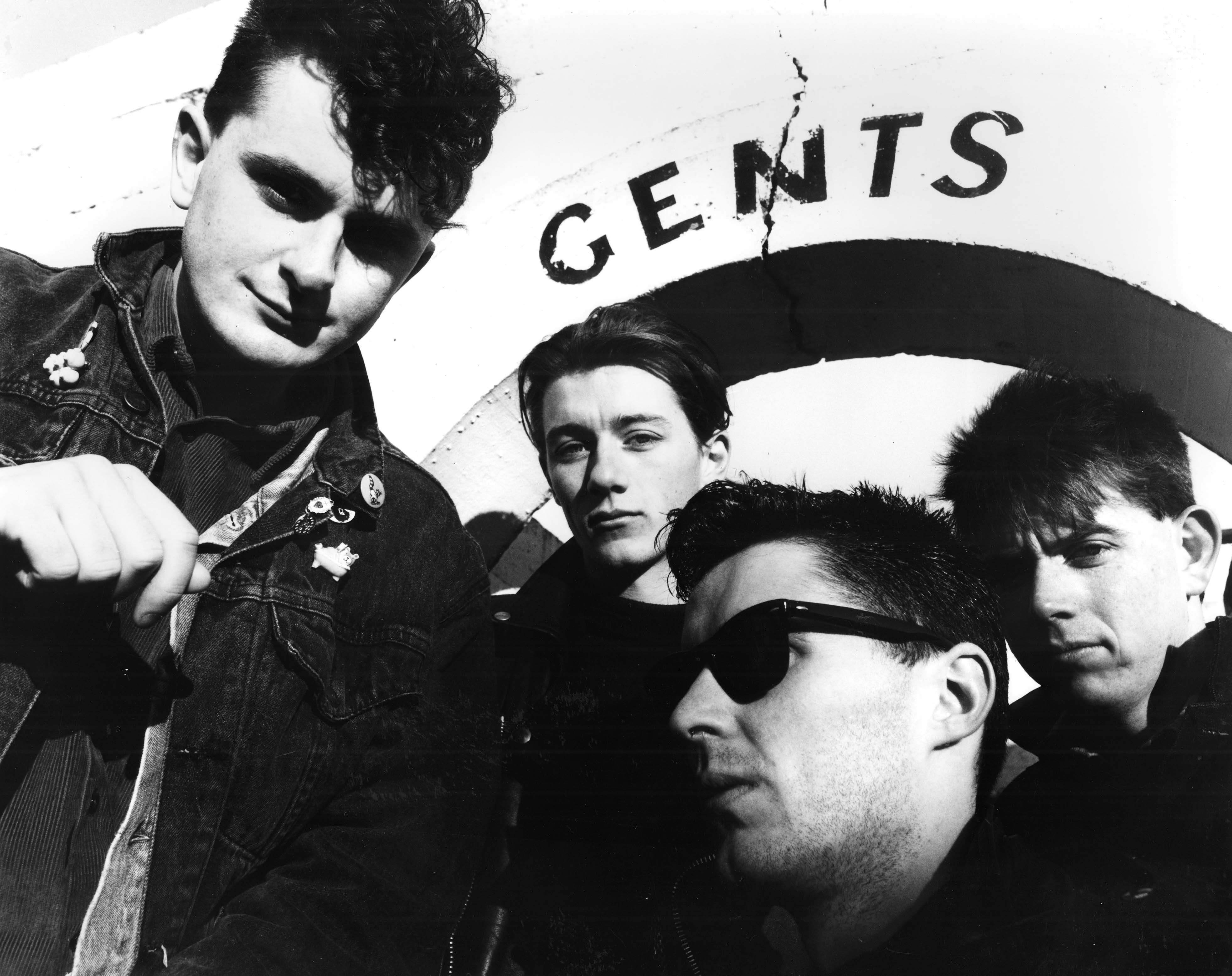
  1. Cypress, Mine! at the Lee Baths, Cork City in 1988. Photoshoot just before launching their 3rd single ‘Sugar Beet God’.
    Left to right: Ciarán (vocals), Ian (Guitar) Mark (drums) and Skoda (bass) Photo by Jim McCarthy.
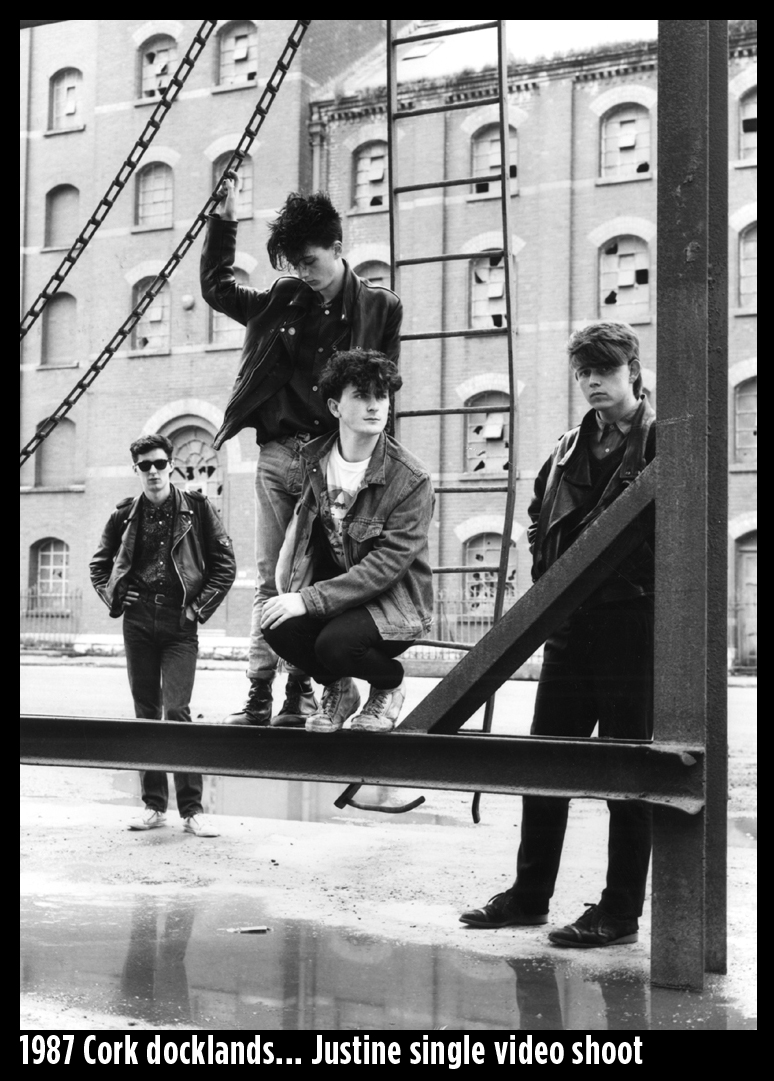
  2. 1987 Cork docklands… Justine single video shoot
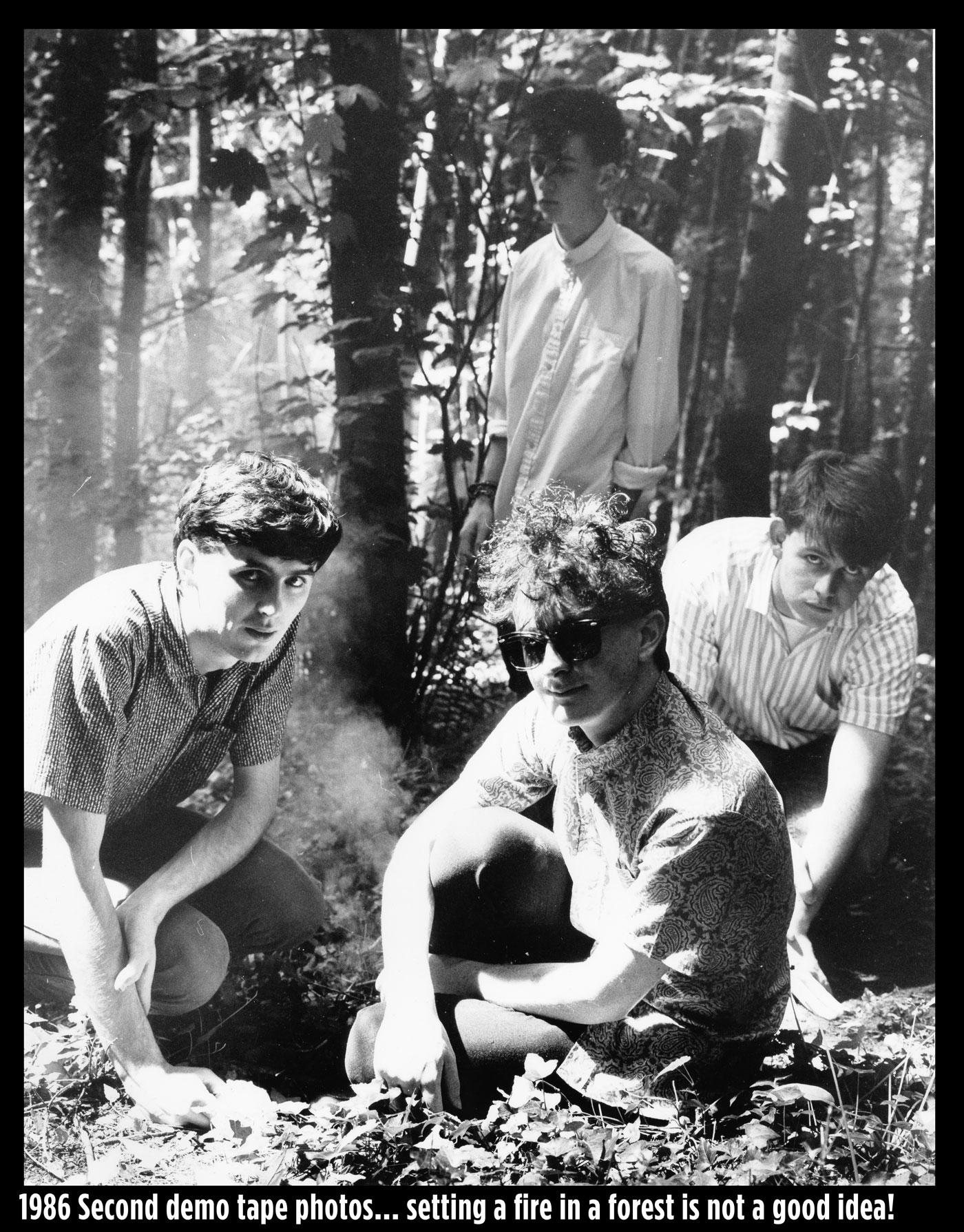
  3. 1986 Second demo tape photo

Hope you enjoy it!

++ Hi Ciarán! Thanks so much for being up for this interview! What are you up to these days? Are you still making music?

Working as a graphic designer in Dublin since I left Cork in the early 90s shortly after the band broke up. No, I don’t make music really but have dabbled a bit from time to time.

++ I wrote about your band on my blog some time ago and then almost immediately I learnt from Javi (Pretty Olivia Records) that you were preparing a re-release of “Exit Trashtown”. It was quite a surprise. But it also took some time. How did this release came to be?

Javi contacted us a few years ago and suggested the idea of re-releasing our album. So we discussed it and since I live in Dublin and Ian, the guitarist lives in London and the remaining members still in Cork it took a while for us to make up our minds. After that, we spent nine months approximately trying to source the analogue tapes which was a big ordeal since some of them could have been thrown out or lost. Luckily, Joe O’Herlihy who is U2’s Audio Director had kept the original master tapes for Exit Trashtown but we spent a lot of time looking for other tapes including our last demo tape which we were eager to get out there. Then, a lot of time was spent on the artwork as we had to reproduce the original artwork plus a whole new idea for the second LP In Pieces.
Also Javi introduced us to OMG in Brooklyn, New York and we were going to co-release the album with OMG and Pretty Olivia Records. Unfortunately, OMG were not in a position to release it in 2017 so we went back to the original idea of releasing it with Pretty Olivia Records only. So we lost a lot of time during the talks with OMG.

++ And for those who are unfamiliar with your band, what can one expect and what is in this record, which I think is unmissable!?

Thanks for that. The main LP Exit Trashtown was recorded in 1987 and was recorded in a small 8-track studio in Cork. It was the first rock LP recorded in the city and was all self-financed but an Irish label called Solid Records pressed it and distributed it for us. As a band we were always interested in trying new things and this is probably due to some of our punk influences or roots. The original band (without me) included Sean Lenihan who was in a punk band called Urban Blitz in 1980. We formed in 1984 and it took us a while to get our own sound which originally was a little bit punky with the guitar sounds of the Go Betweens and the Smiths. When we released the album, we released three singles to accompany it and the last one, Sugar Beat God was not on the original album but it gave a clue to the type of sound that we recorded in our later demo tapes in 1988/89. This sound was still jingly jangly but was influenced by the grunge and harmonies of the likes of Husker Du. So the second album has these demo tapes and a collection of our singles as well.

++ So, let’s go back in time to get the full picture of the band! Was wondering first of all, what are your first music memories, like what sort of music did you play home or what was your first instrument?

Thats an easy question cause I tried and failed badly at piano and guitar and haven’t managed since to conquer them. Luckily in Ian, Mark and Denis I had excellent musicians to get me out of that hole.
The type of music that I used to hear as I was growing up was mainly Irish tradional music and classical music. But by the time I was 16 and started going to gigs, I was lucky enough to see a really healthy Cork and Irish music scene happen. I used to go to these gigs to take photographs and I watched bands like Microdisney, Five go down to the Sea, U2, Virgin Prunes all start off. Also bands from the UK such as The Fall, the Specials, Wah, Heat! played locally in Cork.

++ And then what inspired you to have a band?

Good question. A lot of my friends were in bands and they seemed to be having great fun and were getting fairly successful. Obviously I liked music and had it in my mind that I would like to give it a try and one day I met Mark Healy by chance outside our local record shop and he was asking me if I knew anyone who wanted to be a singer in his band. I said I didn’t but I would be happy to give it a try myself. The following week I went to their practice room which was above a chip shop in the Grand Parade, Cork and I listened and made some noises and it just carried on from there. The band at that stage were called the Playroom and were really only finding their feet. I’d say it took another year before we put a few proper songs together because I certainly had no background in it.

++ Had you all been involved in bands prior to Cypress, Mine!? If so, which bands and how did they sound?

No, just taking their photos!

++ How did the band start? How did you all know each other? How was the recruiting process? Originally there was a different singer, right?

There was a different guitarist, Sean and I believe a different singer for a little while but that was well before Cypress, Mine! were formed. As I mentioned by the time I met up with Ian and Skoda for the first time in the practice room over the chipper they were called the Playroom and Ian suggested at that stage that we should change our name to The Classical. Cypress, Mine! were only formed around that stage.

++ And just out of curiosity why was Denis O’Mullane called Skoda?

Denis when I first met him used to drive a little Fiat Panda car. We loved playing around with words in the band especially Mark so since Fiat was made in Italy we decided to call him Denis O Milan which then changed to Fiat O Milan but then he changed cars to a van and we had to change his name to Skoda because he no longer had the Fiat. These days, he cycles a lot so maybe the name should change!

++ Before being in the band I read you had been a photographer of the early punk scene in Cork. How was that experience?

It was fantastic. I met a lot of people from all over the world as they came to play in the Arcadia in Cork. I also learnt how to take photos the old fashioned way with film which helped me get work when I left school. It was a real eye opener as I was very young going to these gigs and very naive.

++ What’s the story behind the band’s name? I’ve seen it written sometimes as Cypress Mine too, what was the correct form to write it?

The right way is Cypress, Mine! and as I mentioned we loved playing with words. We thought it might get attention with the extra punctuation and also annoy some people as well. It was always a talking point which was a good idea to get people’s attention.
Regarding the actual name, as you know we toyed with the idea of being called The Classical for about two weeks while throwing other words and ideas into the mix as well. Eventually during one practice Mark shouted one word and I added another word and that’s where Cypress, Mine! came from.

++ What sort of music were you all into at the time? Who would you say were your influences?

Because I saw all the bands in the Arcadia, I started to like the Liverpool bands, Echo and the Bunnymen, Teardrop Explodes, Pete Wiley and then later the Smiths, Go Betweens, the Cure, Let’s Active, Prefab Sprout. I remember Ian liking the Byrds, Glen Campbell and Crass. Skoda was a big Julian Cope fan. Later on, I started to become aware of Husker Du, Jane’s Addiction but I always loved the Cork bands who wrote about their own place in their own voice.

++ How was Cork back then? Were there any like-minded bands? Where did you usually hang out? What were the good record stores, or venues to go and check out up and coming bands?

eat and healthy scence with a fair few small gigs. We started in a place called the Underground, and played in parks, played on the back of trucks and later graduated to Sir Henry’s which was the best and the biggest gig around at the time. Other bands like Porcelyn Tears, Real Mayonaisse, Burning Embers, Belsonic Sounds were formed around the same time but we all had our own individual sounds. Having said that there were many average bands around as well!
Our favourite band at the time was a band called Without The who were rocky, punky, melodic and funny all the same time. Later on, other good bands sprouted up like The 3355409’s, Sultans of Ping and Frank & Walters. At that stage, we had moved on, concentrating on Dublin and London so we did not keep up to date with all that was going on. In 1989, we broke up of course and interestingly enough since there was not that many great record shops in Cork at that stage, a guy called Brian O’Kelly asked me to help set up a branch of Comet Records in Cork in 1990. Comet were the company that put out our first two songs on vinyl (Swallow and Sounds Like Rain) and had a very successful record shop in Dublin. Fairly soon after that I moved to Dublin to work in design.

++ How was the creative process for Cypress, Mine!?

We basically met in our practice room for a couple of hours two or three nights a week where I recorded the melodic noise that the others created on a sony walkman tape recorder. I listened back and tried to find vocal ideas from that and then the lyrics came at a later stage. As the guys were very talented and sometimes practiced on their own and came up with song structures, my job was the easy part.

++ I read that you were managed by Tony O’Donoghue who is now a sports commentator. What did he bring to the table? How was your relationship with him? I suppose lots of sports talk?

No, there was very little sports talk as he was only starting out in his career on radio at that stage. He started out reviewing music and then later moved to sport. Tony was very persuasive and was a good talker which was very handy when we were organising gigs and talking to record companies. He had a wider view on things which was helpful too.

++ Where did you usually practice?

We had two practice rooms. We started off above a chipper sharing with the Belsonic Sounds who were a reggae band. Then we moved to a building close to the City Hall in Cork which was above a paint shop.

++ Was your first ever “release” the 2 song demo tape wth “Swallow” and “Talk to the Wall”? This tape was mostly sold at gigs alongside other demo tapes of yours like “The Bible – Part 2”. How many copies were made? And were were these recorded? What other sort of merch did you use to sell at gigs?

Have no idea how many copies we sold or made. We didn’t sell any other merch. I think we recorded these in Sulan Studios in Ballyvourney which is in West Cork.

++ In 1986 and 1987 you appeared on two compilations by Comet Records. This was a small retail chain in Ireland. Was wondering how important were they? Or what can you tell me about this store and label, and how did it help you make a name in town?

Yeh this was very important to us because it gave us our first radio plays and videos and also got our name out there especially in Dublin. The record store in Dublin were looking for local Irish bands to put on their two releases and they liked us so put us on twice. The shop itself in Dublin was very important. It was one of the few places in Dublin at the time that you could get our type of music and was very busy. It had a great scene around it. You’d see a lot of people hanging around outside the shop and always seemed to be very busy inside.

++ Your first proper record was the fantastic “Justine” 7″! I hope to find a copy one day, it might as well be my favourite Cypress, Mine! song. But I wonder if there’s any chance if you could tell me the story behind this song?

I suppose its just a very simple love song written from a fairly naive perspective…. a kind of first love breakup type of a song…… just talking about the games that people play in those situations. In fact, the girl the song was written about (her name was not Justine!) made a brief appearance in the equally rare video of the song.

++ This record and your next record “In the Big House” 7″ came out on Solid Records. Who were Solid Records and how did you end up signing with them?

Solid Records were also Dublin based but run by a Cork man – Denis Desmond of MCD promotions. He signed a lot of Irish bands around that time and released a lot of vinyl on the label, most of it now is fairly rare. Again this was very helpful as we got bigger gigs like playing with Echo and the Bunnymen in Belfast and more TV and Radio plays from it as they were “a recognised label”.

++ In 1988 your LP “Exit Trashtown” is released. It says that the name of the album refers to a place in County Cork called Trashertown. What’s that about?

As I mentioned earlier, often in practice we used to play around with words. A lot of my song titles changed because we wanted a better title or we were bored or just for the fun of it. The same thing happened when we were looking for a title for the album. Someone came up with the word trashtown first and then Exit seemed to be a good word to put before it….. it kinda reflected where we were at the time. We had recorded an album, the first rock album in Cork that we self-financed, we started to play shows all over Ireland and the UK. We just wanted to say that it was possible to do things with a bit of work. Yeh it was mentioned that there was a place in north Cork called Trasherstown, but it had nothing to do with that.

++ This record was produced by Dennis Herlihy, how was that experience?

Dennis was our live sound engineer and it was great working with him in the studio. He was very inventive especially since it was only an 8-track studio. He managed to bounce a lot of tracks to make it faux 16-track, splice- up tape and played it backwards and invented a lot of solutions and sounds to help us along. Of course, we also had Peter West engineering who recorded our last demo with us which we were very happy with. A few tracks were also produced by Joe O’Herlihy during that time as well and Joe did our live sound occasionally when he wasn’t working for U2.

++ In 1988 there was yet another 7″, “Sugar Beat God”. At this time, I want to ask about the artwork of all your releases. There is something very 80s about them but at the same time timeless. Was wondering who made them, and what was your expectations for them?

The artwork (old style- cut & paste with very little computers involved) was done by our friends Mick and Conor and the photograph on the album was taken by another photographer friend of mine called Jim McCarthy. We, of course, had a lot of input into the artwork, again you’ll notice the wordplay on Sugar Beat God sleeve. The new double album was a challenge for me because I had to re-design the original album again and finding all the old material was an ordeal. Also, I had to tie in the two albums together.

++ “Sugar Beat God” has a video filmed in London by Roy Fairweather. Whereabouts was it recorded? What memories from that day? Did you spend much time in London?

Super Channel which were tied in to MTV in some way met us down in the Bull and Gate in Kentish Town in London. This venue was run by Jon Fatbeast who later became famous with his involvement with Carter USM. We used to gig there a lot. They recorded us playing on stage there and then took me out on the streets of Kentish where we filmed on the high street in front of a church. That was during the time that we spent about a month in London playing lots of gigs and squatting all over the place.

++ There is also another video on Youtube for the song “Last Night I Met the Man”? I’ve only seen this a few days ago, where does this footage come from? Is that you dressed as a girl?

Yea that’s me in the dress alright. It was filmed for an Irish language programme in 1988/1989 and I shot some new video around Dublin that I mixed in with it. Also there are some clips from our last ever live show in it which was in a school in Cork.

++ The last time we hear from you is with the song “Sugar Beat God” on a tape compilation on Solid Records called “Solid Citizens”. Wondering, aside from this compilation and the two Comet ones, were there any other compilation appearances by the band?

No I don’t think so.

++ Are there any unreleased material by Cypress, Mine! or has everything been released?

There is some but not much. Most of the best stuff has been released.

++ What about gigs? Did you play many? What were the best ones that you remember?

I have no idea of how many gigs but there was many. Some of the best gigs for us were in places like Kilkenny, Waterford, Sir Henry’s Cork and the Bull and Gate in London. Some of the gigs were we supported bigger bands were great as well. Meeting Rory Gallagher after he came to see us in the Mean Fiddler was something that I’ll always treasure.

++ Where there any bad ones? Any anecdotes you could share?

One of the worst ones for me personaly was we were due to play with some other bands in Christchurch Cathedral in Dublin. I think it was due on TV as well. As the day wore on I began feeling worse and worse and started to lose my voice and came down with the flu. I knew I wouldn’t be able to do anything later that night but all the guys including some friends in Dublin were all urging me saying that it will be alright. We were holed up in a pub across the road and just as we were about to go to the venue I heard the news that the PA blew up so luckily for me I got away with that one but felt absolutely crap about it. Another time in Tralee we played the Abbey Inn. There were very few people in the pub and I think we were run out of the pub by the owner. I just don’t think we were his taste and rumour has it that we weren’t the first ones it happened to!

++ Where was the farthest from home that you played? And which bands did you like sharing the bill with?

I suppose the London gigs were the furthest away from Cork. We played with Microdisney in the Mean Fiddler in London which was fantastic, as I mentioned the Echo and the Bunnymen gig in Belfast, U2 in Cork, the Bluebells in Kerry, and Aztec Camera in the Olympic Ballroom in Dublin. They were all great gigs.

++ On the Irish Rock website it mentions you appeared on the TV show “TV Ga Ga” in 1986. How did that happen? Were there any other TV shows where you were invited?

Not sure how it happened but it was probably Tony asking and harassing people! I think we were also on a show called Borderline, at around the same time. We were also on Irish Language Programmes as well as some local Cork television.

++ Then what happened? When and why did you split?

One of our best gigs was in Ian’s old school. We had been invited along to play to the students in Spring of 89 and we played some new material mixed with the old. The students loved it and we were performing really well as a band. We had recently finished recording our last demo which we were really happy with and had sent that out to various people. So we had recorded something that we were very happy with and played an awful lot of gigs at that stage but we didn’t seem to be progressing the way we wanted to in the music business. So I guess we just grew frustrated and impatient at the lack of progress.

++ What did you all do after? Were you involved with music still?

I did a bit of DJing, helped to get Comet Records started in Cork and began to do graphic design. I did a lot of posters for bands and a bit of photography to do with the music scene in Cork at that stage. After that I moved to Dublin.

++ Did you get much attention from the radio or press? What about fanzines?

Yea we got a lot of local press in Cork and some in Dublin. There was a few guys in Dublin like George Byrne who really helped us out but the Dublin journalists concentrated a lot on the Dublin bands at the time. Strangely enough even though I was involved in fanzines personally a few years before the band, there didn’t seem to be many around in the mid – 80s.

++ Today, aside from music, what do you all do? What other hobbies do you have?

Mainly graphic design and photography.

++ Have you ever thought or have played any reunion gigs?

Yes we have talked about it but we have nothing planned.

++ And today, are you still based in Cork? How has the town changed? If one was to visit, what would you say are the sights not to miss, or the traditional food one has to try?

I don’t live in Cork now and I rarely get back there.

++ Looking back in time, in retrospective, what would you say was the biggest highlight about being in Cypress, Mine!?

Making some decent records, recording our last demo, playing some decent gigs and having fun along the way with three or four others while doing it….. and of course meeting Rory Gallagher!

++ Thanks again, anything else you’d like to add?

Thanks very much for the interview, Roque. Some great questions and hopefully some of my answers might help to clear up a few of the rumours that I have occasionally seen! Keep an eye out on our Twitter, Facebook and YouTube as we will be occassionally updating it. Cheers.

::::::::::::::::::::::::::::::::::::::::::::::::::::::::::::::::::::::::::::::::::::::::::::::

Listen
Cypress, Mine! – Justine

30
Jan

Thanks so much to Tim Alborn for the interview! Harriet Records was definitely one of the best and most influential indiepop labels in the US during the late 80s and the 90s. The label based in the Boston Area, while Tim was at Harvard, is remembered with nostalgia by many indiepop fans thanks to all the bands they released, from The Magnetic Fields to My Favorite and more. Fifty 7″ singles and ten albums are the legacy of this great label, all highly collectable now. Time to talk then about that time, and get to know the story behind the beloved American label!

++ Hi Tim!! Thanks so much for the interview! How are you? What are you up to these days? Still involved with indiepop in a way or another?

I stopped running Harriet in 1998 when I got a job in New York, teaching at Lehman College (which is part of the City University of New York), in the Bronx; before that I had taught at Harvard from 1991-98. At the time I thought I would keep on doing my fanzine, Incite!, but that fell by the wayside as well. Since I’ve been in New York I’ve kept a pretty low profile in terms of indie-pop. For a couple of years (2012-13) I did an indie-pop-related blog through Lehman, some of which was reposted on the Ply blog, but in each case most of the posts have disappeared. That blog was pretty representative of my means of discovering/getting excited about music since 2000. My wife likes to travel so we often end up in places like Iceland, Portugal, or the Czech Republic and I use the opportunity to figure out what’s going on music-wise. So I did posts on the Denmark scene, the Czech scene (especially the amazing label Indies Scope: see Dva and Tara Fuki), and the Iceland scene (my favorite Icelandic band is FM Belfast). Less directly connected to indie-pop, I started teaching a course at Lehman a few years ago on the history of pop music in the US and UK, which has been a wonderful experience. I’m considering co-writing a book on that with a friend of mine who has a book coming out on the Hamburg rock scene in the 1960s. Last year I posted much of the Harriet catalogue (not including stuff that had been posted by other people) on my YouTube channel.

++ So let’s start from the beginning. The label was based in the Boston area, but are you originally from that area as well? And what sort of music did you grew up listening too as a kid at home?

I’m originally from Astoria, Oregon, where the Columbia River meets the Pacific Ocean. That’s not incidental, since my best friend in high school was Rob Christie, who was an original member of Some Velvet Sidewalk (off-kilter indie-pop, K Records mainstay in the 1990s). He sadly died in a car accident 15 years ago; he also taught me everything I knew through 1982 about punk rock, so when I went to Harvard that year I wanted to learn more. Before I met Rob I was a total AOR-head; we received two FM radio stations in Astoria from Seattle, KZOK and KISW, which played the usual Zeppelin-Pink Floyd shite but occasionally, also, Lou Reed or The Cars or Elvis Costello. Then Rob taught me about the Ramones and X and the Dead Kennedys. At Harvard, I became a DJ at WHRB, still a pretty amazing radio station, where the rock department had just transitioned from new-wave to punk, which suited me to a tee in 1983. My radio show in the early years used “Fight the System” by the Indiana hardcore band The Delinquents as its theme song.

++ And when would you say you got into indiepop and how?

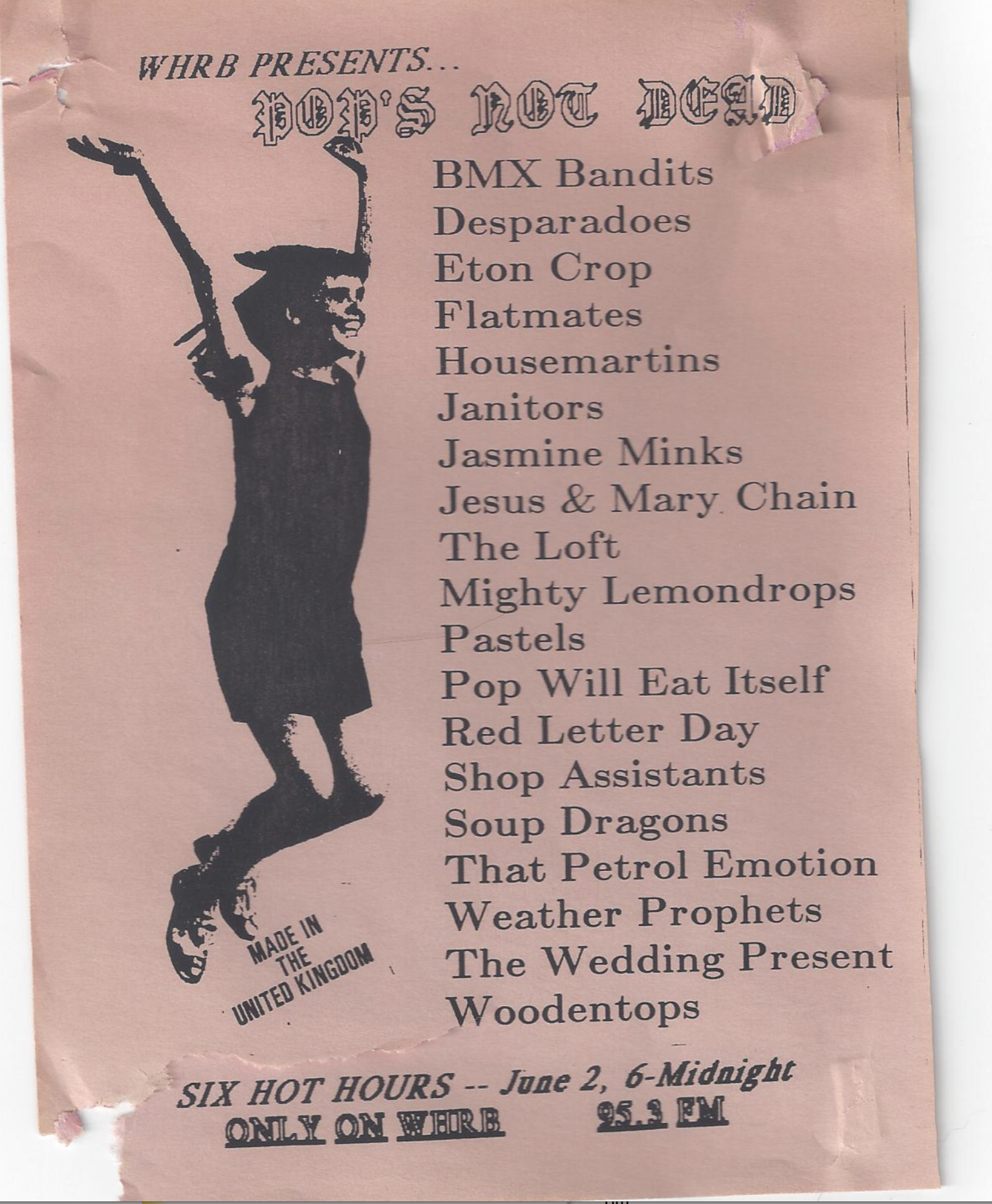
Somewhere between 1984 and 1986. I spent the summer of 1985 in England, and although I mainly bought/listened to punk (the complete No Future catalogue, and I did a 6-hour show on that at WHRB, I also picked up singles by The Woodentops and That Petrol Emotion and saw The TV Personalities in East London. That summer also inspired me to start my fanzine, which by 1987 (the “Special Pastel Issue,” hand-colored with pastel crayons) was edging into indie-pop. By the spring of 1987 I had collected enough British indie-pop singles to do a show called “Pop’s Not Dead!” with The Wedding Present, Pop Will Eat Itself, Pastels—basically the C86 crew. I did a follow-up show in spring 1988 (creatively called “Pop’s Still Not Dead!”), which incorporated the two Bristol-based labels I had fallen in love with in the intervening year, Sarah and Subway Organization. That summer I went to England for two weeks (I was still a poor graduate student —I had to sell some records to be able to afford the flight) and I interviewed Matt and Clare from Sarah and Martin from Subway.

++ Do you play any instruments? Were you ever in a band? Or was it always your thing supporting the musicians, doing the label?

I played the oboe in high school, but that’s pretty much it. I’ve always been a firm believer in the division of labor, and I knew my strong suits were my writing (prose-only) and my ability to make things happen. And, basically, I’ve always been enchanted by the wonder of a great pop song, and I never wanted to tarnish that sense of wonder by figuring out how to make one myself. I remember the first and only time I saw Nikki Sudden perform and the next day telling a friend of mine about the resulting goose bumps I felt, and he was a little astounded that this was even possible. I’ve done my best to retain that capacity, which I tried to express with the label and the fanzine through the 1990s. My friend Stephanie Burt, now a poetry professor at Harvard, did a better job than I ever could to articulate this in a blog post on Incite! for the London Review of Books a few years ago: https://www.lrb.co.uk/blog/2012/05/11/stephen-burt/incite/.

++ It is said that Harriet Records was the best label ever founded on the grounds of Harvard University. I wonder, are you aware of any other labels founded there?

Good question: I’m sure there have been others, but nothing I can think of, certainly not while I was there. Discogs tells me there was a “Harvard Records” in 1959 that put out three singles. While I was there the only decent Harvard indie-pop band were the Push Kings. I read the drummer’s senior thesis: his name was David Benjamin and it was this amazing thing on right-wing conspiracy theories (still very timely 20 years later). He’s a cutting-edge architect now.

++ And what were you doing at Harvard at the time?

When I started Incite! I was a junior and when I started Harriet I was a year and a half away from finishing my doctoral dissertation in the history of science department. After getting that in spring 1991 I got a job teaching history and social theory at Harvard through 1998.

++ Why the name Harriet Records?

In 1988-89 I was sharing an apartment in Cambridge with Rob Owen, a Harvard Law student who had previously been my roommate in Belmont. At some point I found a copy of “Harriet the Spy” by Louise Fitzhugh on his bookshelf and I loved everything about it. I had already been inspired by Sarah Records (see below), and I was getting generally hot under collar about the hyper-masculinity of indie rock (Albini, Byron Coley, Pussy Galore, ad nauseum), and generally inspired by the backlash propelled by Sarah and K, so the idea of calling a record label after a girl made a lot of sense to me. I wrote about that book and “The Borrowers” by Mary Norton, which was a favorite growing up, in Incite! in fall 1988 that expressed most of this. Or at least I assume this is how it went—it’s one of those things where I invented such a compelling mythology about the label over the course of the 1990s that I actually don’t remember my exact through processes at the time. The first bit about when I first encountered “Harriet the Spy” is true, anyway.

++ What would you say inspired to create Harriet Records? Were there any labels that influenced your aesthetics perhaps?

The biggest inspiration was Sarah Records, although my early releases were a pretty far cry from theirs in terms of their sound. Another inspiration was K Records, which was of course Beat Happening but also a set of compilation tapes (Let’s Together, Let’s Sea, Let’s Kiss). Having done a fanzine for four years, as well as being on the receiving end of indie records at the radio station, made the idea of starting a label seem much more possible. And Boston, in general, had such a vibrant music scene at the time that being part of it in any way I could seemed a necessity.

++ You started the label in 1989. But was wondering if before that year, had you been involved with any other releases or musicians? Or was the first release on Harriet your first experience doing the label thing?

In the fall of 1988 I decided to put out a compilation tape, ”Harmony In Your Head,” with two local bands (Ed’s Redeeming Qualities, High Risk Group), my friend Rob’s band (Some Velvet Sidewalk), Linda Smith (whose cassettes K had distributed), and X-Tal, who my now-wife put me in touch with through a friend of a friend. The first band I asked to be on it was High Risk Group, who I had seen play in Boston earlier that year. The others fell into place; X-Tal was a last-minute replacement after Galaxie 500 (who I knew through WHRB) backed out. This cassette was a very slip-shod operation: only 250 copies and really poor sound quality. But it was enough to keep me moving quixotically forward.

++ Where did you run the label? In your bedroom? Did you have perhaps a stock room? Where did you press your records? What was the infrastructure of Harriet Records?

Not quite my bedroom: by 1991 my wife and I had an apartment with enough space for me to have a separate closet to store the records and an office/study where I could keep track of everything Harriet- and Harvard-related. But the basic set-up was that a few weeks before each record was released a UPS truck would pull up outside my apartment building and I’d lug ten boxes of singles up to the third floor, then assemble them by hand into sleeves (mostly printed at Typotech in Harvard Square) and plastic bags (ordered through Bags Unlimited). I pressed all my vinyl at Rainbow Records in Santa Barbara, which also mastered them until I switched to John Golden in the early 1990s. Mostly it was just me. Chris Bavitz, who is now a law professor at Harvard and at the time was a Tufts undergraduate, helped me for a year or so (he had been a Harriet fan as a college radio DJ), Jason Shure (a WHRB friend) helped in the summer of 1990, and Tom Devlin, who was in Prickly, helped in the summer of 1998 when I was navigating my move to New York. For the most part Harriet didn’t interfere too blatantly with the rest of my life, although the month leading up to my wedding in 1990, when I was also furiously assembling the Fertile Virgin and Linda Smith singles before spending a summer in England, did generate some premarital tension.

++ That first release was the “Flag” 7″ by the High Risk Group. The sound of course is not strictly indiepop. So I ask, was the label intended to be an indiepop label at the start?

Definitely not intended to be indiepop from the start, although my listening tastes had already been moving in that direction. In that sense K was a bigger inspiration than Sarah: I loved the way they signed bands ranging from Mecca Normal to Courtney Love. Sarah was more important in my insistence on releasing only 7-inch records, which I stuck to for the first four years. Although I was never dogmatic about it, the one consistent aim at first was to provide opportunities for bands where women and/or LGBT people had a major role (not just as a drummer or bass player). 1989 was a good five years before riot grrl and the opportunity gap was pretty tangible, especially in the northeast US. Out of the first twelve bands on the label, nine fit pretty squarely in one of those categories. Many of the early local bands on Harriet, including High Risk Group and Pop Smear, were active in Rock Against Sexism.

++ How did you find most of the bands on the label?

Most of the local bands on Harriet were people I saw perform in clubs and got to know that way: the best clubs at the time were the Middle East, TT the Bears, and the Green Street Grill, which were all within a block of each other in Cambridge, MA. This applies to High Risk Group, Fertile Virgin, Pop Smear, The Lotus Eaters, and The Musical Chairs. Most of the out-of-town bands I got to know through my fanzine, either because they also did a fanzine before starting a band (Wimp Factor XIV) or because they sent me a tape or a single to review (Crayon, Scarlet Drops, Bagpipe Operation, My Favorite, Tokidoki, Hula Boy, Receptionists). By 1993 or so quite a few bands were sending me demo tapes, especially from the Boston area. Very few of these appealed to me enough to lead to anything, but a few did: Prickly, The Ampersands, Caramel, My Pretty Finger. Linda Smith continued to work with me after I had recruited her for “Harmony In Your Head,” and told me about her friend Nancy Andrews (Pinky). Mecca Normal, The Cannanes, and Franklin Bruno from the Extra Glenns I had known for a long time before putting out one-off singles with them. Along with many of the other out-of-town bands on my label, they often slept on my couch after playing a show in Boston.

++ Most of your releases were 7″s, but there were a few CDs. I wonder, why not 12″ LPs for these albums?

The 1990s were not kind to LPs in the US: they were expensive to produce and hard to get distributors to buy. And I didn’t have much closet space. Tullycraft and Wimp Factor XIV both put out LP versions of CDs that I had released on the Little Teddy label in Munich, so I sold some of those in the US. But basically there wasn’t much demand for LPs, either from the bands I was working with or from my distributors.

++ Would love to ask about every single release on your label, but I know that might be too much, so I’ll just choose wisely. Let me start with My Favorite which is a band I know, met, seen, even released. You released “The Informers and Us” in 1995 which is a fantastic record. Wondering how did you meet? how close-knit was the scene from Boston to the one in New York? Did you travel south much?

My Favorite was one of the bands I met after reviewing an earlier record in my fanzine. The record in question was “Absolute Beginners” on the Bay-Area Swingset label, which I reviewed in fall 1994. I took My Favorite’s side against a review Mike Applestein had written about them in his zine “Caught in Flux,” where he worried that they were starting a dangerous trend by reviving 80s new wave. I wrote: “It’s good to hear someone sing like Penelope Houston instead of Amelia Fletcher for a change, and if that’s a change for the worse I’m willing to risk it.” Although Mike was probably right to worry in the long run, I’ll still stand by the My Favorite aesthetic. In any case, Michael Grace from My Favorite was happy to have me as an ally (it turned out he had been a major Harriet the Spy fan growing up), and I booked them to play for a big 5-year Harriet bash at the Middle East in January 1995. “The Informers” followed a few months later, and I branched out from there to put out songs by their Stony Brook friends, The Mad Planets and Shy Camp.

In terms of New York, I hardly every traveled there during the 90s – maybe once every two or three years—and I never put anything out by a band from NYC, only Stony Brook (and I never visited Stony Brook until after I had moved to NY in 1999). To this day I have mixed feelings about the NYC music scene, and at the time I would have defended the Boston scene over pretty much every other scene in the US, but especially NYC. Regarding My Favorite and Long Island, the irony is that two years after I moved to New York my wife got a job teaching at Stony Brook, so we now live there and all the bands on my label who had gone to college there have moved away. It was fun hanging out with Michael and Andrea in the early 2000s when they were still together and living on Long Island, though. I think we saw them play in a Battle of the Bands at Stony Brook in 2001 or so, which was pretty awesome—but not quite as awesome as visiting the house in Babylon that once belonged to Dee Snyder of Twisted Sister, which had been bought by one of my wife’s colleagues.

++ I guess many people would be interested in your 7th 7″, the one by The Magnetic Fields with “100, 00 Fireflies”. How did this release come to be? Any fun anecdotes you could share perhaps?

Claudia Gonson, their drummer/manager, was a roommate of a good friend of mine from college, and when they were looking to release a couple of songs in the US from their first CD (which had been released on Red Flame in the UK in 1991) they called me. I can claim credit for picking out “100,000 Fireflies” from the CD as the song I wanted for the A-side. I’ve always been better friends with Claudia, who I’m still in touch with, than with Stephin, though I did see him at parties now and then when we lived in Boston. One of the things I’ve always loved about his lyrics is his wordplay (“Your heart is Kansas City/ In Kansas and in misery” from the second single I did with them) and this would sometime come out in conversation: once when I asked him if he could give me a song for a compilation, he said: “It hinges… on syringes,” which of course it didn’t. After the first single came out he asked me, in all seriousness, outside Johnny D’s in Allston, why I liked “100,000 Fireflies”, and in the course of telling him I pointed out that it was actually three songs stitched together, not one. He really seemed to appreciate that I had figured that out.

++ Definitely your involvement with the Six Cents and Natalie/Crayon/Tullycraft troupe is another interesting one. They come from the other coast of the United States. That’s quite far! Aside from the singles, you released the first album for both bands. I just read that Tullycraft are preparing one new album these days. They all must be the ones that appear most on your label, am I right? How did you sign them to Harriet? And was it difficult to let them go to another label afterwards?

As I mentioned above, I grew up in the Pacific Northwest and I still visit family out there nearly every year, so that partly explains it. I already knew about Crayon through their fanzine “Thrill!” and in 1991 they sent me their “Cartwheel for a Kiss” cassette. Although I assume I would have caught up with it at some point, they actually intended to send it to Mark Lo at the “File 13” fanzine but it ended up in my envelope by mistake. Anyway, I asked if they’d be interested in putting out a single and the rest was history. I think the fact that I often visited the northwest did help; I remember a great stopover in Bellingham, I think in 1993, where they played in someone’s garage with this amazing proto-riot grrl band Hussy, and they covered a Misfits song in the encore. Crayon and Tullycraft also toured more than most of the other Harriet bands put together, so I got to see them a lot in Boston too. Like a lot of bands on my label, I kept putting music out as they changed parts. Tullycraft was sort of like a Harriet supergroup, since Gary from Wimp Factor XIV, who had moved to Seattle from Pittsburgh, played guitar for them.

I was never very possessive about bands on Harriet, and when Tullycraft decided to switch to Darla in 1998 that was fine by me; I was heading toward winding up the label by then in any case. And I think every single Six Cents and Natalie single appeared on a different record label, which was par for the course in those days. Both the Crayon CD and especially the Tullycraft CD sold very well. A lot of the proceeds went directly to the bands, since I gave them as many copies as they could sell on their tours, but what I sold to distributors made it possible for me to absorb losses on the many singles I put out that didn’t break even. Yes, Tullycraft is still at it—I’m still in touch with Sean (off and on) and I also consulted on the reissued Crayon LP, which came out in a wonderful package in 2014. Funny story about that one: at the time, my sister ran a clothing store in Olympia, and this woman named Courtney showed up and asked them if it were true that I was her brother. When she said yes, she showed them her Harriet tattoo! Anyway, she later got in touch with me about her idea to do a Crayon reissue and a few years after that it finally happened.

++ Also you released Mecca Normal, a feminist band from Vancouver. There were many indiepop bands which had feminist ideals, but very few were openly feminist. Of course, you could argue that Mecca Normal was an indie rock band but the truth is that they were on an indiepop label. How important was for you having them on board?

As I mentioned earlier, Harriet was more “feminist” than “indie pop” in its early years, so it made perfect sense for me to put out a Mecca Normal single in 1992. Jean Smith had already done the cover art for the Scarlet Drops single the year before (she complained that I only let her do artwork for Canadian bands); I had been friends with Jean and Dave since 1987 or so, and still am 30 years later. Like a lot of bands at the time, Mecca Normal were quite happy to release singles with lots of different labels, even though they mainly worked with K and later Matador and then Kill Rock Stars: besides Harriet, Dionysius and Jettison also put out singles by them in 1992. They called the single I put out “Orange” even though neither of the songs were called that, because I could only afford to pay for a two-color sleeve (also done by Jean) so “Orange” was the third color.

++ There are a few releases by very obscure bands, that only got say one or two releases as a band ever. Wondering if you could tell me what do you remember about them in a line or two? For example My Pretty Finger, Twig, Shy Camp, Orans, Bagpipe Operation, Pinky or Pop Smear?

I see you’re managing to ask me about every band after all—very sneaky! Twig, which emerged from the ashes of Fertile Virgin, actually put quite a lot out in the relatively short time they were together: they released two singles with me, a CD on Candy Floss and several compilation tracks, and they only lasted from 1993 to 1996. Orans was Julie and Ramona from Twig, and by 1998 they had a falling out, leaving Julie all by herself in Balloon Chase Team on the “Friendly Society” compilation. So she holds the record for being in four different Harriet bands. My Pretty Finger was this guy Jon Elliston who had been part of the Chapel Hill scene when he was in college; someone gave him $1000 so he could put out a single, and he asked me to do the honors. Bagpipe Operation was this guy Scott Miller (not the Game Theory Scott Miller) who put out one single under that band name before the one he did with me but has done a huge amount of other stuff. As I mentioned above, Pinky was Nancy Andrews, a friend of Linda Smith’s, who was also in a band called Lambs Eat Ivy. And Shy Camp was Dave Rapp, who did record quite a lot besides the five songs on Harriet (I have the tape to prove it) but moved on in life before he found anyone to release them (Harriet had ceased to exist by then, or I would have). His main claim to fame is that his father was the main songwriter for the 60s band Pearls Before Swine; Shy Camp contributed a song to a PBS tribute album called “For The Dead in Space.” Pop Smear, finally, came and went pretty quickly, but several of their members ended up in other local bands (some on Harriet): Phylene Amuso played bass for the Magnetic Fields on the “House of Tomorrow” EP; Dezaray DeCarlo was the lead singer for Shiva Speedway; and Nancy Asch was in Magic 12 and did some work with Come.

++ One last one about the bands. The Australian bands. You had The Ampersands and The Cannanes. Did you ever meet them? Went to Australia perhaps?

I met Andrew Withycombe, the bass player for The Ampersands (and also The Cat’s Miaow), before the single came out. We went to a show at the Paradise Theatre in Boston featuring The Dambuilders, who I had slandered in the most recent issue of Incite! as sounding like Joe Jackson in the recording studio, whereas they were one of my favorite local live bands. Their singer came close to assaulting me that night between sets, which was a bit awkward. I’d known the Cannanes for a long time before they put out the last Harriet 7-inch in spring 1998. I had bought their first cassette on K and their first single back in 1985 or so and I had been a fan ever since (and still am). I got to know Frances and Stephen even better a year after I stopped the label, my first year in New York, when Frances was a visiting law professor there. We saw Joan Jett together in New Jersey: how cool is that?

++ Who took care of the artwork for the releases? You or the bands?

The bands, almost always, sometimes for each other. Linda Smith did the cover for her single with me and also for “100,000 Fireflies’; ditto with Jean Smith (see above). Wimp Factor XIV’s design sensibility was the most labor-intensive: the first several hundred sleeves for “Train Song” featured pennies that had been flattened on Pittsburgh train tracks, which I had to affix to tar-splattered sleeves; to my great relief, they went with glue and acrylic paint for the second pressing. Fertile Virgin and The Receptionists both went with childhood photos, and Sean from Crayon/Tullycraft generally went with copyright infringement. I never even asked where my bands found many of their images—wish I knew now! By the late-90s I found this amazing graphic designer, Eleanor Ramsey, who was a friend of Twig’s, who worked on the last four CDs I put out. She did wonders with the two images I found for “Friendly Society,” the CD compilation that was my final release: priests on skateboards from Life Magazine and a picture of the Mt. Holyoke women’s basketball team from 1902 that I found in the Boston Globe.

++ And what about the label “logo”, that cartoon with the girl with glasses that is definitely the Harriet trademark. Where did that come from? There was a different version at the start of the label too, right?

The picture is from Harriet the Spy (see above). At first I just copied a picture from the book for my first six singles, then asked Debbie Nadolney from High Risk Group to do a version of it for everything that came after.

++ Was there much communication with the labels from across the pond in the UK? Or even with the US labels at the time? I know it was pre-internet times, but I wonder if you got much distribution in the UK or maybe you traded records with people interested there? How did that work for you?

It was a very small world in 1989 (and smaller still after email became available in 1994 or so!). As I mentioned above, I met the people responsible for Sarah and Subway Org. in 1988, a year before I started the label. I came home from that trip laden with Sarah test pressings and loads of records he folks at 53rd and 3rd in Edinburgh gave me, just because I did a fanzine they liked. Those were the days. Even before that I had easy access to tons of UK music in Boston, thanks in no small part to the ace record store Newbury Comics. In an odd way, I knew the UK labels better than the bands: few of them had enough money to play in the US, and I wasn’t over there enough to see many of them. A good example is the summer of 1996 when I was doing research in London and spent a week on the couch of the person who ran Che Trading, one of my favorite labels at the time. It turned out that was the week Urusei Yatsura was in town recording their CD for Che, so we all basically slept on their couch at the same time. Even though I was only 32 at the time it made me feel very old. I did eventually see them play a show in Boston; and I also ran into them in Heathrow airport totally by chance one time when I was returning to the US and they were flying to Sweden. I also had fairly close contacts with people in Germany and Japan who sold some of my records. In summer 1998, after I had stopped the label, this guy from Japan interviewed me for a Japanese TV show, so apparently a few people had heard of me over there.

The fanzine network in the 1990s made it very easy to stay I touch with other US record labels, since most of the ones I liked sent me their stuff to be reviewed in Incite!. Also, some of the best indie labels also distributed other labels, including Harriet: Ajax, Bus Stop, and K all bought anywhere between 15 and 50 of my records each time. So we all knew, and supported, each other more or less. And in Boston, two other indie labels started up shortly after Harriet: Pop Narcotic, run by Bill Peregoy, and Sonic Bubblegum, run by Mike Hibarger; we would always say hello to each other at shows. A couple of years ago the three of us got together in Boston to do an interview with this other guy who used to put on shows in Vermont; it was supposed to come out as a podcast but hasn’t yet.

++ Which was the record on Harriet that sold out the fastest?

I can’t really recall – the first Magnetic Fields single did sell out pretty fast; and I lost the proofs for the sleeve so I used a color Xerox of Linda Smith’s original water color for the next pressing, then a larger-sized version for the next one after that. So without intending to I created all these collectors’ items.

++ Were there any bands that you would have liked to release and were very close but never happened?

I really wanted to put out a Tizzy CD but they had interest from a label with better distribution; this was around 1997. That never happened; my friend Trey Woodard who ran the Paper Cut label in Florida ended up putting it out after I had shut down Harriet. I also really liked Bulkhead, a Boston band in the mid-1990s, and we talked a bit but nothing every came of it. I’m sure there were others, but those are the two I can think of.

++ Did the label get much attention from the press and radio? Was it more in the US or internationally would you say?

John Peel was a fan right at first: when I was in England in the summer of 1990 I sent him my first three singles and he played Fertile Virgin and especially High Risk Group, who he invited to do a Peel Session but we didn’t have enough money to send them over there. Someone sent me a tape of his show where he talked about the label at some length and revealed that his mother’s name was Harriet. The same summer I ran into Everett True in a subway after a Galaxie 500 show and gave him the same three singles; he reviewed one or two of them in the NME. It was downhill from there as far as UK press and radio was concerned! Harriet had sporadic moments in the limelight in the US; one radio station in LA did a show called “Harriet Not Helmet” (Helmet was a really bad indie rock band), semi-major music zines like CMJ, Puncture, Magnet, and Option reviewed my records a few times each, and so forth. But the main “buzz” was from the fanzines that were done on the same scale as I did Incite!, mainly run by high-school girls and nerdy guys in their 20s. Harriet had loads of love from that quarter. Finally, I made enough waves in Boston to achieve notice from the local newspapers and radio stations once in a awhile. The Boston Globe did a piece on me and Mike Hibarger, the Phoenix and Boston Rock both did profiles on me, and on Harriet’s 5th Anniversary I did an interview on WBCN, the main AOR station in Boston, which was weirdly thrilling.

++ You also did the Incite! fanzine while having the label. I must say I’m not very familiar with it, but wondering how many you did? How long did it last? How many copies did you print for each? And what sort of topics did you cover on them?

Incite! lasted from 1985 until 1998. There ended up being 30 issues in all; in 2011 I scanned and posted the complete run here. At first I did it 3-4 times a year, then once a year after 1992 or so. Initially it was a more typical fanzine, with band interviews (including Beat Happening, Mecca Normal, The Nils, and really obscure punk bands like Sons of Ishmael and the Prevaricators), live reviews, and record reviews. By the late 1980s I was running some poetry, short stories, and snack reviews by friends of mine. By the early 1990s it was all my own writing, and increasingly just record reviews and Harriet news, with occasional bursts of esoteric whimsy. I especially liked finding clip art from the depths of Harvard’s library: my favorite source was the Geography section, which included great 19th-century travel books with crazy wood-cuts. I did one issue where all the illustrations were pen-and-ink drawings of manatees and dugongs, and another special library issue (where I interviewed several indie-pop library employees) featured illustrations from library trade journals.

++ On your last release, “Friendly Society”, you mention that people should keep an eye open for future fanzines, CD compilations and so on from you. Did any of these happen?

Nope. I got halfway through Incite! #31 but that didn’t survive my move to New York. I had planned this huge article on Sarah inserts (I just checked on my computer and it looks like I actually wrote several pages, which I had completely forgot). The only fanzine-ish thing I did since then, besides the short-lived blog I referred to earlier, was a one-off magazine called “The Pedestrian,” which you kind of have to see to understand (and even then you might not): http://www.lehman.edu/academics/arts-humanities/alborn/pedestrian.php.

++ What else did you do after closing shop with Harriet Records? Had you sold all your stock at that time? Or what did you do with it?

I kept some of everything that was still in print (most of the CDs and 30 or so of the singles), and although I’ve sold dribs and drabs to people over the years a lot of it still sits in my closet and is still for sale! Email me at timothy.alborn@lehman.cuny.edu and I’ll let you know what’s still available. I occupied a fair amount of my spare time between 2004-2007 writing limericks for something called the Omnificent English Dictionary in Limerick Form, which is still plugging away without my help in its goal of providing a definition of every word in the English language in perfect anapest. Otherwise all my writing has been of the academic variety: dozens of articles and three books, all on British history between 1750 and 1914. The most recent will be published by Oxford University Press next year, on gold as money and bling in Britain before 1850.

++ On that same last CD, you mention that indiepop is sort of a Friendly Society. I think that is very important and very true to this day. Why do you think it is important to continue being so? And how come it has been alive, with up and downs of course, for 30 years now?

The context for that was that I was doing a lot of research at the time on friendly societies, which were these clubs in the nineteenth century in both Britain and the US where members (mostly men) chipped in money to help each other when they got sick or injured at work (this was before employers or the government provided health insurance); but besides this, people joined these clubs to share time with friends, hence the name. I just sent a copy of “Friendly Society” last week to a friend of mine who teaches history at Boston College who is about to publish a book on friendly societies (I need to write a “blurb” for it by next month). After receiving it she wrote back: “Your description of modern day friendly societies fits right in with the epilogue I eventually wrote. They haven’t gone away, they just solve different problems. I hope yours reconvenes in some future iteration.” So yes, it’s really all about sustaining a sense of community, and blogs like yours, and labels like Tender Loving Empire in Portland or Where It’s At Is Where You Are in London, and all the people who keep making music for its own sake and to connect with like-minded people—that’s never going to go out of style. It hasn’t since at least the garage bands in the 1960s, and there have always been people around who insist on keeping the fire going from one generation to the next. People like this guy Reid in Boston who ran a record store called In Your Ear when I was in college and was a walking encyclopedia of 60s garage punk; or Fred Cole, who was in a band called the Weeds in Las Vegas in 1965 and then kept it going in the band Dead Moon right up until he died earlier this year.

++ And aside from music, what other hobbies do you have these days?

I more or less covered that above. I also like going to movies with my wife, watching sports on TV, appreciating our cat Hermione, and going on walks. But (most of all) I have never stopped learning about music that’s new to me (which might have been recorded in 1955 or 1975 or 2015), at least an hour or more each day, via discogs, Youtube, Bandcamp, etc etc… I can and most likely will keep doing this for the rest of my life without ceasing to be simply thrilled honey as Edwyn Collins would say.

++ Looking back in retrospective, what was the biggest highlight for Harriet Records? And are there any regrets for Harriet Records?

Not a single highlight, but all the people I got to know and all the music I got to listen to before almost anyone else had, and the constant sense that I was helping people create things, made that decade in my life incomparably special. Really no regrets at all: I ended it right when it needed to be ended—I didn’t have enough time any longer to keep selling my growing back catalogue and do what needed to be done with the new stuff, and by the way work full-time as a college professor. I do wish I had managed to stay in touch with more people from the bands. I still do now and then with several but I’ve totally lost touch with most of them.

++ One last question, and it is a hard one, I would know running a label, did you sell all of your releases?

A lot of people got to hear the bands on my label who otherwise wouldn’t have. Not as many who might have if I had been running it full-time or with a different mindset, but that was always a line I didn’t want to cross, and I’m pretty sure all the bands I worked with understood that. I pressed 1000 copies of all my singles and sold more than half of all of them, and went into second pressings for six or seven; and I sold, on average, 1000 copies or so of the 10 CDs on the label. I never broke even, but I was able to write off around a third of my losses on my taxes. So Harriet never caused me any financial hardship—and caused me an incredible amount of unexpurgated joy.

++Thanks again! Anything else you’d like to add?

Nope – got to get back to work!!!

::::::::::::::::::::::::::::::::::::::::::::::::::::::::::::::::::::::::::::::::::::::::::::::

Listen
My Favorite – The Informers

12
Jan

Thanks so much to Jonny Hankins for the interview! Thanks to Ricky from the Madchester Rave On Blog I got in touch with Jonny because 1. I had written about them on the blog and was looking for more information and 2. the band was reuniting for a gig in Manchester. These were definitely two great reasons to ask Jonny if he was up for answering all my questions and so I could learn the story behind this great Manchester band from the mid and late 80s!

++ Hi Jonny!  Thanks so much for getting in touch and being up for this interview! I notice that there is going to be a Bounce the Mouse reunion gig! How did this happen? When and where will it be? Was it easy to figure out the logistics for this to happen?

Hi, yes there is going to be a reunion on 3rd February, at Gullivers in Manchester. It is a celebration that 30 years have passed since the recording of Will you Ever Say, and its later release. We have loosely kept in touch over the years, more sporadic between some members and closer with others, but we have never fully lost touch. A couple of years ago the other members met up for a beer while Steve was in the UK but I was abroad, and you know however you interpret the events it was a great period for us, making records, touring, our first experience in the music industry, and so you inevitably refer to these things when you meet up after years. Last year I was 50 and I had a party in Manchester, Adam and tom came as did loads of other musician mates from the time that I am still in touch with like the New Fads, Thrush puppies and old road crew and sound engineers, and I think that ignited the spark. Steve had a trip to the Uk to plan so we decided to meet up. Why not even have a practice? Why not do a gig. We got a fair bit of interest and so here we are, or will be anyway, Saturday night in Manchester.

++ I see that you are all living in different places around the world, how did this happen? And are you still making music wherever you are?

Yes Steve went to the USA a long time ago, I think at least 20 years ago. I think he got football coaching qualifications at first and got into sport management, which is still his line. I am not sure exactly because we only ever talk about music, but I know he is in sport. I went first to Italy, then the USA and now I live in the Netherlands. I have always done music. In Italy I played in a blues band and collaborated with a DJ called Kres, we did a kind of Run DMC inspired hip hop with a rapper, and I did theatre training and did cabaret and story telling with a band. In the USA I was part of an organization called the Revels, I did a big scale musical and Christmas album, and made a film that Kres wrote the music for and we did a couple of shows over there. In the Netherlands I play in a 25 piece percussion band. I have expanded my repertoire but have managed to continue at a more or less professional level wherever I have lived.

++ So where were you all from originally? Manchester?

Yes we were all brought up in Greater Manchester. I worked with Adam and we decided to get a band together, which we called Bounce the Mouse. After a couple of years we disbanded and formed another band under the same name, and that is all of the members that we know now.

++ And had you been involved with any other bands prior Bounce the Mouse?

Adam and I had started with this previous incarnation, but I had been playing music since I was a kid. I played guitar in my first band when I was 13 or 14. Steve and Tom had both had experience in the local band scene, so we had a few contacts when we started. Steve knew a lot of people in the Manchester scene and we managed to start on a higher level than we had operated on. None of us were complete beginners.

++ What would you say were your first music memories? Like what sort of music did you listen to at home growing up? Or what was your first instrument and how did you get it?

My mum and dad were great jazz lovers, so my first musical experiences were with trad jazz. I saw a lot of bands with trumpets and trombones. My dad liked blues, Robert Johnson and some of the wilder jazz singers, as well as the Carpenters and a lot of easy listening from the 70’s like the Manhattan Transfer. One of my early favourites was Tom Jones, and I liked the Shadows, and they were the first group I ever saw with my parents at a big concert at the Apollo in Manchester, late 70’s. That is very uncool, but if you think about the 90’s surf guitar bands that were around like Huevos Rancheros it was the direct forerunner of that wave, and that was cool. I played, well tried to play various instruments when I was young, but I was no good so ended up as a drummer. Yes the jokes are true. I tried trumpet and played a type of xylophone instrument in a marching band when I was in my early teens. I have always had a guitar and had lessons but I can’t play it even today.

The first club band I saw was Orange Juice at the Hacienda in about 1983. That was after I started work and was introduced to indie and rock music on a large scale.

++ At the time of forming Bounce the Mouse what would you say were your influences?

Well we listened to a range of stuff, The Doors, Julian Cope, Velvet Underground and Echo and the Bunnymen amongst others. I think we were influenced by the bands around at the times a bit too, like the Bodines and Orange Juice , but also Spear of Destiny and some of the noiser stuff that was current. We never quite fit in with what we used to call jangly music because we were a bit noisier, although that was the circuit we were on. We had a Marshall, and so the sound reflected that. The Smiths were massive too, and a lot of bands were influenced both by Jonny Maar in terms of guitar sound and by Morrissey, but we didn’t have those sounds. The Stone Roses were a big influence, as were the Happy Mondays. And we saw a lot of other bands, and played with everyone from McCarthy to Carter and the Levelers and Blur. You take something from everything you hear I think, especially if you think that we saw these bands regularly. I saw the New fads about 90 times, Cud and the Family Cat about 40 or 50, the Levellers 20, and I think that influences what you do.

++ How did the band start? How did you all know each other? Was there ever any lineup changes?

Myself and Adam wanted to continue our adventure after the first Bounce experience, and we asked around in the local music shops and looked for adverts from other members. Manchester was buzzing at that time, and that is how we got together. And because we knew people and were already in the flow we started playing very quickly, and we were playing real venues like the Boardwalk and that led us just to being in the right place, I don’t know about the right time, but it gave us possibilities.

We stayed with the original line up until toward the end of the band, when we tried out a couple of new members in order to add something to the sound, but the nucleus was always the same with some fringe help.

++ Where does the name of the band come from?

There are a few possibilities here. We spent some time chosing the name and had various mouse like suggestions. One of our stories involved animal feeding. In the original Bounce the Mouse we had a bass player who had a Monitor Lizard in a glass box in his bedroom. He used to feed it live mice, but as it was not Malaysia but Manchester the lizard was not very active. So he had a pair of long pliers that he used to feed it with, something like a giant thing that you might imagine used in an operation in a hospital, but to get the lizard interested in the mouse he used to bounce the mouse on the lizard’s head. Another more plausible possibility is that it comes from a Peter Gabriel lyric. “I prefer this to be a mouse called Bounce, rather than an unkind act”.

++ Where did you use to practice?

We practiced at a rehearsal room in Chorlton in Manchester that was owned by a drummer called Mark. He had a band that made a few records too, a kind of funky outfit, and we would go twice a week. Then we moved to a rehearsal room in the city centre called Redhouse. This was an underground world with a small 8 track studio and 4 or 5 spaces full of bands. Everyone started there, there was a sofa and we would meet up with other bands and play. I still see Trevor the old sound engineer sometimes, and various other members of bands that were down there. It was damp and the gear smelled when we put it in the van, but it was a busy place. We played there twice a week throughout our time.

++ Your first release was the “Will You Ever Say?” single on your own label. I read that it happened because during a gig at the Boardwalk you met Chris Nagle and he urged you to record that song. Do you remember what gig was that? And why did he urged you to do so?

I can’t remember the gig, but he was a regular and had access to downtime at Strawberry Studios as well as having a name in the industry. He came over after the gig and suggested that he would produce it if we payed for the studio, overnight, not at full rate. So we took it. We were playing regularly there at that time, as I said before we were in the right places.

++ I love that single, that song is truly a favourite of mine. So if you don’t mind, would you tell me the story behind “Will You Ever Say?”?

Well we were a new band when we wrote that song, and we were writing 2 or 3 songs a week. Some of them got lost before they were played, but we had a lot of imagination. If you think about the arrangement with the bass introduction and the swing of the main part it is really quite original, and the vocal line is catchy, so it stood out in the set for that I think. And when we recorded with Nagle we did not change the arrangement as we did with later productions, it just kind of grew out of nothing into what it sounds like still today. It captures a feeling I think, and did at the time.

++ The songs for this first record were recorded at Strawberry Studios in Stockport. How was that experience? I read it was quite productive as they would later offer you releasing as second single!

Well Strawberry had been a big studio a few years before. It was the first 24 track outside London, and had done a lot of stuff, so you can’t help but feel that when you are there. We were always in overnight with Nagle, and so had the place to ourselves. And although it was a bit dated inside, the desk and technology had been at the highest professional level. Apart from the odd demo this was our first studio experience, following in the tracks of Joy Division and many other famous Mancunions, so it was exciting. Jimmy Hendrix had played in the pub over the road, it had been the centre of the North West music industry, and was still operating on a high level although losing pace with technology. We had a good relationship with Nagle and the in house engineer Jonathan Barrett and as they wanted to relaunch a record company that had existed in the past (I think it was even called Strawberry Records) they asked us if we would like to put something out. A great opportunity.

++ So in 1989 you released “Like Lorraine” on both 7″ and 12″ on Big Round Records. At this time you got the chance to play shows with The Levellers, The Family Cat and Cud. You got the support of the label. Did you see much difference between being on a label or being a self-released band?

Yes we had a small budget for promotion, so we could make some postcards and the record company paid for both 12” and 7 and all of the promotional distribution. They had a good distribution deal (we had gone through Red Rhino with the first single and they had gone bankrupt), and they knew a lot of people. I think the real difference was that we had met our manger Jim Tracey who was Social Secretary at the Manchester Polytechnic and he used his contacts to book out a tour. So we had 4 extra pairs of hands, and that allowed us to tour and promote the single. It was a professional team, we did about 30 dates to promote the single in the May, than toured again in September, it got us a lot of press and sold the records.

++ And who was this Lorraine? A real person or not?

Well it tells a story, and as we know stories are always true at the time that they are being told.

++ And why was the record released on both 7″ and 12″ formats?

Well Dj’s played 12” at that time not so much 7. So if you wanted to get something played in a club you had to produce a 12” version. And we were fontunate that we had some backing, and so we did both.

++ At the end of that year you changed your name to Sinister Groove. Why was that?

Well we started to get major record company interest, and they wanted to see if they could make a serious commercial band, that is what they want, and so we under their influence looked for a more serious sounding name. We played under both names toward the end of that year, so there was no sudden stop and start, we played on one night under one name and on another under the new name. EG records and Island put up some money for us to do some demos under the new name, and they wouldn’t have done that had they thought that we wouldn’t bend a little towards commercialism.

++ I notice too that the sound of the band changed with the name change. What sort of sound were you looking for at this time?

Times had changed and musical sounds had changed. The arrival of the Happy Mondays, Stone Roses and New Fads really introduced this groove feel. Our change in sound reflected what we were listening to and who we were playing with. But the change in sound was also tied to this change and the record company interest. And we changed producers. We started working with Clive Martin, and that was a dramatic change. He was an internationally known producer, had won an Oscar for the soundtrack to 7 Years in Tibet and gold disks with the Hunters and Collectors in Australia and Le Negre Verde in France. And his influence changed the sound. But the Happy Mondays had broken through too, and there was a lot more dance influence in guitar music, so the musical genre changed at the same time as our production capabilities. We had stepped up a level in production quality and resources, which brought expectation, and you can hear the difference. We were looking for a sound that you could get played on daytime radio 1.

++ Are there any more songs by Bounce the Mouse that remain unreleased?

We recorded “Get Down”, that was never released that had been an early BTM song, but as I say this was at a time when we were playing under both names so any of the Sinister Groove demos that are about are of songs that were played under both names. I think the sound had changed by the time the name changes, and the effect of the resources made the sound seen so different. There was no gap though and you can only write a few songs in a year, especially if you are playing a lot, so I don’t think you should see them as separate entities. So there are loads of unreleased songs that were played by Bounce the Mouse but recorded as Sinister Groove.

++ And what would you say was your favourite song of your whole Bounce the Mouse repertoire and why?

I think Sugar Hates Spice is my favourite to play for the groove, it is lazy but noisy. Get Down too, it marked the passage into thinking about the music in terms of dance rather than rock. We even made a version with just a drum machine, aiming for a kind of I Feel Love feel.

++ What about gigs? Did you play many? What were your favourites? Were there any bad ones?

Yes, we played loads over a short period, real touring. 3 days on, one day off. Huddersfield Polytechnic always treated us well, real food and a full rider. Playing with Pulp in London and Blur at the Hacienda, the Alnwick Festival was our first festival, playing with Hellbastard amongst others. Soho and the New Fads gigs in London were great, and a turning point in our carrer and playing ability, so I have fond memories of those shows, touring with the Family Cat was always fun and the Aberystwyth University gig stands out. We played the Mean Fiddler which was another fine show and the Treworgy festival in Cornwall with our mates the Levellers in the crowd, all good fun. We had a few very poor ones though, crossing the line into punk ethics that I wouldn’t like to relive, smashing stuff up, thinking we were rock n roll, playing to empty venues (the George Roby in London being the example), but it is a trade you have to learn. To learn the limit of what is show and what not, how much alcohol you can drink and what you can and cannot say.

++ And where was the farthest you played from home?

We only played in England, the farthest was the Cornwall festival, probably 500 Km, but we played the entire country, and more than once. Every city you have ever heard off and another 30 that you have never heard of.

++ Did you get much attention from the press or the radio?

We got loads of press just due to the fact that we gigged a lot. Local radio played our records and we did a lot of interviews, we got a few plays on national BBC Radio 1 as Sinister Groove too. Various press articles in the NME and Melody Maker, we got a mention every week in the gig guides and reviews for the records. Not all good, but not all bad either.

++ What about fanzines? I know they were big back in the 80s, maybe you were involved with them?

Yes M62 was a good local fanzine and they wrote about us, as did a few others like Kill Everyone Now another Manchester based Zine. Later when I joined Dumb we targeted the fanzines much better, they were missed in the early days as we went for national press. We did get it though so I don’t want to say it was a mistake.

++ Then what happened? When and why did you decide to call it a day?

Well we had been pushed and pulled by record company interest. That had led us to taking on new members, and changing what we wanted and aimed for, what we thought about what we were doing and into being critical of what we were doing and probably of each other. It is not a healthy way to lead your life, you are trying to please different people who want different things, and at some point we decided that were not going to be able to do it and it wasn’t fun anymore. We realized I think that the reason we had started was not the same reason we were doing it for now, and we decided to call it a day.

++ What did you all do afterwards? I know you were involved with Dumb, but what about the rest?

Adam moved into acoustic music, and became a very accomplished acoustic guitarist. He is well know on the local scene. Tom took a break for a while, but has always played and kept his contact with other local musicians, Steve went off to the USA and I don’t really know how much he has done, and as I said before I was a founding member of Dumb, then did a load of other entertainment stuff. None of us has lost contact, and you see the results now that we have begun playing together, we are all better musicians that we were then. Although we play less we play as mature players, we have continued to learn.

++ How do you feel when people tag your music or you as a C86 band? Do you like that term?

As I said we were always a bit too noisy and probably uncool for the scene that this term really reflects, although we toured with a lot of the bands that were on the original cassette and we definitely got press interest off the back of that scene. We were not at the end of the day trying to fit into that scene either, we wanted to sell loads of records, and we thought they were all singing about miserable stuff that was a bit too introverted. The early BTM stuff was noisier, Will You Ever Say was the closest to that sound, but the set did not really sound like that. Like Lorraine certainly wouldn’t fit into that category. It was a movement though and it helped all indie bands at that time I think as it created an image for a kind of movement, and being crap and cheap recording was no longer a problem.

++ And today, aside from music, what other hobbies do you have?

I still do theatre, I like to write, I write for my job too and I see what I do as art. I use the skills we used as a struggling band to promote myself and the organization I work for. I learned a lot and I still use it. I was a teacher for 10 years and stage experience is good for that, now I do lectures in Universities and it is good for that too.

++ One last question, what expectations do you have for this upcoming gig of Bounce the Mouse, going back to the UK and all?!

Well I am sure we are going to have a great time, and we will not be the only old people at the gig. There will be loads of our old peers, and I believe they are doing free camomile behind the bar and allowing pipes and slippers.

++ Alright! That was quite a talk, anything else you’d like to add?

Well thanks for giving us the chance to share this time. I find it both strange and warming that there is interest in this music from years ago, and that people like you re writing about it and people actually want to read it, it’s great. I used to say that when you make a record it’s like immortality, someone somewhere will find it in 30 years and play it, and here you are. Great, and thanks.

::::::::::::::::::::::::::::::::::::::::::::::::::::::::::::::::::::::::::::::::::::::::::::::

Listen
Bounce The Mouse – Will You Ever Say?

15
Dec

Thanks so much to Brian Smedley for getting in touch and answering all my questions for this interview! I wrote about The Sedgemorons some months ago as I love their song “Drop Dead Darling” and was looking for more information about them. Happily a few days ago Brian got in touch and was kind to be up for an interview! And even better he tells the story of the band, his label Sheep Worrying, and even the town of Bridgwater with lots of detail! I love interviews like these! Hope you also enjoy it!

++ Hi Brian! Thanks so much for getting in touch and being up for this interview! How are you? Are you still based in Bridgwater? Still making music?

Ey up. No problem, thanks for the interest. I’m in Bridgwater. In fact I’m in bloody cold freezing wintry Bridgwater today which is very unusual here in the Tropical south west of England. How am I? I’ve got a cold. Still making music -not so much -spend more time touring other bands round -check out NYC band Gangstagrass -I drove them round UK & Europe last year. Played my last gig in April this year with a Jamaican guitarist a Czech bassist and an Italian drummer – that’s International Socialism for you. I sang ‘Car Park Attendant’ a song I debuted in the Sedgemorons.

++ So let’s start from the very beginning, like what was your first instrument and how did you get it? Was it easy for you to learn how to play it?

Instrument? Probably a piano accordion that laid around the house as a kid. My grandad was a captain of sailing ships and brought it back from Nazi Germany in the 30s. Having been liberated from Fascism it featured on and off in bands through the years. I did some session work with John Parish’s band ‘Automatic Dlamini’ (featured PJ Harvey) in the 90s and played it on that. Song called ‘Roland Barthes didn’t do country’ (1992) and again later with a US band called ‘Ensenada Joyride’. You can also hear it on the Red Smed track ‘Partisan Song’ (currently on 374,000 views- that’s more than Uncle Freds Lucky Tandem!!). Anyway – learning that led me to piano and then one day I moved to guitar at about 16 and taught myself that. Never had no lessons nor nothing. Hence shit technique.

++ And what sort of music was listened at home while growing up? When did you know you wanted to be in a band?

My dad was never at home as he worked away at power plants but when he came home he’d sometimes bring comedy records with him – Jake Thackray, 5 Penny Piece, Spike Jones, Blaster Bates, My mum would sing old movie songs around the house. So no help there then! I was a kid in the mid 60s and so the Beatles were the first thing I listened to –  also the Monkees. And it was their TV series that made me want to be in bands. So I formed a garage band aged about 10 when I lived in North Wales (called ‘The Thundermakers’) I sang (and wrote) and we played in the garages on our council estate and invited the neighbourhood kids in to watch us. They paid a penny each then we’d take the cash and spend it on Batman bubblegum cards. Rock n Roll or what!!

++ Had any of you have experience in being in bands before being in The Sedgemorons? If so, which bands were you in?

Just me and Nervo the drummer really. We’d been in punk bands together since the late 70’s (mainly ‘The Dangerous Brothers’).Stuart the bass player had been singer in a punk band called The Market Gardeners, but he was also in the Royal Navy and so didn’t gig too often (apart from Falklands War and the Cod War) (that was a real war about fish against Iceland)(Aggressive little sods) (the fish I mean) Anne, Lianne and Gareth -SMs was their first band and Bazza the sax man had only just learnt his instrument (I think)

++ How did you all know each other to form The Sedgemorons? Was there some sort of recruiting process?

Well, the Dangerous Brothers were the heart of the Bridgwater music scene and we formed an organisation around us called Sheep Worrying -which was not just a record label it was also a fanzine, a theatre company, we put on gigs and so on and it was very DIY indie punk stuff. So all the people in the SMs were an integral part of Sheep Worrying. It was a bit like recruiting the Magnificent Seven. First there was me and Nervo, then Stuart, then Anne, then Lianne, then Gareth then Bazza and then we shot up a Mexican village. There was nothing like ‘auditions’ except maybe me teaching Stuart to play the bass.

++ Where did you usually practice? And how was the creative process for the band?

Sheep Worrying had an ‘office’ on the top floor of the Labour Party headquarters Unity House. We did everything there -wrote the fanzine, rehearsed the plays, etc and so we rehearsed the band there too. The creative process was mainly me writing stuff and bringing it to the band and them adding to it with ideas. Later Anne or Gareth wrote whole lyrics. ‘Girlfriend’ lyric was mainly by Gareth with me putting music to it. Then I’d teach Stu the bass line, then Anne and Lianne would work out some harmonies and then Gareth would fall off a chair or out of a window.

++ The sound of The Sedgemorons is quite unique I think, so I wonder, what would you say were your influences?

In truth we decided to break away from the quirky punky feel that came from the previous bands I’d been in and aimed for more indie pop and more accessible music. We formed the band to raise money (not for ourselves) so we wanted mainstream gigs  and to be a bit cabaret to earn cash-but we very quickly weren’t satisfied with that and kept pushing the boundaries, sending ourselves up and the audiences and so influences were quite eclectic. Personally my guitar influences were always Eddie Cochran, Hank Marvin and Wilko Johnson so that mix is where you get the fast jangly rhythm and the twangy lead sounds. But the underlying influence was punk attitude I’d say.

++ What is the story behind the band’s name?

Well, the district we live in is called Sedgemoor. You can checkout that it’s also the scene of the last battle in England (1685) so it didn’t take much to add ‘morons’ in there.

++ How was Bridgwater back then? Where did you usually hang out? What were the places where you would go out and check bands? Where there any like-minded bands?

Bridgwater was and is a small provincial town but with a radical history. 75% working class but by the 80s that was in decline due to Margaret bloody Thatcher. Unemployment was high and money was scarce. So we were a mix of the fightback against her and trying to create a scene ourselves that was original and local and encouraged all bands to work together and put on stuff together, share gigs, share gear etc. However, we basically took over the local Art Centre (which incidentally was the first art centre in Britain-1946) and put on it’s music programme and our original theatre  and mainly hung out there. So it was us that put on the local gigs 4 bands at a time -and brought down big alternative bands of the day such as Crass, Toy Dolls, Chumbawamba that sort of thing. Bands rarely came to Bridgwater that we didn’t put on so you’d have to go to the nearest city-Bristol to see big gigs. However, Glastonbury is only 10 miles from Bridgwater and there’s that massive music festival there every year which we all went to. We used to help them with the traffic control -these days I supply workers for the bars there.

++ Your first release was a cassette album titled “We’re Bonkers”. I haven’t found much information about it aside that it was recorded live. Is there a tracklist? When was it released? How many copies were made?

’We’re Bonkers’ was the first thing we did yes. It was a mix of a live gig at the Antelope Inn Sherborne where we played with The Chesterfields. Simon Barber recorded us from the PA and in fact his voice is on the album wishing me a happy birthday (it was my birthday) -but we also went into a studio to add maybe 6 more tracks. The album was basically a mix of the ‘cabaret’songs we’d been doing to raise money (‘Sorrow’-The Merseys,’Don’t Get Around much anymore’-Duke Ellington plus our on stage opener ‘Y Viva Espana’-played Shadows Style) then some of the newer originals we were writing including an early version of Drop Dead Darling and some of the ‘poems’ (which I wrote for a stage play and Stuart read). Recorded 22 Sept 1984. Don’t think we made more than 100 copies Track list –1 Y Viva Espana (Trad) 2 Sorrow (trad) 3 Don’t Get around much anymore(trad) 4 Greed (Smedley) 5. Window Box of life (Smedley) 6 Drop Dead Darling (Smedley/Kane) 7 Ethiopia Utopia (Smedley) 8. I walk the line (trad) 9.Twist n shout (trad)

++ Your second 7″ came out in 1985 on the label Sheep Worrying Records. This was your own label, how was the experience running it?

Sheep Worrying’s first release was ‘False Nose’ by the Dangerous Brothers in 1980 and then we did a few others and as it was our umbrella organisation it was natural the SMs would be part of it too. In fact it was our 3rd 7” release -the second was ‘the Sheep Worrying EP’ (1982) which featured me and Nervo + others in a band called Club Whoopee doing a song called ‘You’re sort of ok’ (written by me and horror writer Kim Newman). Running a DIY indie label with no money was a nightmare but so was the 1980s. We were in a massive political struggle and no one involved had any money, few had jobs and gigs were a political statement more than building a career. We also went on demos, actions, protests all that stuff. The establishment hated us. One local newspaper labelled me ‘the most dangerous man in somerset’ at this same time.

++ I read that because the label needed funding to keep going you formed The Sedgemorons to get out of the debt. Is that true?  Did it work out in the end?

Yes that’s true. We built up our fanzine to a ‘Listings’ magazine with 1,500 circulation but it had to be paid for so we used advertising. Sometimes we didn’t get enough to cover it so we just kept letting the debt build up then one day we were staring at a £1,000 debt..so we said ‘let’s form a cabaret band just to pay this off’ -hence the Sedgemorons. After a year we paid it off and by the second year we were gigging for fun and actually gaining a reputation and enjoying it so stuck with it.

++ This 7″ had two songs, “Drop Dead Darling” and “I Need a Girlfriend”. I found a video for the second song, all of you playing it at the Bridgwater Arts Centre when the BBC2 was filming a documentary about it. How was that experience? Was it the only time the band was on TV?

The clip is from I think 1985 and upstairs at the art centre. We’re playing acoustically but I dubbed the single version over the youtube clip.I’m in the white car park attendant coat,Lianne in the bobby socks, Anne with a broken arm, Gareth singing ‘Girlfriend’ Stuart on tea chest bass playing with his motorbike gloves and Nervo and Bazza sat on a window sill, I don’t recall the SMs doing any other TV. We got a fair bit of radio play.

++ I must say that I love the song “Drop Dead Darling”, was wondering if you could tell me in a few sentences what is the story behind it?

Ha! When the SMs formed in 1984 I lived with Debbie (Kane) and we jokingly wrote the song together. Mainly her lyric and directed at me. And then she left me. Reality imitating Art. She also did the design work on the cover which is meant to represent a lipstick message on a mirror! I wrote the music. Actually the original idea came from writer Kim Newman (who I wrote musicals with) and who was trying to write a pastiche of ‘Move Over Darling’ (Doris Day) but when I was trying to put music to that basically me and Debbie just totally re-wrote it and we changed all the words except his title so he asked not to have a credit. I played the new song to the band and it became our most popular song and sort of set the scene for the next 2 years.

++ How was the recording process for these songs?

We recorded them at the Milborne Port studios near Sherborne early 1985. It was an 8 track studio and the producer was Chris Hardcastle. It took us an afternoon and evening I think. We brought in Bazza to do some sax on ‘Girlfriend’ and he also did the ‘whistling’-which he ad-libbed in a jazz style. Bazza was basically Gareths mate who we’d barely met. Gareth wrote the words to ‘Girlfriend’ and sang it and also spontaneously did the scat singing bit (without asking us). Anne sang lead on ‘Drop Dead’ with Lianne doing backing. I over dubbed the lead guitar and then at the end I put in some piano. There’s only one ‘mistake’… during the almost last line of ‘Girlfriend’ Stuart is slightly late on a bass note – and now I’ve told you that you’ll hear it all the time!!

++ Did you appear in any compilations that you remember?

The SMs didn’t. We did ‘We’re Bonkers’ then ‘the single’ and then we went into a studio in Weston Super Mare to record 4 more tracks which we never released. Although the photo that we use on most of our promo stuff was taken that night on the stormy seafront in the town of John Cleeses birth. We only lasted 2 years

++ And so, why weren’t there more releases by the band? Was there any interest by other labels?

When we did ‘We’re Bonkers’ we tested the water with record labels and in fact Cherry Red were really keen and sent us a hilarious fan letter back. This really boosted us and made us take the cabaret band into the more original direction hence the single -which was distributed by Rough Trade and led to good coverage in the music press and some good gigs.

++ Are there more recordings other than the ones mentioned, any unreleased songs by The Sedgemorons?

Just the 4 songs from Weston – 2 Anne lyrics (my music) ‘Small town’ and ‘women only’ and 2 of mine ‘Rock n roll is pretty exciting’ and ‘Trotsky’. Both these songs are on you tube done by my later bands but I might put these original recordings up as now I think of it theres some comical bits there plus me playing a banjo and some backward vocals from Nervo to sound Russian and backward cymbals to sound Pink Floyd. We also played one gig at the Thekla (a boat owned by Bonzo Dog Doodah Band frontman Viv Stanshall) which we recorded and I think there’s an unreleased tape of that somewhere..I’ll have a look!

++ What about gigs? Did you play many? Any particular great ones that you remember and why?

We played lots of gigs mainly in the south and west of England. Best gig was the Moles Club Bath after which we had a review in Sounds (music paper) and then Peel played our single and the next days gig at the Exeter Art Centre was packed with people who’d heard it. The Bristol Thekla gigs were good, lots of obscure pub gigs and of course a lot in Bridgwater and surrounds. Our last gig ever was in St Pauls Bristol at the Tropic Club, but Nervo couldn’t find it so we had to borrow a drummer from the audience

++ I read that you toured a stage musical named “Rock N’ Roll is Pretty Exciting”, how were this musical? What was special about it?

Yes this was a send up of teen rock musicals like ‘Summer Holiday’or more likely ‘the Young Ones’-or maybe check out ‘What a Crazy World’ or ‘Gonks go Beat’. We all wrote lots of sketches based around our songs and then glued them together to make a show. It was about a car park attendant (Rockin Brian) whose car park was going to be closed and turned into a discotheque. So -like Yul Brynner did, but with more hair – I had to get ‘the kids’ to help me save the car park. (oh, that’s ‘parking lot’ in American). We did all the songs and we all acted in it. Then we toured it to a few other places. We considered reviving it recently with my daughter – but then she grew up. For this show we all gained our stage names -I was Rockin Brian-a particularly tedious man with a flat midlands accent (ref Noddy Holder from Slade, Ozzy Osborne or anyone in the cast of ‘Peaky Blinders’), Lianne was Bobby Bland-a rather starry-eyed teeny bopper, Anne was ‘Betty Bonkers’-a hard bitten feminist, Gareth was ‘Bing Beasley’-a twat who fell over a lot , Stuart was the abstract poet ‘Ghenghiz 2-Stroke’ Bazza and Nervo were just themselves really.

++ And where there any bad gigs at all? Any anecdotes you could share?

We didn’t do bad gigs because we made out we were bad and argued with each other on stage so no-one could tell the difference. We played one gig at Cheltenham College where the rugby team tried to disrupt it but couldn’t work out if they had or not so gave up. The ‘legs’ photo on the sleeve is from there. By our last gig at the Tropic club we’d actually fallen out with each other for real so the atmosphere wasn’t good. Our last song played together was an acapella version of ‘Silent Night’. It was excruciating, we just sang the words ‘silent night,silent night’ over and over.

++ Did you get much attention from the press or radio? I see John Peel used to play you. What about fanzines?

Yes Peel liked us and played us a few times as did other radio and we got a fair few reviews here and there. Fanzines -well, we reviewed ourselves and so did a few other ones.

++ When did the band call it a day? And why? What did you all do afterwards? I see you were involved in many bands even covering some Sedgemorons songs!

I’m pretty sure it was late 1985 which now I think of it meant we were only going for a year and a half. We started off as great mates with an aim – to raise money – we did the album then the single -got good reviews-looked like we were on the up and up and then I reckon egos came into it a bit. We sort of split into 2 ‘partner’ factions , me and Lianne against Anne and Gareth with Stuart in the middle. Nervo was always in demand with other bands and was a very good ska-reggae drummer playing with the Alkaloids and another good indie band ‘India’ then I think this reflected in what we all wanted to do next. So when we got to the Christmas 85 gig we in fact formed 2 bands -me and Lianne formed ‘Red Smed and the hot trot smash the system boogie band’(which did the comedy political stuff) while Anne and Gareth formed the ‘Inflatable Ducks’ which were more maybe ‘Smiths meet the Cure’ type of sound. Then people moved on and the band wound up. Anne left music and went into journalism (she was actually the main reporter for the Bridgwater Mercury at the time anyway) but moved to another part of UK and in fact to NYC at one point. She went on to make a name for herself as a producer of current affairs programmes for the BBC radio 4. I met her a coupe of years back in London for the first time in 20 years. She has 2 daughters. Lianne, who I dated at the time, went off to RADA and then became a successful stage manager of largescale childrens theatre productions  around the world. I haven’t seen much of her since she left-but I always get a xmas card. She lives in Coventry. Or possibly Belgrade. Gareth went to Manchester and studied acting-which is what he does now with his one man shows. He’s very good. I met up with him again mid 90s and we produced a Czech-English musical together called ‘Czechomania’. Stuart left the area to study drama and became a teacher. He moved back to Bridgwater mid 90s and I got him playing for the Red Smed band on and off. I hadn’t seen him for 10 years by the way – until today!! Weird or what? He wants to get another band together. Bazza went off to London and did his own thing as an electronic music session player and recently moved back to Bridgwater and I bump into him rarely. Nervo (real name Kevin) played in every band I was subsequently in (Red Smed, the Visitors, the Spanners) but about 10 years ago his doctor told him he couldn’t drum anymore. So he just stopped.(Nervo i mean, not the doctor)

++ Are you all still in touch? What do The Sedgemorons do today? Has there been any band reunions?

We’re not really in touch. I had a go recently to see if I could get a reunion, but it didn’t seem likely. That said Stuart seemed keen today, so you never know….

++ Aside from music, what other hobbies do you have?

Well, in 1990 I got elected to the council as a Labour councillor and have done that for 27 years. Today I’m the Leader of Bridgwater Town Council-which is a strong socialist council and so I’m trying to instil some of that original punk ethos into the local political scene and I think It’s working. I also became very involved with the Czech and Slovak Republics after the collapse of Communism and so spend a lot of my time taking people backwards and forward there – every year organising a rock tour for instance -and lots of other stuff too. Not sure that gives me time for a hobby – football maybe. I’ve organised international football teams and tournaments and only stopped playing myself a couple of years back (with a sensational hat-trick in Hungary against a fat team of Czech factory workers). I like encouraging young bands -especially original ones – and I like driving and touring musicians. One of the last gigs that Clash Frontman Joe Strummer played was here in Bridgwater in 2002-a month before he died (he lived round here and called Bridgwater ‘a Clash Town’) – me and Nervo supported him on stage and from that gig we keep an annual link up with KEXP radio Seattle who do a live link up for their ‘International Clash Day’ (c. Feb 8th). We twinned Bridgwater with Seattle – check out the youtube click of me reading the proclamation.

++ Today how is Bridgwater, Somerset? Has it changed much since The Sedgemorons days? If I, or any reader of this interview, was to visit as a tourist someday, what would you suggest checking out in your area?

If you or anyone who wasn’t a total fkwt wanted to come to Bridgwater you would be welcomed with open arms. Today it’s a bit of a boom town…yes, we now have 3 nuclear power plants…..and 6 new hotels. A lot of music and a lot of history and all in the beautiful surroundings of the cream and cider drenched West Country. The Bridgwater Art Centre is still going, the Engine Room film and media centre was set up following the Strummer benefit gig and is a great progressive place, and the river has the 2nd highest tide in the world (after somewhere in Canada). Check out the Green Olive meze restaurant, the Blake fish and chip bar, the Cobblestones indie music pub, the Fountain Inn (an old sailors pub..if you like old sailors), Wetherspoons-for the cheapest drinks in town (and Nervo) and my flat in the elegant 18th century Georgian Castle street (a bit like Boston) home of the Swedish Womens Netball Team – well, it would be if they were looking for a home.

++ Looking back, what would you say was the biggest highlight for The Sedgemorons?

1. Getting the fan letter from Cherry Red 2. Getting played on John Peel 3. The early days when we were one big happy family

++ Anything else you’d like to add?

Maybe some web links?

The Sedgemorons – Drop Dead Darling

The Sedgemorons – I Need a Girlfriend

Red Smed

Bridgwater International

Somerset Labour

Bridgwater Westover Web

Clash Day Proclamation by Brian Smedley

::::::::::::::::::::::::::::::::::::::::::::::::::::::::::::::::::::::::::::::::::::::::::::::

Listen
The Sedgemorons – Drop Dead Darling

06
Dec

Thanks so much to Japs Sergio for the thorough and illustrative interview! I wrote about Daydream Cycle on the blog a couple of months ago, when I was featuring the Philippines, and luckily Japs got in touch with me through Twitter. He was up for answering my many questions and he was even kinder to send scans of different memorabilia from the band. Daydream Cycle released two fantastic dreampop albums which were limited to small runs in their home country. If you have never heard of them, now is a good time to discover them!

++ Hi Japs! Thanks so much for being up for this interview and tell the story of Daydream Cycle! What are you doing these days? Are you still based in Manila? Still involved with music?

Ey, Roque! It is my pleasure. I have no idea how you even found out about Daydream Cycle, but thanks for your taking the time to listen to our younger selves. Yes, I am still in Manila and I’m definitely still involved with the local music scene. In early 2011, a few months after I left my more mainstream band, Rivermaya, I started making songs that was initially intended to be released one at a time online via soundcloud, just for the heck of it, since I was pretty much band-less anyway. It ended up being my debut album as ‘japsuki’ called ‘Monologue Whispers’ that I wrote & recorded for 3-4 weeks in the summer of 2011. It was released later that year and was supposed to be a one-off album… but yeah, right to that one-off thing! Hehe. Making this album was definitely the cure for my depression around that time, so its theme is pretty much a depressed me finding ‘the light’ through the process of musical creation.

Shortly after that, I was on a roll. I was already making a lot of other new stuff, but this time making music in the total opposite direction with a more guitar rock sound, and eventually formed a band called Peso Movement. I like to call our music ‘dirty rock’, and I call it the ‘Mr. Hyde’ to japsuki’s ‘Dr. Jekyll’. We released our album ‘The Gentle Sound of Chaos’ in 2014.

In 2015, I initially planned to do another solo alter-ego that would be my ‘release’ for songs that are more stripped down with more basic arrangements and all in Filipino. I also wrote and recorded it a few weeks in the summer of that year, and at the last minute, I just decided to release it as japsuki. The music definitely has a different style than the first one, so I was a bit wary of that, but the thought of making all these new social media accounts and explaining to people the difference between this and that made it an easy decision to just stick with ‘japsuki’. The album’s theme is about my observations of Filipino pop culture over the years, and it is called ‘Pinoy Pop’.

Last month (October 2017), I released a 3rd japsuki album, and this was a conscious effort to be a sequel to the debut album. I tried to capture a bit of the feel I had during the first album, but since I was not depressed this time around, it kinda messed up my mind a bit, and as much as I loved conquering another challenge, I certainly won’t do that again. Hah! The album is called ‘Stereo Mood Swings’.

*scrolls down the rest of the questions* Goodness, I have already taken up 1 page and it’s only the 1st question hahah

++ This new project of yours going solo under Japsuki, how would you describe it? How similar or different would you say it is to Daydream Cycle?

Japsuki’s mantra is ‘steady’ and it’s just me and my outdated MacBook and I record and mix everything on a Snow Leopard-era GarageBand. I’m the only one silly enough to be releasing albums like that haha! I try not to do the usual stuff I do with DDC – chords, effects, etc., mainly ‘cos I really got tired of it, but for my just-released 3rd album, there are a handful of songs I made that I would have made for DDC, if we made an album this year. I think it has been a decade since I ‘got tired of the usual DDC stuff’, so it’s about time I did it again.

++ Is there a way for people to buy them or listen your new releases?

Yeah, as I mentioned above, I have just released my 3rd baby last October, and all 3 albums (plus Peso Movement) are available in most music streaming sites. Just search for ‘japsuki’ and ‘Peso Movement’.

++ Let’s start from the beginning, what are your first music memories? Like what sort of music did you grow up listening to at home? And what was your first instrument ever?

Oh wow! I am the youngest of 5 kids, so there were a lot of times when I got to hang out with the oldies, mainly ‘cos they couldn’t really ditch me, so I got to listen to their music – anything ‘80s like Spandau Ballet, Shakatak, Kenny G, Michael Jackson, Swing Out Sister, Basia, aaaand I think you get my drift… hah! Around that time, house parties were huge and we had a neighbor that was the usual host for such parties ‘cos they were also a ‘mobile’ – the term for DJs then. I got to listen to a lot of groups that I had no idea who they were at the time, ‘cos of our neighbors and the radio, like The Cure, Depeche Mode, Tears For Fears, Duran Duran, The Smiths, etc. This was my pre-teen years so I wasn’t really THAT into music yet, but it definitely planted the seed. I remember going to another neighbor’s house, and they had this dusty old acoustic guitar that had only 1 string on it. I fooled around with it, as a young kid, trying to play the bass line of “Boys Don’t Cry”, a song that was huge on the radio for years. That was my earliest recollection of playing something on the guitar.

When the late ‘80s-early ‘90s came, it was the time when I was getting into the rock stuff with Guns N’ Roses, Metallica, britpop, the whole Seattle scene, and the like, and was starting to learn the guitar. We had this crappy acoustic guitar that me and my brother Dok (also from Daydream Cycle and other bands) shared, and I pretty much learned it from reading local music magazines that had songs with chords and chord charts.

++ At what time did you find out that you had to be in a band? What was your first band?

I’m pretty sure the release of Nirvana’s Nevermind had a lot to do with wanting to form a band with my school friends. When the idea of forming a band was brought up, everyone wanted to be the guitar player, and by virtue of them being fast enough to have dibs on the stringed instruments, the only instrument left vacant was the drums. My sister was going out with a drummer then, so I just said to myself, “How hard could banging those round things be, right? I could just have him teach me,” plus of course, the fact that I had no choice if I really wanted to be in the band, so I told them I knew how to play the drums, and instantly became the drummer. The next step was to actually learn how to play the drums. I was initially taught the basics, but the problem was the drumset he had was still in the province way up north from Manila, so I had to learn it, initially, using drum sticks and throw pillows, and for some reason, it actually worked. We had our first band gig in December 1991, at a Christmas party of a tennis clubhouse where our vocalist’s parents were members. We were called ‘Crash Course’. Looking back, it was actually a fitting name for a first band, but I just got it from Metallica’s song ‘Crash Course in Brain Surgery’.

++ What other bands aside from Daydream Cycle had you been involved with?

In my school years, as I’ve mentioned, the first one was Crash Course that eventually became Water No-No’s, from the school days. In 2000, after college, Bogs and I started what eventually became Daydream Cycle. After DDC’s 2nd live gig in 2001, I eventually became the bass player for Rivermaya. I left Rivermaya in late 2010 and took a ‘break’ from music making, and then Japsuki happened.

++ And when did Daydream Cycle start as a band? How did you all know each other? Was there a recruiting process? Lineup changes?

Shortly after college, in the summer of 2000, Bogs and I started to fool around with making our own music. He had just bought this BOSS DR-202 drum machine, and being a drummer for pretty much the whole of the ‘90s, I wanted to do something else, so I would bring a Strat-like electric guitar to his room, and we would jam along with songs of Massive Attack, Sneaker Pimps, Portishead, and the like, playing in the background. I eventually borrowed the drum machine and started making guitar riffs playing along with it. Bogs’ computer had a freshly installed loop-based recording software, Acid, so we recorded a couple of instrumental stuff that we were quite pleased with, but knew that it lacked a voice, and listening to pretty much the same stuff, we also knew that we wanted a female voice.

We were schoolmates with Kathy in college and we had mutual friends. She was steady with a hippie vibe, so I thought it was right up our alley, and I knew she wrote poetry, so I asked her if she would be comfortable singing it in a band, and that was it. The first album’s lineup was born.

++ Why the name Daydream Cycle?

In the first few months with the 3 of us, I thought of the name Electric Smooth, but at the time, there was a local band called Electric Kool-Aid, and I thought it was too similar, so that name didn’t really last. I think a handful of other names were thrown after that. The name Daydream Cycle was a product of a recurring dream that I was having at the time, and it was just perfect for our music, too, so yeah, that definitely got everybody’s vote. A few years ago, I found a test print of an idea for an album cover with the name Daydream Cycle and the former name Electric Smooth reassigned as the album title. (Photo attached)

++ How was the scene in Manila, in the Philippines, at that time? It seems there were many like-minded bands, right? Were you friendly with them? Which were your favourites?

In the early 2000s, out here, being an independent band was a no-no. It was like there was this unwritten rule that the only way you would be accepted as being a legit band was when you were signed to a major label, so yeah, we played alongside groups that were mostly underground independent types like us, and it was fun. We met a lot of different people in different fields of art, and we had mutual admiration for each other’s work, and a lot of ‘em are now huge in their fields of art. There were a lot of great bands that I was (and still am) a fan of, from Sonnet LVIII to the Buzz Nite production bands of that time, to that rare dreampop band that was signed to a major label, Sugar Hiccup, to name a few.

++ And what were your usual hangouts in Manila then? What were the venues you used to play or check out bands? Or the record stores to waste time?

A lot of small bars like 6 Underground, Mayric’s, Millenia, Sanctum, and I remember even playing once at this place called Club Sex where our slot was sandwiched in between dark metal bands hah! For some reason, we were also invited to a few metal gig prods, at the time. We were like the calm before the storm, I guess. Haha! And yes, I would spend hours inside Tower Records listening to different stuff. We were also so DIY then that I would go to select Tower Records stores myself to have DDC CDs consigned.

++ How was the creative process for the band? How did that work out?

For majority of the songs, I start with the guitar/bass riffs, and then I go to Bogs’ place and we throw it into his computer, then he puts in the beats and other magical stuff. After having a usual 4-min arrangement, we’d give it to Kathy, who then writes the words + melody, then we record it. We never really jammed out in a room to create a DDC song, especially for the first one. The music always went straight to recording and then just figured things out for live performances later.

++ The first time I heard your music was through the Shelfife Records compilation “You’re Still Young at Heart”. You contributed the song “Lousy Judge of Character” to it. Do you remember how did you end up there?

I think the guys over at Shelflife Records were checking out some bands from our neck of the woods, and we eventually signed with them for a brief time. My memory is not really that good, especially from those ‘daze’ haha, so I don’t exactly remember how we ended up on their radar, but I do remember that Laura Watling from The Autocollants, somehow, got to listen to our stuff and enjoyed it, and she was quoted in an article saying so.

I think the label gave the bands the song to interpret and we ended up with that song from The Shermans. I remember sending an email to one of The Shermans’ members and, being my young and shy self, asking for the song’s chords just to make sure we don’t fuck up their song. They didn’t really send the chords and told me to just have fun with it, so, yeah… I definitely had fun with it. Heheh. Doing our ‘process’, I started out with that guitar riff that drove the music to a totally different direction, and we went on from there. I never found out if The Shermans liked it or hated us for it haha. I do hope they found it interesting, at least.

++ That happened in the year 2000. And your first album came out the next year, in 2001. I read somewhere that this first album was originally going to be released by Shelflife Records. Is that true? If so what happened?

Ah no. Shelflife found out about us after we released our debut album in 2001. The Shelflife ‘You’re Still Young At Heart’ anniversary compilation album was released in 2003, said Google search (definitely not relying on my memory on this one haha). I don’t remember if the 1st album was supposed to be re-released under the label or if we were to do a few new songs for them, but either way, we didn’t really last long enough with them, after the compilation’s release. From what they told us, the label was having financial problems so they had to stick with their main guns, and we were one of the bands that had to be cut loose. It was a fling, but we certainly enjoyed and appreciated the Shelflife experience, especially being an underground band (even in our own country). It also gave our music the opportunity to be heard worldwide, and it’s amazing that, even up to now, more than a decade after, we still get to ‘meet’ people like you from different parts of the world, thanks to social media.

++ As I said your debut self-titled album came out in 2001 and had 12 really strong songs. It was released by your own label Metronome Recordings. How was that experience, doing the label part? Did you enjoy it? Was it hard or easy?

The label was just more of a formality. Having a registered label name was a requirement to be able to release and sell albums. It wasn’t really a legit label that had a roster of bands and all of those things that come with it.

++ What do you remember for the recording sessions of this first record? Any anecdotes you could share?

It was very ‘experimental’… ‘cos we really had no idea what we were doing. It was the first time Bogs and I got to really fool around with a music recording software. We didn’t have real gear back then. We bought a cheap ass imitation mic worth around US$2 (in today’s exchange hah) and used that for all of the vocals. I had an electric guitar and borrowed Dok’s bass guitar. Being a drummer for majority of my music life then, I didn’t even know the importance of having a tuner, but I knew how to tune a guitar, so all of the songs in that album are not really in standard guitar tuning. The tuning would be based on what felt ‘right’ at that moment when the guitar was in Bogs’ room… and it was definitely not standard, and I just tuned the bass following the guitar’s tuning. Haha. I feel sorry for those who tried to fiugure out the guitar bits… and it didn’t help that I used a lot of open chords, too. Hehe. It was literally a bedroom recording with me and Bogs seated on his bed with our heads glued to the computer. A lot of dog barking and passing car sounds also made its way onto the album, and it was all intentional, of course, ‘cos we really wanted to capture the art of noise brought about by things we were clueless of. Hahaha yes, bullshit, I know.

When Kathy hopped on board, as I mentioned earlier, Bogs and I had already made, maybe, around 5 songs, and there was no real & solid plan of releasing a full-length album. We were just genuinenly enjoying the discovery process of creation, so we made an EP’s worth of songs just for us and our friends to enjoy. To be a bit presentable, we printed out an album cover for the CD’s case, and it had a grayish vibe going on, so there is an even more rare DDC CD out there with those earlier versions of some of the songs on that album. (attached photo).

We were already happy with that, actually, but to our surprise, those songs were really enjoyed by our friends, who then passed it on to their other friends, so we decided to make it a full-length album. It was really DIY all the way. I went to a bookstore and really took a long time to pick just the right paper to be used for the CD’s sleeves. I chanced upon this glittery one that was piled under a lot of other usual paper board stuff. It was Dok who made the artwork for the grayish version and the one that ended up as the final version. We used sticker paper for the actual CD’s cover, then we printed it out using that old school dot matrix printer that took a long time to print for just 1 CD. We also just used CDRs and burned them one by one using our desktop PC. A lot of trial and error happened to achieve all of that. Haha.

It was only until after finishing the album that Bogs, Kathy, and I really thought about how the hell we were gonna play the songs live with just the 3 of us. It took some time to figure out the live part, to the point of inviting some of our friends who weren’t really musicians to try and help out in pushing buttons and stuff, and eventually, I got sober enough to realize and eventually ask my brother Dok, who is in a band with Jerome in one of the big rock bands out here called ‘Teeth’ and who happen to like our music, if they were interested in joining the band. Shortly after that, we had our first gig in the early summer of 2001, and the rest is… a lot more dazed and confused but fun times.

++ I read that this album is quite rare, that you don’t even have copies of it. How come? How many copies did you press?

The master files were only saved on zip discs, ‘cos a zip drive was the shit back then, and we just lost ‘em. The CDs weren’t really professionally pressed, as I’ve mentioned earlier, so we just printed out a few by batches before going to a gig. I remember trying out a more professional replication service, but a lot of the CDs they gave us were duds, so we ended up doing the DIY printing and burning. There were times when people wanted to buy the CD, but since they were not available in the conventional record stores, we ended up selling our personal copies, so yeah, we didn’t really get to keep one for ourselves. I have no idea how many total we sold on our own, but I’m sure it was only in the few hundreds range.

++ About your second album, “Underwater Kite“, there is very little information on the web. I don’t even think it is listed on Discogs. When was it released? Where was it recorded?

I had to double check the info at the back of the CD’s case for this one haha. It was released in 2005. This one took a longer time to be released ‘cos I was already busy with my outta nowhere mainstream band life. It was still recorded in Bogs’ room, with pretty much the same process, but with a mildly upgraded gear and a couple of years’ worth of “musical knowledge.”

++ To promote this album two promo videos were made, for “Avenue” and “Roses and Cadillacs“. How was that experience doing videos? And which one do you like best and why?

The main guys in charge of the “Roses…” video, Mark Mendoza & Manny Angeles, were fond of our music, and we had mutual friends in the art scene, so we ended up doing a quickie shoot one night with the green screen, and they just fooled around with it in post-production.

I posted on our yahoogroups looking for young video makers interested in making a music video, and one of the replies I got was from this then-college student, King Palisoc, and we exchanged emails and he ended up doing the music video for “Avenue”. That video became his “gateway drug”, and he is now a director of big films and videos, out here. We even had the chance to work together again in 2014 for my band Peso Movement’s music video for “Bawal Simangot.”
Unlike the first video, this was a half day shoot with a lot of extras in a house we borrowed from one of King’s friends. The idea was to make us become the calm, laidback kind of light in the middle of chaos & darkness, characterized by rave-like dancing.

They are 2 very different videos, in terms of the process and the execution, so I love ‘em both equally. They were also done within the confines of our limited DIY budget, hehe, so we owe a great deal of gratitude to every single one of those involved in those videos.

++ I really like the song “Roses and Cadillacs”, wonder if you could tell me the story behind this song?

I think this was the only song that was born out of a live jam. One day, after rehearsal, Bogs started it out with his then-new gadget, a Roland MC-505 Groovebox, then we both played along with it for what felt like an hour straight, with me on guitars and Bogs fooling around with the Groovebox and a bass guitar. I recorded that jam with a tape recorder, and we eventually arranged it on his computer. Like always, Kath was fully in charge of the words, and I’m not exactly sure what the story behind the song is.

++ There is also a Christmas song, “Christmas is Here”. Was this song released in any way? I could only find it on Youtube.

It was a Christmas giveaway single, released in December 2008, and I eventually just put it up on my bandcamp page japsuki.bandcamp.com. There was never a plan to release a Christmas song. One day, I bought a new bass guitar and I wanted to immediately try it out, so I got home that night and I tried to record a riff, and the first riff that came out was the bass riff for this song. I was happy with it so I ended up recording the rest of the music that night. I think it was late-November or early-December that’s why the music came out Christmas-y. I sent an mp3 to Kath and I didn’t really mention “Christmas”, but when we recorded her vocals, she nailed it, as always. Bogs was not an active member already by this time. Actually, that year, we weren’t really active as a live gig band anymore, it just so happened that I did a lot of music that I wanted it to be for a 3rd album. I was sending them mp3 copies of the music, every time I finsished a song or 2, so we were still in contact with each other, DDC-wise. For this song, Jerome was the designated engineer & co-producer when we recorded the vocals and did the overall mix.

A few years after that, a group of college kids sent me a message wanting to make a video for the song for their school project, and maybe that was the one you saw on YouTube. I think they won some school awards for their project, too, so that’s an added bonus.

++ Did you appear on any compilations?

As far back as I can remember, it was just that Shelflife Records “You’re Still Young at Heart” compilation album, released in 2003.

++ On Facebook it says you recorded a 3rd album. What happened to it? Will it see the day of light someday? Are there any other unreleased songs by the band?

As I mentioned earlier, I was making a lot of music, in 2008, designed for a DDC 3rd album. Somewhere around that year, my laptop crashed and, me being me, I didn’t get to back up my files, so a huge chunk of DDC stuff got eaten up, but I got to salvage a few that was more than enough for a full-length album. We actually managed to record probably around 7-8 (??) songs with Kathy’s vocals already, but we didn’t really get to finalize the mix. I still get to listen to those songs, every time I get friends to listen to them, and being almost a decade old now, if we were to release any of those stuff, I would want to re-record most of ‘em, if not all. Out of the many songs I made for that album, I think at least 4 of ‘em would make it, and everything else would be scrapped. I remember Jerome even telling me, almost 10 years ago now, that a track or 2 sounded like this “Chill Wave” thing starting to heat up then, and I really suck at subgenres, so I had no idea those “…wave” type genres would be as big as it is now.

Listening to them years after its supposed release, some of the music are just too “technical” for me now, with a lot of samples going on, and it doesn’t sound as “fun” to me anymore. I’m pretty sure age had a lot to do with why I did it then, and why I feel this way now. Hehe.

++ And from your whole repertoire, which would be your favourite song and why?

Aah I’m really not the guy to ask for “favorites”, especially if it involves stuff I’m a part of, but just for the heck of answering your question hehe, from the 1st album, I’ve always liked “Slow Return” the most. Last year (2016), I chanced upon this cool video on YouTube with Enigma’s “Return To Innocence” vibe going on with the slow mo reverse thing. It was made on an iPhone and this dude’s travels. I shared it on my facebook, and I got to meet the guy a few months after that when he popped up in one gig. The connecting power of the internet! Phew!

++ What about gigs? Which are the ones you remember fondly? And were there any bad ones?

There were definitely a lot of good and bad ones. There was this annual, end of the year rock awards show out here, courtesy of the now-defunct radio station NU 107.5, and in 2002, we were invited to perform on the main stage. As an independent DIY band, this was a big deal for us, and we were the only indie band to play on the main stage, and this was the era when the Korn-type bands reigned, so you can only imagine how the crowd’s raging hormones reacted to our steady music. We were like hobbits in the land of Mordor. The performance was actually not good, and majority of it was ‘cos of the terrible sound system that, after doing all of the usual sound checking earlier that day, conveniently forgot to play a crucial bit of our intro that heavily depended on a sampled track.

This was also an era when being an independent musician was a big no-no out here, so as much as the performance was not really good, as a band from the underground, unknown, and independent world, it was my most memorable DDC performance and I highly appreciate the recognition given to us by NU. It was a small “win” for us and the independent scene.

++ Did you get much attention from the press or radio?

Not really. From the FM world, it was just NU, RX 93.1, and probably 1 or 2 more who supported us and played our songs, with NU being the one who played it more. As I’ve mentioned earlier, we were active in a time when the independent scene was really underground. We would occasionally end up on some music magazines, music TV shows, and the like, but of course, being part of our other major bands helped out with that, too. Also, we were briefly adopted by a local independent label, Terno Recrodings, shortly after we released Underwater Kite. Toti, the label’s main man, definitely helped us out a lot, too. It is unfortunate that we didn’t get to release an album fully under his label.

++ Then what happened? When and why did you split?

We never disbanded. I guess it’s just the normal perception when a band is inactive. We are just always on hiatus. We created DDC for the pure love of music making, and the experience gave us other opportunities. In my case, I got to be part of one of the most influential bands of our local pop history, shortly after just our 2nd live DDC gig. And in most cases in the art world out here, something built on pure love is not realistically sustainable as the years go by, especially in this new internet era. Some people, back then, have said that we were ahead of our time, and I never really took it seriously then, but looking back, yeah I’d have to agree.

++ There have been a few reunion gigs, right? Will there be more in the near future?

Yeah, a couple, but it was more of just helping out friends’ events. I’m not ruling out anything. Nothing is ever final with this band. I definitely miss DDC that’s why after a decade of intentionally avoiding the DDC style, I finally did some of my usual + old DDC tricks on my latest japsuki album. “So why not just get the band back together?” is the usual question I get asked. Haha. It’s really challenging to get us all in one room, with different schedules and all, and for me, the time and effort to do all of that would be more productive directed elsewhere, as selfish as that may sound. Haha!

++ And what are the other band members doing these days? Still making music?

Kathy is probably the busiest, being a mother to her lovely kids. Dok & Jerome are bandmates in both Teeth and Pupil, and are also doing some album producing, engineering, mixing & mastering for other bands. Bogs is one of the main men in the top music & sound advertising supplier out here.

++ Aside from music, what do you do? Do you have any other hobbies?

Right now, I just finised an album that really drained me, and sticking to the DIY roots from the DDC tree, I have to take care of the usual stuff that comes along with an album release, so it’s mainly music for me, and I’m not complaining. ☺

++ How is Manila today, has it changed much compared to the Daydream Cycle days? If I was to visit, what would you say are the places one shouldn’t miss? And what food one has to try?

In terms of the independent music scene, it has changed tremendously, in a good way! This era is definitely way better for the indie bands, and it’s great how the younger generation can easily access & discover music from literally anywhere, nowadays. I have always been confident that the quality of local music will never dry up, and even with the help of the internet, it’s hard to keep up with the number of great new local acts coming out. I am happy for all of them/us who are still active in the music-making world. I’m not really active in the gigging scene, but do buzz me if you plan on wandering in our neck of the woods, and I’ll help point you to the right people/direction.

++ Looking back in time, what would you say was the biggest highlight for the band?

For me, the 2 albums with all of their embedded stories are basically it. It amazes me that even up to now, there are still some people, from all ages and different parts of the world, who send us messages telling us that they have just discovered our music. I don’t even know how people discover our music now, ‘cos we are not even on the usual streaming sites. That is just one of the things I love about album-making – life will go on, and eventually, as we grow older as music fans & music makers, we realize that life is not 100% about music, but through songs & albums, the music will always live forever.

++ Anything else you’d like to add?

Yes. I would like to thank you, Roque, for this interview. I still have no idea how you even found out about us, but answering these questions definitely brought back a lot of great & precious memories! I truly appreciate your interest not only with DDC but with our local independent music scene. If there’s anything else I can help you with, music-wise, just buzz me anytime. Cheers!

::::::::::::::::::::::::::::::::::::::::::::::::::::::::::::::::::::::::::::::::::::::::::::::

Listen
Daydream Cycle – Roses and Cadillacs

29
Nov

Thanks so much to Richard for the interview! I wrote about The Holidaymakers some time ago on the blog and was very lucky that the band got in touch and were up to answer my questions! The Holidaymakers were a very fine fine band of jangly guitars that released a 7″ and a 12″ during their time. But aside from that there wasn’t much I knew about them, until now!

++ I know a bit about The Holidaymakers, thanks to doing some research on the web, but of course, there’s little information about you. I guess I want to start from the beginning. Like what sort of music you listened when growing up? What was your first instrument?

I know Adrian was fond of Josef K, Orange Juice, Fire Engines, Postcard-type stuff. We were all listening to the usual stuff: The Smiths, Sonic Youth, Joy Division, New Order, Husker Du, The Byrds.

++ And was The Holidaymakers your first band? Or there were other bands before?

First serious band for all involved, I initially met Adrian through work (a mind-numbing office position).

++ Who came up with the band’s name and what’s the story behind it?

Don’t even remember how we came up with the name, sorry.

++ How was your hometown back then? Were there like-minded bands? Good places to play? Where would you usually hang out?

Edinburgh’s Onion Cellar and The Venue – so many good gigs – Sonic Youth, Television Personalities, Stone Roses, BMX Bandits, Mudhoney, Primal Scream, Spacemen 3.

++ Your first release was the Woosh flexi with the song “Everyday”. It was the start of your relationship with Stephen Joyce from Woosh. How did you end up signing with him? Did you play at his legendary club in Newcastle?

I think we played there first and then he offered to put out some sounds. Played there with The Nivens and My Bloody Valentine if I remember correctly.

++ The single was shared with The Nivens. Were they friends of yours? Did you ever play with them?

Our connection with The Nivens came about as label-mates, think we played together a few times. Actually talk to them now more than we ever did back in 1988 (thanks to Facebook).

++ The next release is possibly the one most people know, the “Cincinnati” 7″ on Woosh. I know it is kind of silly to ask, but I have to, have you ever been to Cincinnati?

Not me, although I live in Canada these days and am about as close as I’ll ever get. Maybe one day.

++ Your sound is classic indiepop, jangly goodness. What bands would you say influenced your sound? And how did the creative process work for the band?

Adrian and Neil were the songwriters, the bassist and drummer just followed their lead (as it should be with the best bands).

++ This record was produced by Angus McPake and engineered by Bob Heatlie. How was working with them? What do you remember from the recording sessions for this single?

Angus was, of course, known to us through his many musical endeavours in Edinburgh (Jesse Garon, Fizzbombs). He was very easy to work with. He also had great hair.

++ You were to come back in 1989 with a new release on a different label, The Gay Cowboy Recording Organisation. Was this a self-release? Why did you leave Woosh? Was there any other labels interested in your music at the time?

Gay Cowboy was our own label. Whoosh was always a one-record deal. The irony of Cherry Red putting out a track on a compilation 25 years later is not lost on us – we’d have sold our mothers to get a deal with them back in 1988.

++ This release was the “Skyrider” 12″. On this record I notice a change in the sound of the band. Less poppier I’d say. What happened? Why the change? Was it because of the times?

Just progressed to a heavier sound I guess. I always thought Skyrider was closest to how I wanted the band to sound.

++ That was your last release. Why didn’t you get to release any other records? Did you leave any unreleased recordings?

The Holidaymakers entire catalogue is out there, nothing else was recorded.

++ From that period I only know that you contributed “Seventh Valley Girl” to the legendary tape compilation “Everlasting”. Do you remember anything on how did you ended up there?

I believe they just put it on there. Not sure permission was asked or even granted. Although it was certainly welcome.

++ What about the press? Did you get much attention? What about the radio?

We’d scour the NME, Melody Maker for a single or live review but I don’t remember anyone knocking down the door to talk to us at the time. John Peel played our first single a few times and Skyrider once (apparently he didn’t like it that much, oh well).

++ What about gigs? Did you play many? What are your favourite gigs that you remember and why? Where was the farthest you played from home?

We played some great gigs with My Bloody Valentine (really nice people), House of Love (again really nice), Ride and Spacemen 3 (not very friendly at all). London was the furthest we played.

++ And then what happened? When and why did you split?

We kind of fizzled out when we moved to London. No big drama and we’re still all in touch. Adrian is still in London and plays with many different bands (Beatpack, The Mirage Men). Mark is a tech wizard and teacher living in Edinburgh. Neil lives in Scotland and builds musical instruments with his own company, Soundtree Harps. I live in Ontario, Canada and am an Advanced Care Paramedic.

++ Looking back, what would you say was the biggest highlight for The Holidaymakers?

For me, first John Peel radio play and supporting The House of Love at The Falcon in London (1988?).

::::::::::::::::::::::::::::::::::::::::::::::::::::::::::::::::::::::::::::::::::::::::::::::

Listen
The Holidaymakers – Cincinnati

28
Nov

Thanks so much to Chris for the interview! A few weeks ago we talked about his first indiepop project, Pop City Arizona, and now it is time to talk about the band he is more known for, Mary Queen of Scots. The Birmingham band who released a split 7″ with the band Peru and participated in many compilations, is back now releasing new songs on their SoundCloud. We talk about the present, the future and the past, and we hope you enjoy it!

++ Thanks Chris for being up for a second interview, this time about Mary Queen of Scots, the band you formed after Pop City Arizona. Will there be a 3rd interview? Had you been involved in any other indiepop bands after Mary Queen of Scots?

I’m currently in another band called Fly Away Sorrow which is a folk-pop band along with my partner Kim who does most of the singing. We’d be happy to chat about that. Kim also does her Bliss/Aquamarine fanzine. It’s not folk-folk if you get my drift but more taking folk songs and giving them a (slight) pop feel. We’re certainly not proper folkies!

++ So at some point you left behind Pop City Arizona and you started to focus on Mary Queen of Scots. When was that moment? Who were in Mary Queen of Scots and how did you all know each other?

Around 1992 I found the sound I was looking for which was quite minimalist with a lot of reverb and a bit trebly. Some say it sounded like Brighter. I was also a fan of The Carousel who were doing the folky-pop-acoustic thing. Again it was mainly me in the band but around that time I met my friend Ruaraidh at uni who was very much like-minded and into the C86/Byrds scene and so we hung out. He also played and sang on “Climb Ev’ry Mountain” for the Sound Of Music LP/CD and contributed some songs, one of which I unearthed only recently. Alas I seem to have lost the others.

Soon after I met Fergus and Andrea who had a band called Lonely and a label called Garden Of Delights. They also lived in Birmingham and, though not part of my band, were very encouraging.

++ Of course something I’ve been curious for a long time is the name of the band, why did you name it Mary Queen of Scots?

I vaguely knew Jo (from riot grrrl band Huggy Bear) and she told me she knew Elizabeth Price and Amelia Fletcher and that they were doing some project called The Catherines of Arrogance. I misheard it as Catherine of Aragon and I thought hey that’s kind of a nice name for a band, sort of historic and melancholy. Now if only I could find something similar…

++ At the time of Mary Queen of Scots what sort of music were you into? Who would you say were big influences in your sound?

I was into so much music at the time, most of which did not have a direct bearing for MQOS. I really liked a wide range of music, anything from Big Black, punk and grunge to the most obscure twee indie bands. Labels like 4AD, Blast First, Factory and Creation were on my radar. I also liked classical music. Naturally C86 and Sarah were the most obvious influences but, yes, Brighter, Another Sunny Day and The Carousel.

++ How was the creative process for the band?

Generally songs were written quickly, demoed and then possibly made into a proper recording. I didn’t enjoy the recording process much, it was really quite tedious and frustrating. I don’t consider myself a proper musician… I just play instruments… there’s a difference. I’m more of a music-maker and songwriter. And a 4-track cassette recorder is quite constraining by virtue of only have 4 tracks.

++ I see on Discogs that the first release was a self-titled cassette with 10 songs. It has a photo of a detail of Westminster Abbey. What was this tape? A demo? How was it distributed if it was? Where was it recorded? And how many copies were made?

It’s tape of ten songs which was self-released. I did copies as and when they sold, a bit like with the compilation CD today. I personally don’t regard it as a demo as the songs on there were done and dusted as far as I was concerned. It was all recorded on my 4-track. As for sales, I really don’t know, not more than 100 I would have thought.

++ Your only proper release was a split 7″ with the band Peru which I interviewed some years ago. How did this release happen? How did you get in touch with Bring on Bull?

Richard from Bring on Bull was interested in MQOS, he had mentioned the band in one of his fanzines. He then wrote and asked if I would do a single. At the time I was a huge fan of Peru and I thought it would be nice if we could do a split single. I also lent Peru my 4-track for their recordings. It all went remarkably well. Thinking back I’m really pleased with the outcome, not just my songs but also Peru’s, their songs are great on it.

++ And how friendly were you with the band Peru? Did you ever meet them?

I discovered their music on the C92 tape, I think, and we started exchanging letters. I met Brian a few times. My brother was a fan too… I think he liked their songs on the single more than mine!

++ You had three songs on your side of the record, “Another Sunny Day”, “Evensong” and “Dreaming”. Would you mind telling me the story behind these songs?

There was a girl who lived downstairs from me and we planned a day out on the bus. But it never happened and so began an endless outpouring of sad songs. No, not really. But yes “Another Sunny Day” is vaguely about that. “Evensong” is about self-doubt and self-deceit. Some of my songs have religious overtones even though I’m not religious… religion fascinates me. And “Dreaming” is about hope, about being fed up of where you are and the people you’re with… longing to be elsewhere.

++ And what do you remember of the recording session for these songs? Were there more recorded?

I don’t remember much to be honest other than redoing lots of takes to get them right. I kept thinking this is for a single, I’ve got to make it perfect! The vocals were quite problematic as I was very fussy about them. Then the mixing went on for a while as I kept fiddling with EQ levels and so on. My friend Simon had some nice digital effects and the angel voice at the end of “Dreaming” was done at his house. I’m very pleased with how they turned out. There were only 3 songs planned for the single. I think 1000 were pressed and Richard kept half and I got a quarter along with Peru. Shortly after Richard wrote to say he had sold out and can he buy back my share. I believe he did the same with Peru.

++ You appeared on a few compilations, probably the most known one is the one on the Bring On Bull comp, “The Sound of Music”, where you contributed “Climb Ev’ry Mountain”. Why did you choose to cover that song?

The truth is all the good ones were already taken! So Ruaraidh and I decided on that, and I wasn’t confident about tackling the vocals so he had a crack at it. He also played guitar and I did the keyboards. Apparently we were the only band whose song was done on a 4-track and Richard said it didn’t sound like it… well not too much!

++ Then I see that you appeared on the Shiny Sunset compilation “Charming Trip in the World of Dreams”. This label was from Italy! How did you end up there?

I’m afraid I don’t remember much about that one. People wrote and asked and I would usually say yes.

++ There are also a few compilations I’m not very familiar with, like the C92 tape by Rainbow were you contributed “Wonderland” and “Only For You”, the Polythene Star tape where you had “Ascension Day”, the Meet Disco Girl! tape where “”Around the Sound” was included or the Green Oranges tape where you had “Around the Sun” and “Ascension Day”. Who were the people behind these compilations and labels? Do you remember?

C92 was Gerard Mucci… I was only asking Kim about him the other day. That was a great tape. Simon Minter was behind Meet Disco Girl! whom we once invited to Birmingham for a rather boozy night. And the Green Oranges tape was on Kim’s tape label. I can’t recall anything about the Polythene Star tape, sorry.

++ There is also listed on Discogs a CDR compilation titled “Here Comes the End”. When was it released? 1999? And from where are all the recordings that don’t appear on the tape or the split 7″?

The CD came out in 1999 – the later songs on the CD after the single and “Climb Ev’ry Mountain” were really demos. I tried to get Richard interested in another single but it didn’t happen. I toyed with the idea of a 10″ release. In hindsight I should have done at least another release even if self-financed, but that’s easy to say now.

++ There are 24 songs on it, but I still wonder if there are any more unreleased tracks by the band?

Yes, there are but most are probably not fit for release unless tidied up. I will revisit my old tapes at some point.

++ And this year you came back with a new song on SoundCloud, “Lyle Lovett On The Radio”. What made you come back and record again? Are there more songs coming up?

I had always wanted a banjo. As a teenager I listened to REM’s “Wendell Gee” and I thought the banjo on it sounded great… sad and poignant. So having put it off for years I finally bought one in 2016. It’s an openback banjo which has that mellow, ole-time feel. Kim and I sat around singing old folk tunes and Kim’s voice just worked really well with those kind of songs. When she sang “Little Birdie” it was so moving. So we thought we had to have a go at recording some songs, just for fun if nothing else. One thing I knew for sure was that I did not want to go near my 4-track again, it would have to be recorded on the computer. So we finally got some folk songs out under the name of Fly Away Sorrow and I began to think the unthinkable… I still had an old song rattling round my head from 20 years ago. I had to record it, if only to get it out of my system. So “Lyle Lovett On The Radio” was the result and I feel a little more relaxed about life now.

Back in 1998 I did a demo of 8 new songs. One of those eight songs, “Edgbaston Rag”, has already been recorded by Fly Away Sorrow. Another three, “Dateline International”, “Grow Your Hair”, “You Or Nothing” have just gone up on Soundcloud. There are plans next year to record another three together, and the remaining one may end up as a Pop City Arizona song. There are also tentative plans to bring out a CD (a proper, factory-pressed release) of the recent 4 songs plus some new ones plus some rarities next autumn 2018. It would be nice to find a label to do this otherwise we may bring it out ourselves.

++ Four new songs have appeared on Soundcloud this year, can you tell me about them?

I’m not entirely sure what “Lyle Lovett On The Radio” is about… perhaps loss or even death, or death of an emotional kind. Around the time I wrote that I was discovering country music, in particular Hank Williams and The Carter Family. If Hank Williams scanned better I would have used him rather than Lyle. There used to be a dating service called Dateline International. As well as being a love song it has some religious overtones. Perhaps it’s a song about understanding what one’s genuine needs are, be they emotional or spiritual. Again I’m not sure about “Grow Your Hair”, the second verse and outro are a mystery to me… perhaps it’s about being a hippy! I like the idea of writing abstract lyrics which create an atmosphere without actually saying anything specific. “You Or Nothing” is another love-gone-wrong song so I tried to make a nice pop song out of it. As for the title “Beachy Head Here I Come”, it’s just a gentle dig at myself and my songs, and not a comment on anything else.

++ And from all your songs by Mary Queen of Scots, which would be your favourite and why?

Wow, that’s a good question. I like the 3 songs on the single a lot, and “Kimberley” is very personal. But I’m very fond of “Tomorrow Never Comes” which is a very old song that pre-dates MQOS so it’s like an old friend, and has been recorded a few times, so I say that one.

++ Why weren’t there more releases by the band? Was there any interest from any labels to release anything else by you?

After the single I should have tried harder to get something happening. But there wasn’t a lot of interest and to be fair my mind was starting to drift elsewhere. After the compilation CD came out in 1999 I really thought it was the end… the desire to write and record was gone.

++ I suppose that with Mary Queen of Scots you did play live. Did you play many though?

No, MQOS never played live. It’s not something that ever interested me much. And to be honest I don’t think I would have had the nerve. Ruaraidh was playing live in other bands.

++ You told me Pop City Arizona didn’t get much attention from the press or radio, but what about Mary Queen of Scots? And what about on fanzines?

I think MQOS certainly got interest from tape labels and fanzines. “Climb Ev’ry Mountain” was played on BBC local radio.

++ Speaking of fanzines, during those days there was an explosion of guitar pop bands, did you ever feel part of a scene at all?

Yes, most definitely, something very special was happening, and it was a huge part of my life at the time. Life revolved around Sarah releases! Apart from the songs I was inspired to write my own fanzine “Scholarship Is The Enemy Of Romance” which lasted three issues (the title is from a Billy Bragg song). Through that I met Kim who was busy starting her fanzine and label at the time.

++ When and why did you split?

There was no real split… it all petered out. I found the recording process with the 4-track difficult and tedious. Computer recording today is so much easier and productive. Now once you’ve recorded a track you can edit it in endless ways and combine it with other takes with no loss of sound quality. It’s easy to double track and add effects, and correct mistakes. You’re only limited by your imagination.

++ What would you say was the biggest highlights for the band?

The single and the “Sound Of Music” song. Bringing out the “Here Comes The End” CD was a big thing too, quite a lengthy project as all the songs were remixed from the 4-track tapes to computer rather than from the master tapes to improve sound quality. But I think “Lyle Lovett On The Radio” is a important step forward in the MQOS journey, a continuation of the past but created in a completely different way.

++ Has Birmingham changed much since those days? I’ve never been there, but wonder if I was to go, what would you suggest someone doing in your town? Maybe the sights not to be missed, the traditional food or drinks?

I arrived in the city in 1986 and I remember thinking it was all a bit grim… the old Bull Ring wasn’t the greatest and all those underpasses everywhere. But it had great music venues as I mentioned in the previous interview. Today (as with most major cities) it’s a completely different place, it’s quite beautiful. The Symphony Hall, the new Bull Ring, the new New St train station, the new Central Library and the regeneration around Broad Street have all helped to make Birmingham a much nicer place.

I’m not sure if there are any must-sees in Brum… perhaps the rusty Iron:Man in Victoria Square… it’s a sculpture by Antony Gormley who’s better known for The Angel of the North. No, forget that… they’ve apparently moved it into storage to make way for a tramline. But there’s always the Museum and Art Gallery (a place I used to frequent habitually) and the new Bull Ring shopping centre. As for traditional Brummie food and drink, well, there’s groaty dick… washed down with a pint of mild. Kim suggests sheep’s brain on toast, bostin!

++ Thanks for everything Chris! Anything else you’d like to add?

You’re welcome. Thanks for the opportunity to chat about the past, it’s been fun! There will be more stuff happening in 2018 so watch out 🙂

https://soundcloud.com/mary_queen_of_scots
https://www.facebook.com/mqosband

::::::::::::::::::::::::::::::::::::::::::::::::::::::::::::::::::::::::::::::::::::::::::::::

Listen
Mary Queen of Scots – Another Sunny Day

09
Nov

Thanks so much to Alistair Wilson for the interview! Some time ago I interviewed Ali about his band The Legendary Hearts and now it is time to talk about the band that came before, Watch With Mother!! With this band he released only one 7″ and made a promo video. That 7″ by the Edinburgh based band is still on my wishlist, hasn’t been easy to track down. On this interview Ali talks about his new projects, Edinburgh in the mid 80s and more. Hope you enjoy it!

++ Hi Ali! Thanks so much for being up for another interview after the one we did about The Legendary Hearts! Let’s start with the present before we talk about the past. I noticed The Legendary Hearts are back and there are new songs on your SoundCloud and Youtube. When did this comeback happen and what can you tell me about these songs?

I had lost interest in songwriting some years ago, but my interest was rekindled in 2014-15 when I spent 18 months working with a great Scottish songwriter, now based it Brooklyn, NYC, named Freddie Stevenson. He has several albums available and also co-writes with Mike Scott of The Waterboys. Shortly after Freddie headed back Stateside, I wrote 4 new tracks and decided to record them and release them on 2 CD singles, as well as downloads and streams. The first one “Make A Home / Rescue” was released in October of 2016, receiving worldwide radio play and some decent reviews. The second, “Faded By The Sun / Oceans And Small Streams” , released in February 2017, performed similarly well. The songs were influenced by my three children, the area of Scotland where I live and also by the curtains in my kitchen, which had been “Faded By The Sun”…although, at the end of the day, the song isn’t actually about curtains! We also released a “soundscape” entitled “Coney Island Rain” a couple of months ago. Basically its a piece of music rather than an actual song. Videos for three of the tracks are available on YouTube. Search “The Legendary Hearts – Scotland”. Be aware that there are 3 or 4 bands all named The Legendary Hearts! We’re the Scottish ones. The original and best! 🙂

++ And are there any releases coming in the future? Perhaps a Legendary Hearts album?

I hope so. I’ve been talking about doing an album since 1987, but I want to release something I’m 100% happy with, so it may take another 10 years!

++ Aside from The Legendary Hearts, are you being involved in any other music adventures at the moment?

I make my somewhat meagre living from teaching drums and playing drums with various bar bands and function bands. I hope to work with Freddie Stevenson again in the future. I recently played two gigs on drums for New York based, maverick, raconteur and troubadour, rock’n’roller, Willie Nile, in Edinburgh and London. That was a lot of fun!

++ So let’s go back now, because we talked about The Legendary Hearts in detail last time, but before there was The Legendary Hearts there was Watch With Mother in the mid 80s. At that time you were living in Edinburgh, before that you had been in Stirling with the band The Curious Reign, is that correct? But where in Scotland were you originally from?

I’m from Edinburgh but spent 6 years living in Stirling, where I played with my High School band “Graven Image” and then, aged 19, I joined “The Curious Reign”.

++ And another curious question that springs from the previous one is about The Curious Reign. Never heard about them, but did you release anything? Were there any recordings? And music-wise how did you sound?

There are videos and songs on YouTube posted by Brian Robinson, the old Curious Reign guitarist, now based in Canada. Search under his “silverscot 11” channel. I don’t think anything was ever released, but we were invited to support “The Thompson Twins”, before they became a successful chart trio, on a UK tour…at which point our singer left and the band and the tour never happened. We also supported “Orange Juice” once in Stirling and also “Those French Girls” who were also from Stirling and had a deal with Safari Records.
“The Curious Reign” were influenced by The Stranglers, Magazine, Bauhaus and Van Morrison. We had prominent keyboards on all tracks…but we were not synth-pop!

++ So Watch With Mother, how did the band happen? Who were the members and how did you meet each other?

The band formed in 1985 in the small coal mining village of Rosewell, 10 miles south-east of Edinburgh. Most of the 7 members lived there or in the surrounding countryside. A couple were Edinburgh based. They gigged mainly in the Edinburgh area, through the latter half of 1985, and I answered an advert for the drumming job in March ’86, after their original drummer left. The line up in 1986 was Ged Hanley (vocals and guitar), Annette Haig (vocals), Patricia Patterson (vocals), Lawrie Ball (keyboards), Maurice Dudley (bass), Alex Weir (saxophone) and myself on drums.

++ Where does the name of the band come from?

The name came from BBC Television. In the 1960s, they broadcast a kind of “Children’s Hour” strand entitled “Watch With Mother” and featuring shows with characters such as “Andy Pandy” and “Looby Loo”. Kids’ TV for the under 5s basically!

++ How did the creative process work for the band? Was it similar as in The Legendary Hearts?

Ged Hanley wrote most of the material, although we all submitted songs at various times. We took them to our rehearsal room and knocked them into shape rapidly, as we were always gigging and were keen to get new material out there fast.

++ And which bands would you say influenced the sound of Watch With Mother?

Quite honestly, everything we’d ever heard. From Killing Joke to Neil Diamond. From Half Man Half Biscuit to Simon & Garfunkel.

++ The 7″ was released by the label “Surfin’ Pict” which was your own and we talked a bit about it last time, but this time I was wondering who came up with the awesome logo for the label?

I designed that label whilst working as a city planning assistant in Edinburgh and drew it whilst sitting at my desk instead of working!

++ The 7″ had 2 songs, “Suzanne” and “Something So Wonderful”. Was wondering if you could tell me the story behind these songs? Was Suzanne a real person perhaps?

You’d need to ask Ged wherever he is. He wrote them and I guess there’s a little bit of fact and fiction contained within each. “Suzanne” was meant to be the B-side but was flipped around at the last minute.

++ The two songs on the single were recorded at Frontline Studio by Paddy O’Connel. What do you remember from the recording session? Any anecdotes that you could share?

Paddy had had a hit with “17” by The Regents. I cant remember if he produced the song or was in the band. Later, he wound up a few miles east of Edinburgh and set up a studio there. I remember little about the recording session aside from the very early Roland electronic drums I was forced to use which, due to vibrations, made sounds randomly when other parts of the kit were being played. I think they call it “cross-talk”. Really annoying. I wish I’d been able to use an acoustic kit. I think Paddy, Ged and Maurice did most of the production, although we were all credited. It was all so long ago!

++ The record sleeve has a very cool photograph that was taken by Louise McKay. Do you happen to know where is the location of that place?

Yes. The photo was taken outside The Usher Hall, a beautiful concert venue, on Edinburgh’s Lothian Road.

++ What is very cool is that a promo video for “Suzanne” was made. How did that go? Was it aired a lot on TV? And how was the experience of making it?

It was a fun video to make, although I don’t recall it ever being aired on TV. I remember we tied a double bed to the roof of our van to use on the video shoot. When we got to the studio, the bed was gone. We turned the van around and found the bed a quarter of a mile away, in the middle of a road in central Edinburgh, obstructing the traffic!

++ I see on Discogs that a song called “Sleeping” by Watch With Mother appeared on a 1981 compilation titled “In Colour/Music By Numbers”. I’m guessing this is a different band with the same name, do you know what is this about?

No, that was not us.

++ And was there any compilation appearances by the band or not?

Not that I can recall. We gigged hard, but didn’t do loads of recording. I recall a few sessions, at one of which we recorded about 10 songs in a day. The results were not great.

++ You were telling me that in 2008 you went to the local recycling facility and gave away 100 copies of the single to be destroyed. What made you take that decision!? And how many copies from the pressing are left now?

Yes!…I was moving house and getting rid of stuff and I had a box of 100, possibly even more, original, unplayed, copies of “Suzanne”. I decided that after 22 years they were going to be of no use to anyone, so dumped them in a bin at my local recycling facility. Two weeks later I discovered a used copy selling for $80 on eBay. So technically, I threw away over $8,000 worth of records. Now I only have one left. Thanks for reminding me!!!

++ And how come there were no more releases by the band?

The band started to fragment in late 1986. Ged left, followed by Maurice. We continued for a couple of months with a new bass player and Annette and Patricia took over lead vocals, but my heart wasn’t in it, so I then left and immediately recorded a demo of my own songs under the name “The Legendary Hearts” with Maurice and Lawrie from WWM.

++ Were there any other recordings by the band?

A second single, the name of which escapes me, was recorded for release on Paddy O’Connel’s “Big Noise” record label, but never was released. In fact I don’t think it was even completed. Altogether there are about 20 tracks recorded by Watch With Mother in demo form.

++ What about gigs, did you play many? What were your favourites and why?

I played well over 100 gigs with WWM in the year I was with them. We did one short British tour in mid-1986. “The Jailhouse” in Edinburgh was a favourite, as was “The Cunzie Neuk” in Fife and “The Front Page” in Carlisle, England.

++ Were there any bad gigs?

The gigs were always rowdy and a bit mad. we played a biker bar in West Bromwich, England…Thankfully they quite enjoyed the show…and the fact that there were two ladies in the band helped!

++ Did you get much attention from radio or press?

We got a great, short and sweet review from a gig we did at Liberty’s in Derby, England. It was written by a fella named Patrick Weir and it appeared in the hallowed *NME* in October of 1986. Otherwise we had some local stuff printed and won a Battle Of The Bands competition in Fife.

++ Then what happened? When and why did you call it a day?

The band started to fragment in late 1986. I think it had simply run its course. It was a bit like being in the middle of a firework display. Lots of bangs and crashes for a short while…and then it’s all over.

++ Are you still in touch with the band members? Did any of them continue making music like you did?

I still see a couple of them now and again. As far as I know, all members are still performing and making music and are still based in or around Edinburgh.

++ Lastly, what would you say was the biggest highlight for Watch With Mother?

The NME review…plus a brief reformation to support The Waterboys and We Free Kings at “Pict Aid” at Letham Village Hall in 1987.

++ Thanks Ali! Anything else you’d like to add?

Not really. It’s all in the distant past now…and I need to lie down now, having been reminded about all the records I threw away!

Thanks Roque…until the next time. Slainte!

::::::::::::::::::::::::::::::::::::::::::::::::::::::::::::::::::::::::::::::::::::::::::::::

Listen
Watch With Mother – Suzanne

04
Nov

Thanks so much to Christopher for the interview! I was aware of Mary Queen of Scots but I had no clue about three recordings that appeared on Youtube all of a sudden not too long ago under the name Pop City Arizona. This was a bedroom project before he started Mary Queen of Scots and I was curious enough to ask him about these songs!  You can now check these songs on SoundCloud too. And yes, very soon a Mary Queen of Scots interview, I just thought it would be the right thing to go chronologically!

++ Hi Christopher! Originally we decided to do a Mary Queen of Scots interview but thought that maybe it would be interesting and go in order, do two interviews and start with the one that came before, Pop City Arizona. Would that be alright? I was very surprised when those recordings surfaced on the internet and shared with Melotron Recordings. Will they be releasing these songs perhaps in a way or another? I noticed they were only mixed this year?

I revisited some old recordings recently and found these songs which were recorded around 1990-1. I thought it would be fun to tidy them up and remix them, and put them on the web. I’ve not heard them for over 20 years. I’m a bit surprised they’re getting this amount of attention! Kostas (Melotron) asked if he could share them on his Youtube page. If someone wants to release them then I would be glad to chat.

++ There is absolutely no information about this band on the web so you’ll have to tell us everything now! But first let’s do some background. You were based in Birmingham is that right? How was it in the eighties and early 90s? Where would you usually hang out? Where did you go check out bands? Were there any local bands that you followed?

I was a uni student in Birmingham. The music scene in Brum was incredible, it had big venues but also tiny ones like The Barrel Organ, Edwards No. 8 and Burberries. You could see practically anything there and for years all I did was go to gigs. I’ve been to so many I sometimes have to think really hard whether I saw someone or not. The Barrel Organ was pretty special, there was a rundown feel about the place but I loved it. It was nice to see Matt and Clare of Sarah there one night with The Field Mice (I think). The Sea Urchins were there a lot, James and Robert were friendly and we used to chat a bit. As for bands from Brum I like, well, there are so many but I must mention Dexys, ELO and Fuzzbox. My most memorable gig was seeing The Stone Roses at the Irish Centre, just before they hit the big time. The Pixies and Throwing Muses at Burberries was also very special.

++ Was Pop City Arizona your first band? Or had you been involved with music before that? Who were Pop City Arizona? Who were the members? Or was it just yourself?

Well, the 3 songs were originally done under the banner of “Red Ochre” and were the first songs I felt confident about. As there is now another band called Red Ochre on Soundcloud I put them out under the name “Pop City Arizona” which I much prefer anyway. It really wasn’t a band as such, just me in my bedroom doodling, nothing was released and I didn’t gig. Having said that my friend Ruaraidh and I did do some rehearsals with the intention of gigging but nothing became of that.

++ And even before the bands, what are your first musical memories? Like what sort of music did you grow up listening at home? What was your first instrument and how did you get it? Do you remember?

My earliest memory of pop music as a child was watching the Bay City Rollers on TV who were at No.1 with Bye Bye Baby. It has a great tune. As a teenager I liked all sorts including The Cure, New Order, Joy Division, early Peter Gabriel, REM (I could go on…). I did share some common taste in music with my brother who liked folk such as Joni Mitchell whom I became a big fan of. My sister played The Carpenters and “Seasons In The Sun” which I’m pretty sure had a (good) effect on me.

++ And what would you say inspired you to start and be in a band?

Back in the 80’s I was very much impressed with people like Elvis Costello, Billy Bragg, The Smiths and Suzanne Vega. Perhaps the very first instrument was a recorder when I was about 9, not sure how I obtained it. My sister had a classical guitar which we found in the shed but no-one knew how to tune it – nevertheless it got me and my brother interested. One day a friend of a friend was selling an electric guitar and that was the start. I bought the Billy Bragg song book, it came with a flexi showing how to play all his riffs, it was great fun. I would never be able to play like Johnny Marr but I could vaguely sound like Billy. I wrote to Billy and he was nice enough to respond with some useful advice. I had no mad urge to be in a band… it was more about expressing myself and songwriting seemed the way. Again a friend of a friend played me some of his songs on his Tascam 4-track recorder and I thought that’s the way to go.

++ What’s the story behind the band’s name?

Well, there was a British TV programme called “The Fall And Rise Of Reginald Perrin” and in it was a catchphrase “so-and-so City Arizona” to emphasise something really good. So if you were having a nice pizza you may say “Pizza City Arizona!!”. It was funny. You had to have been there.

++ Who would you say were influences for the sound of the band?

Would you be surprised if I said Sarah and C86? As for the 3 songs, I guess Brighter’s “Next Summer” flexi did, perhaps, in some small way, have a influence. I also loved The Carousel from whom I pinched some words for the end of “The Girl With Mousy Hair”.

++ How was the creative process for the Pop City Arizona?

Well, it was a lot of doodling really… an idea pops into my head, a lyric or a melody and I think ok that’s interesting, where can I go with that? If it works, the song is written quickly. If it takes longer it probably means it wasn’t any good.

++ I know of the three recordings and I wonder if they were released in any way back in the day? Perhaps as a demo tape that you gave around to fanzines or labels?

I did send a tape of those songs to Pillar Box Red (I think it was them) who promptly sent it back! To be fair the remixes do sound better than the originals. I wouldn’t have put those songs on the web in their original form.

++ The songs I’ve heard are: “Girl With Mousy Hair”, “Seaside” and “Bluebell”. Was there an order to them? And if you don’t mind, perhaps in a sentence or two, would you tell what each song is about?

The running order (to be pedantic) is “Seaside”, “Bluebell”, “The Girl With Mousy Hair”. What are they about… mmm… they’re stories (not necessarily about me) about being overwhelmed with a particular emotion at a particular time, be it love, envy or sorrow. Bottling the moment, so to speak. The listener can decide for themselves.

++ Are there any other Pop City Arizona recordings?

I’m going to have another look at my old tapes, maybe something worthwhile will turn up. There are also plans to record a new song before too long.

++ Did the band get any attention from the press, radio or fanzines?

No, nothing much happened with those songs. Maybe I should I have tried harder. But by then (~1992) I had started Mary Queen Of Scots, so that was taking up all my attention. I forgot about those songs until now.

++ I must ask even if it is a silly question, have you ever been to Arizona? Probably not much of a pop place!

No, but the nearest I’ve been is San Francisco which is quite near Arizona? Anyway I hear it’s warm there!

::::::::::::::::::::::::::::::::::::::::::::::::::::::::::::::::::::::::::::::::::::::::::::::

Listen
Pop City Arizona – Bluebell