14
May

Thanks so much to Ali Wilson for the interview! The Legendary Hearts released one 12″ that is quite a masterpiece! And if you haven’t heard about them, perhaps it’s time for you to discover them. As it seems, they are still going strong and you can keep track of them on their soundcloud. And also they have a Facebook page so you can become a fan!

++ I see you are still making music! How does it sound? How would you compare it to The Legendary Hearts?

It still IS, and always will be, “The Legendary Hearts”. TLH are MY band and are the only band I write for. I like to think it sounds like a natural progression of what we did before in the 80s and 90s.

++ Were The Legendary Hearts your first band? Which bands have you been involved with so far?

No I played drums in several bands before TLH. The main ones were “The Curious Reign” from Stirling in Scotland, from 1981-82 and “Watch With Mother” from Edinburgh in 1986-87. WWM released one single “Suzanne” in 1986 on my Surfin’ Pict label. It’s hard to find copies now.

++ Let’s talk about The Legendary Hearts. How did the band start? Who were the members and how did you know each other?

The idea for TLH started in Stirling in 1984 when I saw Lou Reed’s “Legendary Hearts” album in a record store and decided…”That’s what I’m gonna call my band!” I was writing songs back then but didn’t actually put the band together until early 1987, using ex-members of Watch With Mother.

++ What about the name of the band? Where does it come from?

The Lou Reed record!

++ When did you pick up for the first time an instrument? And which can you play?

I’ve been trying to play guitar since I was 10 and I’m still crap! I’ve been playing drums since I was 12 and that’s how I make my living today: Playing and teaching drums.

++ And what would you say was that moment that you said, “I want to have a band, I want to make music”? Who would you say were your influences for The Legendary Hearts sound?

In 1983 I was heavily into The Church, from Australia, and The Waterboys, and decided I wanted to change from playing drums and attempt to front a band, doing something similar to both these great bands.

++ You only released as far as I know the “In a World Like This” EP. It’s such a great record! Do you mind telling me the story behind each of the three songs?

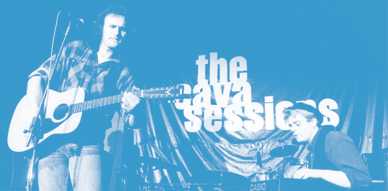
That was our only release on Surfin’ Pict Records but we had two tracks, “Ferryman” and “Promised Land”  included on The CaVa Sessions compilation LP in 1990 on the TLV label.

From the EP, “What In The World” is partly about an ex-girlfriend, as I guess is “Love & Understanding”. “Everything I Have” is a love song but also touches on consumerism, the Middle East, the US military presence in Scotland and the impending Apocalypse!

++ What about compilations? Did you appear in any?

Only “The CaVa Sessions”. Again it’s hard to find but it was available on vinyl, CD and cassette. At least 5000 copies were pressed.

++ On Soundcloud there are many unreleased songs by the band. Why weren’t they released? And are there even more songs than this? If so, have you ever thought of doing some sort of retrospective album?

Most of the songs are “bedroom demos”. There are around 30 tracks in total. I always intended to re-record about 15 of them properly and put them out as the first TLH album…but money was short and the years flew by…I got married / divorced, had 3 kids and never got around to doing the LP.

++ In general, what would you say is your favourite Legendary Hearts songs? and why?

I like most of them. I have no real favourite. All the songs mean something to me and remind me of a certain time or event. “Queen Of Lorient” from 2001 is one I really like, but the subject matter is painful and I don’t know if I ever want to sing it live again .

++ You put your EP out under your own record label Surfin’ Pict. Why did you decide to go this way instead of looking for a label? How did you enjoy doing the business part of the music?

I decided to put out the EP first and try to get a deal off the back of it. We got a couple of decent reviews but the major UK music press ignored us. We had some major label interest but no deal was ever forthcoming.

++ Were there any other releases in the label?

Yes. Watch With Mother “Suzanne” was the first, SP01. Then a band called The Crepe used the label for their release. SP02, but I wasn’t involved with that. TLH EP was SP03-12. I also released one CD album by a band I drummed with called “The Rainkings” in 1996. Copies are still available I think.

++ Tell me about gigs. Did you play many? What were your favourite gigs? Any fun anecdotes you could share?

We played less than 10 gigs in total, as it was hard to get a full time band together, as all our members were involved with other bands. This is often the way when you are trying to make a living from music. I was drumming with bands in pubs, clubs and hotels at the time trying to earn a living and writing for TLH when time allowed. I enjoyed all the gigs apart from the last one in December 2001 when I used a band who were woefully under-rehearsed. Actually, some band members had never met until we stepped on stage. It was pretty awful. The pressure of fronting a band made it hard for me to have much fun because I was so busy concentrating on my job and keeping the other guys right too.

++ How was Edinburgh back then by the way? What were the best venues? The places were people into guitar pop would hang out? Were there any good bands in town?

Edinburgh was, and still is, a great city, with some great venues and bands. The indie and pop-art crowd would go to the City Cafe, The Doric, The Wee Red Bar (at the Art College) and The Hoochie Coochie Club among many others. The best gigs were mainly at The Venue, The Music Box and La Sorbonne.

++ I’ve been to Edinburgh a couple of times myself and really enjoyed it. I wonder though were would you recommend the best haggis in town? and what about the best cullen skink?

I’m a big haggis fan! You can eat in a Michelin Star restaurant or a simple fish and chip shop and the haggis is usually very good. I like it with a whisky & pepper sauce best. Cullen Skink? Also widely available and usually good at most places in the city centre and beyond.

++ So then what happened? When and why did the band split?

The band is, and always will be, just me myself. I work with a keyboard player who I’ve played with since WWM  in ’86 and then we add members as we need them. I have a pool of guitar players, drummers and bass players who I can approach when required.

++ And are you still in touch with the rest of the band? if so, what are they up to?

Yes, I’m in touch with all of them from the early days. I still play with Lawrie Ball the keyboard player and Glyn Harris the guitarist regularly in cover bands playing around Scotland. Neil Baldwin, the bass player, was not an actual member but played on the EP and at the first gig. He was also in The Bluebells, Goodbye Mr MacKenzie (with Shirley Manson of Garbage), TV21 and is currently with a great band called The Cathode Ray.

++ What about you? Aside from music, do you have any other hobbies?

To be honest, outside of music, I don’t do much. Some mountain biking and hillwalking.

++ One last question, what would you say was the biggest highlight for the band?

Being selected in 1989 as one of the top 6 new bands in Scotland for “The CaVa Sessions” album out of 300 bands who entered.

++ Thanks again Ali! Anything else you’d like to add?

I’ll be playing music until the day I die…simple as that!

Thanks for your interest in The Legendary Hearts.

::::::::::::::::::::::::::::::::::::::::::::::::::::::::::::::::::::::::::::::::::::::::::::::

Listen The Legendary Hearts – Everything I Have

13
May

Thanks so much to Simon, Mark and Jan for this great interview! Beware the Dog were an English band from Slough and released one great 7″ back in 1987! You can listen the songs from the 7″ on Youtube, “Madam” & “Nasty Things“! Aren’t they really fantastic? So I thought it would be a great idea to talk with them and hear their story!

++ Hi Simon, Mark and Jan! Thanks so much for being up for this interview! So whereabouts in the world are you? And are you still making music?

Simon: Very happy to oblige, Roque – it is good to know that people are still interested in the 1980s.

Mark (Leechie): I’m still making music. I now live in Wokingham, Berkshire where I’m currently in a couple of active bands and I still do a bit once a year with The Morbific Seeds [https://soundcloud.com/the-morbific-seeds]. I live with my partner Suzanne and have a 17-year-old son Jack.

Jan: Back home now after 15 years living in Ireland as a photographer. Have picked up drumming again after all this time, am involved in a few projects and loving every minute of it albeit a bit rusty. My home is now in Burnham Bucks which I share with my wife and two young kids aged six and two.

Simon: My lovely wife and I live in West Sussex in the UK, not far from Brighton; our three daughters are grown up and live all over the place. I have a small studio which I don’t get enough time to use, shamefully. I am still writing music but, since converting from analogue to digital, I am hampered by my lack of ability to relate to the software.

++ So let’s take a trip back, when did Beware the Dog start as a band? Where were you based? And have you been in other previous bands?

Simon: We all lived in Slough back then – quite close to each other, in fact. The three of us came together in early 1986, having known each other for several years. We had all been in various separate line-ups. I had been in lots of local pub/club bands, playing mainly cover versions and some original material. I joined Simon Townshend, Mark Brzezicki and Tony Butler in about 1980; various line ups with ST followed over about two years until he took a solo tack with his brother, Pete. After that, I tried a string of ventures whilst renovating a house.

Leechie: I was booted out of the matrimonial home and ended up around Simon’s with a crate of beer! That was the start of a mad summer! Previous bands include The Onlookers [http://www.detour-records.co.uk/ONLOOKERS_INFO_PAGE.htm], The Morbific Seeds, The Mighty Marvels (a soul band with a chap named Eddie Pillar, founder of the acid jazz label) and various other musical projects that didn’t get off the ground. I had also done some recording for Simon in one of his previous bands.

Jan: As Simon said we all lived locally and had a social scene going, being young and single with lots of free time to spend on music. The 3 of us had day jobs so we crammed in our music all involved in our own projects. I was involved with a few local bands, Arrogant, I Can Crawl, Johnny Panic and a cover band or two. This was the time we fine-tuned our art, all being involved with recording and gigging the London circuit. Simon was always writing material and when he teamed up with Mark there was a natural spark and some good stuff was being made. I got interested and gave the project a bit of my time to see how things would pan out.

++ And who were Beware the Dog? What did each of you play? and how did you all meet?

Simon: It started when I teamed up with Leechie and we very quickly forged a solid musical – and social [Leechie laughs] – partnership. I was on Lead Vocals and Guitar. I had generally played keyboards and percussion up until then but I played guitar while we looked for a real guitarist. Hah. We spent a while looking whilst penning our first songs, and then we somehow just got used to the idea of just me playing guitar and, because we’d come to like the simple, energetic sound of ourselves as a three-piece, we just went with it. We persuaded Jan to share his time with us, although he was heavily involved with another project at the time.

Leechie: I was The Bass – and backing vocals.

Jan: I played Drums.

++ Where does the name Beware the Dog came from?

Simon: Mark and I wrote Madam (our very first creation) and the idea of the dog reference was amusing. We eventually twisted it into a catchy name which also closely resembled a commonly used sign so maybe people would easily remember the name. After a while, we were actually known as ‘The Dog’.

++ When you were around, which other bands did you guys liked? Who would you list as influences?

Leechie: I was young enough to have witnessed the Punk movement first-hand. I guess The Buzzcocks, Magazine, The Jam, The Sex Pistols, The Ramones and The Clash got me into playing music first and then got into all the 60s beat music: The Kinks, The Who, The Beatles and even rarer ones too numerous to mention here. I also love soul and Reggae.

Jan: Although my drumming was rock/pop based I was listening to Sly and Robbie, Grace Jones, Simply Red, Prefab Sprout and disco stuff like Chic, Sister Sledge and WHITNEY HOUSTON!

++ You only released the “Madam” 7″ single. And how great are the two songs on it. Care to tell me a bit about each of the songs? What’s the story behind them?

Simon: Thanks!

Simon: The story behind Madam was about young love, general misunderstandings and incompatibility within relationships.

Leechie: That’s a polite way of putting it!

Simon: Nasty Things was a nod to the horrors which sadly appear in the papers every so often. The playful music is an ironic reference to the way that, after the event, the perpetrators seem to give casual, bizarre or banal account of their heinous crimes.

++ How do you remember the recording sessions for the single? And why did you choose these two songs?

Simon: We recorded a few tracks at a small studio: ‘The Padded Cell’ in Colnbrook, near Heathrow Airport. Madam and Nasty Things were both short, sharp tracks with very different themes and we felt comfortable with how they sat. It was a great time and as I remember; the whole process was just straightforward.

Leechie: It was a lot of fun, I remember that. What I also remember is that there was this humming noise that kept appearing on the backing tracks and we couldn’t figure out where the hell it was coming from until…

Simon: … we realised that Jan was humming during the takes.

Jan: Unfortunately I still do that… bummer! It was a habit I picked up from years learning to play whilst humming the bass line to myself. I have a daft concentration face as well, it’s a good job I’m sat at the back!!!!!! Yep, I remember the session and it was a blast, happy days indeed.

++ I also happen to like very much the artwork for the single. What’s the story behind that?

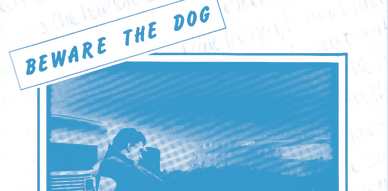
Simon: Jan (Spidey, the photographer) took a great picture of my 1963 Humber Super Snipe on a cold winter morning. We thought it somehow captured the spirit of the theme of lost love that is at the heart of Madam. The picture on the sleeve for Nasty Things was found in an auction lot and, having now searched the internet, I believe it was from a set of sketches by Polish artist and Dachau concentration camp survivor Jerzy Zielezinski. I had a load of art studio stuff set up at the time and I designed and created the artwork for the sleeve.

++ And how come you didn’t get to release more records? I ask because, clearly you had many more songs!

Simon: We released the single as a sort of banner and I guess we could have got some more songs out there but we were concentrating on trying to land a major sponsor, so it was somehow low on the agenda.

++ Do tell about these other songs. How many songs did you actually record? And in general, which would you say is your favourite Beware the Dog song and why?

Simon: We recorded (live) a bunch of songs at rehearsals and did indeed record a few more tracks at The Padded Cell, which included Heartbreak and Waste of Space [http://www.youtube.com/watch?v=n2Y-CVnxxiw]. Waste of Space is my personal favourite because I got to say what lots of people had in their minds and I like to think I gave it a catchy, simple and light-hearted tune.

++ Let’s talk about gigs, did you play live often? Which was the farthest you ever went to play a gig?

Leechie: We didn’t play much beyond London. We spent a lot of energy doing as much ground work as possible to promote the gigs – we even recorded an ad for our first gig that we put out on Capital Radio, which was a hoot! In those days you had to go around the local area at night with a bucket of paste and an arm full of posters sticking them up everywhere local to the gig. No Facebook in those days.

++ And which would you say were your favourite gigs? Any anecdotes you could share?

Simon: It was brilliant playing live because, as a three-piece, we could basically do whatever we felt like. We jammed through extended versions of the songs a lot of the time and improvisation was easy because it was just up to me and Leechie staying in the same key and Jan nailing it all down. I think, for me, our run of slots at the Rock Garden in Covent Garden was the best.

One time, I broke a string early on in the set. I finished the verse, scurried off to the side and, within a few moments, I had the new string in place – albeit a few tones low. I sang another verse with the volume down, at the same time tensioning the new string. As we approached the chorus, I added an impromptu few bars and hit the volume in order to get the string in tune. Just on cue, we made the chorus as the string climbed up the scale and (although I say so myself) it sounded awesome! Things like that really hit home with an audience and the write-up in the paper was all about ‘the string change mid-song’. Professionalism is indeed key!

++ The single was released in 1987. One year after the influential C86 tape. I was wondering, did you ever feel part of a scene at that time?

Leechie: Not really. I liked a lot of the bands: MCARTHY, Bodines, Wolfhounds, but sadly we just missed the crest of that particular wave and really we were a little different from the scene.

++ And so then what happened? When and why did you split? What did you guys do after?

Simon: We were gigging a lot around the time when the ‘Acid’ scene was just about to kick-off. I managed to land us a gem of a slot at a nightclub called La Val Bonne to coincide with one of the very first events given over to the new craze. It took a lot of effort to convince the Night Club Manager that this was going to be a big movement and he eventually agreed for us to headline on the second night. This was a really flash club at the time and for the first time in its history they were going to allow people in wearing ‘T’ shirts! It sounds daft now but back then this was a massive shift.

The plan was to play a totally dynamic set with no songs as such – but snippets of lyrics, monster grooves and blazing chords (the place had a fabulous sound system). However, as it turned out, Jan had booked a holiday; I asked him to cancel it because this was such an important opportunity but he said no. Leechie refused to do the gig with a session drummer, I got upset… end of story.

Jan: What we were about to do was a massive deal, there weren’t bands doing the whole mash up acid/club thing, it was being done live by DJs but not by live bands! It was a serious undertaking to do it properly in a named high profile club (no pressure) and there was not the time scale to prepare for it. My mantra, if it’s worth doing… Sadly, that was the beginning of the end.

Leechie: I liked the Acid scene, but sadly doing a gig without Jan at the time was unthinkable as we were all good mates in it together. My loyalty upset some people. It’s a shame that we don’t have recordings of some of the more Acid BTD ‘cos that was an interesting progression.

++ And what about today? What do you do? Any other hobbies aside of music?

Simon: I am an engineer and spend far too much time behind a desk. I am in the early stages of writing a musical. I love snow-skiing and hitting tennis balls.

Leechie: I’m still making music – currently as a member of both The Transients and The Leopolds and I have a few other projects on the go. Last year I had an old demo released as an album by the Onlookers ‘Blue and green and tangerine’ [http://www.boredteenagers.co.uk/ONLOOKERS.htm]. Day job as a sparky. Not much work about at the moment though.

Jan: By day I’m a househusband. By night I’m playing drums with Hubba Bubba a disco\pop covers band and have recently completed an album with my old buddies from I Can Crawl which is proving to be awesome! I still do photography, albeit part time [http://janwilgaphotos.com/].

++ Let’s wrap it here. If you look back in time, what would you say was the biggest highlight of Beware the Dog?

Jan: Playing exciting, fresh music with a great bunch of guys. A great ride. Happy days.

Leechie: I agree with you there, Jan. It was a fast ride and great fun! Cheers guys!

Simon: For me, breaking a string at The Rock Garden!

++ Thanks so much again, anything else you’d like to add?

Simon: You too, Roque; good times!

Leechie: Yes, cheers Roque for showing an interest and looking back. It was fun.

::::::::::::::::::::::::::::::::::::::::::::::::::::::::::::::::::::::::::::::::::::::::::::::

Listen
Beware the Dog – Waste of Space

10
May

Thanks so much to Dave Jones and Matt Bolter for this fantastic interview! I wrote about Turn to Flowers a long time ago and they were kind to get in touch and tell me the story of the band! Now sit back and enjoy, it’s never to late to discover a great band!

++ Hi Dave and Matt! Thanks so much for getting in touch and being up for an interview! You were telling me that you all are still around in different guises, so yeah, what are these guises? In which bands or projects are you involved these days?

Well, Matt is now a father and still very active in music – performing with his original songs band called Statedancer and a covers band called the Robbers. He writes and records regularly in his home studio. (music available on itunes – search for statedancer)

Dave is a now a doctor but is also still involved in music and theatre. He writes his own songs in his home studio and tends to get onstage acting, singing etc at any available opportunity!

Steve – sadly we’ve lost touch in all but Facebook – don’t know what he’s up to currently.

Paul – lives locally and works in multimedia. He did a couple of stand in stints drumming for us.

++ Let’s go back in time. When did Turn To Flowers start as a band? And had you been in bands previously? Or was this your first incursion into music?

When did Turn To Flowers start as a band? Formed about 1983. We’d all been in a couple of School bands and there was one early incarnation with Matt, Steve and Paul called the Misistry. We were all self taught except Dave who had learned the piano from an earlier age.

++ What inspired you all to have bands, play music? What are the first “music” memories you have?

Matt: I always wanted to get up there and “do that” – especially if I heard something that was crap and I thought “we could do that better”.

Dave: The desire to get up and perform really. Loved the vibe of playing live.

Matt: Let it Be (Beatles), Trex, Slade, the Sweet.

Dave: My brother (completely a-musical) taught me a healthy love for heavy rock – ACDC, Rush, Deep Purple, however being  younger was a child of the 80’s – so was brought up on a healthy dose of 80’s cheese – new romantics and indie etc.

Although these were earliest memories our influences were taken from Beatles, 60’s psychedelic, funk, Jazz, Punk, Blues, some classical.

++ So how did the band come together, how did you all know each other?

Matt met Steve and Paul at college and they were looking for a keyboard player. Matts girlfriend at the time (Sue Lees – the sort of “Janine” in the relationship) knew Dave and introduced them. The band started rehearsing in a old (derelict) village hall in Partington, Cheshire – it barely had floorboards. We started doing small gigs around Manchester (The Boardwalk, Jilly’s, Middleton Civic (often playing with the Mock Turtles), the Green Room, Band on the Wall, PJ Bells, The Roadhouse and other smaller venues).

++ What about the name of the band? Where does Turn to Flowers comes from?

Turn to Flowers comes from the fact that we were about to give a tape to someone, and we didn’t have a name. The song “she turns to flowers” by The Salvation army who later became the Three O’clock was playing – so it was just plucked from that. Crazy.

++ Tell me about Manchester. It must have been fantastic living there in the 80s with the amazing amount of great bands in town. Plus you had the Hacienda of course. How did you like it there? What were your favourite local bands? and where did you usually hang out?

Yes it was fun time and there was so much music going on – it’s a bit weird that when you’re there, you don’t quite realise the significance of the emerging bands and the emerging Manchester scene. Later on, the Stone Roses emerged and we were big fans of them. Ian Browns brother used to play tambourine in TTF for a while – he was like our “Bez” character. Apparently Ian used to think that we’d get signed before the Stone Roses – but we now know they were signed and became massive.

++ And compared to these days, would you say that Manchester has changed for better or for worst?

Definitely the worse. The music scene is nowhere near as vibrant as it once was – there are precious few live music venues these days. There are lots of big club nights but many of the band venues have ceased to be.

++ You only released the one EP on Imaginary Records. How did you end up signing with them? Were there other labels interested?

We basically did the old thing of sending tapes to record companies and got picked up by Imaginary. They had a few bands on the books including the Mock Turtles who also released EP’s at the same time. We also recorded a version of the Kinks “Village Green Preservation Society” which was released as a Tribute to the Kinks (Shangri La) on Imaginary. We felt proud of our version! Sadly we don’t have a copy of this anymore. If you get one – let us have a listen!!

++ Tell me about this EP. Care telling me a little about each of the songs on the record? And which one is your favourite?

People Change like the weather: Probably our most popular song. It’s about a relationship breakup – like many songs.

On Her Own: This is a song about the same person but was originally written for a college play. There was a theme about dolls marching – therefore the marked riff. We would have loved to do this with a real cello/orchestration.

Listen to the deadman: “Pure gobbledygook” (Matt’s words). Written like they’re meant to mean something – but they don’t!

++ And you were also telling me that there are many more Turn to Flowers songs. Will they ever be released? And why weren’t these songs released back in the day?

Well we were due to release another EP – but for one reason or another with the record company (mainly money), we never got the chance. Maybe we should think about putting the others on itunes – better that than letting the tapes just degrade.

++ What do you remember from the recording sessions of the EP at Suite 16 in Rochdale? How was that experience?

That was a great and fun time. We had an engineer called CJ who was great fun. I (Dave) personally remember laughing a lot, but also caught up in the excitement of our first proper recording sessions – we wanted to make a really good record – but we have a damn good laugh along the way. Suite 16 had been used by lots of major bands (New Order, Joy Division, A Certain Ratio, Happy Mondays, Railway Children) so it felt pretty exciting to be in such esteemed company. We had access to New Orders “Emulator” (a true vintage keyboard) – which they had used to record “Blue Monday” on there. We used their cello samples for On Her Own and also used some guitars from the Chameleons – particularly their 12-string.

++ Maybe there were no more Turn to Flowers releases, but perhaps you appeared in compilations? Do you remember if you ever participated in any? Maybe in those 80s tapes that were given away with fanzines?

See above about “Shangri La” – tribute to the Kinks. We’d love to get hold of a cop of that! Our first CD.

++ And talking about fanzines, how did you like that culture in the late 80s?

We really didn’t go into the fanzines. It wasn’t a big thing for us at the time. We paid some lip service to the NME and Melody maker – but their reviews just tended to annoy (often being overtly negative – and reports written by non-musicians).  At least the fanzines would tend to have an enthusiastic and positive viewpoint in stark contrast to the music press.

++ And what about a scene. Did you ever feel part of one?

Not especially – although we did feel an allegiance with the other Imaginary records signings. Especially the Mock Turtles – as we did so many gigs with them.

 ++ Let’s talk about gigs. Which were your favourite and why? Any anecdotes you could share?

Dave: one of the best ones was when we were in the ascendancy and we were asked to headline a gig (at the Green Room) and the Mock Turtles supported us! Martin Coogan wasn’t happy about that – he always felt they were the better band. Other great gigs were at Manchester Uni (when we were supported by the comedian Steve Coogan (now a film and TV star) – who is Martin Coogans (Mock Turtles) brother. It was brilliant to think weve been on the same bill as Steve Coogan!!

Probably the highlight was supporting the Stone Roses at the Powerhaus in London (Islington). This was just as the Stone Roses were breaking through and a time when we were really starting to motor ourselves. It was an exciting time.

++ And then what happened to you guys? When and why did you split?

Gets a bit complicated. We had another guitarist involved (Mike Anderton) who took lead and we continued for approx 1-2 years without any further signings or record deals. There were a few “musical differences” emerging but the band had probably just run its course. Rather than splitting, we sort of ground to a halt!

++ After Turn to Flowers you were involved in Black Fat Cat and The New Originals. Care telling me a bit about these bands?

Yes – Dave had gone off and formed a band called The Elysian Fields. The line up was Sean (vox), Paul Lockett (guitar), Andy Treacy (Drums – he now plays with Faithless) and Colin Robb (bass). After this, Dave and Colin teamed back up with Matt to form Fat Black Cat. We auditioned for a drummer and a female singer and soon enough we were joined by Helen Garner (drums) and Alison Donohue (vox). We probably had a lot more success in terms of big gigs with FBC. We had two UK tours with the Australian Doors Show which took us to all the major venues around the UK from Aberdeen to the London Shepherds Bush Empire. Although we released our own EP with FBC, we were never formally signed. The New Originals was a band we formed as a covers outfit to fund our touring costs. It worked really well and actually outlived FBC by many years. We only really stopped playing with the New Originals in 2011 – when our dear friend and band member Colin died at the age of 47 from Oesophageal cancer. We have done one or two “special” gigs since then but it was very difficult to carry on after losing Colin. Matt has since formed a new covers band called The Robbers (in memory of Colin) and as mentioned above is still actively writing and playing with Statedancer.

++ These days, aside from music, what other hobbies do you have?

Dave is doing more and more with the theatre and loving it. Matt has a new love for eating salad and exercising – something very alien to him when we were playing in Turn To Flowers!

++ So, are you a United or a City fan? Who were your favourite players ever in your team?

Dave: United. All the way. About to win our 20th league title. I’m a season ticket holder. We have had SO many brilliant players – my personal favourites are Cantona, Roy Keane and Andre Kanchelskis. We have a very rosy future – but our inspiration manager Sir Alex Ferguson can’t go on forever. It’s going to be a terrifying time when Fergie finally goes. Matt hates “dull ball”!

++ One last question, what would you say was the biggest highlight for Turn to Flowers?

Well it has to be the first time we saw our record in print and supporting the Stone Roses In London. Definitely!

::::::::::::::::::::::::::::::::::::::::::::::::::::::::::::::::::::::::::::::::::::::::::::::

Listen
Turn to Flowers – People Change Like the Weather


09
May

Plastilina Records, the label based in Lima, Peru, has many new releases this year. I thought it was a good time to interview the person behind it these days: Jalito.

++ Hi Jal. You’ve got some new releases coming up after being quiet most of the year. Can you tell me about these 3 new releases coming up? Pinkie, Nubes en mi Casa and Diosque?

Hi! Yes! I’ve been quiet most of the last year because I focused more on discovering Latin-american indiepop bands and promoting my record label in Brazil, where i lived for nearly a year. Now I am back with fantastic new music as Pinkie from UK… This is Alex Sharke’s proyect ( Member of the legendary Brighter. Fosca, Hal, etc…) Plastilina is releasing his second album called “ Somehow It Feel Like Rain” after being almost 8 years hidden. An album full of lyricism, nostalgia, beauty and superlative elegance.

Nubes en mi Casa and Diosque are my newest gems that I found in the South American region. Both are from Buenos Aires – Argentina and bring us perfect oneiric atmopheres that’ll wrap you easily. Highly Recommended!

Also I just released what may be one of the best albums of 2013! “ When you and I were Really Young” from Silver Screen! An álbum with a fluid guitar sound reminiscent of COCTEAU TWINS, married to a gentle pop sensibility very near to the sounds of bands like THE SMITHS or IAN BROUDIE of THE LIGHTNING SEEDS, and, indeed: artists of past decades on the adored Sarah Records label. You really must give a check!

++ I see you are releasing for the first time some South American bands. What does that mean to Plastilina, being a South American label?

Since we started this label around 2006 Plastilina was always looking for Peruvian and South American artists but the lack of bands at that time (in indiepop terms) forced us to look for foreign sounds. Years after we witnessed how this regional scene grew with amazing bands such as Nubes en mi casa which actually was on the last line-up of the SXSW Festival in Austin-Texas. Diosque which has one of the best regard albums in our continent, Eva & John which is our new Peruvian discovery! And many many more talents are appearing!

++ And what about Pinkie? Working with someone who has been involved with cult bands like Brighter and Fosca! How has your relationship being with him?

Alex Sharkey is one of the most talented persons that we have in our home. We have following his work for years and once we figured out that he was in the process of recording his second álbum, we were in touch for at least one year and finally got to release his amazing second album. I’m personally quite surprised how this guy can keep his roots in every different proyect that he has…. “ Somehow It Feels Like Rain” is an album of 11 perfect dreamy songs that reminds me to Pale Saints’s voices, Cocteau Twins’s guitars and Beach Boys’s chorus! Highly recommended!

++ I’ve heard that there are many other releases coming up, seems you’ve gotten busy as of late. What else is coming up on Plastilina for the near future?

Yes… we have a tight schedule this year… We recently released the newest Silver Screen album “When You and I Were Really Young” which goes over very very well in Japan and some other countries in Asia. Also, Eva&John, which is our first Peruvian band on the label! And at the same time we are gonna start a new series of releases on flexi discs. We finally got them! Also Coconut Groove’s second álbum, “How To Build a Maze” will be our next one… and then The Tartans and their full discography, plus unreleased bonus tracks is our new challenge.

++ Let’s go to the early days. When and how did Plastilina started as a label, and did you imagine being around this long? what expectations did you have then?

Plastilina was born in late 2005 when Roque and I, along with two other enthusiastic friends of mine decided to be part of the new change. Unfortunatelly, at that times, Lima (our city) had a monotonous independent pop scene. So our idea was to create a new plattaform to encourage people to make pop music. Since we didn’t have a proper local band to start this project with, we replace that idea with hosting our own events like gigs, festivals, a record label’s fair and themed parties with the few bands and attendants we had at that time. Years after years this has been growing and now we are in the process of making our independent scene even stronger.

++ As years passed you’ve released more than 25 CDs in a country were piracy is number one, where copied CDs are what people prefer. How have you managed to tackle this problem?

CD piracy was never a trouble for us since our prices in the local market are pretty accessible. I personally believe in spreading music through streaming and blogs that share and allow music to be downloaded. I do support piracy in small scales… As long as any third person who is not involved in this can make any kind of profit. I don’t think that that can be trouble for independent record labels since nowadays our objective public is entirely made up of music collectors and true music lovers that truly believe the only way to keep this alive and releasing great stuff is by supporting and buying originals, thus rewarding bands. Just true lovers of music.

++ Running a label is never an easy task, there’s problems, but there are times that are very rewarding as well. Which releases are you the proudest of? And if you were to choose one release that sums up the spirit of Plastilina, which will it be?

Absolutely, during all these years I have experienced lots of anecdotes and have worked with many different people from various countries and cultures. Choosing my most rewarding moment is a very difficult question but I may mention that it was very very cool working with such amazing bands like Twig, St Christopher, Alex Sharkey( Member of Brighter, Fosca, Hal), Diosque and being able to arrange Plastilina shows abroad in places like Brazil, Argentina or Djing in Sweden, Germany and other countries. Definitely, the releases what I feel proudest of are “Life After Ridge” by Twig, “ Bote+Brote” by Diosque and “Lost at Sea” by the emblematic St Christopher! Uff!

++ Are there any labels that you would consider as influential to Plastilina?

Totally. I am very much a fan of the work of Hardly Art, Beko, Matinee, Fuego Amigos, Sincerely Yours, Labrador, Siesta ,Cloudberry, Shelflife and many, many more. I love how these labels have kept their musical aesthetic despite
those rough times when the music industry tries to kill you.

++ Tell me about Plastilina’s setup, your office and stuff? How far do you have to go to the post office? What’s like a day in Plastilina?

Nowdays Plastilina’s office is ran from my home in Chorrillos… a really nice neighborhood next to the beach and 15 kilometres from downtown Lima… A day in Plasilina is pretty mellow… checking emails, creating, designing and discovering artists for the label, emailing distros and customers, listening to demos and new music while I make something yummy for lunch, then again… coordinating the next gigs and festivals , biking to the postal service in the afternoon, which is only 5 minutes from my place, watching movies, planning to trips to new places at night and having some beers with friends on the weekend That’s pretty much my life.

++ And by the way, why do they call you Jalito? Isn’t your name Jose?

It’s kind of a secret….. but I can give you a clue… It’s about the Halley comet! 😉

++ So Jal, how did you get into indiepop? How did you discover it?

I was always so passionate about music and I think this is one of the very few ways to discharge all the tension that everyone gets from living in big cities. I began listening independent music when I was around 13 years old… I was
pretty interested to hear new sounds and I discovered New Order and Cocteau Twins which changed my perspective in life at the time. Then after listening lots of 80’s pop music I got into guitar bands such as Yo la Tengo, Pavement, Built
to Spill, The Pastels, etc… Then Spanish pop caught my attention and led me to discover an unreleased tribute to The Field Mice which was the beginning of all of this.

++ Which would you say are your favourite bands? And if you could, can you give me a top 5 songs of yours?

I really like when interviewers comes to this same question all the time. I’ll take a look into my collection and mention 5 acts that were significantly important in my life.

Bands:
The Siddeleys ( UK)
The Embbasy ( Sweden)
Silvania (Peru)
Aztec Camera ( Scotland)
Air France (Sweden)

Top 5 songs:
Something Almost Brilliant Happened Last night – The Siddeleys
All the Dark Horses – The Trash Can Sinatras
This Chain Won’t Break – Wild Nothing
No excuses – Air France

++ Actually, have you ever been in a band?

My closest experience with a band was back in 2004 when I tried to be the drummer in a twee pop band. We all met via soulseek and arranged a rehearsal (that’s how we met for the first time!) and then we came up with a lightning bolt band called Los Rebeldes Walkies Talkies… This band recorded around 4 songs that were included in some local magazines… Now I am about to take some lessons to produce music on my computer. Hope to have this done soon!

++ You don’t only release records but also organize gigs and club nights in Lima. How do you enjoy doing these? And how successful do you think they are? How big is the indiepop scene in Lima?

To be honest Lima has a small independent scene despite that it has around 9 million inhabitants… Even though this city is pretty big and has about 49 districts everything is summed up in 4 of them. That’s why I am planning to expand my events/organizations to create more accessibility for everyone. Plastilina shows have gone very well in the last few years. I have around 150 enthusiastics followers that always come when I set up gigs, festivals, etc… I pretty much enjoy doing this and even moreso when I see those smiles of happines, or people singing the songs, or simply when people dance with their eyes closed. That’s pretty rewarding.

++ What would you say has been the highlight of Plastilina so far?

The highlight of Plastilina is to have been recognized by people from every country that we’ve traveled to and also to have our faithful followers in Japan! I think that’s pretty much exciting! One of my plans for the near future is
to actually travel over and make a Plastilina pop party in Japan! Can you imagine!?

++ And where do you see the label 5 years from now?

I see Plastilina with a subsidiary in the States or Europe that basically would be in charge of releasing our same albums on vinyls. Also working even harder to make our bands participate in festivals like Primavera Sound, SXSW, etc. Getting more synchronization licensing for our bands to be able to be on soundtracks in movies and more. That would be really cool, indeed!

++ Everytime someone involved visits Lima, you give them a tour. So, what places would you recommend visiting if someone was to go there?

Yes. I love to meet people involved from all over the world and exchange information about our work. That’s very productive! Lima is a such big city… I would recommend to get a bike and make a tour around Barranco which is one of the nicest areas in the capital.. very beautiful, cozy and charming. Also, go around Miraflores’ promenade around 5-6pm to see one of the nicest sunset in the Pacific. I’d also recommend to visit some art galleries like Revolver, Centro Colich, if you are around those mentioned areas … then downtown! And goes directly to Quilca’s galleries to DIVE and look for some Peruvian gems on vinyl from the 60s or 70s. So much amazing music throughout that period. Then keep walking til Queirolo ( one of the oldest bars in Lima) have some Pilsen Callao, relax and keep walking til Plaza de Armas which is the main square and just next to there is the “ Alameda Chabuca Granda” which is a boulevard where you’ll find lots of traditional food and deserts.. I recommend eating e v e r y t h i n g.

++ And what would you say is your favourite Peruvian dish and beer?!

Peruvian food is absolutely great. Actually, It’s one of the few things that I really miss of Peru when I am abroad. I may say that I am really into seafood as I live really close to the sea. Dishes like Rissoto con Mariscos, Ceviche, Leche de Tigre and the best invention of humans: Conchitas a la Parmesana along with some cold Pilsen Callao (beer) It’s just like heaven!

++ And when you are not listening to music, or releasing music, what other things do you like to do?

I like to spend time with my very good friends outdoors or at their places watching movies , cooking delicious food or deserts or simply playing table games with them. Also I really like to explore more about my city and taking pictures… Also relax and read on my bed… that’s how I enjoy life.

++ Thanks so much Jalito, anything else you’d like to add?

Remenber that we all like to dream, but also we must make things happen. .Thanks to you! I really enjoyed answering these unusual questions! See you soon!

::::::::::::::::::::::::::::::::::::::::::::::::::::::::::::::::::::::::::::::::::::::::::::::

Listen
Silver Screen – Really No Wonder

31
Mar

Thanks so much to Katie for this second interview. Not so long ago we talked about her previous project, The Wilson Hospital, which was the band through I got to know her music. These days she is busy with her current band, Katie Goes to Tokyo, and it seems that at last she’ll be going to Tokyo this summer! Under Katie Goes to Tokyo she has released two albums that I totally recommend! If you want to know a bit more about her music, just keep on reading 🙂

++ Hello again Katie! How are you? Now in Los Angeles, right? How do you like it there? First time you visit?

Hi again Roque! I’m great! I’m in Vancouver at the moment and I think it might very well be one of the best cities in the world. I love it here. I just got here from Los Angeles (with a detour to Hawaii). Los Angeles and Hawaii were also great, but I guess I’m not really a beach girl. I’m more of a down hill skiing/mountain climbing girl. Lately I’ve been a lazy-hanging-in-hotel-room-girl though.

++ And you are going on tour soon to Japan and Korea! When is this? And what can your fans there expect?

Yes! I’m so exited to go there. I have never been to either Korea or Japan before so it will be an adventure. The plan is I will go to Korea in the beginning of June and stay for about a week and then go to Japan. My Korean record label Some Music and my promoter Ruby Records are putting together a tour for me that includes TV-performance, interviews, club-gigs and gigs at the Swedish embassy. I will play with a great Korean band called Mushrooms and we’ll hopefully record something together as well. I’m sure it will be a trip to remember. I’m really looking forward to meet my fans and all the people who have been working so hard for me over there.

++ So at this moment you are recording the third Katie Goes to Tokyo, album is that so? What is missing for you to finish and all of us be able to buy it?

Yes, I am…The recording of my third album has been going on for a while now and It’s going well, but I’m not there yet. It’s been a little up and down. I have written so many songs only to trash them a week later thinking they are no good. I guess after 2 albums you can’t help but get affected by what other people think or might think – maybe it’s something you’ve read in a review or something someone said about your previous albums. When you are an artist people always have an opinion about how you should sound, look like etc. I don’t want to give any attention to it, but I guess do. Sometimes. I’m gonna let this 3:rd album take its time. In other words: It’s in progress and will be finished when you least expect it!

++ And how different will your next album be compared tot he previous ones?

I don’t know. I change my mind every other week so I better not make any promises.

++ Do tell, how different is Katie Goes to Tokyo compared to The Wilson Hospital? I see Mårten still contributes with you.

KGTT is not as much 60’es (sound wise) as TWH and KGTT is not a band – it’s my solo project. After the demise of TWH, Mårten didn’t really want to front in yet another band. I just wanted to do my own thing for a while. So we decided that I should go solo. Still, when it was time to record my songs it was only natural for us to work together. It took a while for us to set the terms for the whole project and there was a bit confusion going on for a while as to the sound etc. I guess we were trying to pull the project in opposite directions. For me, the whole idea with KGTT was that I should be able to do my own thing without compromising with anyone. At one point I started thinking that if we’d continue working together then maybe we would end up as enemies. So I fired him. It only lasted for like a day. I didn’t really want to continue without him. In the end, when it comes to music there is no one else I admire as much as Mårten. There is no one I can speak my mind to as easily as him, and he gets me, even if we don’t agree on everything. So we sat down and had a very long talk and made up some rules. Since then everything is going smoothly.

++ Why the name Katie Goes to Tokyo?

The Wilson Hospital released an album in Japan in 2002. We really wanted to play in Tokyo, but unfortunately that never happened. When I started KGTT I wanted to set out a goal for myself. Something that I could look forward to. So then again I came to think about Japan and how it would be so great to go there one day. That’s why I chose the name “Katie goes to Tokyo”.

++ Let’s talk labels. The first album was released on Tap Your Feet Records, who were they? And how did you end up with them?

Tap Your Feet is actually Mårtens company. The truth is that after all the struggle with Backfish and The Wilson Hospital, I was just fed up with labels and publishers. And I thought that if we had full control over the recording rights and the publishing rights then we would never have to argue with anyone again and still get our music out there. We would be able to decide for ourselves who we wanted to work with for promotion and how to do things in general. Mårten had just started his own company and so we decided to release my first KGTT-album on our own.

++ And then the second album was released on Redberry (great name by the way!), who are they and how is the relationship between band and label?

Haha, thank you! Redberry is my company. I started it right after I graduated from law school in 2007 and so when it was time for the release of my second album, My Naked Heart, it was just natural to use my own company instead of Mårtens. There’s a lot of paperwork, bookkeeping and economic risk at steak when you release an album and I just thought I would save Mårten the trouble, if any. For my second album I signed with a manager, PR Agencies in both Sweden and Canada and a music publisher. Some Music is releasing both my albums in Korea and Ruby Records handles the PR. They are amazing and I am so happy with their work!

++ Now let’s talk songs.  I really like your lyrics so I wonder, what inspires you to write them?

Oh, thank you very much! I can’t take all the credit for the lyrics since I usually co-write them with Mårten. I guess the main thing that inspires me is people, just ordinary people doing ordinary things. Lately I’ve been thinking a lot about why I chose this life. Traveling has made me realize that there are so many people out there just like me, doing the same thing as I am – recording music, loving what you do one day and then hating it the next day, being beyond happy when you hear your song on the radio, getting really annoyed by that one bad review although you got 10 good ones, smiling all day long after one nice e-mail from a true fan, arguing with your music publisher, having writers block, thinking about quitting, resenting the very same thought, starting over. I’ve seen many people quit over the years and I always think they will regret it later. But who knows. I’ve promised myself that when writing music don’t make me happy anymore then I will quit. I guess I fell of the topic a bit there, sorry. I write about my life, ordinary people and love. I never write about politics. The game of politics makes my brains boil. It’s all about the package and the rhetoric. All I want to know is the truth.

++ And what about the creative process? What comes first, lyrics or music? And how did that first idea becomes a proper song in the end?

I always start with the music and then the lyrics although I know it would be much easier the other way around. I find it much harder to write lyrics to music than to write music to lyrics. But somehow the music always comes first. I usually come up with a melody when I’m out walking or doing something mechanical. I usually record it on my iPhone, but I rarely listen to what I’ve recoded. I figure that if it’s any good then I’ll remember it anyway. I write down the title for the song and what the song should be about – I basically just write down everything I can come to think of which usually leaves me with several pages of text without structure. This is where Mårten steps in, finds the missing lines and makes sense of everything. We record the music pretty early on, long before the lyrics are done. Both Mårten and I play several different instruments so we record everything ourselves.

++ I really like from the second album the opening track, “A Long Way From Anywhere” and also “My Naked Heart”. Do you mind telling me the story behind these songs?

It’s about trying to succeed but not feeling like if anything you do is enough. Once you’ve overcome an obstacle you realize there is a much bigger one ahead. But you keep on trying, sometimes not knowing why you do it, or if it’s even worth it. “My Naked Heart” is about being honest about who you are and not doing or saying what¨s consider to be the right thing within the group of people you interact with.

++ And which would you say is your favourite Katie Goes to Tokyo song and why?

“Moving from this town” is my favorite KGTT song, I don’t know why. Maybe because it was the fist one I wrote for my first album.

++ You prefer recording in Canada these days. Why is that? Is it much different compared to Sweden?

I can record anywhere, but I love being in Toronto. I like the city, the people. Makes me feel like home. It actually reminds me a bit of my hometown, Skellefteå. Canada is not very different from Sweden except for the mentality I guess. People seem to be less stressed in Canada and more friendly. I don’t know. In Sweden I always get the feeling that the morality is that you should know your place and not try to be better/different than anyone else. Other than that, Sweden is a beautiful country, especially northern Sweden where I grew up.

++ I noticed you’ve made plenty of videos for your songs. How do you enjoy doing them? And who comes up with the different concepts for them?

Yes, I love making music videos! When I hear a song I always imagine how the video would look. I have so many ideas for music-videos that I will probably never be able to use. I was lucky to work with Maria Stenlund, who has filmed most of my videos and also created the concept for “One Way Conversation“. We’re both amateurs, with a lot of ideas and we make a great team. “A Long Way From Anywhere” and “Suburban street” was created, filmed and edited by professionals. I had so much fun shooting those videos. The Stockholm Roller derby is in “A Long Way….” They were fantastic! And my co-star in “Suburban street” is Adde, a 10 year old skate pro…he was awesome! Rollerblades and skateboarding – 2 things I wish I was good at.

++ I really like the “One Way Conversation” video, but which is your favourite one? Why?

I don’t think I have a favorite, I like them all. The videos for “Moving from this town” and “Until she breaks” (my 1:st album) are great. They both have fun concepts. I guess to make a good music video, you must see to that the scenery and the story compliments the music. A good music video does not take focus from the song – it makes the song stronger.

++ I believe your sister also stars in that video. So I wonder, is there anyone else in your family that is involved in music, or are you the only one? And do say when was the first time you picked up an instrument?

Yes, my little sister Isabelle is in 2 of my videos (“One Way Conversation” and “Paper Moon“) and my niece Agnes is starring in the video for “Good morning Accidents”. Everyone in my family plays an instrument and sings, so I guess we could form our own orchestra if we wanted to. My dad used to play bass in a rock band in the 60’es and then another band in the 70’ies and 80’ies so we had a lot of instruments at home when I grew up. The first instruments I learned how to play was either the piano or the flute. Not sure. My dad taught me how to play guitar when I was 16.

++ And talking about the videos, you aren’t a video professional are you?

No, but I wish I was.

++ So do you play live shows often? Which has been the best so far, your favourite?

I don’t play live so often. It’s hard because I need musicians to play with me and for that I need money. Or I guess I could just sing to backing tracks. I never tried that. I think my favorite gig is yet to come 😉

++ What do you say, so far, has been the highlight of Katie Goes to Tokyo? And where do you happen to have most of your fans? Can I guess Japan?

Oh…there are so many. But I remember feeling really happy when Swedish radio started playing “Moving from this town”. And when they picked up “Little sister” I felt really blessed. There’s something special about hearing your own music on the radio. I don’t know where I have most of my fans. Korea or Japan maybe. My Korea-Japan tour will certainly be a blast, but I won’t celebrate until I’m actually there. Anything can happen between now and June.

++ And now that you are going to Korea and Japan, aside from the music, what do you plan to do there? Visiting any particular sights? Go shopping? Eating new food?

I’m not sure I will have any free time. I will probably be very jet-lagged and sleep whenever I have the chance. But when I travel I usually check out the local art museum, if there is any, and historical places. I always hope that I will feel something special when I go to historical places, that there will be some kind of energy there. Unfortunately that is often not the case. I guess when a historical place becomes an institution then everything that’s magical about it disappears.

++ And after this Asian tour, what’s the next tour you wish to do? What other countries would you like to play and visit?

My highest priority is to finish my album, but after that I would love to go to Iceland. It seems so beautiful. I would also like to play in Germany, France and England. I’ve actually never been to France so it should be fun.

++ Thanks again Katie, let’s wrap it here. Anything else you’d like to add? Time to tell where to get your records perhaps? 😉

Thank you so much Roque! My records are available on iTunes, CDbaby.com, Amazon.com etc.

::::::::::::::::::::::::::::::::::::::::::::::::::::::::::::::::::::::::::::::::::::::::::::::

Listen
Katie Goes to Tokyo – A Long Way From Anywhere

22
Mar

Thanks so much to Peter Watts for this great interview. The first time I heard “Giving Way to Trains” I was so surprised. It was such a fantastic song and I couldn’t believe it was THIS obscure. It deserved better. It deserved to be an indiepop classic. Happily I found his actual band, Spygenius, and Peter was kind enough to answer some questions for me. Hopefully now the Murrumbidgee Whalers are not that obscure anymore!

++ Hi Peter! Thanks for the interview! How are you doing these days? I see you are still involved with music through your band Spygenius! What surprises me is that you are still making guitar pop music! I guess this is the music you love the most? Why would you say is that?

Well, guitar pop was my first love, and it’s always stood by me!  At a young age I got obsessed with the Beatles, especially circa 1965 / 1966 (yes, I know, so did everyone…). And then the Byrds, when I bought a 7” single which had Mr. Tambourine Man on one side and Turn, Turn, Turn on the other.  I became completely besotted with the electric 12 string jangle and just wanted to make that noise – so at first I tried to find ways of making my six string sound like a twelve string, using lots or arpeggios and open strings, kind of like on Revolver, then I actually had a go a building an electric 12 string, out of an old neck from an acoustic guitar and some really cheap fender copy body.  You could play it, just about, but it would only stay in tune for half a song… so as soon as I got some money I bought a proper one….

From the Beatles and the Byrds I got into psychedelia – all those West Coast bands – I love the folk and country influences and the big harmonies.  But I guess as much as those sixties influences, the period in which I woke up musically was an era of classic intelligent British guitar pop – Squeeze, XTC, Elvis Costello, Ian Dury, the Smiths, the Jazz Butcher, Robyn Hitchcock – all of which seeped into my musical consciousness. And then alongside that there was the whole paisley revival thing in the 80s – the Rain Parade, Guadalcanal Diary, the Smithereens, Let’s Active, those sorts of chaps.  And REM, I suppose, if you push me on it… so it was guitars all the way, and I just sort of joined in.  Actually, there’s loads of other genres of music that I love too (all those classic Capitol easy listening tracks, and exotica), but the guitar is the only instrument that I’ve ever been able to master, so I guess that is another reason why my music comes out this way…

++ Tell me about Spygenius. What are the differences between it and the Murrumbidgee Whalers? How many releases you have? Do you play often?

Well the main difference is that Spygenius has managed to stay together for the better part of a decade instead of imploding under the stress of young egos clashing with each other!  Also, we have a guitar-bass-drums-keys line up rather than a guitar-guitar-bass-drums line up.  The full Spygenius line up is me (guitar), my wife Ruth Rogers (bass), Matt Byrne (Keyboards) and Alan Cannings (Drums).  And we all sing.  It started out with just me, Ruth and Matt working as an acoustic trio – we’d all been in bands before and seen them flourish and then fade away, and so I suppose our aim with Spygenius was really just to try to write, record and perform original music to the highest standard we could muster, for as long as we could get away with it!  The acoustic thing was great, but I think we really came into our own as a group after we found Alan hiding in the van… I think another difference between Spygenius and the Whalers is that the whole approach is a bit more mature – the Whalers had a lot of ideas and energy and attitude, but Spygenius have a bit more in the way of knowledge and skill and experience. So there are some advantages to getting older!

We don’t play that often nowadays – usually we play in Canterbury (in the south east of England) where Ruth and I live, but we do venture out of the city from time to time – we usually play the International Pop Overthrow festival in London and Liverpool – and in fact last year we played at the IPO in Los Angeles which was a great experience – I think we’re a very English band, so it was relief and a joy that we went down OK with an LA crowd.

Spygenius has released three official albums to date, mostly recorded in our home studio – ‘Songs from the Devil’s Typist’, ‘Red Lounge’ and ‘The Comforting Suture’.  We’re currently working on a fourth studio album, plus we recorded a couple of gigs a few months back, and as soon as we’ve tidied those recordings up a bit we’re going to release them, probably just as a download for hard core fans.  Hopefully we’ll get them done before the IPO Liverpool in May.

++ And how come you decided to re-record “Giving Way to Trains” with your new band? Have you “recovered” some other songs from that period?

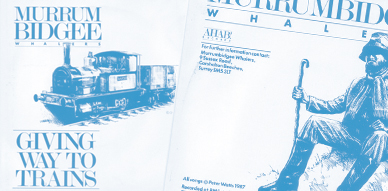
Giving Way to Trains has been part of Spygenius’s repertoire for a few years now so it made sense to record it, because the Whaler’s version didn’t really mean a lot to the folk who come to see Spygenius now.  I think I originally wanted to put it in the set because ex-Whalers would occasionally come to Spygenius gigs, so I thought we could give them a little treat!  And yes, Spygenius do play a lot of the songs that the Whalers used to – as I said before, we were all pretty young when the Whalers were going and I think quite often our ideas outstripped our ability to realize them – so it’s good sometimes to revisit a tune to try to finish the job.  ‘Trains’ is a bit of an exception to that rule because the 7” exists, and so effectively I recorded a cover version of myself – which was a bit strange… quite pleased with the result, though.

++ About “Giving Way to Trains”, it’s such a great song, I think it should have been a classic. What’s the story behind this song?

Well, where should I start?  I know it sounds like it’s about one particular relationship, but it’s not.  In the UK Highway Code there is (or was, back in the 1980s, I haven’t checked lately) a line that says that at level crossings you should always give way to trains (or in American English, that you should ‘yield’ to trains).  And it makes it sound so polite, like it’s just a matter of etiquette – but of course if you don’t ‘yield’ to the train you’ll get completely splattered into oblivion.  And it seemed to me that that happens sometimes in life – that there are things you need to just walk away from even if you really don’t want to.  And I have to admit that I’m not very good at doing that, and on occasions I’ve made a real mess of things because I haven’t known when to stop.  So, the song is an aide memoir to me – don’t be an idiot: sometimes it’s better to walk away.  (Although, having said that, sometimes, just sometimes, running in front of the train (metaphorically speaking), taking the risk and forgetting about the consequences, well, that can be what makes you feel alive…  But no – I’m not going to advocate that! Don’t try this at home, kids! Safety first…) So there you go – existential conundrums explored through the medium of train related guitar pop – what could be finer!?

++ Let’s go a bit back to the early days of the Murrumbidgee Whalers. When did the band start and how did you all come together? How did you know each other? And you were based in Sussex then, right?

Actually we were based in Surrey, in a place called Carshalton Beeches which is about 14 miles south of central London (more of CB later!).  ‘Sussex Rd’ was just the name of the street I lived in, with my brother who was also in the band.

Anyway, I guess the Whalers started with me and my brother learning to play guitars in our bedroom, where we used to bash through classic 60s pop tunes together.  Then I decided to get together with some mates from school to form a band – I guess I was about 14 years old – and after quite few years and a lot of racket the Whalers emerged.  There were a lot of line-up changes, but the classic line-up was me (guitar / vocals), my elder brother Chris (guitar, vocals, occasional faltering keyboards – brave man!), David Fisher (first bass, then drums and vocals) and Rob Telford (bass and vocals).  I can’t actually remember how I got to know David – he was someone I knew of from the local musician scene and I think he replaced me on guitar in a side-project band that I’d been involved in.  The first time we ever played together, I think, was in some sort of pick-up rock ‘n’ roll band playing on the fringe of a dodgy festival somewhere in the Midlands.  I don’t remember it too well, because I was, well, let’s be honest, very drunk.  He had a pink beard, was playing the drums that night, and fell off the stage along with his kit, which I thought was pretty rock ‘n’ roll, so it was fine by me.  Anyway, I think we got to know each other after that, and when we lost our previous bass player, he asked to join and the rest is history.  Rob I met through David.

Actually, though, the single of Giving Way to Trains was recorded by the previous line-up, with David on bass and a guy called Martin Gregory on drums. I think I met Martin because he was a friend of the younger brother of the guy I used to sit next to at school.  Or maybe it was through a youth club?  I’m not sure, but he was also part of the local musician scene. I always had an ear to the ground in those days for the names of people who were playing, you know, just in case you’d suddenly need a new drummer…

++ And who came up with the name? What’s the name about? I read there’s a river in Australia of the same name? But also a song by Harry Robertson?

I think we must have been named after the song, but not even realized it!  Or at least I never did.  I’d never heard of the song until just now when you asked the question and I looked it up on Youtube – the person who came up with the name was a former bass player I think (am I right, Simon?  Was it you?) and as far as I remember we decided we liked it because of the idea of telling tall tales – obviously there are no whales in the Murrumbidgee, so if you’re claiming to be a Murrumbidgee Whaler then there’s got to be something fishy going on from the outset.  That seems to be what the song is about, so I guess that was the original inspiration – I knew the story, but I’d just heard it as an anecdote, I didn’t know about the song.  It kind of fitted us though, because there was always a bit of a folk influence in our music – people kept saying I sounded like Ian Anderson (which I never understood – although I did have a habit of standing on one leg on stage at that time…).  In any case it was a terrible name for a band doing what we were doing because promoters couldn’t spell it (“Tonight!  The Murrum Bridge Whalers!”) and / or they would think that we were a reggae band (“No, ‘Whalers’, not ‘Wailers’”).

++ So you released the one and only 7″, which you were telling me only 250 copies were made! That’s so little. How come you didn’t press more? And also, why weren’t there more releases by your band?

The original 7” was entirely self-funded and we didn’t have a lot of money, so we just pressed enough to use for promotion purposes.  I seem to remember that we printed 500 sleeves, so that we could just get the discs done if we ever ran to another batch.  We sent out loads of them to anyone we could think of – record companies, magazines, management companies – and got occasional nice reviews, but never really much interest. I seem to remember being invited to sit in the lobby of Chrysalis records for several hours before meeting someone for about 30 seconds, but it never came to anything.  As for why there were no more releases, well I guess the band dissolving in a maelstrom of youthful egos didn’t help!

++ This release was self-released under Ahab! Records. I guess you were a big Moby Dick fan as well? Just to keep with the whale theme, right? How did you enjoy doing the label bit? Sending out records, promotion? How was your setup?

I’d really, really like to be able to claim that we called the label ‘Ahab!’ because Albert Camus presents the good Captain as an exemplar of the ‘absurd hero’.  But I can’t. It’s not true.  We did indeed use that name just to keep the whale theme going, and to be honest even now I still haven’t read the book.  I have seen the ‘Dicky Moe’ Tom and Jerry cartoon, though, and that was a life-changing moment… In fact, ‘Ahab!’ wasn’t really a proper label, it was a marketing ploy to make the record look more official than it really was.  I think we did consider turning it into a real label, but we were pretty naïve and never quite got our act together.  I can’t really say much about our set up, because it was all pretty chaotic and hit and miss (mostly miss, to be honest…) – we’d send out and chase up the records ourselves – that’s the four of us plus our good friend James Kliffen who acted as our manager.

++ In this record the B side was “In a Garden” which I still haven’t had the chance to listen. But do tell me what is this song about?

Yes, hmm, In a Garden.  Not a great song, which is one of the reasons why Spygenius has never picked it up, I suppose.  Ghastly lovelorn teenage angst about a girl I dated way back in the last millennium.  It has a folky tune, sung over a guitar part that sounds like Johnny Marr c1983 if he had joined the Cure.  Actually that makes it sound better than it is.  I have recently made an mp3 copy of the Whalers’ version, and keep planning to put it on Sound Cloud, then chickening out in the interests of public decency… not my strongest moment.  I suppose it has some sort of naïve charm, but the lyrics are just awful.  Not awesome, awful… but I will let you know if I ever do commit it to the internet…

++ “Giving Way to Trains” was also included in a 7″ compilation released by House of Dolls. How did this release came about?

Well, there’s the thing.  None of us can remember.  When you first contacted me about doing the interview I got in touch with David, Robert, Chris and James and everyone thinks that someone else in the band was responsible for sorting out that contact.  David told me to ask Chris, Chris thought that James had set up the deal following a suggestion from David or Robert, Robert thought that James had set it up, but James doesn’t think it was his idea.  I know it wasn’t mine!  I know that somehow we got an interview for House of Dolls (which was conducted in a Buddhist Café in Croydon for some reason…?) and getting the track on the EP came from that – but how we got the interview?  Sorry, none of us has any idea, it’s lost in the mists of time… this may partly explain why we never rose to any massive success: we were all very easily confused….

++ What about other recordings by the band? Are there any? Maybe lying in some demo tapes in someone’s cupboard?

Actually, they’re in a sideboard.  Yes, the Whalers did record another four songs on 16 track, and I do have a quarter inch reel of tape which I think has these songs on, but I don’t have a reel to reel recorder, and anyway I think the tape would have to be baked or something before it can be played.  I will get around to making digital copies of them one day.  I can’t actually remember which songs are on there, but I think one of them was a song called ‘Heathen’ which is scheduled to be revisited on the next Spygenius release.

++ How was Carshalton back then? What were your favourite places to hang out? Did you go out there often? Or did you mostly commuted to London and see bands there?

Carshalton is an ancient village mentioned in the Doomsday Book.  Carshalton Beeches, which is where I’m from, isn’t.  It is mentioned in a Monty Python sketch, though.  Carshalton Beeches is a mile or so up the road from Carshalton proper, and is an area where a lot of medium priced housing was put up between the wars, so that people could live there and commute to London.  It centers on, and is actually named after, the railway station.  In fact, the house that my brother and I grew up in backed onto the railway station.  (And if you listen to Spygenius’s version of ‘California Sunshine’, on our third album, it starts with a station announcer – that’s more or less what I could hear from my bedroom every morning when I was a kid.)  Back in the 80s there wasn’t a whole lot for teenagers to do in Carshalton Beeches (or in Carshalton, for that matter) – in fact there was pretty much nothing to do.  There were no clubs or bars or venues to speak of, and even now the only real landmark apart from the station is a baker’s shop.  That baker’s shop is the geographical hub of Carshalton Beeches….

So, mostly I’d go to London – up to the Mean Fiddler (the old one in Harlesden), Dingwalls, the Bull and Gate in Kentish Town, places like that.  Back then there was a pretty good pub scene for original live music, and the Whalers were part of that – playing at the Bull and Gate, the Half Moon (Herne Hill) and, erm, I’ve forgotten… other similar pubs, most of which are now gone.  First tribute bands and then Karaoke started to erode the original music scene, and then everyone decided to stay at home and watch their home cinema systems instead of going to gigs, so one by one the pubs died or changed their trade.  I was really pleased to discover the other year that the Bull and Gate was still operating as venue (in fact Spygenius played a gig there, twenty-odd years on, and it had hardly changed.  Same sticky stains on the floor…).  But I just heard that the Bull and Gate is going to close down soon, as well…

++ Did you gig a lot? Any favourite gigs that you remember? Any anecdotes you’d share?

The Whalers mostly gigged around London playing short sets – half an hour or forty minutes – which were great, but they’ve all sort of blurred into one in my head over the years.  But, whenever we could we would also get gigs in student unions which were really good because you’d get paid!  Those are the ones I tend to remember – as for anedotes, well, the event that always sticks in my mind was at a gig at one of the colleges in Cambridge.  I always used to wear this hat on stage – it was a really beautifully worn out railwayman’s cap, and quite often as we were jumping about and what have you, it would fall off, which it had on this occasion.  So there I was, standing at the front, lips glued to the microphone, so I can’t see the rest of that band – but then I became aware that Rob’s playing had become just a wee bit random, that there was a lot of cheering going on in the crowd, and that a lot eyes were pointed in Rob’s direction.  So as soon as there was a gap in the singing I turned around to see what all the commotion was about, and basically, what was happening was that the pizza that Rob had eaten before going on stage had turned out to be a bit dodgy and had decided to escape back to the outside world.  So, no polite way of putting this, Rob was throwing up, on stage, into my hat – and at no point did he stop playing, which I thought demonstrated consummate professionalism.  In any case, the crowd seemed to enjoy it.  I was a bit conflicted, though, because I was very fond of that hat, and tried to rescue it – I thought I’d figure out how to clean it later.  So we stowed our gear in a ‘secure’ room somewhere on the campus, and went back to our accommodation for the night (a floor, in a corridor, in some or other halls of residence).  Next day we discovered that someone had managed to get into the room where our gear was stored and had made off with two microphones, and my befouled hat.  Weird.  Why would anyone do that?  Pinching the microphones I can understand, but why the violated hat?  Some sort of trophy?

++ During those late 80s there were many great guitar pop bands. Did you like any of them? Did you feel part of a scene?

Yeah, I really liked the whole guitar pop scene of the mid-late 80s – in addition to the groups I mentioned before, I got massively into the Throwing Muses and the Pixies – I think they did a tour of the UK together sometime in 87 or 88 and I remember getting to as many of those shows as I could.  I don’t know if we really felt part of that scene, though, we weren’t successful enough!  But we certainly felt akin to it, we sort of aspired towards it – I think we felt part of a sort of pub-sub-scene!? There were loads of groups playing around the London pub circuit at that time, people who fitted musically with the guitar pop culture of the late 80s, and who were just out there trying to make a name for themselves.  We’d bump into each other a lot, and sometimes arrange joint shows.  There was a band called the Bicycle Thieves who we used to hook up with quite a bit (not the same as the one from Liverpool or the one from Texas – they were from Lewisham) – I don’t know what happened to them…?  But another great thing about the London live music scene in the 80s was that you didn’t just have aspiring bands and up-and-coming bands and American bands – you also had people who’d once been pretty big playing in some really cool intimate little venues – guys like Geno Washington and my personal favorite, Wilko Johnson – Wilko’s just finished his farewell tour and it occurred to me that I’ve been going to see him quite regularly for 28 years.  Back in the 80s I went to see Wilko a lot, every chance I got – I picked up so much about stagecraft and about how to play killer rhythm/riffing guitar from watching that man.  I remember not long after I saw him for the first time dragging the entire Murrumbidgee Whalers along to one of his gigs to sit and learn at the feet of the master.  Love him.  I’m really going to miss him.

++ And when and why did you split? What did you guys do after?

I think we split in 1990.  Why?  Well, did I already mention the whole ‘egos of young men in their early 20s’, thing? I did?  Also, the whole experience was very intense and I think we’d burned out a bit – we’d not managed to achieve the success we’d hoped for, and then the musical backdrop changed – the ‘Madchester’ thing started happening and we began to feel out of step – also, Rob wanted to go back to University and David wanted to branch out on his own, so I guess the thing had just run its course. Following the Whalers David set up his own group (Jubilee) which Chris got involved with, and I formed a series of bands trying to pick up where the Whalers left off – the most recent and successful of which is Spygenius.

++ Are you all still in touch? What are you all up to these days? Any other hobbies aside making music?

Yes, we’re all still great friends and hang out when we get the time, we’re all still playing to one degree or another, and we all get involved in each other’s projects.  David has released a couple of albums of his songs, which Rob, Chris and I have all played on.  David has also recorded and mixed some of Spygenius’s recordings, and Spygenius has on occasions worked as David’s backing band.  In fact David and I co-wrote a song a couple of years back – California Sunshine – which we’ve both recorded and released.  I think Rob and David are gigging together at the moment, along with Alan (Spygenius’s drummer).  And it’s good – more relaxed than in the 80s, which, on balance, makes for a more creative environment!  And the Murrumbidgee Whalers did actually do a reunion gig a few years ago – just the one!  A bit rusty, but it was fun. There are no plans for any more, though.  And we’re all still in touch with James as well, who maintains a keen interest in what we’re all doing musically – in fact a few years back he asked both David and Spygenius to play at his wedding, which was great fun, and somehow ended up with us all having a jam with Robyn Hitchcock – an unexpected bonus and a long story…. The only ex-Whaler I’m not really in touch with any more is Martin Gregory who played drums on the single – he moved to the States, to Boston.  Ruth and I did go to visit him back in 2005, but he forgot we were coming and drove to Maine for the weekend, so we never got to meet up.  Still, Boston has lots to entertain the stranded British tourist, so we were just fine.

++ One last question, looking back, what would you say was the biggest highlight of the band?

On a good night, there was a real chemistry between the four of us.  I think if you’ve never been in a band it can be hard to understand the power of that collective mind thing – it’s elusive and fleeting, but, damn, it’s good when it happens.  And I’m not saying there hasn’t been chemistry and good chemistry in bands I’ve been in since – there has – but the Whalers was where I first experienced it, and you never really forget that.

++ Alright, let’s wrap it here. Thanks so much Peter, happy to have heard the story of the band, and being a little less obscure for me at last. Anything else you’d like to add?

Only to say thanks very much for requesting the interview.  It is amazing to me, and really, really, pleasing, to think that people have heard and liked our record, and that they care enough to want to know more.  Music ultimately is about communication, so it’s both weird and wonderful to be getting some replies now to that little musical message in a bottle we sent out all those years ago.  I love it!

::::::::::::::::::::::::::::::::::::::::::::::::::::::::::::::::::::::::::::::::::::::::::::::

Listen
Murrumbidgee Whalers – Giving Way to Trains

21
Feb

Thanks so much to Phil and Graham for the interview! I’ve written a bit about Life Studies before on the blog and then we’ve shared a great Practice Session as well if you want to check it up. Happily I was in touch at last with the original members from the band and the mystery of Life Studies is no mystery no more!

++ Hi! Thanks so much for being up for the interview. Whereabouts are you these days? Still based in Gloucester? Still making music?

Phil: No I moved up North to near Manchester in the 90’s.

Gray. I still live near Gloucester, we keep in touch with Martyn, he now lives in Devon.

Phil: Gray and I have made more music together in the last five years that we had ever done before. I invested in a home studio (a spare bedroom and a Mac!) and we get together and record.

Gray: Anything from crooning covers like People are Strange and Scott Walker’s After the Lights Go Out, to new Life Studies stuff harking back to the jangly 80’s. We are just setting up to record remotely so we can put stuff together without having to travel!

++ There’s so much mystery about your band, only one single and then you disappeared. What had happened? Why did you split? Why didn’t you get to release more music?

Phil: Gray and I started the band in 1979 and we went through several incarnations until we got to the band that made the single. Things were changing so fast musically then that by the time we got to recording Homeward we already had our hearts set on new horizons. I suppose Martyn moving abroad left a creative gap and that seemed to be a natural place at which to rethink.

Gray: I had already started drumming with some other fiends who formed a group called the Erratic Strides which was a whole different sound to Life Studies. We didn’t really ‘split’ and various bands grew out of Life Studies with Phil and I being the constant. At one gig we did a purely acoustic set of Cole Porter songs with female singer so I guess we were experimenting in real time.

Phil: We did go back into the studio a few times but in those days it was a big undertaking and cost money. We didn’t make much from gigging and whilst we all had day jobs we didn’t always have the funds for recording.

++ But I assume that you had many more songs than the ones included in the 7″, right? Are there any more recordings of yours lying around somewhere? Maybe on some dusty tapes forgotten in a box?

Gray: There are some surviving tapes but the quality, both musically and sound is variable. There are some tapes which we can’t find that include some decent studio recordings.

Phil: I had thought it would be fun to see if any master tapes still exist. We could put them into Pro Tools and re do some of the overproduced stuff and clean it up.

Gray: It was great that Paul still had some copies there was stuff on there we hadn’t heard for 30 years!

++ I read that the single was played and championed many times by John Peel! That must have been a highlight for the band? How was the first time you heard your songs being played on the radio? Where were you?

Gray: We didn’t hear it! A friend of the band did and a few other fans confirmed it was played at least twice. Apparently John said ‘1983 seems to be the year of the acoustic guitar’ I would like to have heard his tone of voice.

Phil: A lot of Peel fans used to record his shows, me included, so there might even be a recording of it somewhere. We did get to meet him briefly at a Fall gig in London but didn’t think to ask him if he remembered it. I doubt he would have!

++ And then I have also read that two of you joined a band called The Trout Faced Few. I’ve never heard their songs, were there any releases? And how did they sound like? Similar to Life Studies?

Gray: TFF was a sort of combination of The Erratic Strides and Life Studies with some others thrown in. We sounded pretty much like the Fall. You could get away with it in the mid 80’s in Gloucester as the Fall were not that well know or heard.

Phil: Julian the vocalist did a passable impression of Mark Smith, but there is an obvious Beefheart influence, hence the name.

Gray: We also had two drummers which the Fall had started doing around ’82. That raised a few eyebrows when we played small pubs!

Phil: There is a video of us in the studio and a studio recording of a few tracks. They’re pretty good. I had switched to playing bass and we used two guitarists and keyboards. After that three of us formed The Citizens and short lived venture that were closer to Life Studies but more electric. There is a video of one of those gigs too.

++ Let’s go back in time now, was Life Studies your first band?

Gray: Not really. I had sang with a rock band but we didn’t last long. Before that in my early teens, me and a friend had a pretend band called ‘Marble Sky”. We had a home made guitar and odd bits of furniture as a drum kit. I seem to remember playing for my sister and some of her friends.

Phil: I was in a band when I lived in Somerset in 1975 but we were all fairly basic musicians and never gigged. Our bass player was into Can and very early Kraftwerk so he influenced the sound but on reflection I don’t think we were that inspired.

++ And how did Life Studies start as a band? Who were in the band and how did you all knew each other?

Phil: Gray and I first met at a Bowie gig in 1978 and I suppose that shared interest led us to get together. When we started there were four of us. Gray and I and a chap called Tony Wilson (no not the legendary Manchester impresario) and a chap who was a excellent guitarist although he was a Clapton/Hendrix aficionado and didn’t really fit our indie sensibilities. It may be a myth but I am sure Gray asked him to leave because he insisted on wearing flared jeans!

Gray: We only did one gig with him. Our First, supporting a band called Primal Scream, no not that one! We went down to a three piece, I bought a synth-drum and we set off down the doom and gloom Joy Division route as pretty much every band in the country was doing.

Phil: That band was the one that did one of our best gigs. We played the local pub and packed it out. A good tape taken from the mixing desk exitis somewhere, that’s the one thing I would still like to hear.
Gray: Martyn who became the other key member of the band once Tony had left was in the same year as Phil at school.

Phil: I remember making my own Stranglers T-Shirt and Martyn spotted this and we started talking, again the love of the same music brought us together.

++ Where does the name Life Studies comes from?

Phil: It’s from the autobiographical book of poems by American Poet Robert Lowell. Not sure why we settled on it but it stuck.

++ You released one fantastic record that I feel was ahead of it’s time. This jangly kind of pop was more 1986 than 1983! So I wonder, what were you listening at the time? Who were your influences?

Gray: We had moved from post punk doom laden stuff to lighter stuff although I can’t recall the precise journey. For me there were two releases that influenced our listening and therefore our music. The first was the C81 NME cassette, this had tracks on by Orange Juice, Josef K and Aztec Camera which we were blown away by. There was a rough edged pop sensibility to the Postcard Label stuff which was a relief after the industrial sound of the late seventies. The second release was the Cherry Red LP Pillows and Prayers which came out a year later. This had bands on like The Monochrome Set and Felt. Felt are still one of our favourite bands.

Phil: There was definite move to wards more complex song writing and Tracy Thorn and Ben Watt were on that LP too and you can really hear the influence of them in Inside Out on the Homeward EP.
The Felt track, ‘My Face is On Fire’ had an acoustic guitar riff that we tried to emulate on Citizen of Love. We had to describe it to the studio engineer as Grand Canyon Guitar. I need to mention the Pale Fountains too who’s ‘Thank you’ single was a big template for Girl on Fire, not that you could hear it!

++ The three songs on the record are really good. I wonder if in a few words you could tell me the story behind each one of the songs?

Phil: I got the title Girl on Fire from an article about Edie Sedgwick in a Sunday Paper. I don’t think it was about anyone in particular, I suppose it is about the paradox of loving someone who is independent and passionate and allowing them to maintain those qualities whilst having a relationship. We’ve all been there. Inside Out started as a bit of a rant against my impending domesticity. The fear of moving towards a quieter, more traditional, and in my eyes boring life. I was only 22! Citizen of Love was Martyns song. I will ask him and let you know, he was probably struggling living with his girlfriend at the time and maintaining independence. You can see theme emerging here. Mart is not a good electronic communicator so it may take a while to get a contribution!

++ On this record you had some guest musicians helping you. How were the recording sessions for the single?

Gray: Not sure I can remember a lot. The studio was a converted barn where the control room was upstairs so the relationship with the engineer was a bit remote. I am not even sure how long it took. People would come and go and do their bit. It was always fascinating having a ‘real’ musicians turn up. Richard the violinist was particularly accomplished and when he played it suddenly transformed the sound.

Phil: My biggest regret was we overproduced things. It was our first time in the studio and we were a bit like kids in a sweetshop. The engineer, John, had just bought a keyboard with all sorts of samples on it hence the strings, vibraphones and other things we put in because we could. There is a demo version of Girl on Fire which, in my opinion, is much better, more stripped down and slower.

++ Tell me about the artwork of the record, were you all big fans of the “Spirit of the Beehive” movie?

Gray: I designed the cover, Phil found the photo. I also designed and drew the label and put all the artwork together.

Phil: I had seen the film in the 70’s it was my first introduction to foreign cinema. I was a horror fan and knew the film had something to do with Frankenstein. It was shown on BBC2 as part of their World Cinema series. Probably around 1975. The fact it little to do with Frankenstein it blew me away. I notice that Criterion DVD reissue contains the same image! Obviously at the time very few people knew the film. Of course it has since become one of the most iconic images of Spanish cinema!

++ I assume Occasion Records was your own label name? Is that so?

Gray: Yes. I set it up and registered it and agreed the distribution arrangements with The Cartel who were a national distribution company for small independents. There was a record shop in Bristol, Revolver, and the guy who ran that helped with advice.

++ There’s this practice session that Paul Hopkins shared with me, “Practice Session Spadger Sound Studios 1983”. Three songs, one of them a cover of New Order. Those were the last days of the band, right? What do you remember from this session, and those last days?

Phil: Having listened to the version of Leave Me Alone you’d think it was the last days of civilisation not just the band. I don’t remember doing that and it is obviously too slow. The rest of the stuff on the tape is a bit better we seemed to have reverted to just drums, bass and acoustic guitar.

Gray: It was a rehearsal for our last gig and The Flying Machine in the village where we hailed from. I recall the gig being a bit of a damp squib.

Phil: Yea, the Strides played too and they were great. They used to cover Take Me to the River but based on the Talking Heads cover rather than the Al Green one. It was a show stopper. I seemed to remember singing a song on my own at the end of the set while Paul and Gray quite rightly went to the bar!

Gray: I didn’t think of us ever splitting up. Phil wasn’t in the Erratic Strides so we just drifted into forming the Trout Faced Few

++ Tell me about gigs. Did you gig a lot? Any favourite venues or cities that you played? Which other bands did you like sharing the bill with?

Gray: We did gig quite a bit. There was a reasonably healthy live music scene in Gloucester. Because we knew a lot of people we would always draw a good crowd which the promoters liked. we didn’t travel too far. The Trouts did get to play Dingwalls in London which is a legendary venue in the UK. Our most disastrous gig was an outdoor festival in Gloucester that a local entrepreneur had organised. We were ok but we were a four piece (with Paul Hopkins and George Weeks from the Strides) but there were more people on stage than in the audience. It was an embarrassment.

Phil: I do still dine out on the story that Bananarama’s first gig was supporting us, I suspect they don’t mention it much . We were asked to support a band called Department S, in Cheltenham. they had a top 40 single called ‘Is Vic There?’ and they bought along Bananarama who mimed to their first single Aie a Mwana. I think they were session backing vocalists before then.

++ How was Gloucestershire back then? Was there much space for your kind of music? Where there any bands that you liked?

Gray: We probably didn’t realise it at the time but Gloucester was a pretty good place for bands and live music. We would often bump into other bands on the circuit and we did share ideas, there was little competition, everyone did their own thing. there was a local journalist who decide we were the best band in Gloucester if not the UK and used to write reviews that were a bit over the top, but it was fun at the time. I remember he tried to get us a manger who came round to Phil’s house to listen to us but Ceremony by New Order had just been released so we insisted he listened to that several times instead! We did tend to sabotage any attempts to be taken too seriously.

Phil: Gloucester had a reputation fro Punk music. the most successful band were called Demob who were hardcore punk and they set the tone for Gloucester bands for a few years. We got to know some of them quite well and like us they would crop up in various groups from time to time. being a parochial sort of place meant you could build up a reputation quite quickly.

++ And what are your favourite spots, places, sights, in your area? I would love to visit some day!

Gray: It is a market town and like many places in England it looks like many other towns. The countryside is still green and pleasant. It has a successful Rugby team and a famous cathedral where some scenes from Harry Potter were filmed.

Phil: I like going back. I spent my formative years in Gloucester so I have soft spot for it. I always try and get Lardy Cakes (Sticky cakes made with currants, dough and lots of butter) whenever I go back.

Gray: If you do visit I guess the Docks and the Cathedral are the high spots.

++ What would you say was the biggest highlight of Life Studies?

Gray: Producing a physical record was a great achievement. Holding the artefact in you hand was a thrill. I also recall a friend who moved to Edinburgh and had met someone who had bought the single after hearing it on John Peel. That was impressive!

Phil: If I am honest the only rock star moment I ever had was when walking home with Martyn through the back streets of Gloucester, the pubs had shut and we were in search of chips when suddenly someone shouted from a top floor flat window. ‘Aren’t you from Life Studies? We’re having a party come on up’ It was a woman we had never met , and we knew no one at the party, that was cool!

++ And these days, what else do enjoy doing? Any hobbies that you have?

Gray: I play guitar a lot now and play with a covers band now and again.

Phil: I make music all the time. I do quite a bit of sync music, music I send to agencies in the hope that someone will pick it up for a radio or TV advert. I had my first royalty cheque last year, £52 for a Portuguese TV commercial so I can’t retire yet!

++ Let’s wrap it here, thanks again so much for the interview! Anything else you’d like to add?

Gray: Just thanks for the interest, it is good to know that someone still likes the record after 30 years! And thanks to Paul for putting us in touch.

Phil: It has inspired me to put some new Life Studies tracks together which can’t be a bad thing. Three songs so far, but this time with Gray singing! watch this space.

::::::::::::::::::::::::::::::::::::::::::::::::::::::::::::::::::::::::::::::::::::::::::::::

Listen
Life Studies – Inside Out

14
Feb

Thanks so much to Trevor Jones for the interview. The Miracle Mile released one fantastic 7″ in the 80s and then came back in the 90s, with a  different lineup to release many great albums that deserve to be more known. It’s time for you all to discover them and if you like them, don’t forget to like them on facebook.

++ Thanks so much Trev for the interview. I didn’t know The Miracle Mile were still going, you were saying you are right now finishing a new album! Care to tell me a bit about this new release?

Sure. ‘In Cassidy’s Care’ is the first Miracle Mile CD since Limbo in 2007. In the interim I have recorded 2 solo albums ‘Hopeland’ and ‘Keepers’. The new album’s subtext is interesting; I wrote a short story that then became the songs on the album.

++ I know you thanks to your first release, the “Bless this Ship” 7″ released in 1986. Who were the band back then and how did you know each other?

The band back in 86 was Steve Smith (vocals) Phil Sands (drums) and me on guitar. Old mates from up north, we came down to conquer London (first) and then the world. Things didn’t quite pan out…That line up split shortly after the release of Bless This Ship and I carried the name forward; became the singer and went on to eventually record the debut MM album ‘Bicycle Thieves’ in 1997.

++ Were you involved with other bands before The Miracle Mile?

The usual youth club bands… hopeful no hopers.

++ And where does the name of the band comes from?

Speaking of ‘hopeful no hopers’; the miracle mile is an area near San Francisco. It originates from the old gold rush days when the miners would come back out of the hills with their gold dust. The towns grew up around their wants and needs: there was a bank to change the gold into dollars, there were brothels and bars for the spending of the money, there was a church where the miners could unburden their sins, then there was inevitably the grave yard. All of these along a strip of road that offered hope, sin and retribution: nominally a miracle mile…

++ Who or what would you say inspired you all to make music? And if you would list your five most influential bands, who would they be?

I like my music mournful; you can’t beat a sad song. I’m drawn to unique lyricists who offer poetry; the likes of Tom Waits, Paul Simon and Joni Mitchell. I love the voices of David Sylvian, Peter Gabriel and Paul Buchanan. I admire the sultry productions of Daniel Lanois, Joe Henry and Mitchell Froom. Favourite bands? The Blue Nile, Prefab Sprout, The Go Betweens, Elbow.

++ This 7″ came out on your own Miracle Records. Were you three doing the label thing?

It was a self financed thing that I think I’m still paying for.

++ How did the creative process work for you guys?

In those days it was a live line up so things were pretty collaborative. Since Slow Fade in 2000 I have worked exclusively with Marcus Cliffe. The MM are essentially a duo who use session musicians when needed.

++ So on this 7″ you included two songs, “Bless This Ship” and “Breaking Down the Barriers”. What’s the story behind these two songs?

‘Bless this ship, it makes me happy when there is love on board’ is a pretty self explanatory line; the ‘b’ side carries on that hoary search for the elusive.

++ And from this period, are there any more recordings?

Plenty of demos but they will remain in my dusty attic until my genius is finally recognized 50 years after my death…

++ What about gigging with this first incarnation of The Miracle Mile? Did you play live a lot? Any particular gigs that you remember? Any fun anecdotes to share?

That original line gigged quite a bit, mainly around London’s usual venues for the ‘up and coming’. We played The Borderline, The Mean Fiddler, The Marquis Café. In those days you virtually had to pay to gig, there was so much competition. I loved it but it was a young man’s folly. I don’t think I could do it anymore; I’d need a changing room, a guest list and a rider now.

++ How do you remember London back then? There were many guitar pop bands at the time. Did you like any of them? Was there a sense of a happening scene? What were your favourite venues, places, to see bands?

We seemed to do a lot of shows with Energy Orchard. It was the time of Lloyd Cole and the Commotions; there was some serious jingle jangle blues going on; all dressed up in lumberjack shirts and turned up jeans.

++ And how come you guys split? And why weren’t there other releases made at the time? Was there any interest from majors at all?

We did many showcases for the Majors but never really got a bite; a familiar tale for many. Steve and Phil split to form their own band ‘Molly and the Moonbeans’ while I kept MM going.

++ After the split you continued with Miracle Mile with Marcus Cliff. Whatever happened to Steve and Phil?

Steve is now living in LA; writes and records as ‘The Delta Boy’. He’s a great writer; reminds me of Stephen Duffy. Phil retreated to Cornwall where he’s probably skinning up with the surfers as we speak.

++ But it took around 10 years between the 7″ release and the “Bicycle Thieves” album, right? What happened in between those years?

Writing, reimagining, paying off debts…

++ I was listening to the tracks that are streaming in the Miracle Mile website and they are really good. Great pop, a bit different from the first Miracle Mile, more of orchestrated pop music, baroque pop, you could call it. I noticed you released many records. I was wondering, if I was to start with one record of yours, which one would you recommend? and why?

I’d say start with the first ‘Bicycle Thieves’ and follow the development of the band through to the forthcoming 8th album. If you’re short on time the easy reference would be ‘Coffee and Stars’ an oversight of some of the band’s better moments. I’ll send you a copy with the 7”.

++ And among all the songs you’ve written, which are many, which are your favourites? And among your releases, where does the Miracle Mile first 7″ stand?

Excuse the platitude but my songs are like children to me; some are a bit crossed eyed and smelly but it makes me love them more. I’d hate to single one out for special attention. ‘Bless this Ship’ was effectively a different band. I remember those days with affection but feel that my musical progression renders that stuff as nowt but nostalgia.

++ And are you still playing gigs? I would love to check out the Miracle Mile next time I visit London!

There may be something to promote the new album. I’ll keep you posted.

++ Do tell me about London, I visit quite often but I can always do with suggestions, what are your favourite places in town? best restaurant? best pub? best sight for a tourist like me?

Anywhere in Soho is a blast; it’s dirty, smelly, vibrant. My favourite walk is to cross Westminster Bridge going south and turn left, walking eastwards on the southbank. You’ll get the immensity of the City across the Thames and you will pass the London Eye, The Tate Modern, You can cross ‘the wobbly bridge’ to St Pauls, then back on to the South bank to Southwark Cathedral and towards Borough Market, one of the great world food markets. The original band used to rehearse in Clink Street around that area, one of the great historical parts of London, where the old bear pits were.

++ And aside from making music, what other things do you like doing? Any hobbies?

We have a house in Corsica; I like to retreat there to write, read and listen to music. Travel is good for the soul. I play squash to keep fit. Music is still my main passion. Listening, searching for that magical moment. And of course writing. I still believe my next song will be my best…

++ Let’s wrap it here, I promise I will discover the rest of the Miracle Mile music, I really like what I’m hearing. Do tell me though, as I’ve seen many musicians from the 80s move to electronic and the like, how come you always stayed making fantastic pop music? What do you love so much about it?

It’s funny, Miracle Mile are always referred to as a ‘pop band’. I’ve never thought of us as such. ‘Pop’ suggests something fleeting, transient. I’ve always hoped our music would be regarded as more substantial and enduring. Still, as Noel Coward famously said, “there’s nothing quite as potent as cheap music”.

++ Thanks again Trev, anything else you’d like to add?

Maybe just this biog; a bit long winded but it might offer you some insight…

MIRACLE MILE BIOGRAPHY

In the mid 90’s, singer-songwriter Trevor Jones began working with producer Steve Davis on material that was to become Miracle Mile’s debut album ‘Bicycle Thieves’.

“Meticulously orchestrated, careful and complex, this is canny songwriting leavened by bona fide humanity.”
Q ****

TJ: “Steve and I developed the recording band into a live unit, adding Les Nemes (bass) and Phil Smith (sax/keyboards) plus Trevor Smith on drums. After the release of ‘Bicycle Thieves’ in 1997, Mark Hornby joined the fold for gigs and the recording of the follow up ‘Candids’.”

“A little gem, loaded with nagging guitar hooks and dynamic vocal interplay. Intellectually as well as emotionally engaging.”
MOJO

TJ: “After ‘Candids’ was released in 1998 I took the decision to stop doing live shows, as I wasn’t sure that the direction of my writing was in line with the gusto and spirit of that live band.”

The songs kept coming and in 1999 Steve and Trevor started work on new material for the third album, ‘Slow Fade’. These recordings were more intimate, less orchestrated with the accent on the songs and the singer. Marcus Cliffe was brought in on Upright Bass, Trevor Smith remained on the drum stool, and the
 legend that is BJ Cole was draughted in to add some pedal steel magic.

TJ: “Steve and I parted company mid-stream. Not the usual “musical differences”, just an honest admission from Steve that, with family and a day job to attend to, he simply didn’t have the time. I was blessed with Marcus. Having already struck up a friendship we decided to complete the album together as co-producers and musical partners.”
Cliffe had played with many fine folk (Steve Earle, Emmylou Harris, Daniel Lanois, Mark Knopfler) a pedigree apparent in the musical backdrops with which he furnished the songs. Slow Fade received ecstatic reviews and saw the further development of a more intimate direction.
“Gorgeous! A lovely, low key collection of sensitive, enchanting songs.” THE TIMES ****

In the summer of 2001 MM started work on ‘Alaska’ at Marcus’s ‘Norbury Brook’ studio. At the time Jones was asked about the lyrical content of ‘Alaska’:
TJ: “These are hardly original ideas. The grass is always greener. The human condition is invariably in a state of disappointment. Is ‘different’ better? When habit and convention demoralizes and casts us adrift, how do we reset our course? Change? The thought of real change is intimidating; it could save us, yet we fear it, and remain content with cold compromise. Dissatisfied, we crave happiness and, when denied, we look elsewhere for a quick fix. As consumers, we’re so used to instant gratification, that we can only be disappointed. We want to be ‘of substance’’, yet we deny the process that makes the fabric hardy – life. We focus on the horizon, rather than on the small dramas in front of us. We desire to be “anywhere but here”, the possibilities of the ‘other life’ making us resent our real lives even more. Traditionally these ‘other lives’ were just vague unobtainable pipedreams, seen in fuzzy black and white. Now, digital clarity presents a focused and immediate reality that we demand, without investment or preparation. Thus, even if we make the dream reality, we’re unable to appreciate or recognise the gravity of it’s arrival; we just use it and move on to something else; easy come, easy go, there goes Mexico, or Alaska, or Sidcup, or Oz… or God. A lot of these songs focus on the tricks that we use, the games that we play, and the skills we develop, to stop ourselves from becoming unglued.”
MC: “The recording of ‘Alaska’ was a difficult time for us both. I was having problems with my family life, Trev had just lost his sister to suicide. I wouldn’t say that it made for a darker album, but there was an emotional edge that gave it a certain grain.”
‘Alaska’ was released in 2002 to overwhelming acclaim:

“Gentle enchantment. The loveliest melodies you’ve ever heard.”
UNCUT
In 2003 Cliffe was due to tour with Mark Knopfler for the bulk of that year. Unfortunately Knopfler was knocked from his motorcycle on the morning of the first rehearsal, badly breaking his shoulder. The tour was cancelled, and Marcus had time on his hands:
MC: “I didn’t want to twiddle my thumbs, so I spoke with Trev. After clearing the emotional decks with ‘Alaska’ he had songs coming out of his ears! We started in on the recordings that would become ‘Stories We Could Tell’.”
For this album, the duo continued with their ambient use of pedal steel, profiling the differing styles of BJ Cole and Melvin Duffy, but they also coloured the sound with woodwind, brass and other instruments not usually associated with their style of music. Lyrically the album attempted to highlight what Jones called “…the profundity of the mundane. It’s interesting how common our ‘unique’ experiences are. However we choose to present ourselves to the world, we’re all made of the same stuff. I’m intrigued by how distance converts experience into memory, and ultimately, into the stories we tell.”
“Miracle Mile’s obscurity remains unfathomable. Perfect adult pop.” THE SUNDAY TIMES ****
Again, a Miracle Mile release that inspired the critics and a small but dedicated following, but met with commercial indifference. Was this due to a stubborn indifference to what makes music ‘commercial’, or a difficulty to place them in the market?
TJ: “Ah, pigeonholes! As the songs became more and more personal, the focus shifted to me and I became more increasingly referred to as a ‘singer songwriter’. If that lends more substance to what we do then it’s OK, but labels can be a misleading, and I don’t think that label does justice to Marcus’s input. We are a musical partnership. Beyond recognizing that my words are personal, I think that defining our roles is pointless; the focus should be on the end product; the song. I guess that we are bloody minded in the pursuit of that perfect song!”
MC: “We always said that we would make the records we wanted to make, and refuse to manicure our sound for a marketplace; we please ourselves. With our music, self-control is everything. Owning my own studio has allowed us to develop our sound without interference or financial constraint. The danger is that you can over indulge, be too particular. The joy is, that while we’re both emotional and instinctive, I think we remain disciplined and focused on the crux of the music; the song stays centre stage.”
Recording for the next album ‘Glow’ started in November of 2004.

TJ: “The first day of recording is always a happy time for me. There’s
nothing more exciting than a blank piece of paper, the possibilities are endless. I get to articulate all the stuff that I’ve been storing up.”

Recordings were completed by May of 2005 and on release Trevor offered:

“Whether half remembered or best forgotten, memories are filtered, the haze of a childhood that can never be reclaimed is where we all start and end.”

This gives a fair impression of the lyrical scope and compelling, emotive power of the songwriting. Added to that were Marcus Cliffe’s excellent playing and multi-instrumental skills, plus his ear for sublime arrangements; ‘Glow’ was an album to cherish.

MC: ‘Sonically it blends traditional elements; acoustic guitar, piano, double bass, with the ambient pedal steel of BJ Cole and Melvin Duffy. These, mixed with some unlikely woodwind and brass arrangements, make for (we hope) a quietly beguiling concoction’.

It’s almost impossible to explain how such simple, natural song craft can weave such a complex web of feelings, lingering images and possibilities, but weave it does. Once you’re caught up there is no getting away either. This is a record to last the rest of your life.

Praise for ‘Glow’:

“Gorgeous melodies, hooks galore, intelligent lyrics that demand and repay careful listening, beautifully produced instrumentation, and an overall effect that combines poignancy and joy in equal measure. The result is as close to a pop masterpiece as you’re likely to hear this or indeed any other year. ‘Glow’ is one of those rare albums where music and words come together in a state as close to perfection as makes no difference, and leaves you with a delicious ache that makes you hug yourself with the sheer overwhelming joy of hearing such wonderful music. An indispensable album.”
Americana UK 9/10

“”MM are pop’s most consistently excellent cottage industry”
The Sunday Times ****

“A little oasis illuminated by musical creativity, glimpsed like a lovely mirage. Intelligent tunefulness that doesn’t kowtow to passing trends has always been as rare as fish fingernails, but it’s here.” Mojo ****

“Little miracles of pop perfection” Rockstar ****

“This British duo’s hazy, cerebral sixth release is an acoustic pop gem. Records like ‘Glow’ will never grow old, which is a good thing indeed.” Minor 7th

“How to write ‘Perfect Pop’ and still remain unknown. They are magic, charming, almost naïve in their perception of beauty”
La Repubblica (Italy) ****

“The intimate songs on this album are like a necklace hung with precious jewels. With deceptively fine melodic structures, this is music to exercise your temporal lobes and promote thought upon the minutiae of life. Discover their back catalogue for even more treasures”
69 Magazine *****

“A treat from start to finish. One day large numbers will look back and call this a lost classic.”
Back on the Tracks ****

In January of 2006 Trevor and Marcus began the recordings for what would become ‘Limbo’.

TJ: “I really believed that the ‘Glow’ sessions would be the last time we recorded at Norbury Brook, so this comes as a happy bonus; amazing what you can come to take for granted; people and places. Same cracked mugs, same mad cat, one new guitar (a battered but lovely old Gibson) and Marcus (also battered but lovely) burning incense rather than spraying that inner nose stripping air freshener! He’ll be wearing a kaftan next…look our for a sitar solo!
We always look for a working title. I’m struck by the word ‘Limbo’ for 3 reasons: firstly it kind of sums up the Miracle Mile’s position in the music world, secondly it relates to Marcus’s emotional and domestic circumstance, and thirdly because I’ve just driven past some orange boxes with ‘Limbo’ written on the side! Friday the 13th seems a fateful date to start our recordings; maybe it’ll bring us luck…so there’s a title; ‘Lucky Limbo’?

When recording was completed in the autumn of 2006 Trevor was asked to introduce the album:

“We all rest where compromise leaves us. We could try to be elsewhere, but that wouldn’t have produced this album. It’s the best we could do, for where we were. ‘Limbo’? It’s sorrow’s way; like the unravelling of a lost kite, a gentle rise or fall towards oblivion. We say, “don’t be afraid to forget.” You will not. It will become the palest thought, and one day, when your gaze has drifted, the sadness will buck and buckle and be gone.
Meanwhile, abandoned and liberated, silence stands as failure and threatens everything. So we fill it with music and search for the perfect song. How do you live the perfect life? How do you write the perfect joke? Start with the punch line and work backwards.
We’re all connected by our unravellings. We don’t always feel the tug, but as the line tightens, leaves a mark, then relaxes, you realise that things can never come to rest and you learn to trust the rhythm of chance.
And the perfect joke? A man falling from a great height whispering “so far, so good.”

Limbo was released to critical acclaim with The Sunday Times nominating it their ‘CD of the Week’
“Classic pop songwriting, gorgeously realised”

Indeed, ‘Lights of Home’ went on to be named a Sunday Times ‘Song of the Year’ 2007:
“Trevor Jones finds the poetry in real life; Marcus Cliffe anchors it in the sweetest pop. Gorgeous as ever. You may cry”

During a lull in new recording, in 2008 MM released ‘Coffee and Stars’ a compilation of songs taken from their 7 albums.

TJ: “‘Coffee and Stars’ seems an appropriate title, as caffeine and wonderment have been our prime stimulants for the past decade, during which these songs were written and recorded. Choosing the tracks for this collection was challenging. Marcus and I had different favorites and, like children I guess, we seemed to favour the slightly wonky, cross-eyed ones. We’ve included a couple of those here (can you see them?) alongside the more obvious favourites that aunty always kisses first.
So, this is like a family photo, with most of the family still locked in the attic. Let’s hope that ‘Coffee and Stars’ compels you to visit those neglected children in situ, on their original albums. We hope, like us, that you’ll come to love them all.”

The liner notes to ‘Coffee and Stars’ were written by a much respected music journalist, Johnny Black. Maybe they are the perfect words to conclude this particular part of the Miracle Mile story:

“For the truly creative artist, perfection can never be achieved for more than a fleeting moment. Painting the ultimate landscape or writing the definitive song inevitably redefines perfection, pushes the standard of what might be possible next time a little higher, a little closer to what was once considered impossible.
Every Miracle Mile album since their debut offering, ‘Bicycle Thieves’ in 1997, has included songs, which, at the time, redefined the limits of what the perfect song might be. This compilation includes eighteen of them.
The cuts were selected not so much to provide a simple ‘Best Of’, as to create a sustained listening experience in which each track flows naturally into the next. It would be easy to quibble with the ommisions, but only a fool would deny that the tracks chosen fit together like pieces of a much-loved jigsaw, depicting an aspect of Miracle Mile that none of the seven individual albums could hope to deliver.
On most Miracle Mile songs, the primary elements – melody and lyrics – are provided by songwriter and singer Trevor Jones. For the past seven years, however, Jones has worked so closely with multi-instrumentalist and co-composer Marcus Cliffe that his contributions have become integral to the sound and shape of the music they make. Whether it’s the yearning regret of ‘Yuri’s Dream’, or the playful lyricism of ‘Sunburst Finish’, the Jones-Cliffe partnership transforms each song into much more than the sum of its parts. When Jones captures the bottled lightning of everyday existence with a beautiful turn of phrase like, “Paper planes and pony tails lead me back to you”, Cliffe colours in the word pictures with unfailingly apposite textures and melodic filigrees.
Best of all though, Miracle Mile will never sink a fang into the jugular when they can plant a whisper of a kiss on that sensitive spot at the nape of the neck and set off a tiny ripple that will, in the fullness of time, explode in the heart.”

Johnny Black
Spring, 2008

Trevor Jones has since gone on to produce two critically acclaimed solo albums ‘Hopeland’ and ‘Keepers’.

Praise for ‘Hopeland’:

“Moves you to tears and refreshes the soul. Scintillating.”
***** Maverick

“The beauty on offer here is enough to make you weep. It did me.”
9/10 Americana UK

“The title track must simply be the most beautiful ballad anyone has written this year.” **** SUNDAY TIMES

Praise for ‘Keepers’:

“A tender sadness. Songs that have universal resonance.”
Netrhythms

“A lush swoon of gorgeous pop. Genuinely life enhancing and life changing” 9/10 Americana Uk

“A melancholic ocean of poetry and sublime song-craft.
Life is indeed worth living and all the richer for hearing this.”
Properganda ‘Album of the Week’

‘Trevor Jones has produced a gorgeous pop album that few will hear — unless there’s justice in the world.’ The Wall Street Journal
“Jones has compiled possibly the finest catalogue of adult pop. Gently beautiful and genuinely moving”
The Sunday Times ****

::::::::::::::::::::::::::::::::::::::::::::::::::::::::::::::::::::::::::::::::::::::::::::::

Listen
The Miracle Mile – Breaking the Barriers

14
Feb

Thanks so much to Katie Bergström for the interview. These days Katie has been releasing records under her latest band Katie Goes to Tokyo but before that, earlier this century, she had a band called The Wilson Hospital that I really like! And even before that she was involved with Backfish who released in the great Swedish label West Side Fabrication. But this time we talk about The Wilson Hospital who only released one album, but what an album that was!

++ Hi Katie, thanks so much for the interview. I hear you are in Toronto these days? What are you up there?

Hi Roque, nice to be interviewed by you! I was staying in Toronto for a couple of months to write songs for my new album. Now I am in LA, doing the same thing.

++ Hopefully we can do a second part interview for Katie Goes to Tokyo, but this time let’s go back in time, The Wilson Hospital wasn’t your first band, right? It was Backfish who released an album on West Side Fabrication. Who were Backfish? What do you remember from those days?

Backfish was my first band and it will always have a special place in my heart. Backfish (German word for a young girl that moves to a new town) was put together by some friends of mine, and I was hired as their keyboard player at first, but then I advanced to be the singer/songwriter of the band. Our first record was produced by Ken Stringfellow (the Posies). I have so many good memories from my time with Backfish and I was so sad when we finally decided to split.

++ How cool was it to release a record on a quite important independent label of Sweden like West Side Fabrication, home of so many fantastic bands?

I don’t know, pretty cool I guess 🙂 Backfish actually got an offer from another record label as well called NONS, but West Side was located in our hometown and all our music friends were tied to that label one way or the other. I guess we just wanted to be a part of “the big family”. I think we were shocked to get a record contract so soon. I can see now that West side has made a huge impact as a indie label- they’re a hardworking company and great at finding new great bands.

++ And then what happened? When did you start The Wilson Hospital? Was immediately after the demise of Backfish? How did you know Mårten?

I actually met Mårten before we quit Backfish. He played drums in a band that supported Backfish in Linköping. After the gig Mårten asked me if I wanted to sing on some of his songs. I thought he was just flirting with me at first, but then we got together and he played me his demos. His songs were amazing! I always wanted to do the 60’es pop thing but couldn’t really get Backfish to go in that direction. So Mårten and I started writing some songs together. At the same time Backfish started to fall apart. It wasn’t because of my new band. It started long before that and I think we just finally realized that it was time to let go.

++ Who came up with the name The Wilson Hospital? And what’s the story behind it?

The Wilson Hospital was actually the name of my fathers old rock-band from the 60’es. Mårten heard the name and loved it (he is a big fan of Brian Wilson and the Beach Boys). The “Hospital”-part you will understand if you know your Brian Wilson.

++ Did you play many gigs? If so, any anecdotes you could share?

We played a couple of gigs. Something that hit me pretty early on was that every time we were about to play somewhere, someone in the band got sick. We always had 3 or 4 musicians with us and it was always the same thing. It was almost like a curse. And after a while there was so much pressure building up to a gig that I stared to get stage fright, because I just knew that something would go wrong. I remember one time, we were playing at a festival that was a 6 hour drive away. I was so nervous and anxious that I couldn’t eat anything the whole day. I was hungry, but the second I smelled food I just couldn’t eat. It was just a very weird situation. I had never felt that way before. Immediately after the gig I felt normal again. Then it took me a couple of gigs to get over the stage fright.

++ What would you say were the main musical influences of The Wilson Hospital?  Were there any Swedish bands from the time that you really liked?

I guess we mainly listened to American and British bands at the time. Mårten listened to the Beach Boys and I listened to the Beatles.

++ Tell me about Morphine Lane Records. Who were they? And how did you end up signing with them?

Morphine lane records was funded by the drummer in This Perfect Day- Johan Nilsson – and the keyboardist in Atomic Swing- Micke Lohse. Backfish had toured with This Perfect Day so I knew Johan from before. We heard Johan and Micke were starting a record label together and so we gave them our demo. They loved our music and we loved them for that and that’s how we all got to work together.

++ With them you released your only release, the fantastic album “Medication for a Lost Generation”. What’s the meaning of the title? And which is your favourite song of the record and why?

Haha thank you! It was Mårten that came up with the title. He pictured that our music would be like medication for tired and clueless souls out there, the lost generation, our generation. “The lost generation” is a phrase from Hemingway’s “The sun also rises”.

“Call Me A.S.A.P” is Mårtens favorite song. I love that one too. But I guess “Don’t be late” is my favorite song to play live.

++ Mine might be “Call Me A.S.A.P.” though my choice changes all the time. But if you don’t mind, I’d love to know the story behind this song!

Mårten got the idea to call me A.S.A.P when he was in the subway, waiting for the train. I think for the part “I need to see you baby” he was thinking of me :). Call me A.S.A.P was actually aired a lot on Swedish radio, and we go a lot of attention because of it.

++ And how did the creative process work for you being a duo? Was it much different compared to Backfish?

The creative process was very different from Backfish. With Backfish I wrote most of the songs, so naturally I always got it my way. But when I started working with Mårten, he wrote at least as many songs as I did, maybe more, and on top of that he wanted to change my songs so that they had less chords! It was a struggle. Suddenly I had to compromise and it was just a horrible experience for me. What I learned from that is that I really hate compromising. But we finally made it through I guess.

++ The artwork of the CD is really lovely, all in sepia, like reminding us of a bygone era. Who came up with that idea and why?

Mårten gave me a book with photos from the 30’es – 60’es for my birthday. I love photography and was doing a bit of that myself for a while. There were a lot of pictures of different airplanes in the book and that’s where I got the idea to use the wooden-planes you can see on the cover. I also wanted to have that old photo look to our pictures so that’s why we chose sepia. We had the chance to work with a very talented photographer – Carina Gran.

++ I read you were already recording or were preparing to record a second album, what happened?

Yes, we started recording some new songs, and at first we were really excited to make another record. One of the major labels in Sweden were interested in working with us and to be able to do that they had to buy us from Morphine lane. However Morphine Lane wanted a much higher price to let us go than they were willing to pay, so in the end nothing came out of that. We were really disappointed and didn’t really feel that we could find the energy to start over. It just felt like we were fighting with everybody and when that happens it’s just no fun to write music anymore. So we decided that we would take a break and do other things for a while.

++ And when and why did you split?

Did we split? I think we’re just on a break…still working together in other projects though.

++ What would you say was the biggest highlight for The Wilson Hospital?

I think it was when we released our album and Call me a.s.a.p was all over Swedish radio. We released the album in Japan as well, but we never got to go there.

++ You were based in Stockholm at that time, right? I’m actually traveling there in less than a month. I’m wondering if you could give me some tips of your favourite bars and restaurants? Perhaps even record stores? 🙂

Oh, cool! Well, Stockholm is a really nice and beautiful town. There are not so many record stores left but I would check out Pet Sounds. It’s on Södermalm. There are a few stores and bars on the same street – Bondegatan (Petsounds record store and Pet Sounds bar and some other nice bars). I would also check if there are any concerts at Debaser (Slussen) or Debaser Medis (Medborgarplatsen). You could also go to hotel Rival at Mariatorget – Benny Anderson from ABBA owns the place and I think he plays in the hotel bar with his jazz-band sometimes. Where to eat….hard to say. My favorite places to eat used to be Jimmy’s steakhouse and Tezukuri Sushi in Hammarby Sjöstad) but I’m a vegetarian now…. I haven’t been in Stockholm for almost 1 year, but I imagine everything’s the same as when I left 🙂

++ What about Skellefteå? That’s where you are originally from, right? Do you miss the city at all? I’ve never been there, but I’m wondering, if I ever go, what are the sights that I shouldn’t miss?

When I think about “home” it’s always Skellefteå that comes to mind, not Stockholm though I’ve lived there for a long time. My parents and my little sister still live in Skellefteå. I love the bright summer nights because the sun barely goes down at night and I miss the winters because they are dark and cold and you get the time to just crawl up in the couch and enjoy a cup of hot chocolate and watch a good movie. Any good sights not to miss…well if you go in the summer I would recommend a boat trip on Skellefteälven, and then go and see the Dragrace in Fällfors outside of Skellefteå. My sisters husband builds drag racing cars and hot rods, maybe he could take you for a ride :=) Let me know if you’re going, I might be home! I could show you around.

++ And as you are Swedish, forgive me if this is silly, but, do you like Abba? And if so, which are your favourite songs?

Haha, yes I love ABBA! My favorite song is Bang-A-Boomerang. I listened to them so much when I grew up so I got a bit too ABBA’d for a while.

++ One last question, aside from music, what other hobbies do you have? What do you like to do in your spare time?

I found a new passion – yoga – a couple of months ago. I love going to class everyday and just take a break from the outside world for a while. It makes me feel really good inside. I think it’s really important to have something in your life that is not connected to performance anxiety, self criticism, being judged by others and everything else that comes with being in the music industry. But apart from all that, writing music is my greatest love.

++ Thanks a lot Katie, can I count you in for a second interview, this time for Katie Goes to Tokyo?

Yes, absolutely. I’ll be here 😉 Thanks Roque!

++ Anything else you’d like to add?

It’s settled now – I AM going to Korea and Japan in May-June!!!!

::::::::::::::::::::::::::::::::::::::::::::::::::::::::::::::::::::::::::::::::::::::::::::::

Listen
The Wilson Hospital – Call Me A.S.A.P.

11
Feb

Thanks so much to Gary Marshall for the interview. A Game of Soldiers hailed from Liverpool and released only one 7″ though many recordings were made. Many of these, plus new recordings by Gary can be heard on his soundcloud page. There was so little information about them online, so I’m very happy to hear from Gary the whole story of A Game of Soldiers in this interview. And also be their fan on Facebook! Enjoy!

++ Hi Gary! Thanks so much for the interview. Hope all is well. I saw you are still making music these days. Care to tell me a bit about your new adventures? Is it just you or you have a band? And how different it is to the sound of A Game of Soldiers? Do you have any releases?

I still have that burning urge to create and make music after so many years of being in a band.These days it’s just for pleasure and indeed good therapy! I have, what I call a ‘desk top’ studio at home, it’s great to go to when the ideas spring to mind or I hear something on the radio & think ‘I can do that better’! It’s really about putting stuff down for keeps sake, at the moment, kind of a diary or some small legacy to leave for my kids…better out than in…I say! Future releases? maybe? I’d like to compile a cd of new material some day. The main difference from ‘A Game of Soldiers’, I guess is the guitar work, my stuff is very keyboard based.

++ So let’s rewind, let’s go back to 1980. That’s when A Game of Soldiers started as a band, right? How did you get together? How did you know each other?

I actually joined the band as a keyboard player, they were already formed, but placed an advert in the world famous ‘Hessy’s’ store (Frank Hessy’s Liverpool. The Beatles guitar shop). I auditioned & found the band where only two streets away from my home!

++ How many lineup changes happened in the band? I see plenty of people listed on the Facebook page!

Too many to remember! but, yes many came and went.

++ During those early 80s there were plenty of fantastic bands coming out of Liverpool. Which were your favourite bands there and did you feel part of a scene?

Liverpool was so vibrant & exciting in the 80’s. We rehearsed in a place called the ‘ministry’ in the city center. The heart of all the excitement. We had Echo and the Bunnymen, A Flock of Seagulls, Julian Cope/Teardrop Explodes & many others practicing in the same building.I remember sneaking to the rooms for a listen & a chance to meet my our idols.

++ And who or what would you say inspired you to make music?

Living in Liverpool surrounded by such a musical legacy, the beatles etc was really enough to inspire you to play music, or indeed the other option would be to play football.
We as a group,had different tastes in music, from Pink Floyd, Ultravox, Simple Minds, U2, Bowie etc

++ It wasn’t going to be until 1988 when you would release your first record. The fantastic “Big Bad Money World”. What’s the story behind this song? And who released this single?

The song actually was inspired by my fiance! We, like many couples, struggled to pay bills in our new home.My fiance made the statement ‘it’s a big bad money world’!, meaning everything is about money.
That was it. I thought,say that again…wow that’s a great title for a song. We released the single ourselves, and actually gave away many during gigs and to radio stations. It was really about getting our name out there & our music played.

++ Why do you think it took that long to release the record?

During that period we became increasingly frustrated, searching for a manager & trying to get that break we needed. It almost became a case of there being too many unsigned liverpool bands circulating at that time. I guess we were just unlucky. So we decided to fund the single our selves and get it played.

++ I was looking at the video for “Rainforest” on the Facebook page, and I notice there’s some footage of you guys. Did you ever made a video or something?

Yeh,we had a video made our selves. A friend of mine filmed us. He normally did weddings! God, i wish we had facebook & soundcloud back then!. Lots of bands nowadays promote themselves & release stuff online. I guess in a small way, we were already doing it.

++ And was there any interest from the big labels?

We only approached the smaller independant labels.

++ Tell me about the band’s name, A Game of Soldiers, where does it come from?

It’s London Cockney in origin, a variation of ‘Sod this for a lark’. It’s a term of exasperation, meaning that something is not worth the effort or the trouble.I like to say ‘ fck this for a game of soldiers’!

++ Would you consider yourselves a political band?

We we’re certainly no U2. Tho our lyrics did reflect attitude towards the government of the day. We played a gig in support of starvation in africa, around the time of ‘liveaid’. I remember we were confronted at the end of one gig by the manager criticising our anti government comments made inbetween songs! So maybe we were a little political.

++ From all your songs, which would you say was your favourite and why?

That’s a difficult one, I think when your in a band or indeed a songwriter, the last song you did is a favourite for a while, until the next idea comes along. ‘Stop the Dragon’ an anti drug song is certainly one favourite.

++ What about gigging? You seem to have gigged quite a lot, which were the best gigs you reckon? Any anecdotes you could share?

Yeh, we loved gigging & played every week for a while. We played mountford hall, here in Liverpool with the band ‘Toy Dolls’, they had a UK hit with ‘Nelly the Elephant’, bloody awful kids song!
We tried to play all the ‘hip’ places of the day. So there were lots of dark night clubs in basements, some of our audience would be rats! yes, the rodent kind!… running around the place! We played a place called ‘the Venue’, i remember Will Seargant of Echo and the Bunnymen telling us we were ‘cosmic’, i quite liked that label sounded cool. I remember we played on a roof, in the style of The Beatles, Abbey Road gig. It was a great gig, we could see for miles!

++ Aside from the two songs on the 7″ single, are there any more recordings by A Game of Soldiers? Did you release any demo tapes?

We made several demo cassette tapes,remember cassettes? ha, we gave them to local radio stations and had some air play from them. We would send them off to A&R men at indie labels.

++ And then what happened? When and why did you split?

Actually, I don’t specifically remember that we did split?, you know, we kinda got frustrated and disillusioned.It seemed every band around us at the time were getting record deals. We never felt like we got the break we deserved. So really, we just dessolved.

++ What did you guys did after? Were you still involved with bands?

You know, I think its quite telling that none of us joined or formed another band. Some of the guys dont even play to this day. I think we all put our heart & soul into the band,made sacrifices, and did all that we could to drive forward,then having not achieved our goal, really lost the faith.In truth we resigned ourselves to the fact, it just was’nt ment to be.

++ What about today. What do you do? What other hobbies do you have?

I still make music,and write the odd song,but not everyday as back then. Its more of a therapy these days and of course fun too. I wish we had todays synths and software, back then. It’s much quicker and easier to record stuff these days.

++ And looking back in time, what would you say was the biggest highlight of the band?

For me, the biggest highlight, was putting a song I wrote, in about 10 minutes, on a scrap of paper, onto a 7 inch plastic record! I was so proud to hold it in my hands. Even if we had split there and then,I still would of felt we had achieved something special.

++ Alright, let’s wrap it here, but thanks again so much. Anything else you’d like to add?

thank you Roque, its been great to reflect back to those days, so many great memories. thank you.

::::::::::::::::::::::::::::::::::::::::::::::::::::::::::::::::::::::::::::::::::::::::::::::

Listen
A Game of Soldiers – Big Bad Money World