05
Jun

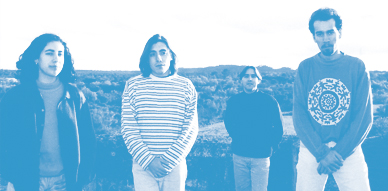
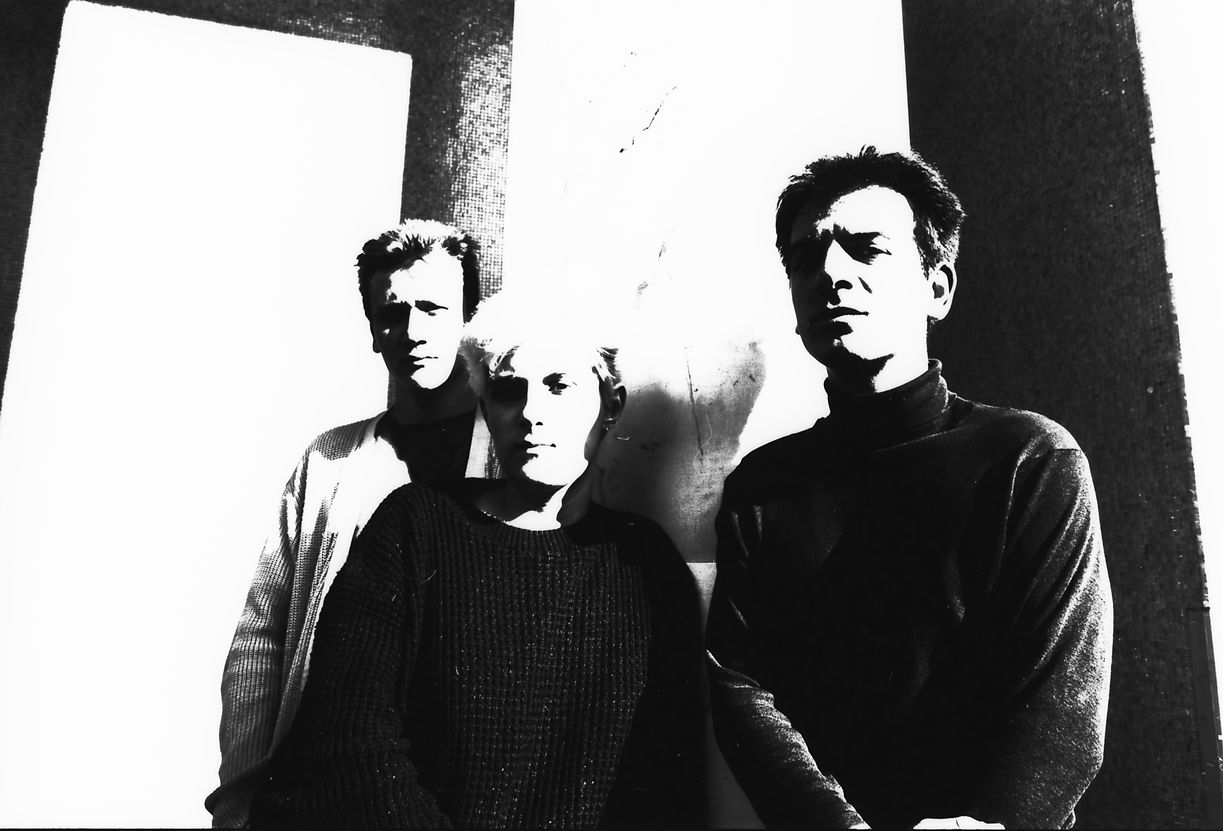
Thanks so much to Ryan Marquez for the interview! Many of us know Ryan’s bands in the US like the super Apple Orchard who graced an early Cloudberry 3″ CD and nowadays the band Golden Teardrops who are releasing a new record. But before all that, back in the Philippines he was involved with a band called Sodajerk that was heavily influenced by Scottish Pop! They didn’t release much but they have put most of their recordings up on Bandcamp. And because of that I thought it was a great opportunity to learn more about Sodajerk and Ryan too!

++ Hi Ryan! Thanks so much for being up for this interview! How are you? We met many years ago thanks to your band The Apple Orchard. What happened to the band? Still going?

Hey Roque! Yes it seems so long ago! We met at the NYC Popfest 2010, was it? Hope you’re doing good. Apple Orchard is currently on hiatus. Dale and I haven’t really called it quits. We’re just not writing material for it.

++ I noticed that you have just released a new record with your new band Golden Teardrops, care telling me a bit about it?

I actually recorded a demo in 2005 with my then girlfriend (now wife) called “A Summer Escape”. I always wanted to do something like it, like a mix of 60s pop and indiepop. Then in around 2014, I wrote a couple of songs which we liked, and that’s when the idea of recording an album came about.

++ You’ve been in many bands but of course, I wanted to interview you about Sodajerk, hopefully in the future we can talk about the rest of the bands! But let’s talk about your 90s, early 2000s, band! You must have been very young when you started Sodajerk, right? Was it your first band or had you been involved in other bands before being in Sodajerk?

I was 19 years old when Sodajerk formed. It was my second band. My first band was Go Figure? (yes, with a question mark), which was only a few months prior to Sodajerk. Go Figure? was a Pavement-cover band when I joined, and I had a Pavement-phase during those years. I was the guitar player there for a while. I only lasted a few months (totalling less than 10 gigs). It didn’t work out because I live far from the rest of my bandmates, and that I had to come back to the States for a few months. They also wanted me to “rock out” because I just stood whenever I play the guitar. I do not remember if I got fired. They’re really good musicians though and I learned a lot from them, like drop D tuning and stuff.

++ And what about the rest of Sodajerk? Have they been involved in other bands? 

Ronald (bass) and John (guitar) were in a band called Noise Behavior. I saw their band once, and they covered songs by Seam, and Superchunk. Manny used to be in a Black Sabbath cover band!

++ Let’s start from the beginning. What are your first music memories? Do you remember what was your first instrument? How did you learn to play it? What sort of music did you listen at home while growing up?

My first music memory was my grandfather listening to this radio station that played 50’s music. He listened to it every afternoonand played the music really loud! He also played cassette tapes of Elvis and Nat King Cole. He had records too but his record player broke, so cassette tapes were big in the family then.

The first instrument I played was keyboards. I was probably 12 or 13. My brother and sister took piano lessons, but I didn’t. My brother taught me the basic piano chords like D, G, and A, and I wrote my first song on a small electric keyboard, but I never really liked playing it. My dad bought me my first guitar when I was 15 loved it! I studied “The Beatles Songbook” with the help of a chord chart and that’s how I learned to play the guitar.

When I was about 10 years old, my brother Dale, who’s 4 years older than me, introduced me to New Wave and all that, and I got into The Cure. I remember getting “The Head On The Door” on cassette. He used to buy these compilation tapes, andvinyl. I remember hearing The Pale Fountains and The Lotus Eaters on one compilation LP called “London Calling”, where they have 2 or 3 songs each. I think The Blue Nile was in there as well. I also bought cassette compilations whenever I have money, so I can discover more bands. So yeah growing up, I listened to whatever my brother was listening to: New Order, The Smiths, Echo And The Bunnymen, China Crisis, Aztec Camera. I remember at a young age, being obssessed to Aztec Camera’s “We Could Send Letters”. I still love that song up to now.

++ You were based in Valenzuela City in the Philippines. Were all of you originally from there?

Three of us were originally from Valenzuela City. Ronald (bass) grew up in Tarlac City then moved to Valenzuela after high school.

++ How was around Manila back then? Were there any bands that you liked? What were the good record stores? Or what about the pubs or venues to go check out up and coming bands?

I learned about the Manila Indie scene from Dale. He was in a band already (Sonnet LVIII), and they had been playing at a place called Club Dredd. This was probably early ’94. Sonnett LVIII was a very good live band, and was starting to make a name for themselves. I’ve seen plenty of local bands around that time, but I particularly liked Bad Days For Mary, Smashed Little Creatures, and Aspirin was pretty good too. The mid to late 90s spawned more good bands like Fingernail Cocktail, Uranus, Soft Pillow Kisses, Smile Plenty… Most of these bands have no recorded output. It’s just that it’s hard for an indie band to get signed those days, and studios cost a lot to record.

As for record stores, there was a place called Groove Nation, where you can order stuff. Later on it was Tower Records. There was another place, but I forgot the name, CD Warehouse or something, where you can place an order then pick it up after a couple of months!

Club Dredd was the best venue to see bands during those years. They had this horrible “ticket selling” process there where smaller bands had to sell a certain amount of tickets in order to play. We used to pay for those tickets ourselves just to play. Dumb, right? But we were young, and all that mattered was playing live. There’s another club called Mayric’s that became home to a lot of indie/indiepop bands. They scrapped that “ticket selling” thing over there, which was a relief!

++ When and how did the band start? How did you all meet? How was the recruiting process?

One afternoon, I had a visit from Ron Cajayon, the guitar player from Sonnet LVIII, who is a friend of my brother, and I knew him since I was little. He asked me to form a band with a couple of guys he knew, and that he’s willing to play the drums. I just left Go Figure?, and have been frequenting Sonnet LVIII rehearsals, and even did a guest guitarist spot on one of their shows. I wanted to start a band with a friend of mine but he moved out of town. Ron then set up a meeting at his place, where I met John and Ronald. This was the second time I met them actually, because I saw their band Noise Behavior previously, and we had a quick chat then, and I told them that I liked the Superchunk cover they did, and they recognized me from Go Figure? They were really cool and funny guys, and they like Teenage Fanclub, too, so we hit it off right away.

++ Why the name Sodajerk? 

Sodajerk was suggested by our bass player, Ronald. We were a couple of weeks away from our first gig, and we didn’t have a name yet. We had a discussion about band names, and I asked Ronald about this recently, and he said we considered names like Lube and Fuel, because our drummer’s house have these boxes of Lube and Fuel stacked somewhere inside the house. So we were looking around and Ronald had a mixtape with him with the song Sodajerk by Buffalo Tom. We all thought it was a good name, though none of us were huge Buffalo Tom fans.

++ How was the creative process for you? Where did you usually practice?

Usually, one of us had a song written, but all of us contributed in arranging the songs during rehearsals. It just happened that I wrote more songs, but it was more of a collective effort.

We were more of a live band so we used to practice once a week, and more than that when we were starting out. In the beginning, we used to practice at Ron’s (our first drummer) house, as early as 9 in the morning. Then later when Manny joined as the drummer, we practiced at several rehearsal studios, for 2 hours a week, and sometimes more. At times, we would rehearse at Ronald’s brother’s apartment.

++ Did you ever sang or considered singing in Tagalog at all?

We never wrote a song in Tagalog. I don’t think we even discussed it. It’s because of the style of music we’re interested in. We like Scottish Pop! In the Philippines, most of the hits were in Tagalog, of course, so we might have had a hit if we had a Tagalog song!

++ And who would you say were influences in the sound of the band?

We all had mutual fondness for Teenage Fanclub. Then later on, we discovered these bands who are somewhat connected to the Fannies, like BMX Bandits, Eugenius, Superstar, Speedboat, and The Pastels, and tried to incorporate a little bit of each to our own sound.

++ I only know of one release by Sodajerk, a tape on the Italian label Best Kept Secret titled “Pop On!”. Was this the only ever release by the band? Or have there been any other releases?

Aside from that tape, we released a split CDEP with Carnival Park titled “That Happy Glow” on Dorothy Records in early 2000.

++ Also this tape came out in 2004, was the band still going at the time? And how did you end up releasing with this Italian label, I suppose you never met the label people? 

This tape came out around the time I permanently moved to the States. So, Sodajerk was put on hold. I knew Alessandro of Best Kept Secret through Myspace. He included an Apple Orchard song in one of his compilation tapes prior to hearing Sodajerk. I’ve uploaded a few Sodajerk songs in Myspace, and he heard it and wanted to release an album. Since we did not have enough songs for an album, it became a compilation.

++ There’s a song called “Weekend Make-Up” on this tape that is said to be recorded live on the Fridge Radio session. What was that session about? What is Fridge Radio?

The Fridge was a radio show, mostly dedicated to indie/indiepop music. They also did guestings of indie bands, where the band members play their favorite songs during the show, along with a live performance. I think we played 4 songs there. It was a really cool short-lived radio show.

++ You did appear on a few compilations in the early 2000s. For example “Training Wheels” appeared on Factory Girl Records’ “Working Titles” comp. Who were behind this label? This comp has a terrific tracklist!

A guy named Mario Serrano was behind Factory Girl. There might be another person involved but I forgot who. Mario was also one of the hosts in The Fridge radio show, and was one of the producers of the indie compilation, “Mutual Admiration Society”.

++ Also “Things You Say” appeared on Dorothy Records’ “Dashboard Teddy Version 1.0”. I always think of Dorothy as the main Filipino label. I don’t know much about them, so perhaps you could tell me about them a bit? 

Dorothy Records was ran by a friend of mine, Mike Dy. It was a CDr label. He released the aforementioned Sodajerk/Carnival Park EP, and re-released Carnival Park’s “Her Kindercrush”, as well as Creamy Bicycle’s one and only album, before they switched their name to Spring Boutique (their singer is my wife). Later on, Dorothy co-released a Balloon Derby 7” with Apple Crumble in Japan. I may be missing a few releases, but yeah, it might be the main indie Filipino label!

++ And I have found out on Bandcamp that just a few days ago you uploaded a sort of Sodajerk retrospective called “My Sweet Dream”. I wonder if there is any intention of putting out in a physical format?

I have been talking to the rest of the guys in Sodajerk for a while now, and I realized that we do not have anything available online. There used to be songs on Myspace but I’m not sure if they’re still there. I just rediscovered Bandcamp, and I wanted to document the songs for ourselves. Unfortunately, there’d be no physical format for the release. I don’t think I have the energy in self-releasing things these days. It’s so hard!

++ And are these all the recordings ever made by Sodajerk o are there more unreleased songs by the band? 

We had a few more demos that were not included on the Bandcamp release, but unfortunately I lost the tapes!

++ Was there any interest from labels to put your music out?

In Manila, there was no interest at all! During that time, you can never get signed unless you have hit potential. I do not know of any indie labels at that time. Maybe just bands self-releasing their own. I don’t think we were playing just to get signed. My thought was, if we’re able to record something, we can put it out ourselves. As I mentioned previously, we did get to release something on Dorothy Records. Mike from Dorothy had always been a fan of Sodajerk. Aside from Dorothy, Best Kept Secret was the only other label that was semi-enthusiatic about the Sodajerk songs.

++ You made covers by BMX Bandits and Teenage Fanclub, what other bands would you have loved to cover? Or perhaps you did when playing live?

We’ve done a lot of Teenage Fanclub covers in the early years, but later on, we began excluding covers to focus on the originals. We did “Million Tears” by The Pastels, which was the most indiepop we could get. We always threw in “Cut Your Hair” by Pavement in our last days, because we all loved that song. I always wanted to cover The Pastels’ “Classic Line-up” and Teenage Fanclub’s “Radio”, but we never got to them.

++ I read you formed in 1995 but your first recordings seem to be from 1997. What happened in between?

We had a 3 song demo in early 1996, recorded on cassette at our former drummer’s house. I lost the tape though. Around this time, we were always looking to play live.

++ The song “Jackpot Queen” was recorded live. Live where?

That song was recorded live in Ronald’s brother’s apartment during a rehearsal. We used one karaoke mic!

++ For me it is hard to pick a song, but I usually ask a band to tell me the story behind one or two of their songs, usually the ones that are my favourites! So maybe I will ask if you can tell me the story behind “Honeysuckle” and “Heartcrusher”? What inspired them?

For “Honeysuckle”, I got the idea for the song when I saw an air freshener with a “Honeysuckle” scent near the supermarket counters where I was buying food. I already had a riff in mind. I was still young when I wrote this, so the lyrics were just play on words. Musically, it was a very different sound for us because of the chord progressions. We used to just write repetitive chord patterns. Our bassist, Ronald, told me once that it was the song that turned it around for us, music-wise.

For “Heartcrusher”, it was inspired by the song “That Kind Of Girl”, by a BMX Bandits-related band called Cheeky Monkey. It was a very jangly song for us. Around this time, we were trying to stay away from the distortion pedals. There’s a lot of love-related angst in that song.

++ And where do you usually record your songs? Who produced them?

For the Bandcamp songs, the 1997 demo was produced by our former drummer and recorded in a church where all the instruments were plugged directly to a soundboard. We recorded & self-produced “Honeysuckle”, “Deadstopper”, “Training Wheels”, “Heartcrusher” and “The Things You Say” in an old studio with a worn out Reel-to-Reel analogue recorder. The engineer was probably 70 years old. I was telling him to make the vocals sound like it was recorded in the 60s, but he was like, “I don’t know how to do that!”. We recorded the songs live with minimal overdubs, and ignored the mistakes to save money. Then we self-produced “My Sweet Dream” and “Weekend Makeup” in a digital studio. The engineer accidentally deleted some of my guitar parts at the end of “My Sweet Dream”. Some of the other songs in the Bandcamp release were solo 4-track tape to digital recordings.

++ On Youtube there is a video for the song “Weekend Make-Up“. Who made it? And how was the experience of making the video? 

I made this video using the clips of the TV guesting we had. I always liked that song by John.

++ Did you play many gigs in total? All over the Philippines?

I am not sure. It felt like it was close to 50, or even close to a hundred…I don’t know, really. Most of the gigs were in Manila. We only had a few out of town shows.

++ And were there any bad gigs at all? 

Yes, there were. We had some line-up issues over the years. In one show, both John and Manny were unavailable. We had a different set up, we asked Ronald’s cousin to fill in with the drums, and we asked someone to play keyboards for us. He was not really a keyboard player, but he was good during practice. At the time of the show, he completely forgot all his lines, and everything came crashing down. There was another time when my leg got dipped in a puddle of really dark mud after the gig which kind of summed up my feelings about the show!

++ When and why did Sodajerk stop making music? 

It was 2002 when I moved to California for good. That was beginning of the end of the band. When I visited Manila in 2004, we got back to record a few songs. I think they were all married by then. So that, and me living in another country were the reasons why we stopped. We had a couple of reunion shows in 2005, and the last one in 2012.

++ After the demise of Sodajerk, what band did you start? Apple Orchard? Trying to put together a chronology! 

I was involved in a lot of bands while playing with Sodajerk. At different points, I played bass for Supergloo, Dorian Of Juniper Bells, and Carnival Park, and also played guitar for Mono Workshop, then there was this short-lived band called Wadaiko, where I was the singer, and a couple of one-gig bands. Apple Orchard was already a side project when Sodajerk was still around. After Sodajerk, I concentrated more on Apple Orchard.

++ Did you get much attention from the radio or press?

Very minimal. We did a couple of radio guesting at this show called “In The Raw” in a station called NU107, although it was only me and Ronald who showed up for both. The host liked us, and he played our songs, and even invited us to do a video shoot for the TV version of “In The Raw”. The only press writeup we had was a review of the Sodajerk/Carnival Park split EP…It was in the music section of a newspaper though, not a music magazine, and that doesn’t happen often to an indie band, so we were proud of that.

++ What about from fanzines?

There were a few fanzines back then. Scenester and Nine (or 9ine) I think. I am unsure if we were even featured in one of them. I was a contributor in a fanzine called “Taste Like Tea”, which was Mike Dy’s (of Dorothy Records) idea, and we made sure we mentioned our own bands! Haha!

++ You still enjoy indiepop, that’s clear, and still follow it. What are the last records you have enjoyed? 

Yes, I still enjoy Indiepop, although I am mostly unaware of the younger bands that are coming out. Some records that I have been playing recently are:
1. Overgrown Path By Chris Cohen
2. Adiós Señor Pussycat by Michael Head and The Red Elastic Band
3. Fragments & Curiosities by Armstrong
4. Love is Enough by Lia Pamina
5. Tracyanne & Danny by Tracyanne & Danny

++ And today, aside from music, what other hobbies do you have?

I just got interested in gardening. We have a small garden so I think I can manage.

++ Looking back in retrospective, what would you say was the biggest highlight for the band?

When our split CDEP was reviewed in the paper. I couldn’t believe it. It wasn’t really a big deal but it was pretty cool.

++ Never visited Manila, would love to go to the Philippines some day. So maybe I can ask for some suggestions? Like what are the sights I shouldn’t miss? Or the traditional food or drinks that you love that I should try?

I am probably not the best tour guide there, but I recommend you visit Jollibee, and try the Filipino spaghetti! You should also try halo-halo, which is kind of like a dessert/drink with fruits, milk, flan, purple yam etc., over shaved ice. I hear there are some good record shops there now, and I see some postings of DJ nights occasionally.

++ And I must say I’ve liked most of the filipino indiepop bands I’ve heard. But maybe you can recommend me a few that I might have never heard before?

There are so many! Just on the top of my head: Archaster, Balloon Derby, Bubble Based Boy, Under Shooting Stars, Spring Boutique, The Gentle Isolation, Sunday Picnic Love Affair, Outerhope, The Wentletraps, Popular Days.

++ Thanks again Ryan! Is there anything else you’d like to add?

Thanks Roque! I had a lot of fun strolling back down memory lane!

::::::::::::::::::::::::::::::::::::::::::::::::::::::::::::::::::::::::::::::::::::::::::::::

Listen
Sodajerk – Heartcrusher
29
May

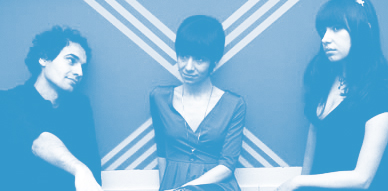
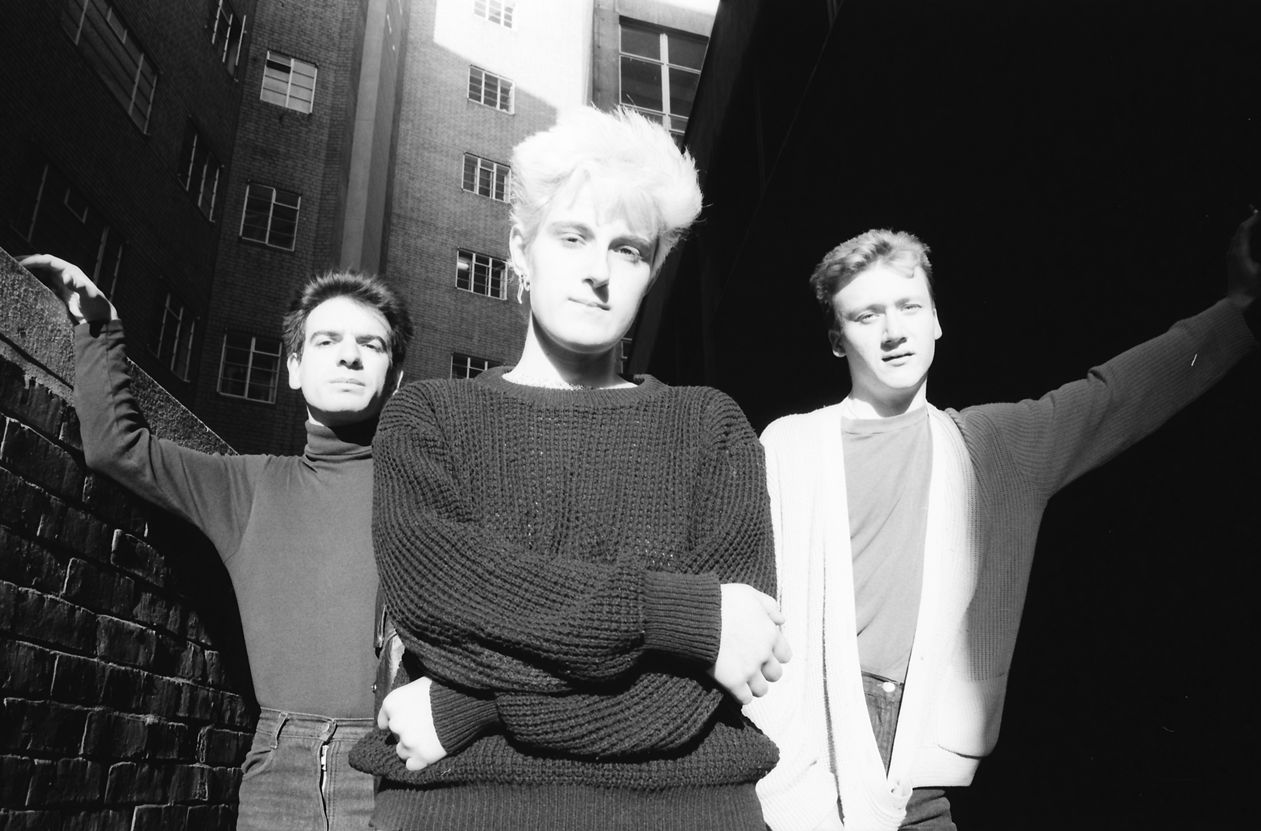
Thanks so much to Nick Batterham for the interview! I got in touch with Nick on Twitter (thanks Wally!) after I had written about Blindside on the blog. The band was around in the early 90s in Melbourne, Australia, and released a string of singles and an album on the renowned Summershine Records. Aside when it comes to their releases, there was not much written about the band on the web. So I took the chance to ask Nick as many questions as I could! Hope you enjoy!

++ Hi Nick! Thanks so much for getting in touch! How are you? Where are you based now? Still in Melbourne? Are you still involved with music?

I’m still making music in Melbourne, including with my oldest friend Hamish from Blindside. We’re currently working on a new project together. I’ve also just released another solo album, seems to be a habit that I can’t get rid of.

++ Let’s start from the beginning. Like what are your first musical memories? What was the first instrument did you get and how? 

I come from a musical family so I grew up with a piano and an organ in the house. I studied cello from a very young age but gave it up at the start of high school. Around that time Hamish and I became school friends and I began to absorb his musical tastes. About age 15, I started learning guitar from his father Jim and by playing along to the records we were worshipping. My brother quit playing the flute when he got braces on his teeth. I pawned his flute and used the money to buy my first guitar from the pawn shop. I taught myself enough to justify getting a better guitar for my 16th birthday – a red Canora acoustic with a pickup. I soldered a cable to RCA plugs and ran it through our home stereo until it tore the speakers. Hamish and I tried busking playing covers of U2, The Cure and REM around Frankston. We didn’t make any money, but we didn’t get punched up either. Still a good definition of success.

++ Had any of you been involved with other bands prior to Blindside? When and how did the band start? How did you all meet? How was the recruiting process? Why the name Blindside?

Blindside was our first proper band – using two other friends from our school, drummer Nick and bass player Chris. I can’t remember where the name came from. We were a little bit goth at that time, so it was probably an attempt to sound dark and mysterious. We had previously called ourselves Mourning Cloud and taken photographs playing guitars in the cemetery! We rehearsed on weekend in Chris’s loungeroom or in Nick’s parents garage. Nick’s older brother Manu worked at Missing Link records and had a great record collection that we immersed ourselves in…. Sonic Youth – Daydream Nation, Dinosaur Jr – Bug, Husker Du – Candy Apple Grey. We’d listen to records then go to the garage and try our best to sound like the bands we loved. The common thread was noisy guitars. We were remarkably lucky to have our formative years when we did. The influencing forces were strong and our tastes were dynamic. We absorbed everything and started writing our own songs.

++ And who would you say were influences in the sound of the band?

Ride and MBV became the greatest influence on our early sound…and our clothes and our haircuts. We strung overdrive and distortion pedals together and made a mess of noise. We started going to live gigs in the city and seeing local bands like The Glory Box and The Sugargliders. Melbourne music was dominated by punk rock bands like The Hard Ons and Cosmic Psychos, but there were plenty of indie bands.
Hamish bought records from Plato’s in Frankston where Scott Stevens worked (Scott became the singer in The Earthmen who I later joined). We made trips out to Jason Reynolds record store Exposure. He had a radio show on RRR which together with the UK magazines formed a comprehensive net around our musical tastes. We saw bands at The Punters Club and The Evelyn and soon were playing there ourselves.

++ All of your releases came out on Summershine Records. How did you end up on that label and how was your relationship with them?

I don’t remember if Jason had seen us play or not. I gave him a cassette and I think he gave us some cash to mix it properly. None of us really knew what we were doing but our desire was strong and we thought we were the best thing ever.

++ Your releases came both on vinyl and CD. That was kind of unusual then, and today it seems very difficult to do that for an indie band. I suppose the band had quite a following and it wasn’t as complicated to sell these records back then? And which of the two formats would you say you prefer and why?

7 inch singles were the norm and CDs were kinda new. It felt like a life defining moment to get your music on a vinyl record the first time. CDs took over through the 90s. To me vinyl still has a feeling of permanence that making a CD doesn’t have. Getting vinyl back from pressing is just as thrilling today as it was the first time. Now I only play CDs in my car – because it is old enough to have a 10 stack CD player!

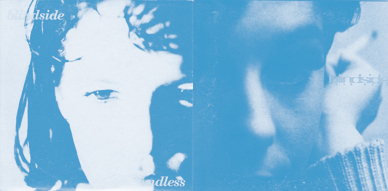
++ Your first release was the “Endless” single. Here the 7″ and the CD have different songs and tracklist. I also notice that you designed the art for your records. Were you a designer by trade? And how important were the aesthetics of your releases for you?

I don’t remember what songs were on the different releases. I was studying design at university and getting into doing my own black and white photography. I dropped out during second year because I knew all I wanted to do was play music. I was playing lots of gigs with Blindside and touring with The Earthmen. The sleeve pictures were my early photographic experiments and the design… I remember cutting out the text from a bromide machine! I still like doing the artwork on my records. Really, I see the sleeves and the recording and video clips all as the same activity, it’s an elaborate craft project to keep myself occupied.

++ You worked for many of the records with Simon Grounds as producer and engineer, how was that experience?

Simon Grounds was a live sound engineer that did our early shows. He offered to record us at his house, he was a bit older than us and seemed to know about recording. He was an eminent figure within the St Kilda music scene. We probably didn’t fully appreciate his achievements at that time. I remember he had tree branches inside the house and boiled coffee beans in a big pot. The studio was a cat playground. We were just thrilled to be capturing our sounds properly for the first time. Until then I had been recording everything on my 4 track cassette so the rapid expansion of knowledge was exhilarating. He certainly captured where we were at.

++ I love the song “Plague” from this first single, wondering if you could tell me the story behind it? What inspired it? 

Thanks! Funny I couldn’t remember what Plague sounded like so I googled it. I think the YouTube track called Plague (with a picture of Hamish on the 7 inch sleeve) is actually the song called To Be Found. It was a double A side, perhaps with the labels on the wrong sides. It’s an angsty teenage song about feeling like an outsider and trying to belong. All the tragic teenage stuff you can only sing when you’re hiding behind your floppy fringe. Very strange listening to it now after so long. I can hear how much I loved the Smiths and the guitar is all Dinosaur Jr. The rhythm and chord progressions are something I have repeated a lot over the years.

++ On the 2nd single, “Idle Eyes”, there is a photo of a girl called Christine on the art. Who was she? 

Christine was my girlfriend. I remember the photo was taken during a party in a hotel room after a hair show. Her sister Suzanne was a hairdresser and Christine had been a hair model in the show. Suzanne had won a prize. The room phone rang and she answered “Hello, winners!” I guess you had to be there, but it is forever stuck in my memory. It’s over 25 years ago but I still call my home wifi network “winners”.

++ Your 3rd single “Teenage Goth Suicide Cult” has a very interesting title. This time around I suppose you weren’t totally happy as the 7″ didn’t get proper artwork? But something that caught my attention was that you appear as Beebaa and Laalaa. Or Hamish Cowan as Biggest Muff. What is the story behind these names?

The title was from some tabloid magazine headline. The BeeBaa was my fuzz pedal and the Big Muff was Hamish’s fuzz pedal. And Laalaa was for me being the singer. I was smoking weed obviously.

++ After the singles you released an album called “Hopes Rise”. How different was to record it compared to the singles? Was it a better experience? And are the songs on the album that were on the single recorded again?

The recording sessions for the album followed closely after the single sessions. We were paying as we went so it was in dribs and drabs. I think we were just recording the songs as quickly as we wrote them. It has an acoustic version of To Be Found on it.

++ The band appeared on a few compilations. One that caught my attention was the “Youngblood 4” one that was a compilation supporting young new bands from Australia. How did you end up contributing to this RooArt compilation, and was there any other sort of support by them, perhaps a gig, other than appearing on the CD?

That was a year or two later. RooArt offered Blindside a recording contract for our second album. I turned it down because the money was less than what I already had debts for at Metropolis studios where we were recording overnight in down time.

++ Are there more unreleased songs by the band? 

There are about 15 songs recorded for that second album that never saw the light of day. At the time I thought they were all a mess. In reality, I was the mess. We were recording from 9pm until 9am every night. I got pleurisy from going too hard. At that time The Earthmen had just signed in the US were going over on tour, which seemed more exciting, so I put all my eggs in that basket and let Blindside fizzle. It really is a shame. Blindside were really happening and I lost perspective. The album didn’t get finished and all that exists are the desk mixes.

++ Was there any interest from other label?

We turned down a deal from Homestead Records too. Hamish still reminds me about that quite frequently. What might’ve been?

++ What about gigs? You even played big gigs, supporting Smashing Pumpkins, right? Any anecdotes that you can share?

I remember they had giant racks of weird guitar effects and were a bit too heavy metal for my taste. We supported the Breeders a few nights later.

++ Did you play many gigs in total? All over Australia perhaps?

Blindside played a lot but only ever in Melbourne I think. The Earthmen ended up playing all over in their later years

++ And were there any bad gigs at all? Any anecdotes you could share?

We were pretty shambolic at the best of times. We equated noisy with good, so in that way the gigs were always good.

++ When and why did Blindside stop making music? And what happened immediately after?

See above. The Earthmen toured overseas, half disbanded, then signed to Warners and made a major label album all in the two years after Blindside ended. Hamish started Cordrazine in that time.

++ You’ve been in other bands, tell me if I’m missing any, like Cordrazine, The Earthmen or your solo project. How different would you say are your other music ventures to Blindside? 

All the bands are as different as the personnel involved. The Earthmen were a noisy band that got cleaner over the years. My own music has gradually become quieter. I still enjoy playing noisy guitar, just doesn’t happen very often. My voice has changed a lot over the years too. That whiney teenager is pretty hard to listen to. I can hear all the formative influences and trace how they’ve had a lasting impact on my writing and recording style.

++ Did you get much attention from the radio or press?

Blindside got local community radio play and street press, but no more than any other indie band at that time. Somehow Summershine managed to get us some amazing press in the UK. Indie guitar music especially was having a great period of broader mainstream appeal so there was plenty of limelight to go around.

++ What about from fanzines?

A bit, not much.

++ And today, aside from music, what other hobbies do you have?

I work in film doing sound and music and I run a recording studio where I produce music for all sorts of things. Somehow I’ve managed to avoid what feels like a real job and have my hobby as my life. I still get to spend time turning knobs and trying to create satisfying tones of distortion.

++ Looking back in retrospective, what would you say was the biggest highlight for the band?

n 1993 we got single of the week in UK Spin magazine in the same week they reviewed new releases by our heroes The Cure and Dinosaur Jr, which at the time felt like we’d arrived. The real highlight in retrospect is being part of the great Summershine collection of bands, at a time of such vitality in local music. It set up my life path and some core friendships.

++ Never visited Melbourne, would love to go to Australia one day, but would love to go one day, maybe I can ask for some suggestions? Like what are the sights I shouldn’t miss? Or the traditional food or drinks I should try?

I’m a bit of a homebody so probably not the best tour guide. I’d certainly avoid any foods served as being “traditional”. It’s a good town for coffee, but you don’t need to fly 18 hours for that.

++ And I must say I’m a big fan of guitar pop made in Australia, but would love to ask what are your top all-time bands from your country? And if you could recommend me a few obscure bands too?

The Sugargliders are my all time top pick. Used to love seeing Ripe and The Glory Box play live and the Dirty Three when they started.

++ Thanks again Nick! Is there anything else you’d like to add?

Thanks for taking an interest in such obscure things from so long ago! It was a special time in my life, remembered very fondly.

::::::::::::::::::::::::::::::::::::::::::::::::::::::::::::::::::::::::::::::::::::::::::::::

Listen
Blindside – To Be Found

19
May

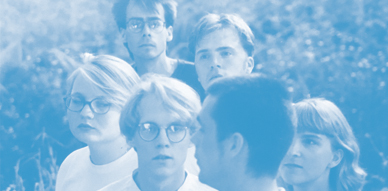
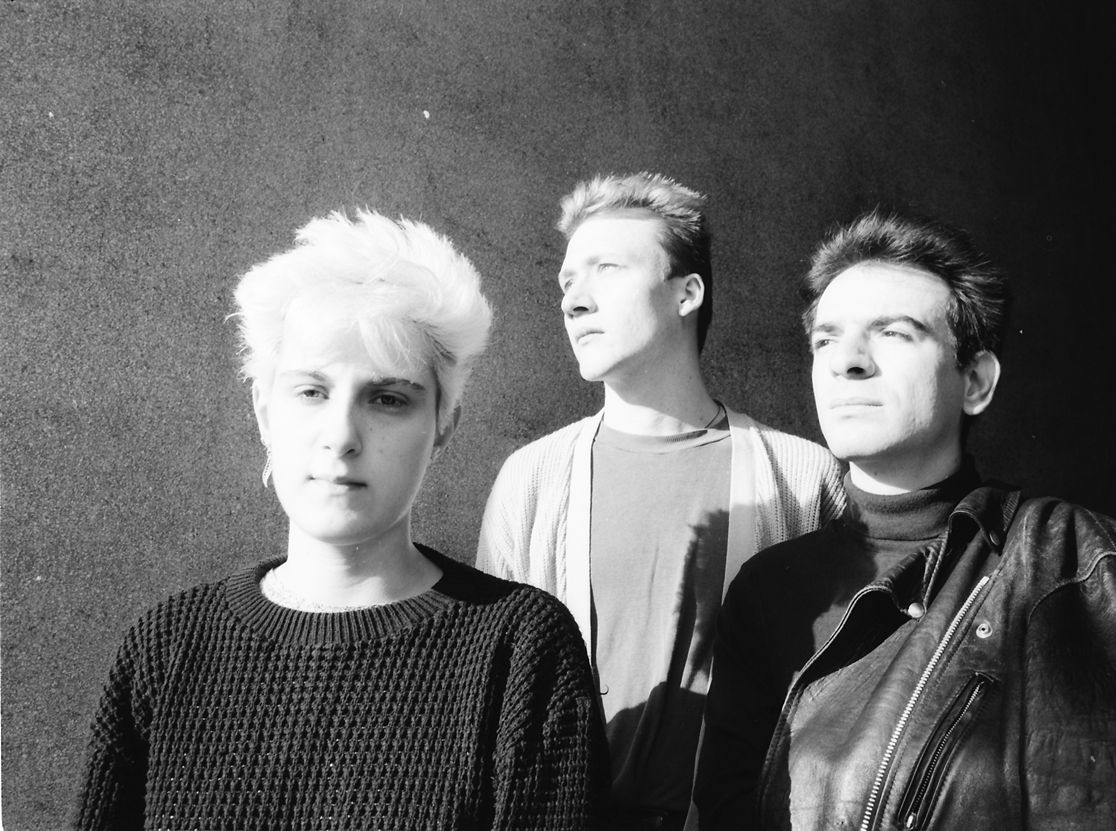
Thanks so much to Simó and Antoni! I know Simó for many years thanks to his current band Marlovers (and before Marlo) who I reviewed on my old blog Mira el Péndulo ages ago. But I wasn’t aware at that time, the mid 2000s, that he had been in other bands. Then I discovered The Aprons on a blog post by Adrià Papa Topo in 2009 on his blog Tweeranosaurus! A year later I was to find two more songs by them thanks to the Annika Records double-CD compilation “Your Wonderful Parade”. These songs, “Full of Love” and “A Beautiful End”, were gorgeous too! But what remained a mystery to me was why no one had paid attention to them, to such beautiful songs. Why no releases!!
So again I conducted the interview in Spanish, after a request of my Serbian friend Nikola who loves this band, so forgive me if there are mistakes on the translation (and you can read the Spanish version of the interview on this Word document). And I’m very happy with the outcome! I learned more about the band, and hopefully one day we all will be able to hear the rest of The Aprons recordings!

++ Hi! thanks so much for the interview! How are you? Where are you these days? Still in Mallorca?

Hi! Thanks so much Roque for remembering The Aprons. The band was formed by four people: two brothers (Antoni and Simó), who are very happy to answer the questions and remembering those days of the 90s, and a couple (Joan y Nuria). All of us continue in the island of Mallorca.

++ When was the last time you picked up your instruments? Are you still involved with music?

Antoni drummed, up to 20003, for Riviera (a post The Aprons band) and hasn’t played again. Joan (guitar and vocals) and Nuria (keyboards) abandoned the music scene in 2000 when The Aprons was no more.

Simó: I still pick up my guitar some days of the week. The band I play with is called “Marlovers”. We have just finished recording our last record. Without doubt we have written some great songs that we hope people like them. In any case it is always a pleasure to sit down and compose songs without any other pretense other than enjoying being seized by creativity, and sometimes, taste a pleasant pop melody.

++ Let’s start from the very beginning. What are your first music memories? Do you remember what was your first instrument? How did you learn to play it? And what sort of music was listened at home while growing up?

Simó: My first music memory is that I don’t have one. I can’t say those striking quotes that many musicians have of having 7 or 8 years old and they remember The Beatles in the Ed Sullivan show or the frenetic rhythm of the chords of the songs of Elvis in their home speakers.

My first instrument was the bass. I believe that I thought that it would be the easiest instrument to play and as my brother already played drums, well, we were the first rhythm section of the first band we had. It was your usual band of mates from college that try to play like their favourite bands. We called ourselves “Nuevas Criaturas”, a name we took from a poetry book by Jim Morrison. The vocalist was a fan of The Doors even though we didn’t get any close to sound like The Doors or a 60s band. I suppose we sounded more like a post-punk band, with a lot of distortion so the technical mistakes weren’t that obvious.

I learned to play bass, but to be honest I don’t know how to play it, thanks to Joan (guitar, vocals and lyricist).  Joan was the typical musician that you see in every band that has this innate ability to make music. He was an exceptional guitarist and who could write great songs. Everything that I know I learned because of him, so I’m very grateful to him.

At home we didn’t listen to any music in particular. My first encounter with the music world was during my teenage years bewildered by bands like The Cure, early U2, Joy Division…

++ Were you in bands prior before being in The Aprons? Red Poppy was the band that came before The Aprons, right?

After Nuevas Criaturas, which was a five-piece band, we formed a band called L’Encruïa that had a very dark sound influenced by the noisepop of The Jesus and Mary Chain or My Bloody Valentine. Later, and not counting anymore with the vocalist and lyricist of the latter band, we formed a new band called Redpoppy which was influenced by the sound of C86 and Sarah Records.

To be honest Redpoppy and The Aprons were the same band. Simple, with the name Redpoppy we couldn’t sign to any interesting indie label so we “strategically” thought about changing names and so try our luck with a new name. In any case our luck, in relation to our expectations, kept being elusive.

++ Simó, you now live in Inca, in Mallorca. Were you always based there? Or where were you based? How was the scene in the island back then? Were there any like-minded bands that you liked? Were there any good record stores? Any sort of scene?

The band was based in the town of Inca, a curious name for a place in the Mediterranean. All of the band members were originally from Inca. The music scene of the island was very active. There were many bands and many styles and sounds. Most of the interesting things were in Palma, the capital of the island.

The record store that was the center for the scene was called “Runaway”. The store was run by Peter Terrassa, and many musicians and fans used to stop by. There you could find the first singles on Elefant Records and singles by many obscure indiepop bands that Elefant used to distribute.  Later we would learn that these records were brought to the store by Joan Vich, who would end up forming the band The Frankeboties and many other projects and events within the scene. Also a venue called Sonotone popped up and at this place we enjoyed gigs by many indie bands from Spain and abroad that had never been in Mallorca like The Jayhawks, Luna, Gigolo Aunts, Los Planetas, Hefner…

However the indiepop style that we played with The Aprons was a rara avis in the island. Most of the bands played rock music, though of course there were some bands that made some pop with shoegaze influence like Honey Langstrumpf or there were many others that tried to sound like Pixies, Dinosaur Jr or Sonic Youth. The bands that were more successful in Mallorca were Sexy Sadie, The Frankeboties and The Cicely Satellites. I think The Cicelly Satellites actually supported us as their first gig. Afterwards they became very well known.

When the band split, around 1999 and the first years of the new millennium, indiepop started to have some recognition and visibility in Spain with bands like La Buena Vida or Los Fresones Rebeldes.

A scene with a coherent sound or some homogeneity didn’t really exist, and if it existed The Aprons weren’t part of it as our sound wasn’t in tune with Sonic Youth-like guitars or sounds that were closer to the Seattle sound. I don’t think there was a sense of belonging, most of the bands were on their own. Maybe, we thought innocently, that were were competing with each other.

++ How did The Aprons start as a band? Who were in the band?

As a natural progression we (Antoni and Simó) started to opt in favour of British indie bands from the 80s (Aztec Camera, The Smiths, The Bluebells, Orange Juice), C86 (The Pastels, BMX Bandits, Talulah Gosh, The Bodines), and the early nineties (Gene, The Beautiful South, TFC, The Pale Saints) and to discover indiepop bands that appeared afterwards in labels like Sarah Records, Setanta, Marsh-Marigold, Midnight Music, Creation…

We recruited a keyboardist (Nuria) iand in the summer of 1994 we started as Redpoppy. The lineup of the band was Joan Reynés (guitars, vocals), Antoni Reus (drums), Simó REus (bass) and Núria Mestre (keyboards, vocals).

++ Why the name The Aprons?

We chose The Aprons thanks to the song “Apron Strings” by Everything But the Girl.  EBTG was, in a way, a band that projected everything an indie band could wish for: top songs, elegance, smart lyrics, social conscience… and as that wasn’t enough, they had achieved success.

++ How was the creative process for the band? Where did you usually practice?

The creative process for our songs happened mostly through the strings (guitar and vocals) of Joan. We all contributed our bit too. Sometimes some songs were contributed by Simó and there was one time Núria contributed one song (“A Beautiful End”).

For practicing we didn’t have many problems. We used part of a country house that belonged to our paternal grandparents in the outskirts of the city so we didn’t bother anyone. At least, that’s what I like to think.

++ And what would you say were your influences?

The influences were varied thanks to every band members taste, but in a way or another we agreed on bands that not necessarily were part of the indiepop canon like: Teenage Fanclub, REM, Belle and Sebastian, Ivy, The Cardigans, Gene, Luna, The Church, Lemonheads, Texas, Matthew Sweet, Velvet Crush, The Smiths, Ride, Razorcuts, Style Council, Love, Pale Fountains, The La’s, Boo Radleys, Pulp…

++ During The Aprons time the majority of Spanish pop bands were singing in Spanish. Did you consider it? Why did you sing in English?

In truth, when Redpoppy started, at the beginning of the 90s, most of the bands of the Spanish independent scene were singing in English. The biggest success story was that of Dover. In a way, these bands wanted to distance themselves of the scene that had lyrics in Spanish and they were fixated with the bands and fashion from North America and the UK. The majority of them sang in English and copied, for better or worst, their idols. There were exceptions like Los Planetas, La Buena Vida or Le Mans… and many others, that had a bigger acknowledgement than those singing in English. Some years later, the opposite happened. Now most bands stopped singing in English and started to make their songs in Spanish. It is at this moment that the Spanish indie scene started to get a much wider recognition.

The Aprons continued singing in English. I couldn’t say why. Maybe it was just inertia. The band didn’t get much recognition, perhaps due to that we never thought about going with the trends of the time. Also, singing in Spanish would mean for us a considerable effort to adapt our music that we never really considered it.

++ I remember that Adrià from the band Papa Topo shared in his blog the song “Glowing Field” by The Aprons and it was gorgeous. Where does this song come from? And what’s its story?

I think that “Glowing Field” was one of the best songs the band recorded. It was recorded on the last recording session in 1999. At this time The Aprons started to show great skills to create good pop songs but it didn’t last much longer. I can imagine that a record packed with songs like this one and recorded in good conditions would have been the perfect ending for The Aprons.

That song was Joan’s. So I can’t really say what’s the story behind it.

++ Did The Aprons publish anything? Some demos, right? How many were they?

There were no releases by Redpoppy or The Aprons. No indie label trusted in our music. Nevertheless we released one Redpoppy song on a compilation of bands from Mallorca in support of the war victims of Bosnia that was put together by the owner of the record store Runaway. We contributed with our cover of “Cling Film” of The Sea Urchins. As an anecdote, one day, Peter from the Runaway store (the meeting place for those in the scene), commented us that he received a letter from the English Society of Authors demanding their royalties! Peter didn’t know we had made a cover. Very little people knew The Sea Urchins, at least in Mallorca.

++ And what is the tracklist for those demos? How many copies were made?

There were four demos:

1st demo “Swallow” from 1994  with 10 songs: “The Sun”, “Cloudy Sky”, “Swallow”, “Everything”, “Thinking About You”, “Only”, “Calamar”, “The Cold is Blue”, “Cling film” (Sea Urchins) and “Crazy people” (Luna). Released on cassette.

2nd demo “Songs from Liliput” from 1996 with 5 songs: “Hold You”, “Inside My Sorrow”, “Little Pretty Thing”, “Verona” and “Keep Smiling”. Released on cassette.

3rd demo “Autumn Time” from 1997 with 4 songs: “It Never Comes”, “High and Low”, “Full of Love” and “Beautiful End”. Released on CDR.

4th demo “Polaroid” from 1999 with 8 songs: “Why Can’t I Sleep Tonight”, “Hold Me”, “Light Up”, “Glowing Field”, “Sleep the Clock Around” (Belle and Sebastian), “Twenty Five”, “What For?” and “My Dreams”. Released on CDR.

++ And where were they recorded? Did someone produce them? Any anecdotes from the recording sessions?

The 1st demo was recorded at Sound & Art studios in Pollença. The 2nd demo at The Independent Republic of Sound that was ran by Toni Noguera of the Mallorca band Los Valendas. The 3rd demo was recorded at the Urban studios that belonged to Rafa Rigo. They were just recordings, we didn’t have enough money to get them produced.

The 4th demo was a technical feat for the time. During 1999 two friends, Pep Ramis and Joan Florit, recorded us with the help of only one computer at the same place that we practiced. Even though the sound quality gets affected by this, the quality of the songs and the good vibes that the band had while the recording sessions ended up in being one of the best recordings of the band.

We started to record the 2nd demo the day after we attended the 2nd Festival Internacional de Benicàssim (FIB), not even giving us time to rest after many days of unending concerts.

++ In your demos there were covers of  “Cling Film” by The Sea Urchins or “Sleep The Clock Around” by Belle & Sebastian. What other covers would you have loved doing? I imagine those two songs are among your all-time favourites?

I remember we played more covers when we played live. I think some by Teenage Fanclub, The Beatles and The La’s.

These are favourite songs indeed, and there many more too.

++ Two of your songs appeared on the Annika Records compilation “Your Wonderful Parade”: “Full of Love” and “A Beautiful End”. These might be the most known songs by The Aprons. I bother you again, what inspired these two songs?

I would say that there aren’t really any known songs by the band. There wasn’t a fanbase who could like one song more than another.

I couldn’t really say much about the creative process for those songs. I’m sorry.

++ And how did you end up included in that compilation? How did you know Gregorio from Annika?

At the start of May 2000 we (Toni and Simó) went to the 4th “Entrega Premios Polares” party (organized by the radio show Viaje a los Sueños Polares by Luis Calvo) to see play live Saint Etienne, Birdie, The High Llamas, La Buena Vida and La Casa Azul.

Simó: In between bands they played music. At some point a familiar song was playing. It took me a while to understand what was going on. That feeling that you know the song but you can figure out which song it is. Suddenly I tell myself, “but it us”. I couldn’t understand how among so many well known indie songs, “Full of Love” by The Aprons” was being played to a multitude of people that was attending the event. What was going on? Where was the candid camera?

Later we got close to the DJ that was playing the music. We tried to talk to him even though the music was so loud that we couldn’t understand each other. That DJ was Gregorio Soria.

After the failed release of the Redpoppy mini-CD with the Efervescente label we changed our name to The Aprons. We recorded the fourth demo and with the addition of our 3rd demo we made a new and last demo that we gave away to different labels. One of these demos ended up on Annika Records hands. Gregorio really liked that demo. And even though it was never possible to release The Aprons as an Annika record, Gregorio included The Aprons on his compilation “Your Wonderful Parade”. The songs he picked were recorded in studio.

++ Are there any more songs that remain unreleased? 

Doing a quick roundup, 5 songs have been published in compilations. The rest of the songs remain unreleased.

++ And there was never interest from labels to release your songs?

To be honest there were some interest. There was a time when a label showed up, one we didn’t have a clue about. It was called “Efervescente” and it was related to a band that we kind of knew that was called Inoxidables. They kind of approached us though there wasn’t much of a predisposition to work with them on our side because how things developed with them. We had agreed to release a mini-CD for Redpoppy (at that time we hadn’t changed names yet). So we went to record new songs the fastest we could. We recorded our 3rd demo and that demo plus a song from our previous demo were going to be our first release. The band were part of a compilation from this label with two of our songs “Hold You” and “Inside My Sorrow”. The label was new and didn’t have much experience.

One day we were asked to play a release party for that compilation in the label’s hometown, Salamanca. Un día nos llamaron para participar en el concierto de presentación de ese recopilatorio en la ciudad del sello, Salamanca. However, the record by Redpoppy, was not released yet. The band had recorded new songs, mastered them, designed the artwork, etc. We asked for some sort of travel expense money because we needed to fly from Palama to Salamanca. Their answer didn’t go well with us, so we decided not to go. In the end the label didn’t release our record.

There were some other contacts with labels but they didn’t prosper.

Looking at it with the perspective of years past, it surprises me that with the quality we distilled no indie label supported The Aprons. Today I’ve been playing some songs and I feel the songs haven’t aged, honestly. They could have been recorded in 1986 or 1996, or even in 2006 or 2016.

++ In that post I mentioned earlier by Adrià, he said that you were planning to release all your songs on a label you were working on, April Eyes Records. What happened to that idea?

The project of starting a new label named April Eyes Records, for the time being, is still waiting to be activated. Maybe later it can become a reality.

++ If you had to choose your favourite song by The Aprons, which one would it be and why?

Simó:  “Glowing Field” is a beautiful pop song, with a solvent verse and a good chorus with the right arrangements and the necessary instrumentation. There is nothing missing nor nothing that is left over. Also its duration is of 2:50 minutes.

Antoni: “Full of Love” is pretty and, in particular, it reflects the sound and style of Redpoppy/The Aprons. I also like a lot the song “High and Low”.

++ Tell me about gigs. Did you play many? Are there any in particular that you remember?

The band didn’t really show themselves much in public. I can’t say how many gigs we played. No more than a dozen. Once we played in Madrid, in the Maravillas venue, which was the indie venue par excellence. It was a gig related to a demo contest, a battle of the bands. At that time they were very trendy these contests aiming to discover new talents. We played alongside a band from Valencia called Polar, who were great to meet. They sounded a lot like Galaxie 500 or Luna.

In another occasion the band supported Los Fresones Rebeldes. That was a great experience to meet the band members of Los Fresones who in some way we knew them through our fanzine April Eyes.

++ Were there any bad gigs? Any anecdotes you could share?

There were good and bad gigs. For sure we learned that it was indispensable to bring a sound guy if you wanted to sound decently when playing live. The Aprons, most of the times, didn’t have one.

++ When did The Aprons stop making music? Did you continue making music on your own? There’s Marlovers, right? In which other bands have you been involved with?

When The Aprons split, as it usually happens, there was on one side the couple (Joan and Núria) and on the other side the brothers (Antoni and Simó). To be honest, the internal dynamics of a band is complicated and if there are romantic relationships between the members it is even more complicated. For me, when a band doesn’t have much appreciation or recognition and the relationship between the members is not solid and you don’t share the same concerns it is very hard for the band to keep going on.

Aside from the already mentioned, there was a band in between The Aprons and Marlovers that was called Riviera. In this band there was the rhythm section of The Aprons plus three other members that would later be part of Marlovers. This band did sing in Spanish. Its sound was very much alike to British pop. There were two demos, in one of them there was a cover of “Crushed” by The Popguns in Spanish.

++ Did you get much attention from the press or radio?

With the first demos we got airplay in Radio 3 in Julio Ruiz’s show “Disco Grande”, that at that time he was doing a sort of “Top 40” of new talents, “La Lista Grande de Maquetas”. That show had a lot of repercussion. All the Spanish indie bands before releasing any records had been played on that show.

We got a few reviews too on the music press. I remember that on the magazine “Spiral”, who aimed to create a scene and was directed by the Elefant Records people, we got a devastating review. So devastating that it was almost funny. I suppose that because they lauded and complimented in excess all the bands and records from the scene they had to compensate in some way.

Our last demo, “Polaroid” was reviewed on the Rockdelux magazine sometime around December 1999 or January 200o on an article about new up and coming bands and a year-end review of what was happening in the Spanish indiepop demo scene.

++ What about fanzines? You used to do one too, right?

We did get some mentions and probably even interviews on fanzines. I can’t remember clearly.

Toni and Simó did a fanzine called April Eyes. Everything was so different during those days. Because of interviews with bands like Heavenly (this time in person as they were playing at the first FIB festival thanks to the help of Joan Vich) or through mail with Keith Girdler of Blueboy, The Softies, Matt from Sarah Records (coinciding with the end of the label and eager to tell many anecdotes), Chitty and Carlos of Moving Pictures, it was all well worth it.

++ Today, aside from music, what other hobbies or activities do you have?

Simó: I love running on the mountains with my two Beagle dogs and my friends. Mallorca is a privileged place for this sport. I practice running on an amateur level though sometimes I do longer distances. Sometimes too I write some fiction though so far I haven’t finished anything that I feel is good enough to be published.

Antoni: Buff! My first and foremost hobbie is adding more records to the record collection I share with Simó. That’s my greatest passion. And activities? well, on weekends I got to see my son play football or go jogging (though many kilometers less than my brother Simó, who is like a wild goat around the mountains),  Mi principal hobbie es seguir ampliando la colección de vinilos, que compartimos con Simó, es mi gran pasión. Y actividades, pues los fines de semana ir a ver jugar a futbol a mi hijo, o salir a correr un poco (menos kilómetros que Simó, que es como una cabra silvestre por la montaña), or hiking around the Serra de Tramuntana….

++ Looking back in retrospective, what would be the biggest highlight for The Aprons?

I don’t know, maybe being the first band in Mallorca, maybe in Spain, that in 1994 did a cover version of a Sarah Records band.

++ How is Mallorca today? Has it changed much? And if one was to visit, as a tourist, what do you suggest checking out? What are the sights not to miss? Or maybe the traditional foods or drinks that one has to try?

Mallorca has changed a lot during the past years, probably more than what The Aprons band members have changed. I would recommend visiting the area of the Serra de Tramuntana to any visitor to the island. It is a hilly area where the most important mountains of the island  are located. There are many picturesque towns like Deià or Sóller. During the summer there are many tourists everywhere. Before if you visited areas that weren’t that known you wouldn’t encounter tourists, but today, with the internet, it is very possible for them to get to places that not even the locals know about.

The traditional cuisine is succulent and varied. I would recommend the “arròs brut” (a rice in broth with vegetables, meat and mushrooms),  “tumbet” (a vegetarian dish made of eggplant, potatoes and tomatoes), and ensaimada (made out of water, sugar, eggs and lard) accompanied by a good red Mallorquin wine.

++ Thanks again! Anything else you’d like to add?

Thanks a lot Roque, and thanks for such a great blog like this so we can continue sharing our passion for music.

::::::::::::::::::::::::::::::::::::::::::::::::::::::::::::::::::::::::::::::::::::::::::::::

Listen
The Aprons – Glowing Field

17
May

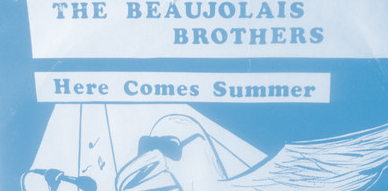
Thanks so much to Lucía, Eva and Roberto for the interview! I wrote about Galáctica on the blog and the same day the band members got in touch with me! I was very lucky! I had loved their band back in the early 2000s and after so many years I got the chance to interview them. I must say that the interview was conducted in Spanish and you can find the original here. I have translated to English all the questions and answers, so forgive me if there are any mistakes! In any case, it is a good time for all of you to discover this superb band from León, Spain!

++ Hola Lucía! Thanks a lot for the interview? How are you? Are you still in León?

Lucía: Hi! Thanks for the interest to interview us, it has really surprised us. I live in Madrid, where I was born; unlike my bandmates, I’m the only one that is not originally from León. I went back to Madrid in 2002 for university studies and I stayed.

++ Are you all in touch? When was the last time you picked up your instruments? Are you still involved with music?

Lucía: We are mainly in touch Roberto, Evan and me. It has been easy as we have continued seeing each other in Madrid and that has given us the chance to continue making different music projects now and then. Galáctica had two comebacks, one in 2005 when both of them were still in León and in 2008 when the three of us were already working in Madrid. Later, in 2014, Roberto and me, alongside two friends, formed a group. Eva joined us later. This project now is on a break until we all have the time to get together again.

++ Let’s start from the beginning. What are your first music memories? Do you remember what was your first instrument? How did you learn to play it? What sort of music did you listen at home while growing up?

Lucía: In my case I come from a very musical family. My father studied in the conservatory, my brother is a professional musician and at home classical music was always played. I think my first musical memories are of  J.S. Bach and The Beatles, who are what really introduced me to popular music. My dad had a band at the end of the 60s where he played covers of The Beatles and other bands, so the music influences for me were big in me. I signed for music school when I was very young and learned to play guitar, following my family steps, but I left it when I was about 16 as I got bored with the academic system. At that time I already knew that what I wanted was to sing (I had studied a bit of singing, but too little) and it was in 1999 when I joined Galáctica with that purpose.

Roberto: I grew up during a time of great Spanish bands like Radio Futura, the golden age of the songs of Berlanga, Décima Víctima and Golpes Bajos. Actually “Colecciono moscas” is one of the first songs I remember, thus my surrealist/dadaist influences. Hahaha.

Eva: I studied in the Conservatory of León and played viola, but I stopped playing it when I was 19 years old, already playing it well but annoyed with the system and seeing very little options to have a professional music career in Spain unless I dedicated myself to teaching in a system that, in my opinion, is old-fashioned and outdated. The other instrument I learned to play, aside from the recorder for music classes in school and the typical Casio organ, was a Spanish guitar that I inherited from my mother when she was young; she used to go to guitar lessons as an after-school activity. I barely learned any chords but I loved it. At home my dad used to play a lot of Jeanette.

++ Were any of you in other bands before being in Galáctica?

Roberto: I had been in random pop and rock bands in León since I was 16 years old. But before being in Galáctica I had a band called Bételges that made some pretty decent indiepop.

Eva: My first band didn’t even had a name nor we played live. I must have been 17 years old at that time and had done everything to buy a Hammong organ with a Leslie amp. When I met Roberto I joined Bételges, and it was then when I got on stage for the first time.

Lucía: I was never in any other bands because when I joined Galáctica I was 15 years old, and at the most I had sang in some school plays. ]

++ How was León back then, at the start of the 2000s? Were there any other bands in town that you liked? What were the good record stores or venues where you usually hang out? Was there a scene?

Lucía: I was born in Madrid, and went to live in León in 1992 and always saw that city with foreign eyes, it was hard for me to adapt to it. But halfway around the 90s, and even though I was still a kid, I remember that there was a scene that was interesting in a national level, with many new bands having fun and doing things in a different way. What was the norm was that bands sang in English but things started to change towards bands redeeming Spanish language pop. I always thought that León was in a privileged spot regardless being a small city. It may be because of the existence of the Purple Weekend festival and bands like Los Flechazos or it being close to cities like Gijón that also had a great musical scene and with it had a lot of creative exchange. The truth is there was a music scene in León that a lot of people remember to this day. I got into it being very young and my bandmates in Galáctica showed me almost everything. Up to that moment I haven’t been out much, to concerts or clubs. It was a sudden, intense and incredible experience.

++ How does Galáctica start? How did you all meet? Was there a recruiting process?

Lucía: All of them knew each other from bands they had played in together. I was the only stranger, I met Eva because I used to go to classes with her little sister. I had 15 years and dreamed of singing in my own band. At the time I considered it more of a fantasy than a real possibility, but the opportunity arrived when Eva’s sister told me they were looking for a female vocalist for a new project. I remember I got very excited. She gave me the contact details, I went to sing with them to their practice room and they told me I had the job. It was all very easy. And even better we became friends and everything started rolling. I always thought that Galáctica was something magical, there were no up and downs, we were always very active and very excited.

++ Why the name Galáctica?

Roberto: Because of our obsession with the space and glitter. We’ve always preferred what’s “robot”.

Eva: We wanted an straight-up name, one word and possibly feminine.

++ How was the creative process for the band? Where did you usually practice?

Lucía: At the start of the 2000s everything was more rudimentary and analog, we didn’t have access to home-recording systems nor we could send each other song ideas by email or whatsapp, so when we needed to share something there was no other option that meet face to face and play our instruments. The contact between each others was necessary and that I remember with nostalgia. Roberto would bring melodies and later I started contributing lyrics, Eva contributed with keyboard arrangements…. I can say that we were very meticulous and hard-working, we practice a lot and we took it seriously. During the year 2000 we practiced at an old practice room that our drummer, Amado, had in a town called Cembranos, near León. Afterwards we moved to other shared practice rooms, that I remember had the dirtiest bathrooms in the whole León province.

Eva: Even though León is a city with a big interest for every music style, for decades there hasn’t been any institutional help of any kind to provide bands decent practice rooms, clean and with minimal security measures. This problem is still going today, sadly.

++ And what were your musical influences?

Lucía: Each of us brought their own. I was a fan of British music, I had grown up with The Beatles, David Bowie and The Smiths, and was in love with britpop bands like Blur, Suede, Elastica, Pulp or Echobelly. I didn’t know many Spanish bands at the time, that is something I thank my bandmates for introducing them to me.

Eva: British pop from the 90s made a mark on me, and because of that and the influence of mod and sixties influenced bands like Los Flechazos I started to get very much into 60s musics in all of their styles (soul, beat, garage…). To that I’ve been adding more and more influences, for example melodic electropop, mod revival, punk 77 and today the new psychedelia…

++ Were you always fans of science-fiction? The future? Perhaps there are writers, movies or series that influenced you?

Lucía: We all are from the Star Wars religion. Particularly, about science-fiction, I’m in love with the books by Ray Bradbury, though I can’t really say if they had any influence in Galáctica.

Roberto: Science-fiction has always been there, it is an escape for our imagination to “impossible” worlds that take you away from this gray reality that is our real world.

Eva: I love movies like “Logan’s Run” or “2001: A Space Odyssey”… and all of them where there are bad guys that are very band with enormous desks and swivel chairs with many henchmen all dressed the same at to his service, but I do need to say that today’s science fiction is not for me, I don’t like it at all, and even less all the exaggerated digital special effects though there can always be an exception.

++ How did you end up signing to Mushroom Pillow and how was your relationship with them?

Lucía: I believe it is time now to tell our biggest anecdote: the day Mushroom Pillow decided to come and check us out playing live, we did our worst gig in Galáctica’s lifetime. It is true that there were many catastrophic circumstances that were out of our control, but it was a disaster and we were very sure that they weren’t going to sign us ever. But luck was on our side, some days later we played for the first time in Madrid at the Siroco venue on 18 November 2000 and we were really magnificent. Then they signed us. Justice was made.

++ Your first record was a mini-album, “Lujo Estelar”, in 2001. Had you recorded anything before this album? Perhaps some demos? Or were these your first ever songs?

Lucía: We have to remark that for Galáctica everything happened very fast: we were recording our first demo after six months of practicing and signing to Mushroom Pillow after just a year. The first demo was recorded during the summer of 2000 at the home of Mario Cooper in León. It had five songs, two of them (“Chica invisible”, “Ya sales en RockdeLux”) were included in “Lujo Estelar”. The other ones were recorded later.

Eva: I remember fondly when our demo was played in the legendary “Viaje a los sueños polares”, at that time in a hyper commercial radio (when they still let some indie music to be played).

++ A song that is catches one’s attention is “Ya Sales en Rockdelux”. Did you ever appear on the music magazine Rockdelux?

Lucía: We did, of course we did! I don’t have a copy, but I believe they took the song well, with good humor. I still can’t believe it.

++ Afterwards you release a CD single for “Electrónica” for which you made a video. How was that experience? Where was it recorded? And why did you choose “Electrónica” as the promo single for the album?

Lucía: The single was recorded at Feedback studios in León during the spring of 2002, but the promo video wasn’t filmed until September of that year. It was our first video, we filmed it in two different scenarios (indoors and outdoors) with two different set of outfits and I remember it as being lots of fun. I think they chose that song because our bosses thought it had the chance to be a hit.

++ In this CD single you included a cover version of “Mi Verdad” by Luna. What made you choose this song? I also read you made covers when playing live of the likes of Los Flechazos, Le Mans, even The Ramones. What other covers would you have liked to do?

Lucía: This was a song by a band from Ponferrada that had some success in the 80s. We thought it was fun and exciting, very much in the style to what we doing with Galáctica.
On another hand, our covers history is kind of crazy. I remember doing covers of bands so different among themselves like Magnapop, Easybits, The Charlatans, Ramones (an Spanish version of “I wanna be sedated”), Los Flechazos (“Quiero regresar”), Le Mans (“Un rayo de sol”) and Dinarama (we did “Rey del Glam” for a Carlos Berlanga tribute for the Contempopranea festival in 2003).

++ The album “El Fotógrafo del Más Allá” was published in 2002 and had 12 songs. There are many favourite songs but my favourite might be “Mejor Berlín”. In a couple of sentences, what’s the story behind this song?

Roberto: When you live in a city like León where everything is small and everyone knows each other your only obsession is to escape and traveling is a good medicine for that illness.

++ For the album you also made a video, for the song “Superdisco”. Two questions, what inspired this song? And two, tell me a bit about the video, any anecdotes or how did you end up working with Juan Marigorta who actually directed both of your videos?

Lucía: If I remember it correctly, it was a song that we made with lots of snippets from other songs that we never ended up using. The lyrics are inspired by one of the contemporary issues that worries young people: becoming an adult.
About the recording for the video, I only remember the part that we were playing altogether and the embarrassment I had when walking around the León streets while Juan Marigorta was filming.

++ There is a later record called “RMX” which I’ve never seen, nor it appears on Discogs, that was released by Miss Lucifer Records. Which songs were included in it? And who made the remixes?

Roberto: A friend and me started a label for when we had these crazy ideas. I have always been interested in working with people who make other people dance and understand the instincts that are awaken by the most simple electronic rhythms. And Diego Cadierno was always someone I admired because of that. I like the vision he had with our music and where he takes it.

++ Something that caught my eye was the band’s artwork. Who took care of them?

Eva: The art for “Lujo Estelar” and “El fotógrafo del más allá” were done by Marc Argenter, a Catalan artist that was influenced by pop art and the iconography of the 60s and 70s. We were very happy with his work and even today I think it is wonderful. I drew the logo of the girl and also the design for “RMX”, which was more minimalist as it was a record of electronic remixes that inspired me that style but with retro influences.

++ I read that in 2010 and 2014 you got together to record new songs. What happened to these songs? Where they released? I think there was the will to release them on vinyl, right?

Lucía: In 2010 we recorded a demo in a simple manner with three songs that we hoped to release. Because of those modern things (work, paying invoices, moving) we left them in the fridge. About 2014, we got together again in a side-project called Strauss Kahn with our friends Roberto Paramio and César Sánchez. Me, a very attentive girl, have uploaded them to Bandcamp https://strausskahn.bandcamp.com/

++ Are there more unreleased recordings by Galáctica?

Lucía: There are. We are saving them for the time when we become a cult band.

++  If you had to choose your favourite Galáctica song, which would it be?

Lucía: I have a soft spot for “Anticanción de verano” because aside from loving it since the first day that Roberto played the chords in our practice room, it was my first time contributing lyrics (the second verse). I was 16 years old and it may not be brilliant, but I was very proud. I like it because it is a very simple song and talks about a difficult relationship, close to the wrong idea of what romantic love is, but far away from innocence and naiveté. Other songs that I really like are “Electrónica”, “Dinastía”, “Sin estrellas” and “Pasados encuentros”. Also “Picnic 2003”, which is a song we recorded for our first demo with some very cool Farfisa arrangements that we never played again and today I feel that was a shame.

Eva: I really like “Electrónica” as I identify myself with the lyrics, I’ve never felt totally from this world nor that I fit within the majority of human beings.

++ Tell me about gigs. Did you play many? Are there any in particular that you remember? Did you play all over Spain?

Lucía: A little while ago, talking to Roberto, I noticed that I don’t remember not even half of the gigs we played, it is as if they were deleted from my mind. I know I’ve been to many places because I’ve seen photos or I’ve been told, but about the gigs I only remember a few. I can say that the Contempopránea 2003 was very special. It was around the end of the night, it was packed, and it went phenomenal. Even though it sounds a bit sad, I already suspected that it was going to be my last gig, so I wanted to leave a good memory.

++ And how was the Radio 3 concerts? How was that experience?

Lucía: That’s another thing I can’t remember. I remember being very sleepy and had bags under my eyes because we were playing just immediately after playing in Valencia. I watched it when they aired it but I haven’t watched it again. I don’t like seeing myself on viceo.

++ Were there any bad gigs? Any anecdotes you can share?

Lucía: Curiously, after all this time the worst experiences are the ones you remember the most and you keep telling to your friends. We have a ranking of worst-gigs that changes with time. The band that says that they don’t have disaster-gigs lies shamelessly. I have memories of uncomfortable venues, extravagant sound engineers, scant crowds… as a particular anecdote I remember that at the Easy Pop Weekend of 2002 I sprained my ankle 15 minutes before getting on stage. I swear I was sober. I cried of pain but I played the gig, I danced as if nothing had happened and returned to Madrid as a cripple. The concert though went well.

++ Did you split or not? And did you continue making music on your own after Galáctica?

Lucía: I left Galáctica in the summer of 2003, after being mentally tired. I had started studying fine arts at the university of Madrid and I was overwhelmed. But we’ve always been in touch, making songs sporadically. I have been away from music, but that hasn’t stopped me from collaborating live with bands like Ellos, Mostaza Gálvez y Perapertú (for who I did backing vocals for their record “Miramar”, released this year, 2018). I also recorded two songs with some friends on a short-lived electroclash band called Margaret Astro, in 2003.

Eva: Approximately from 2011 to 2014/2015 I played keyboards in a garage-rock band called Idealipsticks, from Guadalajara. With them I recorded an LP (“Humanimal”, 2013) and played many venues and festivals like Sonorama, FIV… You can see me with them on the video for the song “Very very” if you are curious! In 2015 I went back to León and joined the band Silver Club Bikini with some old friends who I had already worked with when they had a band during the time of Galáctica, with whom we also played Germany even. The band was at the end of a period and we decided to put it to rest and start a new one called Shining Lights with whom we’ve recorded a vinyl EP released by Clifford Records. As a curiosity I want to tell you that it was recorded at the same studio as “El fotógrafo del más allá”, this time around with Juan Marigorta producing, the same person who made the videos for Galáctica: at that time he was just starting and today he is a superb professional. With Shining Lights I have encouraged to sing; I had already done backing vocals with Idealipsticks and thanks to that I’ve started to feel more comfortable and sure of myself. I also contribute with the 60s freakbeat band from Bilbao The Extended Plays.

++ Ustedes, por lo que veo, se han reunido varias veces después de haber estado en silencio. Cabe la posibilidad de que haya más Galáctica en el futuro?

Lucía: With Galáctica you never know. Maybe the least expected day we give you a surprise and we burn MTV down.

++ During these years, the end of the 90s and early 2000s, many of the bands were labeled as tontipop. I can imagine that you weren’t the exception. What do you think about that? Did it help or not? Did you like it?

Lucía:  This is something that is interesting and about which I’ve reflected on for the last few years. That trend, “tontipop”, had a big impact but it was a label that sincerely I didn’t like. On one hand it did redeem a vision of a happy and frivolous life, that didn’t take it seriously. After many years now I see it almost as a political position, against a dominant discourse. But the music press has always been macho, patriarchal, and I always received that criticism with disgust. I think it had to do with the band having two girls and that the vocals were female. The critics that used that label used it with a sarcastic tone, treating us as dummies, not doing any effort to listen to us paying proper attention. That would have made them notice that with Galáctica we didn’t really talk about childish topics. That is a thought that is always on my mind, but when you are only 18 years old, you don’t know or can’t express these thoughts with the same clarity as I can do it now.

++ Did you get much support from the press or radio?

Lucía: I think that Galáctica’s journey would have been impossible without radio programs like  “Viaje a los Sueños Polares”, which was run by Luis Calvo and Joako Ezpeleta. They were the first to play our demo in the year 2000 and who put us on the map. Eternally grateful to them.

++ What about fanzines?

Eva: Roberto and me made many volumes of a fanzine called Galaxine where we reviewed demos we liked or not, records and films, we also wrote reports about festivals or concerts… we had contributions too, for example someone talking about some specific synthetizer or a film movement… We used to do it on a computer and later we printed them on black and white photocopies with a color cardstock cover (each number of a different color). The fanzine world was very interesting and it let one to meet other people that self-released and were nonprofit too, as you know no one made themselves rich by making fanzines nor intended to. The mailbox always had a surprise when you got home, we used to receive lots of demos, other fanzines that we traded for ours… I remember all that with lots of love. We did some badges too designed by ourselves. Something particular about Galaxine was that we were very acid and sarcastic when it came to some traditions of the most ignorant and uncultured Spain; it was around the time when all the reality shows and singing contests appeared on TV; television was changing, from “nutritive” as Aviador Dro used to sing to a trash vomiting  device aiming directly to millions of brains. We would forecast among jokes and humor a big cultural downfall at a big scale which never really happened and not even in our worst nightmares we could imagine.

++ Today, aside from music, what other hobbies or activities do you enjoy having?

Lucía: I dedicate my time to painting and illustration. We can say that it is my hobby and also my job. As important pieces go, I have done the art for the record “Vida y milagros” by Mostaza Gálvez, I’ve worked on the illustrated songbook “Armas para volar” by Dorian and actually I’m working on another illustrated songbook by Anni B Sweet.

Eva: As an Art Historian it is no surprise that I love visiting monuments, museums, exhibitions… These days I work as an assistant in a Contemporary Art museum with activities of independent culture management (commission of exhibitions, event organizing, activities production as the Purple Weekend since 2005). When it comes to music, aside from playing and going to gigs or small festivals, I collect records especially from the 60s and I DJ whenever there’s a chance. Actually I DJ much more than what I play live. Also I love fairs and vintage flea markets and I collect lots of things like fashion magazines. Clothes and accessories from the 60s and 70s are my ruin. For many years of my life graphic design was very important but now I kind of have it forgotten on a side.

++  Looking back in time, what would be the biggest highlight for Galáctica?

Lucía: For me I suppose it was playing in big places like Madrid or Barcelona, in festivals like Contempopránea and support Ladytron in 2003. But what I remember the most was being with the band for four years, making songs and having a good time.

++ How is León today? Has it changed much? If one was to visit, as a tourist, what would you recommend checking out? Or what are the traditional foods or drinks one shouldn’t miss?

Lucía: It is better that my bandmates give the recommendations, as it is their hometown and will know much better what to say. I don’t go much to León though my father is still living there. I suppose I’m a bad daughter.

Eva: León has changed like all of the medium and small sized cities in Spain after the big crisis we had and we still have; the population is getting older and those younger than 45 years old have moved to bigger cities or other more prosperous countries. Still, the cultural movement that still exists is impressive, literature, visual arts and music wise… there is no week when there aren’t gigs, there are many venues that book them regularly. About important events, the Purple Weekend festival is going to be 30 years old this 2018, there are electronic and experimental music events like TESLA, or during the city’s festivals, for some years now, there is “Come y Calle”… bands like Cooper are still on first division, anyways, even though the situation and the population decline, there is much life here.
Tourism is an important vehicle for the city and the province because the historic and artistic patrimony of León is huge; here I could talk and talk and I would never finish. We invite you to come to see the most beautiful gothic cathedral of Spain with one of the best collections of stained glass in the world, the San Isidoro basilica with their paintings of the royal pantheon, who some say is the “Romanesque Sixtine Chapel”, visit the León Museum so you can get an idea of the importance and richness of the historical Kingdom of León, do the Roman route, stroll along the walls… and to counter all the old and medieval art, visit the MUSAC, the Contemporary Art Museum of Castilla and León: just its prize-winning architecture is impressive thanks to its vivid colors inspired by the stained glass of the cathedral.
Another aspect that is worth mentioning of the province of León is its varied gastronomy – actually this 2017 we are Gastronomic Capital – and here our wine selection stands out, for every taste and of great quality. It is very typical to go for tapas (or go for wines), especially around the area called Barrio Húmedo, but also around the Barrio Romántico, the Burgo (everything is close by). Tapas here consist of an appetizer that comes freely with any drinks you order. The most common ones are the potatoes, mushrooms, croquettes, cold cuts, black pudding…
My favorite bar is without doubt Planet Móngogo since many years ago, if you want to know why, come and you’ll know why!

++ Thanks Lucía! Anything else you’d like to add?

Lucía: That we are very handsome these days. Greetings and thanks!!

::::::::::::::::::::::::::::::::::::::::::::::::::::::::::::::::::::::::::::::::::::::::::::::

Listen
Galáctica – Mejor Berlín

15
May

Thanks so much to Johan Gille for the interview! Got in touch with Johan thanks to the Watermelon interview. Thanks to that, he noticed I had written about his old band Théhuset on the blog. I was very happy to be able to ask all of these questions as that one release they put out was quite a mystery to me. Even better, to discover there are more songs by the band, and finally seeing photos of the band, has been quite a treat! Also so you know Johan has been in another classic band, Able, who are still going and who we’ll be doing an interview very soon too! Check them out! Hope you all enjoy reading the story of this obscure but fantastic Uppsala, Sweden, band!

++ Hi Johan! Thanks so much for getting in touch! How are you? Where are you at now? Still in Uppsala?

Hi Roque, and thanks to you! I’m in Uppsala, doing my duties at the university, bringing up kids, playing music, generally living.

++ You got in touch thanks to the connection with Erik from Watermelon Men, how lucky for me. But how did you two know each other? Did you ever make music together?

I moved to Uppsala to study, and I started studying Spanish. Erik was in the same course, and we became friends. He was a bit older and had been playing quite a while with Watermelon Men by then. He opened my eyes to a lot of things, and I’m very grateful for it. We played a few gigs as an acoustic duo, mostly covers as I remember it (singer/songwriter stuff, The Church, sixties pop…). I bumped into Erik the other day, it’s great that he’s making music again (with Distant Days).

++ Are you all from Théhuset still in touch to this day? What are you all up to?

Not that much, to be honest. It’s been a long time, and we all live in different parts of the country by now, but we get in touch every now and then.

++ You are still making music with Able right now right? Would be great to do an interview later about Able, but at this moment, what is coming up for the band?

Yeah, we are actually, and it feels great. Over the winter we’ve been recording songs for a new album, and we’ll continue with that until we’re satisfied with it. After that, we’ll see what happens. We played a show just the other week, and it felt fantastic. We’d love to play in New York. 🙂

++ Let’s start from the beginning. Like what are your first musical memories? What was the first instrument did you get and how? 

Oh, wow. I remember having a plastic toy guitar by the age of three. My parents played a lot, especially my father, who had been in bands since the 60’s, and was out playing every other weekend. So music was a natural part of life growing up. His father (my grandfather) had played in bands since the 30’s, and his parents in turn met when playing in some religious context back in the late 19th century. I started taking guitar lessons by the age of 8, and kept playing though I gradually moved away from playing music on sheets. I wanted to get closer to the magic of songs. I was intrigued by that. How do you write a song? A bit later, when I was 13 or so, I started studying Paul Simon’s songs, and then I wrote my first songs. Which were pretty horrible.

++ Had any of you been involved with other bands prior to Théhuset?

Some of us did actually play in a band in Borlänge (where I grew up, two hours north of Uppsala) before Théhuset. It was called Projekt Byrån, but we didn’t have a clear sense of direction, to put it diplomatically. When some of us started to figure out what kind of music we wanted to make, there was a flurry of activity for a while. There was one band called Barking Up The Wrong Pyramid, which eventually led to Théhuset being formed.

++ How was Uppsala back then? Were there any bands that you liked? What were the good record stores? Or what about the pubs or venues to go check out up and coming bands?

Théhuset was actually formed in Borlänge, we relocated a bit later. Borlänge was a pretty good place to be in a band back then. Not that there were many (or any!) bands around that we felt similar to, but there were a few places to play, and a good crowd at most of them. The music scene there was generally more oriented towards heavier stuff. A lot of heavy metal. At the time, Sator (Codex) were making their first records, Blue For Two were also getting a lot of attention. We played softer pop songs, and in Swedish, with a flute. It’s no overstatement to say that we didn’t quite fit in. In that sense, it felt like a relief when we moved the band to Uppsala, which was far more open-minded musically. Being able to play at the student clubs (“nations”) was also a great way to get practice. That said, Borlänge had (and has) one of the best record shops in the country: Folk å rock, run by the great Ingemar Magnusson. I only realized after I left how special that was.

++ When and how did the band start? What was the recruiting process like?

The band formed around 1987-1988 in Borlänge, when Jonas Leksell, Gunnar Alm and I started having an idea on what we were supposed to be doing musically. I’m not entirely sure who joined when, but you could say that there were two versions of the band. The first line-up was Jonas on drums, Gunnar on bass and me on guitar and vocals. Soon after that, Anna Blomqvist joined on flute (which was a pretty radical instrument to have in a band in Borlänge at the time) and tambourine. In this first version, we were all close friends before forming the band. Jonas and I had been to school together, Gunnar was living with my sister, and I was going out with Anna. The second version of the band was when we were in Uppsala. Lotta Nyblad joined on guitar and vocals, Patric Thuresson on violin and guitar, and then Tomas Bergman replaced Gunnar on bass. After a while, Anna had to leave, and Anna Carlsson came onboard.

++ Why the name Théhuset?

I think we wanted a name that went along with the soft and slightly intellectual character of the music (as compared to the other bands around in Borlänge). We were also heavy tea drinkers, and some of us had been reading “The Teahouse of the August Moon”.

++ How was the creative process for you? Where did you usually practice?

I would write the songs, or sketches of songs, and have pretty specific ideas about the arrangements, which would be adapted by the band as they saw fit. At first we practiced in Jonas’ basement in Borlänge, but in Uppsala we eventually had a place around the corner from my flat where we rehearsed when we were the six of us. Lotta and I would play a lot at home too. Towards the end, it got more difficult. Tomas lived two hours away, Jonas in Stockholm. So we didn’t exactly rehearse twice a week by then.

++ And who would you say were influences in the sound of the band?

Many! The Go-Betweens, the Church, Big Star, the Byrds, Prefab Sprout, the Sugarcubes, Elvis Costello, Suzanne Vega, the Triffids, Sarah Records in general, the Cure… The list could go on and on. Any music with a heart and brains.

++ What would you say are your all-time favourite Swedish guitar pop bands? And why do you think there’s been always quality Swedish pop bands up to this day?

At the time we started Théhuset, there really wasn’t a whole lot. We’d listened to some Swedish new wave bands, like Reeperbahn, Camouflage and Tant Strul, but as far as we were concerned, the 80’s wasn’t a great period for Swedish guitar pop. But that might have been us living in our bubble. We hadn’t even heard Watermelon Men, for instance. Anyway, things changed in the 90’s, a lot! The first sign of things changing was, for me and I remember discussing this with Erik Illes at the time, “My Hometown” by the Wannadies in 1990. It’s hard to pick one band among so many great ones. You’d have to mention Eggstone, obviously, they were brilliant, but there were so many, from Bear Quartet to Stevepops to Cloudberry Jam by way of countless great people and bands. I honestly have no idea why there has been so many good Swedish pop bands. One reason people usually mention is the general music training that we’d get back then, which meant that when you formed a band, the people would have a basic schooling and generally know how to play. That helps, obviously, but I’m not sure if it explains it, really.

++ Your one record was released by Ambush Records. Who were they? And how did you end up in the label?

It was through Mattias Bolkeus Blom, a friend of mine who knew the people running the label. It was all pretty simple with them, hardly any discussions at all. But I don’t know much about that label.

++ There are three songs on the record, “Egen Värld”, “Världens Bästa Dag” and “Tänk På Något Annat”. If you don’t mind, in a sentence or two, tell me the story behind these songs?

“Egen värld” was to our own ears perhaps one of the few proper pop songs we had then. Many of the other ones were all a bit… quirky. Which isn’t necessarily a bad thing. Ask Paddy McAloon. The lyrics are about a loved one you can’t communicate with anymore due to illness. And the flute solo was inspired by Bach! For some reason, this was the only song that for a long time had English lyrics, I had to write new ones for the recording. “Världens bästa dag” used to go over quite well when we played it at gigs. Might have been one of the few songs where we had a harmonica. The lyrics tell a rather twisted tale of a couple cheating on each other. Don’t know where I got the inspiration for that! “Tänk på något annat”: I distinctly remember sitting on the floor in the rehearsal room writing the lyrics to this one after reading far too many Borges and Cortázar novels for anyone’s mental health. The narrator is in anguish about not actually being him, but rather a dream made up by someone else, while the girls try to calm him down, telling him to think of something else (which quite easily could be taken as evidence that he was actually right all along). I can see now that we didn’t really write songs about the normal stuff…

++ How was the experience recording them at MBS Studios? 

It was our first time in a proper recording studio, and the engineer had some strange ideas. He didn’t want to use compressors, for instance, which everyone uses, and for obvious reasons. We had a really hard time getting radio to play the single. They liked it, but the volume on the record was a whole lot lower than on other recordings, so it was hard for them to fit it into the playlists. I don’t think the engineer was very used to recording pop music, to be honest. It wasn’t the best experience, but we learned a lot. And I like the fact that we played the backing tracks live, all of us at once.

++ Tell me about the art of the record, who is the girl from the photo?

There was this postcard that we had, I don’t know where it came from, but we used to have it on our posters. She became the Théhuset girl. So it made perfect sense to put her on the cover.

++ Are there any other releases by the band? What about compilation appearances?

There were no other official releases, but we recorded a couple of demos, and there’s a live recording as well. One of the demos was named “Demo of the month”, or something like that, in a Swedish music magazine.

++ What about unreleased songs? Are there any still? 

Well, there are those demos, about 11 songs altogether, and the live recording, but we didn’t record any other songs in a studio.

++ Was there any interest from other labels perhaps?

I don’t know how hard we tried to promote ourselves, but knowing ourselves I’d say probably not very much. There was some interest from labels, but I don’t know how serious it was. And not long after the single, the band was dissolved, leading eventually to Able forming in -93.

++ What about gigs? Did you play many? Any in particular that you remember?

We played quite a lot, around Uppsala mostly, at student clubs primarily, but also quite a lot in our native town of Borlänge. The most memorable gig was probably playing to a big crowd at Dalarna University in Borlänge. That was a great gig. At one point, my father joined us on stage to play the accordion. And my mother was furious with me afterwards because we had played too loud. I tried telling her that we weren’t the ones to blame, but she’d have none of it.

++ And were there any bad gigs at all? Any anecdotes you could share?

I’m sure quite a few of them were sub-standard, especially in the beginning, when we were all pretty new to having gigs and dealing with everything around it. At our very first show in Uppsala, the engineer got the idea that the flute and my guitar competed in the same frequency range, whereby he promptly brought my guitar way down in the mix, leaving the band basically sounding like drums, bass and flute. I tried to compensate for that by playing harder on my guitar, which inevitably lead to me breaking a string on the first song… So that show was a bit of a disaster, especially since there were some record company people there checking us out. But apart from that we had a great time together, and in time we grew to be a pretty efficient live machine. As far as anecdotes go, every time we played in Borlänge it would take about one song or two before people started shouting on us to do songs by Creedence Clearwater Revival. We never did.

++ When and why did you split? Did you all continue making music afterwards?

It was towards the end of ’92 and mostly due to practical reasons. People living in different parts of the country. All of us kept playing afterwards. Jonas played with the Standards (they were pretty successful), Patric formed a ska band (Rude boys). Lotta and me started Able.

++ Was there ever a reunion gig or talks of a reunion gig?

Not that I remember. We’ve been living in different parts of the country, playing in new bands, eventually raising kids and having less and less time for it. But who knows what happens?

++ Did you get much attention from the radio or press?

We were an underground band all along, but we received some attention. We did some interviews for radio and newspapers, the demo was picked and featured in a magazine. The 7″ didn’t sound like it should have to be played in the radio at the time, though.

++ What about from fanzines?

I don’t know if there were many Swedish fanzines around at the time that wrote about that kind of music. If there were, they didn’t find us. Ha ha.

++ And today, aside from music, what other hobbies do you have?

Well, there isn’t a lot of time for hobbies when you have children and a full-time job, so we’re happy to find time for the music. Other than that, I am a linguist by profession and that’s kind of a hobby as well. And I’m a pretty good golfer.

++ Looking back in retrospective, what would you say was the biggest highlight for the band?

It’s hard to pick one single thing. What I keep and value most from that time is how good friends we were, and all the good times we had together. I also remember recording one of the demos, with a hi-fi wiz in a concert hall in Uppsala. We recorded the whole thing live, no overdubs. The memories from that session are all envolved in pink fluffy clouds.

++ How is Uppsala today? I visited once and really liked it. But compared to the Théhuset days, has it changed much? If a reader of this interview was to visit one day, what would you say are the sights I shouldn’t miss? Or the traditional food or drinks I should try?

I love Uppsala, I have since the day I came here. It has a bit of everything without being a big city, and the university has its stamp on much of it (which is a good thing and a bad thing, but coming from Borlänge it has mostly been a good thing for me). The city’s grown since then, and now has a football team in the top division (IK Sirius, which we support wholeheartedly). The music scene is quite different, though. There aren’t many venues that offer live music, which is a real shame. Considering the size of Uppsala, and the music being made here, there should be a lot more. A tourist to the town should probably spend some time just walking around, stopping by the normal sights (the cathedral, the castle, the university, Gustavianum, the botanical gardens…), all of which are within easy walking distance. I think many would want to make the trip out to Gamla (‘Old’) Uppsala, to get a feel of the Viking age.

++ Thanks again Johan! Is there anything else you’d like to add?

Thanks to you, Roque! I’m quite impressed that you found Théhuset. Keep up the good work!

::::::::::::::::::::::::::::::::::::::::::::::::::::::::::::::::::::::::::::::::::::::::::::::

Listen
Théhuset – Vid Din Fot (demo)

13
May

Thanks so much to Frank Werner for the interview! I wrote about one of the Fast Weltweit bands, Die Bienenjäger, on the blog and Frank was kind enough to get in touch and give me more details about the band. So, I took the opportunity and asked if he’d be up to tell the story of the superb later he ran with his friends back in the 80s, and he was! There is quite some information about it in German on the web but very little in English, so this might be a great way to introduce the label to many! For those that German is their first language the interview is now also available on the Fast Weitwelt website. Also to get a good idea of which bands and how they were connected Frank has shared a Fast Weltweit family tree that might prove useful to read the interview (and to collect the records too of course!). So sit back, and enjoy a trip to memory lane with the one and only Fast Weltweit from Bad Salzuflen.

++ Hi Frank! Thanks so much for being up for this interview! We got in touch thanks to my post about Die Bienenjäger here on the blog. You shared with me an interview with Jochen and could learn a bit more about the band. I’m curious of course if there are any more unreleased songs and perhaps any plans to re-release their songs?

Hi Roque, thank you! That’s a difficult question. Jochen does not want recordings from that time to be published. In the interview you translated, he talks about himself as a Girke-Begemann imitator on his way to himself. There were several demo recordings with Die Bienenjäger and Jochen considers them as a development phase in themselves. He also asked me several times “not to give anything to anyone”. I think we will have to wait a very long time for Die Bienenjäger publications…

++ I asked that as I’m aware some of your label’s bands have had some retrospective releases on Tapete Records lately. How did their interest come about and how is your relationship with them?

We owe this in any case to the interest and the untiring work of Carsten Friedrichs of the Tapete label. The first collaboration came about with the Tapete sampler “Falscher Ort, falsche Zeit” in 2015. Carsten was looking for pieces and bands that fit the theme with their history and effect. The two samplers featured Die Antwort, Jetzt! and the Time Twisters. The collaboration with the label is going very well; we, the musicians involved, are involved and informed in everything.

++ Speaking of Tapete, they do seem like a much bigger label compared to Fast Weltweit. But there must be some things in common, right? What do you think that is? And what other German labels do you have a soft spot for?

Tapete Records has just celebrated its 15th anniversary and has put out over 300 releases to date, including those of Robert Forster, The Monochrome Set, Fehlfarben and many more.
Gunther Buskies and Carsten Friedrichs from the label play in the band Die Liga der gewöhnlichen Gentlemen, which has a lot in common with the Time Twisters, e.g. humour, carefree attitudes and a very own joy about the lightness of being. In any case, what they have in common is the will to give the respective bands the artistic independence and to provide support in the right places.
Other important labels are fore example Staatsakt in Berlin, Trikont in Munich, but also small labels like Kleine Untergrund Schallplatten in Augsburg. 😉

++ You shared with me a couple of German-language interviews and they were great for me to get some background of the label. I still think that most English speakers need some of the basics of the label even if it is a bit repetitive. To start Fast Weltweit was formed by many people. That is kind of uncommon. Who were the people behind the label and how easy or complicated was to work altogether?

The label was founded in 1985 by Michael Girke, Achim Knorr, Andreas Henning, Frank Spilker and myself in the back room of a small Greek pub in Herford. It was a long night and there was a lot of discussion and table football in between.

“It was me who at some point had the idea of getting together with these people in a pub to discover what they have in common, perhaps to support each other and not to stand alone (with a raised and disguised voice) against a ‘big, bad world’. That certain shortcomings that everyone has, can be absorbed, compensated for and perhaps even converted into strength in a network. So first of all, to have an interest group.” (quote Michael Girke)

Beyond the discussion, we planned to organize a tour through northern Germany. The organisational logic of this project followed a simple idea: Since the individual bands already had their “bases” in different cities in northern Germany (Berlin, Hanover, Cologne, Bielefeld, Hamburg), it would not mean a considerable additional effort to find a suitable venue for the other groups instead of just for their own band.

A few days later, the idea of a starting point for the media world was born: a sampler, a record on which all groups are represented, would be a suitable advertising to radio stations, record companies, concert agencies, etc.; the media association of records, performances, advertising material could achieve at least a respectable success vis-à-vis these bodies with appropriate personal commitment.

The realization of the project took a corresponding amount of time. The performances had to be organised, the record pressing was commissioned, a record cover had to be designed in consultation with a designer and then printed – that is, a large number of activities had to be coordinated and realised that we were not yet familiar with before. The design of the cover alone led to countless discussions until a common consensus was finally reached.
It was a world without the Internet. Experts had to be contacted, a lot of telephone work had to be done, demos had to be sent out and conversations had to be held.

In spring 1986 the record was released and the first “Fast-Weltweit-BRD-Package-Tour” took place. The response of the press to this tour was surprisingly good. Fast Weltweit was mentioned in the most important city newspapers, the “scene pages” of the tour sites. Even the insider magazine “SPEX” dealt with the phenomenon in the category “Fast & transient” (Schnell & Vergänglich) and had room for quite positive record criticism. In the Berlin “taz”, a record review even spoke of the “almost worldwide movement”. The record and the tour were performed by the regional radio stations. Thanks to Michael Girke’s organisational talent, various radio interviews took place. The euphoria of the hour was great. The “home game” in Enger and the performance in Cologne were audience successes. The concert in Cologne’s “Salznuß” was sold out. The “Fast-Weltweits” attributed this interest above all to a mention in the WDR scene programme “Graffiti”. The DJ played two tracks from the LP in the afternoon before the concert and repeatedly expressed his astonishment at how such a thing would be possible: on the one hand the self-produced record, on the other hand a concert with five different bands in one evening.

Jochen Distelmeyer and Bernadette Hengst joined the label in 1987.
Jochen had read from us in “SPEX” and contacted Andreas Henning of the Time Twisters in Bielefeld. This was followed by a joint performance of the Time Twisters with Jochen’s first band, the White Palms, at the Bielefeld Youth Centre in Jöllenbeck. Bernadette had supported Michael Girke as a singer at the Jetzt! and Achim Knorr at the Der Fremde recordings and got to know the other musicians.

Several releases followed, e.g. Die Sterne singles, the Time Twisters single, the single of Der Fremde, two joint cassette samplers and many demo recordings.
We helped each other with recordings and performances, talked about our songs, played them and stormed the parties and discotheques in the area. Through the contact with our creatively work, so many friendships have been established that have lasted to this day, despite different places of residence, biographies and living conditions.

In October 1988, at the Berlin Independence Days (BID), an indie fair financed by Senate funds, we had a three-day “showcase” at Café Swing. The main acts of BID were to be seen in the “Metropol”, only a hundred meters away, e.g. Mudhoney. So the “Swing” was a strategically excellent place to be noticed by the professional audience. The response to the performances was good and a few promising dates with media representatives followed. Our main goal was to find sponsors for the label and a better distribution opportunity.

The Germany Way Of Making Pop Exciting

In the early 90s the relationships between the musicians diverged. Some of the bands had signed contracts with other labels with newly formed formations and something that was not granted us in the Fast Weltweit time, namely success (e.g. Die Sterne at L’Age D’Or and Sony Music, Blumfeld at ZickZack and Die Braut haut haut at the BMG). I mean with success not wealth, but artistically self-determined work, continuity and simply the possibility of being able to live from this activity.

Today’s interest in Fast Weltweit is certainly also due to the popularity of these bands.

(The original Textversion of the early history of Fast Weltweit is found here::
Frank Werner: Zur regionalen Szene der Alternativ-Labels. In: Dieter Baacke (Hrsg.): Handbuch Jugend und Musik. Leske + Budrich, Opladen 1997)

++ How did you all know each other? And how did you decided to start this label? Most of you were in bands too, so I wonder, where did you all find the time to make all these things happen?

In 1982 I started recording demos with a Teac 4-track tape recorder in the practice rooms of bands. Through this work I got to know most of the musicians. Bernd Begemann should be mentioned here above all as a former influence. He had the first punk band in town (called Vatikan with Bernd Begemann, Frank Jacobs and Martin Stammeier) in 1979 and we met in the smoking area of our school centre. I recorded his band at the Christian youth centre with a tape recorder and borrowed equipment*. The priests thought it was a religious band because of its name, and so they were allowed to rehearse there. Bernd went to Hamburg very early in 1984, had contact to bigger labels with his band Die Antwort since 1985 and already signed a contract with RCA and accordingly airplay in 1986. Bernd helped us a lot with some productions and we could learn from his experiences with the “industry”.

https://soundcloud.com/fastweltweit/vatikan-was-geschieht-aus-den-leuten
*Bernd gets upset at the beginning of the recording about the “disturbing” church bells. The building was only 50 meters away..

++ But you weren’t part of any of the bands on the label, is that right? I only see that you were part of a band called Maramu, but that in the 90s? How come?

After Fast Weltweit I had the recording studio until 1998 and from 1990 I had a permanent job in a local computer company as a supporter. This work proved to be more and more time consuming.
I definitely wanted to continue with music and founded a new company with the musician Thomas Welzel* in 1992. Maramu was our joint project for the world music band Dissidenten. In 1996 we created a very teutonic techno mix from samples of the dissidents for an album (“Mixed Up Jungle”). They called the track the „Evolution Mix“. The contact to Marlon Klein from the group has been maintained and we are still good friends today.
Marlon comes from Herford and was the drum teacher of Volker Seewald, the first drummer of the Time Twisters, and his brother Pitty Klein was the guitar teachers of Jürgen Jahn and Andreas Henning.

*(not to be mistaken for Thomas Wenzel von den Bienenjägern and Die Sterne)

++ Would you say there were any other labels influence in Fast Weltweit?

Musically the influence is surely Creation, Postcard or Stiff Records – still Independent Labels. With reference to the release of singles and sound also Motown. With regard to radical independence, Schneeball. It was a definitely small German Krautrock label that sought its own economic way of production and distribution for the first time in Germany in the 1970s. This also closes the circle to the Dissidenten who used to be members of Embryo, Missus Beastly and the Real Ax Band; they were all snowball bands.
Schneeball later became Efa and Indigo. Indigo is today one of the most important independent German music distributors for independent labels. The headquarters are in Hamburg.
Today, indigo distribution is also used by Tapete Records and many others.

https://de.wikipedia.org/wiki/Indigo_(Vertrieb)

++ Discogs lists a sister label, Werner Klangforschung that released some cassette albums in the first half of the 80s. I suppose, because of your last name, that you ran it? What did you learn from this experience that helped establish Fast Weltweit? And care telling me a bit about the bands that were on this label?

After the split of Vatikan, The Toll was the first band in the early Fast Weltweit history. The group had energy and charm and a changing line-up (with Michael Girke, Jürgen Jahn and Rolf Birkfeld, later with Heike Hickmann on saxophone and Christian Methe on drums). They had keyboards and horns, used Super 8 movies on stage. That was very pleasing. Michael Girke left the band in 1982/83 and continued working with Bernd Begemann. There were ambitions for a common band and there were recordings. 1983 The Toll split up. Andreas Henning and Heike Hickmann formed the Milk-pops – pop folk with much Jonathan-Richman and Cherry-Red influence. Later followed the formation of the Time Twisters with Andreas Henning, Ralf Wendler, Volker Seewald and Jürgen Jahn.

Frank Spilker and Mirko Breder I met in 1983 through Veto recordings. In 1984 we recorded with the new band “the discount” (Frank Spilker, Mirko Breder, Christian Böhm) an audio cassette with the significant title “Linoleum im Hirn” (Linoleum in the Brain).

++ And what sort of infrastructure did the label had? Did you run it from your bedrooms perhaps?

It was more of a garage studio at the nearby forest with 43 square meters and a telephone. The equipment got better and better over time: 16-track Fostex, Seck mixer, Eqs, Reverbs etc. and a digital Sony PCM 601 for mastering. For the masters, analog 2-track copies were pulled on a Tascam 22-2.

The main advantage was our network and the “branches” in the northern German cities mentioned; communication took place via telephone, letter and mutual visits. We also had an internal newsletter, produced with Atari and dot-matrix printer. It was the time before the internet.

++ The label was based in the town of Bad Salzuflen. To be honest I’ve only heard the name of the town when the label is mentioned. Don’t know much about it. How was it back in the day? Did you get many concerts? Were there any good venues to check out bands? Were there any like-minded people aside the Fast Weitwelt gang? Were there any good record stores?

Oh, Bad Salzuflen is a spa town with a very old population and thermal baths. In some parts of the city one cannot get rid of the feeling of being an integral part of a perpetual therapy session (physical education). There is a large spa park, a lot of forest and good possibilities to go for a walk.
The first natural reflex as a young person is to quickly leave the city and its sometimes strange inhabitants behind. I am a little hospitalized with Stockholm Syndrome, live in a suburb and like to visit the nearby bigger city Bielefeld. Many friends of mine have left the city over the years.
Bielefeld is a university town with over 330,000 inhabitants and a few good clubs. That’s an alternative.

https://en.wikipedia.org/wiki/Bad_Salzuflen
https://en.wikipedia.org/wiki/Stockholm_syndrome

Radio was very important for us, especially BFBS as an local English-language station of the British Army of the Rhine, with a much more relaxed program compared to the Westdeutscher Rundfunk, with its cruel hit & german „Schlager“ program.
Our region was occupied by the British Army. English soldiers, army cars and the white english school buses were part of the street scene in Bad Salzuflen and Herford. In Salzuflen there was even a small district where the British officers and their families lived.
I started listening to Nightflight by Alan Bangs and John Peel’s Music early. A large English garrison was stationed in Herford and concerts in the old „Scala“ in Herford were almost like a home play for many English bands.
And there were good clubs, e.g. the Forum in Enger, a privately organised music club with an excellent concert programme. This was a regular meeting place and extended living room for many.
https://de.wikipedia.org/wiki/Jaguar-Club

There was a good local record store in the 80s; unfortunately it had to close later.
The small “Rock Shop” in Schießhofstraße was a meeting place in the early 80s. When we finished the first The Toll cassette, the owner, Frank Lenschen decorated the whole shop window with it and we were really proud.
The record store owner was local hero and sometimes a little dictator.
They’ve heard increasingly gloomy industrial stuff from Manchester & London, Throbbing Gristle…
And if you had bought a nice pop record, there was a saying, “What do you want with that shit?”
Support your local record shop!

++ What’s the story behind the name of the label?

The name was invented by Michael Girke. Big-mouthed, but with a wink.
“Fast” means almost, not fast in the sense of speed.

++ What about the artwork for the label? Was the aesthetics of the label important for you all? Who came up with the label’s logo?

Again Michael, he insisted from the beginning that we needed a proper logo and organized the contact to young graphic artists in Bielefeld. Rena Tangens and padeluun designed it, as they did the cover of his first single.
My girlfriend Susanne Beimfohr designed the cover of the first Fast Weltweit LP. She studied graphics and design in Bielefeld. Through my work with her I learned a lot about typography and design. She also designed the cover of the first Die Sterne single. In return, Frank Spilker and Mirko Breder created a soundtrack for a slide animation about El Lissitzky, a Russian artist – “Von zwei Quadraten”. That was part of her thesis.

++ You also produced most of the records if not all. How did that work for you? Which studio did you use? and what would you say were the easiest and most complicated records to produce?

I was lucky enough to have been able to renovate and use an old garage near my house since 1984. I recorded the Milk-pops in my little apartment.
The easiest and most difficult recording at the same time was the first Time Twisters single at the beginning of 1989. We had to postpone the recording. It took several weeks until a spare part was available because the sales department of Fostex in Germany went bankrupt. I was able to purchase a spare part in Frankfurt from a former employee and have it installed there. We recorded the single in three days – soundcheck, recording and mix. The Twisters were very straightforward and had a new drummer, Matthias Reth, with beat and very good timing.

++ And was it easy to distribute your records? Did you manage to create interest abroad?

It was very difficult. We didn’t have any real distribution. Achim Knorr did mailorder from Cologne. We also sold at concerts. Record shops were often only willing to record the records under commission.

++ Also do tell me about the catalog numbers of the label, they seem quite odd to me, like they don’t follow a logic! But I’m sure there is one!

No, no logic. The names were more important, like Ikea. The red sampler, the blue sampler etc. These were the toner colors in Mirko Breder’s parents’ Xerox.

++ Another thing that surprises me, is that there is a website for the label. That is not common for a small 80s label, to have an online presence these days with so much memorabilia and more. Who runs it? Is it updated often? And who kept safe all of these photos and articles?

In 2008 there was a major exhibition in the Museum of Literature in Oelde about Die Sterne, Blumfeld, Bernd Begemann, Bernadette La Hengst, Erdmöbel and Fast Weltweit – “Stadt.Land.Pop. The Literature Commission for Westphalia was responsible for the event, in particular Moritz Baßler, Walter Gödden, Jochen Grywatsch and Christina Riesenweber.
We were all quite surprised at the interest in the topic – a lot of press and over 6,000 visitors. There was a very extensive volume accompanying the exhibition with a lot of journalistic and scientific research. “Stadt.Land.Pop.” was an interdisciplinary project and had support in teaching at the universities of Paderborn and Münster. There were also some concerts during the six months of the exhibition.

I had conversations and compiled a lot of material, digitized interviews, scanned covers, texts etc. for the book, restored the sound for the almost-worldwide promo video shown at the exhibition, etc. Michael Girke and I gave a video interview, which can be found on the DVD supplement to the exhibition catalogue. The others have written wonderful contributions to the book, given concerts and interviews. However, the main work was done by the staff of the Literature Commission and the participants of the „Museum für Westfälische Literatur“ in Oelde-Stromberg. We have deliberately not interfered in their work.
The wealth of material that came to light during my research prompted me personally to revamp the Fast Weltweit website. Dirk Bogdanski of the Nottbeck House of Culture has made many photos available and thus an impression of this exhibition is virtually preserved. The work on the blog developed a momentum of its own, also because I mix old references and new ones. The preparatory work for the four Tapete records also caused many pictures to reappear.

https://www.kulturgut-nottbeck.de/ausstellungen/ausstellungsarchiv/stadtlandpop-popmusik-zwischen-westfaelischer-provinz-und-hamburger-schule/

++ Well, let’s talk about the label’s releases! I believe the first release was Jetzt’s „Acht Stunden Sind Kein Tag“ 7“, right? I notice that this was a co-release with Hit-And-Run Records. Who were they?

Oh, that was Michael Girke. Pastell, a label from Dortmund, had promised him financing and distribution. We have included the single in our program. It was mixed and produced by Thomas Schwebel von Fehlfarben.

++ There are two „Fast Weltweit präsentiert“ compilations. The first on vinyl, and the second on tape. Of course, I have to ask, why the second on tape?

Cassettes were very popular, easier and cheaper to create and send. We used the tapes as a demo for concerts at the same time. Cassettes were also a statement for the still new DIY and independent culture.

++ Not all of the artists that are related to the label, got a proper release. Only a few did like Jetzt!, Die Sterne, Die Time Twisters or Der Fremde. Why was that?

For the first single of Bernadette La Hengst we had already finished the recordings and photos. Horst Luedtke, producer of “Monarchie und Alltag” of Fehlfarben, produced Bernadette in the Klangforschung for a week in 1989. He came in a Mercedes, wore cowboy boots and lived in the Maritim hotel. The recordings were very exciting and had a positive influence on me. A little later Bernadette met her comrades-in-arms at Die Braut… and the story took a different turn.

++ Speaking of bands released by the label, just as an introduction to the English-speaking fans, maybe in a line or two could you explain or tell who formed these bands, or which song would be a great entry point each of them?

The Time Twisters – Jürgen Jahn, Andreas Henning and Frank Jacobs. A good start would be the first single or – even better – the album “Guten Morgen Sommer” released by Tapete.
http://www.tapeterecords.de/artists/dietimetwisters/

Jetzt! – Michael Girke, solo and in different line-ups with band (Klaus Mertens, Mijk van Dijk, Oliver Mills etc.). Here, too, the publication of Tapete should be mentioned: JETZT! – Liebe in GROSSEN Städten (1984–1988)
http://www.tapeterecords.de/artists/jetzt/

Mijk van Dijk has published a wonderful report about his time at Jetzt! on his website. All in English language: http://microglobe.de/jetzt-liebe-in-grossen-stadten/

Die Sterne – Mirko Breder and Frank Spilker. (The other Die Sterne band was founded in Hamburg in the early 90s with a different line-up but with the same name.)
Especially the first single “Ein verregneter Sommer” is recommended.
https://www.youtube.com/watch?v=IGD7VVcFuWE

Der Fremde – Achim Knorr, Andreas Reth and Andrea Kilian; later with Frank Spilker on bass and Thomthom Geigenschrey on violin. German grunge with a lot of Dinosaur Jr. influence. The recommendation: “Stunden dazwischen” – live with the support of Frank Spilker and Mirko Breder. https://www.youtube.com/watch?v=8udCYt2bkbw

Bernadette La Hengst – here the cover version of Michael Girkes “Das Dorf am Ende der Welt”. https://www.youtube.com/watch?v=5kAk9c103t8 The woman is incredible, climate activist, musician, actor & theater.

Jochen Distelmeyer, Die Bienenjäger – “What will we find”.
At that time with Thomas Wenzel, Mikro Breder and Jochen Distelmeyer.
https://www.youtube.com/watch?v=4335RV7PgkM

++ And if you were to choose your top five releases on Fast Weltweit, which would they be and why?

I can’t decide. 😉

++ I must say that my favourite band on the label is Die Time Twisters, as they are perhaps the most jingle jangly band on it. I believe they could have been much bigger maybe if they sang in English. But at the same time I love that the bands in your label are true to themselves and were all singing in German. I do wonder what you think about that? Do you think this limited in any ways the bands and or the label?

We deliberately chose the German language. As a “native speaker” it is much easier to express yourself in it. A large part of the bands in Germany sang English at that time. People thought it was cooler, didn’t understand the strange lyrics and the funny accent of these bands. We also saw each other as a result of the early German punk and new wave bands, which were distinguished by the then new use of German lyrics. Even if music as a language is universal, the decision to use one language limits the target group. On the other hand, we wanted to be understood and it is more obvious to speak the same language.

++ Are there any other German bands from that period that you would have loved to release on the label?

There were contacts to other bands, but nothing came out of it.

++ And is there a complete discography of the label somewhere? Is the Discogs one complete?

Discogs is a good introduction and almost complete in relation to the official releases. Of course, the many demos are missing. The German Wikipedia entry also mentions some demo recordings.

++ When and why did you decide to stop the label? What did you do after? Did you continue being involved with music?

It was a creeping process. Due to my computer job I had less and less time at my disposal. At the same time there were changes in the bands. Michael Girke stopped making music and became a journalist for the “Bielefelder Stadtblatt”. Jochen also stopped making music for a year and later reinvented himself with Blumfeld. Bernadette founded her band Die Braut haut ins Auge. The drummer of Der Fremde, Andreas Reth, founded a new label for his band in 1990, Reth Tonträger, and we produced the album “Daneben” together with Achim Knorr.
Die Sterne were also newly founded in Hamburg.

https://www.discogs.com/de/Der-Fremde-Daneben/release/1988984

++ Probably the question most people are asking by now, do you still have any stock of the label’s records?

No, all out of stock.

++ Did the label get much support from the German press or radio?

The fanzine “Straight” of the Grether sisters supported us very much. There were some mentions (“Spex” and others) and articles in the local newspapers.
In the mid-90s the Münster fanzine “komm küssen” published a big article and a fat CD supplement to the magazine with Weltweit-Tracks with the help of the Hamburg label L’âge d’Or. This was a great honour for us, as the magazine about Christoph Koch, Linus Volkmann, Ivo Schweighart and Michael Brandes was one of the best German-language fanzines.

++ Looking back in time, what would you say was the biggest highlight of the label?

Live the performances at Café Swing in Berlin, musically the red and the blue cassette sampler.

++ I’m curious, as I also run a small label, did you lose much money with the label? Or maybe you were one of the lucky indiepop labels that could break even or make a little?

I wasn’t in debt 😉

++ Aside from music, what do you do these days? And what other hobbies do you have?

I live off my job as a computer supporter.
My hobbies: still listening to music and sometimes also producing. 😉

++ I think this has been a long interview Frank!! I could probably keep asking questions but let’s wrap it here. Just one more question, as I’ve never been to Bad Salzuflen, do you recommend visiting at all? Are there any sights or maybe traditional foods or drinks one should definitely try?

Maybe “Pickert” This is a pancake-like dish that used to be a “poor people meal”. It is a dough dish and is fried in a pan and served with butter, plum or plum jam, jam, compote, applesauce and others. It’s definitely very tasty. 😉

https://en.wikipedia.org/wiki/Pickert

++ Anything else you’d like to add?

Michael and Bernd met through a tip from The Toll drummer “Balou”. He said to Michael: “I know someone who is just as crazy as you are”.

Some of the band names have their own meanings. „Toll“ means “great, awesome and fantastic” in German. “Die Braut haut ins Auge“ is a “bride that bangs the eye”. All the band members had just been through a divorce. “Die Bienenjäger” are “bee hunters” and “Die Sterne” are “stars”. “Der Fremde” is a “stranger” and “Arthur Dent”, an early band of Frank Spilker has a quote to the fictional character of the comic science fiction series The Hitchhiker’s Guide to the Galaxy by Douglas Adams.

Many thanks for your interest!
Best, Frank

PS: Many thanks to Roque for the interview. Thanks to Andreas Henning, Bernadette La Hengst, Michael Girke, Marlon Klein, Carsten Friedrichs and Sarah Wassermair for the reading and the comments and Volker Koring for the correction.
::::::::::::::::::::::::::::::::::::::::::::::::::::::::::::::::::::::::::::::::::::::::::::::

Listen
Die Time Twisters – Sonst (Denn jetzt bist Du da)

12
May

Thanks so much to Micky for the interview and his wife Victoria for getting me in touch with him after I had written about them on the blog. The Beaujolais Brothers were Rodney and Micky, sadly Rodney passed away in October 2008, so Micky is now the only surviving “Brother”. The two of them were in many bands together and even though they didn’t release many records, The Beaujolais Brothers 7″ is a classic in my book. There was not much information about them on the web so I always wanted to learn more about them. I was lucky that Micky answered my questions with lots of details. Felt like I was transported to the Beaujolais Brothers time. Hope you enjoy this interview!

++ Let’s start from the beginning, from your first music memories. Like when growing up what sort of music did you listen to at home? Were your parents into music? What was your first instrument?

I shared a small flat with my mum, nan and uncles in South London.  My mum was a teddy-girl and my uncles were teddy-boys, we all listened to rock-n-roll, especially Little Richard, a lot of American black artists, but not so much to Elvis.  We used to listen to Forces Family Favourites, on the BBC which was for people based in Germany.  They played lots of different songs from different places.

I would listen to Radio Caroline and Radio Luxembourg underneath the bed-covers.  They were independent radio stations and the DJs on them went on to BBC Radio 1 in the 60’s.

My first instrument was at school – a bass drum in the junior orchestra and I still have the melody in my head.

I got into guitar later on, in my late-teens.  When I was 18 or 19, I learnt 3 chords and started playing gigs; I never learned the guitar properly until later on.

++ Were you involved in any other bands before The Beaujolais Brothers? If so, care telling me a bit about each of them?

In the late 70s I was playing with a band called ‘KP and the Peanuts’ and Rod had joined ‘the Heroes’, a local Croydon band (Dave Berk’s manor).  Rod and I were both born in South London; Rod was born above a radio repair shop and he was one of seven.  We lived round the corner from each other, but we didn’t play in a band until much later.  We didn’t go to the same school for example and he was a year younger than me.  We both played in different bands.  When we started playing together he was in a band called ‘Red Socks’.  Tony Bulldock was in that band and he later did the artwork for the Beaujolais Brother single – he created Cedric the Seagull.  Gerry Shephard (who was guitarist with Gary Glitter https://en.wikipedia.org/wiki/The_Glitter_Band) and Tony Day were also in that band.

There was a lot in between which I can’t now remember.  I was in a middle of the road rock band called ‘Shade To Far’ and we wrote our own songs.  That band was Ricky Hammond, Terry Kavanagh, Tony Bulldock and me.  Our bands used to rehearse in the same studio in Streatham called ‘the Pit’; and I was jealous of Rod’s band and he was jealous of mine.

Then Gerry left Red Socks to join the circus (he and Gary Glitter went off to join the circus and they thought they could put rock into the circus…https://books.google.co.uk/books?id=xmT0CQAAQBAJ&pg=PT115&lpg=PT115&dq=gary+glitter+join+the+circus&source=bl&ots=ZaNtk_vbY4&sig=VLt8PVwlstGjPrkXKQHzte2iHGc&hl=en&sa=X&ved=0ahUKEwj26LW_lOTZAhUmD8AKHWULAMUQ6AEIRzAI#v=onepage&q=gary%20glitter%20join%20the%20circus&f=false) and I was asked to join the Red Socks.  The Red Socks went onto become ‘the Dolephins’, which was a mad covers band (e.g. from 1950s to 80s stuff but in our own whacky style).  We’d have certain themes for the gigs, ‘Dolephins of Sherwood Forest’ or ‘Dolephins go to Tahiti’ (there are some pictures on Rod’s Facebook page).

How it started I was in the ‘White Lion’ pub in Streatham, South London.  On a Sunday afternoon, they had a band, the governor of the pub asked me to do a couple of songs with the band.  I did ‘Johnny be Good’ and ‘Aint that a Shame’.  I got free beer and £20, the governor offered me a regular gig on a Friday night; so I had to form a band, a proper band.  So ‘The Dolephins’ was formed.  We had various singers one of whom later became a singer with the Sexed Up Lambeth Boys – Paddy.  I played lead guitar and Rod played rhythm.  ‘The Dolephins’ played various pubs in South London, including ‘The Crown and Spectre’ which was made famous by Mick Jones of ‘The Clash’.  We had a weekly spot, that was the beginning and we later became The Sexed Up Lambeth Boys.  We played things like ‘Sorrow’, ‘Stepping Stones’ and ‘Walking the Dog’.

++ How did you and Rodney meet? Did you start the band immediately?

My first gig was in the Corn Exchange in Ashford; supporting a band called ‘Dirt’.  We were called ‘Danny Diarrhoea and the Wet Farts’, circa 1977.  Rodney was guitar player in Dirt at that time.  We knew each other as we live close-by when we grew up, but we didn’t socialise together.

++ Why the name The Beaujolais Brothers? Would Beaujolais be your favourite wine?

You are correct about how we got the name the Beaujolais Brothers.  We had gone to France for the vendanges (grape picking) it was about wine, lots of wine, drinking it, and grape picking.

++ So you were a busking band. So wondering whereabouts did you busk, what were your favourite spots?

Rod and I played constantly – we busked every day.  We had a regular busking spot outside the toilets by a shopping centre in West Croydon.  We used to hear a harmonica player coming from the toilets; it was the toilet cleaner who wanted to be our manager.  He would make us cups of tea if we weren’t making any money.  If we made money, we would have a beer – usually Fullers ESB.  We would play anywhere, parties, gigs, we once supported ‘Postman Pat’ (a children’s TV character) in Preston Park in Brighton; walking behind him singing the theme tune to the TV show https://en.wikipedia.org/wiki/Postman_Pat.

++ What would you say were influences to The Beaujolais Brothers sound?

I was a huge fan of 60s bands like, the Kinks, Small Faces, The Who, Gerry and the Pacemakers, Staxs and Tamla Motown.  I was never a huge Beatles or Rolling Stones fan and I wasn’t really into mainstream.  Rod loved the Beatles though.

++ How was the creative process for The Beaujolais Brothers?

We thought about doing a Beaujolais Brother’s single.  I’d started writing the song ‘Here Comes Summer’ as I used to bunk off work in London and jump on a train to Brighton on the south coast.  I’d write down silly words and they became Here Comes Summer; written through numerous visits to Brighton.

Rod had a tape-recorder and we would write silly songs, like ‘Ping Pong’.  Which went – ‘love is like a game of ping pong…’ and the harmony went ‘ping pong, ping pong…’

++ You released just one single, “Here Comes the Summer” with “Day After Day”. Wondering if it is not much to ask, if you could tell me in a couple of sentences what is the story behind each song?

When we did ‘Day After Day’, Dave wanted to be Frank Sinatra.  Also, he didn’t get on particularly well with Andy Dalby the engineer and producer of the recording sessions.  Andy Dalby was quite adverse to people drinking in the studio, so we’d wind him up by coming in at 8am with a bottle of Jack Daniels.  By the time we’d recorded the drums, it was 11am and the pubs were open.  We recorded it on tape so if you made a mistake, you’d have to start again and go right back to the beginning and do it all again.  So for Andy it was not a pleasant experience, especially recording the vocals with Dave as it nearly ended in a big fight every time he got it wrong; which was most takes.

The sound effects (the fun-fair and seagulls) were taken from a BBC sound effects library record.  That cost us more money as we had to buy two different records – they are probably still available today.

To make it stereo, we had to record it twice to make it go out of each speaker, which was very boring.  So the pub round the corner from Cherry Studios got a lot of our money.  Both middle-eights and solos were made up in the studio.  We also used a little Casio keyboard in the studio.

‘Day After Day’ was our version of ‘The Girl From Ipanema’ (I wish it was) and yet again we made up the solo in the studio.  When we finished recording we had to wait for a date to put the single onto acetates.  We had to go to the Edgeware Road on a freezing cold day, to meet a man from ‘Triple A Records’, who were pressing the single.  We met a guy called George who was mixing the single and he was one of the greatest blokes ever.  While he pressed the single, his workshop was right next door to a pub and he had an archway between the workshop and the pub which he could use to go to the pub anytime he wanted while he was working.  He had mastered on ‘Let It Be’ for the Beatles which really impressed Rod.

++ This record was self-released on your own Seagull Records. How was the experience of selling the records, distributing them? And why is the catalog number CORK 001. Why Cork? Because the cork of the wine perhaps?

Everything to do with the single had to be based on drink, so when we went through George’s archway to the pub and chatted, he was the one who came up with the ‘cork 1’ on our single.  If you look at the single, you’ll see his own private message, which was very special to us.  It says ‘A PORKY PRIME HIC-CUT’.  ‘Porky’ was his pressing place and he said it was a ‘HIC-CUT’ from him.  Rod loved the Beatles and we both loved it that he came up with ‘cork 1’ and he was on the same wavelength as us.

++ And tell me a bit about the recording session for this record. Where was it recorded? Who produced it? How long did it take? How many copies were pressed?

One day in the pub we decided we’d record ‘Here Comes Summer’ and ‘Day After Day’; another song which I had written which was lying around in numerous different versions.  Neither of us was earning much money, so we thought we’d record the single, which we did in 1988.  At the time it cost us about £1,000 for the recording and pressing.  We recorded it at Cherry Studios, Cherry Road, Croydon.  We have an idea of how the songs should sound, but both songs were very rough – and still are.

We didn’t have a drummer, so we used a drum machine – a Roland 505, which was the hardest thing to program.  Dave Crawley was a computer programmer and a singer with ‘The Heroes’.  So we got Dave to program Roland with Rod and he then sang on ‘Day After Day’.  The drum machine was a nightmare as I never knew when to come in.

Around that time Michael Jackson had taken over all four of the pressing places in the UK with ‘Man in the Mirror’, so we had a delay in getting the single pressed.  Maybe if not we’d have been more famous than Michael Jackson?  We had a letter to say what day the singles would be delivered to Rod’s house in Croydon.  Rod was worried that the singles wouldn’t fit through the letter-box on his front door.  So he made the letter-box about four times bigger than it already was.  Of course the postman left the singles outside, by the front door; so Rod had a dirty great hole in his front-door for no reason at all.

++ What’s the story behind the artwork for the single, that seagull which I believe was called Cedric the Seagull?

When we got the singles we were really, really excited.  We designed the cover so that it was made in the cheapest way possible and we could easily photocopy it.  We used Tony Bulldock’s artwork as he had been the drummer in lots of bands we’d been in.  We asked him to do a quick drawing of what he thought the song would look like and he came up with Cedric the Seagull (I have no idea where the name came from).  We took some photos of Rod, Dave and me on Streatham Common (long before digital cameras), including one I took of Rod having a pee (urinating) behind a tree.  We have no money and we thought it was a clever way to do it.

++ Did you appear in any compilations?

The Beaujolais Brothers are not on a compilation album, but we were in a mod band called Eleanor Rigby http://themodgeneration.com/profiles/blog/eleanor-rigby-mod-icon-or-the-girl-you-love-to-hate (Rod, me, Tony Day and Nicky Simonon on drums (brother of Paul Simonon of the Clash), Nicky now teaches drums).  We did a Dr Martens CD https://www.discogs.com/Various-Generation-To-Generation/release/3871251.  We were on two of the singles and one nearly got into the English charts – ‘Over and Over’ https://www.youtube.com/watch?v=bZmK8Ojq–E and ‘1995’. We were said to be one of the worse bands by Sounds, which made me really happy.  On ‘Over and Over’ the drummer was Vince Price.

In traditional rock and roll style we are still waiting to be paid for the session.  When Live Aid was playing, we were playing some dodgy club in Manchester Bullring, we were there for nine hours and after a return trip from London to Manchester, we ended up to £10 each.

++ Are there more songs by The Beaujolais Brothers?

There is also a BBC tape of us singing the Postman Pat theme song as the Beaujolais Brothers.

++ What about gigs? Did you play many? What were the best ones that you remember?

Separately, as the Beaujolais Brothers we’d play weekly in Jonguleurs, Battersea https://en.wikipedia.org/wiki/Jongleurs and in the ‘Wine Cellar’ in Croydon.  We played a wine bar in Kingston called MadCats and it was just nuts.  We’d play for an hour and then have an hour off.  We had free beer and got paid at the end of the night.  The problem was we had a break and so we’d head off to the pub called the Druid’s Head.  By the end of the night it was messy, but we always got paid.  We’d play ‘Tequila’ and the whole bar would buy tequila.

The owners at MadCats wanted to do a Beaujolais day and open at 8am to get the first bottles of Beaujolais Nouveau wine over from France in the wine bar.  They said we could have as much wine as we liked, which wasn’t the wisest move they’ve ever made.  We played an hour on and an hour off, the same as we did in the evening, but this was 14-hours in the day, starting at 8am.  By about noon, the wine had kicked in so in a break, we went to have a quiet beer in another pub by the river Thames.  We were attacked by some dogs in the pub and then arrested by the police and taken back to MadCats to get our guitars.  The manager said we had another set to play and as he was paying us £100, he was a bit concerned where we were.  He said he could vouch for us until the end of the night.  So many people had turned up to see the Beaujolais Brothers play, so the police let us play.   We hadn’t done anything wrong, just drunk too much wine too early in the morning, that was all.  We carried on, mainly playing the ‘Time Warp’ and we did get paid.

We played there a few more times, but MadCats fizzled out and it closed down.

++ Any gig anecdotes you could share?

We did a gig in Croydon in September 2008, which although not known to us at the time, was out last gig as the Beaujolais Brothers.  We did our usual repertoire, such as ‘Dirty Ol’ Town’, ‘Pick a Bail of Cotton’, ‘The One After Nine O Nine’.  Then suddenly one night in October 2008 Rod passed away.  He was only 49.  I was absolutely devastated.  He was my brother and I did and do miss him so much.  Besides all of the music, we were best friends.  Rod would go along with more or less everything I ever suggested, and then just every now and then, he’d put his foot down and say ‘no’.  He was usually right.

Funnily enough he would have loved his wake, which was held in his local pub, as every muso in the world turned up.  The sign on the door said the pub was closed for a private funeral, but the jamming session was so good, people were hammering on the door trying to get in.  It was probably the best live music that has been played in that pub for a long time.

Prior to that, I had got married, did some traveling and I still write songs, poems and short stories.  I also have a young son, whom Rod would have adored.  I have a fishing boat (called Shameless, hence the song I wrote) in Brighton Marina.

++ So what happened then, when and why did The Beaujolais Brothers called it a day?

Tony followed a wilder path, sold his drums and sadly he’s no longer with us; be we had played in lots of different bands and had lots of fun together.

By this time, Rod and I had burnt each other out, living in each other’s pocket 24/7.  So we started doing different stuff with different bands.

++ What did you do afterwards? Did you continue making music?

We formed the ‘Sexed Up Lambeth Boys’ from playing in a pub in Streatham and we did loads of gigs.  Rod and I would play with a different band in the day and then play with the Lambeth Boys at night.

Then I moved to France and Rod started to play with Slimy Toad from Johnny Moped on the Croydon scene and moved into Toad Hall with Toad.  Rod joined ‘Ol’ Dirty Bar Stars’ with Martin, Robbo, and Jacko from ‘Johnny Moped’ https://en.wikipedia.org/wiki/Johnny_Moped.

When I came back from France I moved to Brighton.  Rod decided he wanted to move to live by the sea and he came and moved in with me.  We recorded the Beaujolais Brother’s Christmas tape.  I changed my garage into a gaff (apartment) for Rod and we started writing songs together again.  We did open mic nights in Brighton.  Then the Tour de France came to Brighton in 1994.  The BBC were featuring a busking festival and the Beaujolais Brothers were invited to be interviewed.  We said yes straight away and Rod was very, very funny on the recording (on the CD).

We had 15 minutes in the green room with the organizer of the busking festival – I can’t remember his name and he’s on the recording.  We said we’d go for a quick half [of a pint of beer] in the pub round the corner.  He panicked as we ran off to the King and Queen pub.  We got back two minutes before the recording started; perfect.

I can send you a copy of the recording, but it was a fun interview.  Our engineer said afterwards the interviewer thought we were funny.  We asked the promoter afterwards if he wanted to come and have a beer and he looked like he was going to have a nervous breakdown.

Rod then became involved with his girlfriend Sue and we still did various gigs and open mic nights around Brighton.  We knew Dave Berk, but at that time weren’t in the same band as him https://www.repeatfanzine.co.uk/interviews/DAVE%20BERK%20of%20Johnny%20Moped.htm.

Sue knew Rod and Dave Berk from the Croydon scene and she had bought Dave’s old house in Brighton and Rod moved in with her.

++ Did you get much attention from the radio or press? Perhaps from fanzines t0o?

We took the single over to France and it was played on Radio Neuf in Bordeaux, it was a big surprise to us hearing ourselves on French radio.  If we had had another £300 the record promoters reckoned we could have had a hit in Europe; but we didn’t have £3, never mind £300.  We were also popular in Germany and since then, the Japanese quite like us.

The most money we got from the single was £16 from a pub in Streatham.  The single was on a juke box and we earned the same money from it as George Michael – it’s the only time I earned the same as George…

++ Today, what other hobbies do you have?

We formed a band to play at my wife’s 40th birthday party, which included Slimy Toad, Pete the Meat (from the Sexed Up Lambeth Boys – he was called Pete the Meat as he was a vegetarian butcher) on drums and Dave Berk was on bass.  We called ourselves the “Dave Berk Five’.  I did vocals, although I was always a reluctant vocalist and had always left that to Rod, but we had no one else who would do it.  We also did a couple of gigs as the ‘Crooning Punks’ with me, Dave Berk, Pete the Meat and Paddy (from the Sexed Up Lambeth Boys) on vocals.  Paddy is a far better singer than me and is a great front man. Pete the Meat lost interest and got married, Paddy went to rehab and fell out with Dave and we carried on as the Dave Berk Five, with just me and Dave.

Dave does bass and drums and I do everything else.  We write our own songs and we both do vocals.  We spend a lot of time in the studio and we have two albums’ worth of material.

++ Thanks again, anything else you’d like to add?

I hope you like what you hear, there are so many stories and so much that I can’t remember (Rod could always remember things, he used to keep records, so I left it to him and can’t remember a great deal).  I hope this shows you how much fun we had.  Thank you for your interest in the Beaujolais Brothers.  We had a million ideas and we just didn’t stop, we didn’t stop.  We are still recording as the Dave Berk Five and I’m just tidying up the cover to the Beaujolais Brothers single to send you a copy.  I’ll also send you the album when it’s finished, or in the meantime a rough copy.  I still have a few Beaujolais Brothers singles left if there’s any interest.

::::::::::::::::::::::::::::::::::::::::::::::::::::::::::::::::::::::::::::::::::::::::::::::

Listen
The Beaujolais Brothers – Here Comes Summer

10
May

Thanks so much to Maurice Kelly for the interview! Imelda’s Boyfriend was an 80s guitar pop band from Dublin, Ireland, who sadly didn’t get to release any records, but they did record a bunch of demos. Demos that sound great! I was lucky to be introduced to them by D from the Fanning Sessions blog, he had posted one of their songs and told me I was going to like it. He was not wrong! “Smile” was a top track! So I knew I wanted to find out more, and so I got in touch with Maurice so he could tell me the story of this obscure but brilliant band!

++ Hi Maurice! Thanks so much for getting in touch! How are you? Where are you based now? Still making music? 

I still live in Dublin as do all the original members of the band.   I’m still writing songs and really need to record them at some stage.  Myself and Terry still do some home recording together.  I saw Sean sold his kit on Adverts a few months ago so bang goes the reunion LOL.

++ Are you still in touch to this day with the rest of Imelda’s Boyfriend? What are you up to? Are you still involved with music?

Sean and Terry are two of my best mates and we see each other regularly.  I’m still friendly with John and was out with him a few years ago.  We all have day jobs of course now – but Terry is as bohemian as ever so does his own thing and always has. Sean and Terry would still be mad into the music.  After John left, I played guitar and sang and Paul Flanagan came in on bass.  He was only young at the time and was the little brother of a guy I knew.  He was an amazing player and I remember we did a demo out with John Scott in Maynooth and he was blown away with Paul’s playing.  Paul left after a bit and we ‘borrowed’ Morgan Hughes from the Drinkwaters.  He was another brilliant player and became a great mate.  Morgan was football mad so fitted in nicely with us at the time.  I still hear from him from time to time.  We had fantastic fun back then it was a great time to be playing music in Dublin.

++ Let’s start from the beginning. Where are you from in Ireland? Like what are your first musical memories? What was the first instrument did you get and how? 

We were all from Dublin.  Nice and symmetrical two from the northside and two from the southside.  Even when John left we replaced him with another northsider –Paul Flanagan – to maintain the balance.  LOL.    Myself and Terry were the southsiders.  I was always mad into music and always wanted to be in a band.  My first bass was a Squier Precision which I bought in a local guitar shop in Dublin.  About a year after I got it I began to fancy myself a bit as a bass player and went to Belfast to buy a Fender Jazz because they were cheaper in Northern Ireland.  I sold the Precision to a guy called Peter from a band called The Skips.

++ Had any of you been involved with other bands prior to Imelda’s Boyfriend?

John was in a band I can’t remember the name it.  Terry was is a band called the ‘White Spirits’. Imelda’s was my first band and I think Sean’s first proper band too.

++ When and how did the band start? How did you and all meet? How was the recruiting process

I used to work with John in the old Irish Press and we were mates.  He was in a band and I was playing a bit of guitar badly at the time.  John had a friend called Dave Gunning who played drums and so I ended up on bass to form a new band.  Dave left after only a few weeks and we never gigged with him.  We stuck an ad in the Hot Press (Irish music magazine) looking for a drummer and Sean replied.  We met him for a pint in the old Foggy Dew before he even auditioned to see how we would get on.  We all hit it off and that was it really.  Thankfully he was a good drummer as well LOL.

We gigged a bit as a three piece and figured we could expand our sound a bit with another guitar player.  Again, we stuck an ad in Hot Press and that’s where Terry came in.  We did hold auditions this time.  I always remember I wanted to go with a different guitar player at the time but John was keen on Terry.  John followed Terry out of our audition room and more or less offered him the job on the spot.  I wasn’t impressed LOL.  Of course John was right and Terry is a brilliant guitarist as well as an amazing bloke.  I remember Dave Kennedy who went on to play with Crossbreed and Holemasters  and who set up Road Records here in Dublin auditioned.  Dave was a great player but we were totally unsuitable for him and him for us.  Another lovely fella who we used to drink with in town for years afterwards before we all grew old and settled and moved to the suburbs.

++ How was around your town back then? Were there any bands that you liked? What were the good record stores? Or what about the pubs or venues to go check out up and coming bands?

Dublin was brilliant back then and still is.  We played in any venue that would have us, though mostly in the Underground.  Jeff Brennan who ran the place was a phenomenal. It was an amazing tight little venue where nearly every band in Dublin at the time cut their teeth.  Jeff did more for music in Dublin at that time than nearly anyone else.  I still see him from time to time as we are both big fans of St Patrick’s Athletic so we do bump into each other.

We also played in the Baggot, Whelans, the New Inn, the Attic and the International, but the Underground was the best.   I was music mad back then.  We all were.  I spent my Saturdays buying records in Base X on Batchelor’s Walk, Freebird Records on Grafton Street and Macs Records in the George’s Street Arcade.  There was also a little shop in a mall on Grafton Street up near where Champions Sports is now.  I think the guy who ran it was called George Murray.  He used to have some cool stuff.

++ What’s the story behind the name of the band, Imelda’s Boyfriend?

Ha ha ha, I couldn’t possibly tell you that.  All bands need a little mystery LOL

++ How was the creative process for you? Where did you usually practice?

My self and John wrote the songs – separately not together.  We would just bring them in to the rehearsal room and see what happened.    I don’t think we ever wrote a song together.  When John left I wrote pretty much all the songs but I do remember we had a song called ‘Running out of time’ which Sean wrote.   We practiced in Temple Lane Studios.  Temple Bar was very different back then and we used to have a few pints after rehearsal in the local pubs, mostly the old Foggy Dew and the old Norseman.

++ And who would you say were influences in the sound of the band?

We all had different influences.  John was in to melodic stuff like the Beatles, Terry was and still is a great blues guitarist, Sean was mad into Aztec Camera and I was always into guitar based stuff  and liked a bit of country as well.   Very little of this actually came out in the music.  Later on myself and Terry did some heavier, nosier stuff but not as Imelda’s Boyfriend.  I think Morgan would have played on some of this as well.  We never really did anything with it.

++ And in general, what would you say are your all-time favourite Irish bands?

I can’t answer for the other lads but for me ‘Stars of Heaven’ were the best from our time.  Their Sacred Heart Hotel album is amazing and still sounds great today.  I got to know them later on and me and Terry played with the stars drummer Bernard Walsh in $1000 Wedding.  Bernard is another lovely fella.

++ And what would you say was your favourite song and why?

My favourite song was always the Velvet Underground’s ‘Sweet Jane’.  It’s just the perfect song.  No ifs or buts.  Musically and lyrically clever and just so cool.  Neil Young’s ‘Powder Finger’ runs it close and almost anything off of ‘Marquee Moon.’

++ The only recording I know is the “Smile” song that was uploaded to the Fanning Sessions blog. It is mentioned that Dave Fanning played the song in 1990 from a demo he was sent. Where there more recordings in this demo tape? 

There were three songs on that tape.  Smile, The Misogynist and It Could Be Better.

++ Where was this demo recorded? Was there anyone producing it perhaps?

I don’t remember for certain where we recorded it.  It was either Sun Studios in Temple Bar or Ashtown Gate Studios out on the Navan Road.  We produced it ourselves.  As mentioned earlier we recorded another demo out with John Scott in Maynooth after John left.  There was a song on it called ‘Down the Stairs (and around the corner)’ which was played a few times by Dave Fanning.  I have it on cassette and have just gotten around to digitising it.

++ If it is not much to ask, would you tell me the story behind this great song, Smile?

I can’t help you with that one because John wrote it.

++ Was there any interest from labels at all?

Like everyone else at the time we bombarded record companies with our tapes but never really go any interested.  I have an attic full of tapes addressed to myself in sealed envelopes because someone told us that was the best way to copyright your music back then.  LOL.  All you had to do was produce the unopened envelope in court when you had taken a case against U2 for ripping off your song.  Everyone thought U2 were ripping off their songs back then LOL LOL

+++ Are there more recorded songs by the band other than the demo tape? 

Yeah, as I say we did a tape with John Scott later and there was an earlier demo too.  Our first proper recording.  I have tapes of live gigs in the Rock Garden, Underground, the Attic, the Baggot etc but they are of dubious quality.  Whether that was down to the sound in the venue or the quality of the playing is anyone’s guess LOL

++ What about gigs? Did you play many? Any in particular that you remember?

We played loads of gigs back then in any venue that would have us.  I had forgotten some of the places until I had a look back when trying to remember things before talking to you.  We played Whelan’s with the Revenants, which was a real treat at the time because I was such a fan of Stephen Ryan’s from when he was in the Stars of Heaven.    We also played the same venue with The Harvest Ministers, they were another great band.  When we were starting out bands like Rex and Dino and Hey Paulette were really supportive by letting us play with them.

The maddest night was probably the night we went on last in the Underground as part of a ‘festival’ – a bit like ‘Woodstock on Dame Street’ LOL.  The event went on for three days and we got to play as the last act on the Saturday night after numerous bands had been playing since 12 noon.  The place was packed and everyone was in wild form given they had been drinking all day.  Thankfully the audience were drunk enough to enjoy our performance even if we had to keep throwing them off stage.   We also had some amazing nights in the Attic as well. 

++ And were there any bad gigs at all? Any anecdotes you could share?

I’m sure there were lots of bad nights but thankfully the passing of time has managed to blot them all out.  I do remember being devastated about losing out in various ‘battle of the bands’ competitions LOL.  A bit like X Factor in 1990s Dublin…

++ When and why did Imelda’s Boyfriend split?

I’m not sure we are split at all.  I’d say if we had the time we could get the original band back together again and certainly myself Terry and Sean could rehearse tomorrow if the mood took us.   John left around 1992 over what with hindsight was a ridiculous argument started by me I’m sad to say.  Seems crazy now.    The band didn’t really split as such but stopped using the name and then fizzled out.  Myself and Terry did some stuff with another drummer, Paul Vickers and that was very different from Imelda’s so it would not have made sense to keep the name.  That band never really had a name and I can’t remember ever gigging in it.

++ Did you continue being involved with music? I read you were in Northlight Razor Blade and $1000 Wedding. How did these bands sound like? Any similarities to Imelda’s Boyfriend?

Northlight Razorblade were a million miles from Imelda’s Boyfriend.  It was really Dermot McNevin and his then girlfriend Yvonne Cullen’s band.  They were brilliant, really gifted the two of them.  Dermot wrote wonderful intelligent songs and Yvonne was a multi instrumentalist playing cello, piano and saxophone.  Dermot was an old friend of mine and he asked me to play a bit of bass with him.  Yvonne’s brother, john Cullen, was playing drums at the time. I roped Terry in to play guitar.  John left and I remember we recorded a wonderful demo with Shane Rafferty from Revelino.  He was a seriously good drummer.  I knew him and asked him as a favour.  Yvonne returned the favour and played cello on some of the Revelino stuff. Sean from Imelda’s Boyfriend then joined on drums and left amicably after a while.  I can’t remember why.  I suggested Paul Vickers who was playing with me and Terry at the time and he became the drummer.  We did a Fanning Session, produced by Pete Holidai.  They were great times in a great band.  Like all bands issues crop up and I was given my marching orders from Northlight Razorblade.  Terry and Paul then left as well.  Dermot and Yvonne kept it all going and got some other guys in and made some wonderful music.

$1000 wedding was Sean A McDermott’s band.  As everyone in Dublin knows Sean is a genius, a one off.   The band has had a cast of thousands over the years and knowing Sean is probably still going under some guise or other. It was a country band, pure and simple. The songs were absolutely wonderful.  I was lucky enough to be in the band when the ‘Exile on Dame Street’ album was recorded.  It is a wonderfully off centre lo fi country romp.    Sean shared vocals with Mary Whelan, I played bass, Bernard Walsh from the Stars of Heaven was on drums, my mate Terry Rainey played lead guitar and the late Derrick Dalton played guitar and produced the album.  Eveyone in Dublin knew Derrick.  He probably played in more bands simultaneously than anyone else and probably produced and gave guidance to half the bands in Dublin.    When I first met him he was in Hey Paulette who became good friends of ours.  He also played bass in the Mexican Pets and the Skips, who would have been well known in Dublin at the time.

++ Did you get much attention from the radio or press?

We didn’t get much attention at all.  Dave Fanning kindly played our demos a few times and we got some gig reviews and promos but not a huge amount.  We did get asked to headline a Hot Press (Irish music magazine) gig at one stage and got a full page promo out of it but that was about as good as it got.

++ What about from fanzines?

We were lucky to get people to go to our gigs, never mind write about us!.

++ And today, aside from music, what other hobbies do you have?

I was always big into football so that’s still part of what I do.  I’m a fan of St Patrick’s Athletic in the League of Ireland and I mange my son’s team, Terenure Rangers in the Dublin and District Schoolboys League.  I’ve looked after them for years and they are currently Under 14.    I also have a much better guitar collection now than I had back then.  I’m a sucker of old Fenders and Martins.

++ Looking back in retrospective, what would you say was the biggest highlight for the band?

Best highlight had nothing to do with music.  It’s about the lasting friendships that I have with the lads from my own band and with guys from other bands that I know back then.  The memories are also great.  They really were wonderful times.

::::::::::::::::::::::::::::::::::::::::::::::::::::::::::::::::::::::::::::::::::::::::::::::

Listen
Imelda’s Boyfriend – Smile

26
Apr

Thanks so much to Dermot Lambert for the interview! I wrote about Empty Shell on the blog a long time ago and Dermot was kind enough to get in touch and to answer my questions! Empty Shell released one 7″ back in the 80s. Afterwards Dermot formed Rex & Dino and later Blink who are well known in Ireland! But the story starts here! Time to discover Empty Shell.

++ Hi Dermot! Thanks so much for getting in touch and being up for answering questions about your music and your bands. As I know you’ve been in a few bands, wanted to ask if Empty Shell was your first one ever? Or had you been involved with other bands before?

My first ever band was a band called Point Blank, which was myself and a few friends, most of us couldn’t really play, and there’s probably a whole book in that band, I built a shed for rehearsing in the drummers back garden – really, made it myself out of bricks and concrete and the whole lot, it took a fucking year of my life when I could have been out chasing girls, although I was terrified of girls anyway, so that might explain why I spent a year building a shed. Anyway, just as I had finished building the thing, the drummer told me he was not really into the ‘music thing’ and that I should consider going off and getting a bird (our word for girl). Somewhere in between all that building, we played two shows, one in a school hall, and one in a local pub. I remember both equally well, and both had unfortunate outcomes – I managed to alienate myself from the local community of nuns at the school show, by sticking my two fingers up through the curtains at the assembled gathering of a few hundred local families, before going onstage to play our two songs. Apart from my poor display of manners – for which I must say, I have never been proud, one of those things that seemed hilarious but in actual fact was just not – our two song set also managed to squeeze in another unforgettable lifetime memory. Halfway through our second song, I noticed the audience (for ‘audience’ read, confused, bemused onlookers) begin to laugh and point behind me. Not knowing what was going on, I turned to see the drummer Colm had stopped playing altogether, and indeed had gotten up from behind the kit and was casually strolling across the stage in pursuit of his snare drum, which had evidently decided the best thing to do was get off the stage. I have a feeling that I made some feeble comment about the band sounding better without drums anyway, but I’m sure my mind has done everything it can to erase that moment, although Colm was such a funny guy that in retrospect it was worth doing the gig just so that this could have happened, he just strolled after the rolling snare, as cool as a breeze, you can’t become that cool in life, you either are or you aren’t – Here’s to you Gonno Kane!
On the second show I managed to insult a family friend who went to a lot of trouble to get me a lend of his brand new H&H amp, as my Wimbledon valve amp had died on gig day…..come to think of it, this was the school gig again! Oh dear, I would love to go back to that day and give myself a well earned slap on the head! I couldn’t use this amazing piece of equipment, and decided instead that it was ‘a piece of shit’, which of course it wasn’t, but in actual fact I was. I did later apologise to all involved, and I made many efforts to absolve myself over the following years, although it’s still embarrassing to revisit that day / month /
year! If it’s still possible to apologise, the Ronan I apologise, and Tom I apologise to you also – although Tom you did label me Two-Pricks in later life, so I think you got me back already!
We recorded two songs in four hours with two hippy guys who clearly didn’t like us and who smoked grass all the way through the sessions. The songs were called Faraway Illusions and Almost Sure You Know, and someday when I die, I look forward to hearing those recordings in the room where all the odd socks go. That was Point Blank.

++ What are your first music memories?

My brothers and sisters all had records, I’m from a large family of 11 kids, and I’m in the middle. So I grew up with music ranging from The Beatles and T Rex to Val Doonican and Jim Reeves – I didn’t really like any of it in any real sense (I’ve only recently listened to The Beatles White Album for the first time in my life properly ) – my first actual moment that I
realised the power of music was when I saw The Sex Pistols on Top Of The Pops in 1977, that changed everything for me.

++ What kind of music was heard at home?

What was your first instrument? Guitar. I bought my first guitar for 50 pounds off a guy in 1979. It was a Gibson SG but I hadn’t a clue about the value of guitars, I just wanted to be able to own one of my own, nobody I knew had one. I don’t remember how I met the guy, must have been an ad in the papers, that’s how everything was done then. That guitar must have either been worth a fortune, or else I was robbed, I suspect the latter, anyway I lost it and bought a brand new Westbury thing, which I loved because it was purple. I’ve never had a ‘nice’ guitar, but I have had guitars I’ve loved, especially a red Aria Pro 11 copy of a Gibson 323 semi – amazing feedback, and really light. Oh, sorry, my main guitar is my acoustic, a Yamaha that everybody tells me is shit, but which I love, and which I’ve written almost my entire life’s work on – I bought it in 1983 when it was new, and recently somebody told me it was a vintage, I laughed. I’m a f**king vintage.
My friends in Blink bought me two nice guitars for my 50 th a few years ago. Whereabouts in Dublin were you based? Nutgrove,Southside – harder than anywhere on the North Side ha ha ha

++ How was it back then?

Very exciting, tons of bands, I was young, life is exciting when you’re young – it stays pretty exciting too later.

++ Were there any venues or places you liked to hang out?

The Baggot Inn and The Underground were the best known ones – but my starting out venue was really The Ivy Rooms – all the big bands in 1983 played there – someday I’ll get to relay just how exciting a time that was. Don’t let anybody tell you how grim the 80’s were, we might have struggled, but the world was new, and even though there was always the threat of nuclear war, and we were buried underneath a catholic veil with no real job prospects, people like me thought they could escape through music, and there was enough of us to support each other, just by competing with each other even maybe – it took everything we had to be ourselves – even being in a band was considered ridiculous then, but my family were a great support, and that’s all that ever really mattered in the end. I had my 21 st birthday party in the Ivy Rooms, and my 50th in Whelans – that says it all really I suppose.

++ Any bands that you followed?

Aslan, The Blades, Auto Da Fe, Toy With Rhythym, and of course U2.

++ So how did Empty Shell start?

Started in a scout hall in Raheny, me, Neil and a drummer called Redser, his real name was Dave.

++ What year was it?

1982

++ How did you know the rest of the band members?

We met through Hot Press magazine musicians wanted section – it was a pretty terrifying ordeal for me meeting these lads for yet another audition – I was brutal at auditions – so trhis time round I convinced the lads they were auditioning for me, and that’s how it got started. I remember the feeling of playing with the band, the power of the noise we made, holy shit that was a highlight right there! I still have rehearsal room cassettes from those rehearsals – the scout hall got burnt down at one point, and we had to start rehearsing in Dublin City centre, Alan Furlong’s place, and that was where we entered into a ‘scene’ of sorts, where you’d see other ‘real’ bands rehearsing, and you’d realise you had a lot of work to do!

++ Why the name Empty Shell? 

Nuclear Shell

++ Your only release came out in 1986. At the time in the British isles there was an explosion of guitar pop. Did you feel at any point part of a scene?

We don’t say British Isles in my house, but the culture is still very much there, bands like The Cure, Sex Pistols, Stranglers, Souixsy all started around end 70’s and affected me greatly Who would you say were your influences in Empty Shell?

++ What do you remember for the recording session for this 7″?

The recording was after the band had actually split up and I was sick waiting for other musicians to get my life started, so I booked myself and Ellen in to record that song, I ended up playing bass, and we used the other guys images etc on the sleeve, but in truth that band had dissolved into a holding pattern while I worked on Rex & Dino.

++ Where was it? Did it take long?

We recorded it in Paul Thomas’s house, he had engineered U2’s first 2 albums, and in fairness to him he was a good guy in the end.

++ I’ve always been curious about the photo on the 7″ sleeve. Where did that come from?

That guy on the sleeve is a legendary figure in Irish culture, his name is Arthur Fields and you should google him – in 1986 he was locally known, but nobody realised how important he was to so many lives – he agreed to be in the shot if we agreed to let hoim shoot us, unfortunately I’ve no idea where that photo might be.

++ At that time did you have a big repertoire? Perhaps you had already put out some demo tapes?

Not a big repertoire, although the band was in it’s second life-cycle with half new members – the earlier cycle to be fair was a better band I think – that version of Empty Shell had a different singer Declan, who was a great vocalist, and we recorded a few demos, good ones like – I’m tryinmg to get my hands on these – we also did a Fanning Sesssion in Jan 1985 which was very exciting, and RTE say it’s in ‘Deep Archive’.

++ Tell me about gigs, I found that you played at the Roundstown Town Hall in Galway only, but I’m sure you played many more! Did you remember any in particular? Any fun anecdotes you could share?

Yep, three hours beyond Galway in the summer of 1986 we played that date you mentioned, about a six hour drive, no roads in Ireland in the 80’s – when we tried selling 7’ singles after the show, well actually my two younger brothers Terree and Ken were the sales division that day – we were greeted by much laughter, as the locals said they didn’t have record players, the funny thing is though, that nobody has record players now either!
What would you say was your best and your worst gig?

++ What about press or radio in general? Did Empty Shell get much attention? TV? 

We got bits and bobs, we did a few TV things and I don’t know if they exist in ‘Deep Arcxhive’ anywhere, but every paragraph was hard earned, and that single actually got slated on it’s first Hot Press review, I was heart broken!

++ Are you still in touch with the rest of Empty Shell?

Alas not. If so, what are you guys up to these days?

++ If you had to look back in time, what would you say would be the biggest highlight for Empty Shell?

Empty Shell had some highlights that none of my other bands had, we were in the first wave of dreaming, and the dream seemed always close – I will always remember my brother Aiden, and Ellen, Kevin Power, Declan, Neil, Ricky, a flat in Booterstown, The Trinity Ball of 1985, a mad night in Mason’s Laboratory on Crane lane where we rehearsed after the scientist had gone home (true story), trying to decide how we’d look by looking through Face Magazine in Aiden’s house, hand-painting posters that we would then paste up all over Dublin on a midnight poster run (ask any band about this, these were truly fun times) and it always seemed possible, everything was possible.

++ And you are still in Dublin, right? I’ve never been, so wondering if you’d recommend any guitar pop tourists some cool places to check out? What would be the traditional food not to miss? Or up and coming bands that you like?

Well if you want recommendations on new music, I’m probably the
bestr person to talk to, I run Garageland, a National project for emerging Irish Artists,
and it endlessly excites me how some new musicians have exactly the lust for life that
music always gave me. Check it all out on www.garageland.ie

::::::::::::::::::::::::::::::::::::::::::::::::::::::::::::::::::::::::::::::::::::::::::::::

Listen
Emtpy Shell – If Heavens Waiting

24
Apr

Thanks so much to Yvette Haynes for the interview! I wrote about A Strange Desire some time ago and just a week or so ago Yvette’s sister, Julie, got in touch with me. Happily she helped me get in touch with Yvette, who was up for answering my questions, and in the end we got to make this great interview! A Strange Desire only released one flexi back in the 80s, and it is a classic for any C86 fans!  If you haven’t heard about them before, today’s a good opportunity! Also Yvette was kind enough to share three photos from back in the day which I’m sharing with everyone here: 1, 2, 3. Enjoy!

++ Hi Yvette! Thanks so much for getting in touch! How are you? Where are you at now? I hear in Cornwall?

I moved to Cornwall about 15 years ago as I was fed up of the aggression in London. Too many people, too much hassle. It’s great being near the coast, and there’s so much beautiful wildlife here.

++ Are you all from A Strange Desire still in touch to this day? What are you all up to? Are you still involved with music?

Me and Tony Simmons have been in touch for the last few years, thanks to being able to track him down on the net! Nick has lived in Australia for some time, but I don’t really know where – with that and Tony moving to Sweden, we’re dotted all over the globe! I believe Nick is successfully writing soundtracks now, which doesn’t surprise me as he was always a phenomenal guitarist. Tony is still producing music on a personal level, as I am with my drumming. I did give up playing for about 20 years as I was so disillusioned with music, but fell back in love with the drums a couple of years ago.

++ Let’s start from the beginning. Like what are your first musical memories? What was the first instrument did you get and how? 

It was always the drums for me, I wanted to play them from the age of about 7. My family couldn’t afford lessons, and school was of no help whatsoever (I took music with a view to being taught, but they never bothered. Ordinary secondary schools in England are like that!) So I just did what a lot of people do, bashed around teaching myself. Luckily, my sister was learning bass and my brother the guitar, so we all made a racket together – I was about 11 at this point! Our parents were fantastic, always supportive and putting up with the noise. I didn’t have a proper kit for years, just made do with odd drums I picked up secondhand.

++ Had any of you been involved with other bands prior to A Strange Desire?

Yeah, we all had come from other bands. Tony and Nick both grew up in Camden and went to school together in Kings Cross, which is why they had such a good understanding of each other and a great songwriting partnership. Their band Seven Colours split around the same time as the band I was in with my sister Julie, The Joy of Living, who’d had a collaborative EP with the Apostles released by Mortarhate.

++ So you all were from London, from the Camden area. How was around there back then? Were there any bands that you liked? What were the good record stores? Or what about the pubs or venues to go check out up and coming bands?

Tony and Nick were from Camden, I was from Harrow (a town in the suburbs), but I spent a lot of time in the Camden area as there was a lot more going on. It wasn’t the gentrified area it is now, it was pretty rough and ready. We really liked My Bloody Valentine, top people and such an exciting band. We rehearsed in the same studios as them, so used to chat to them quite a bit. It was great to see them get successful. We also really liked A Riot of Colour, I thought they never got  the acclaim they deserved. The best venues in the area from what I remember was The Timebox and The Enterprise.

++ When and how did the band start? What was the recruiting process like?

put an ad in the NME in the summer of 1985, Tony was one of the responders. We got on really well and I loved the demo of Seven Colours he played me and that was that. Working with nice people was always at least as important to me as the music!

++ Why the name A Strange Desire?

We wanted to get away from being called ‘The’ …… as it was used so much at the time. I believe we looked through a book of film titles and just chose a few things that seemed to go nicely together.

++ How was the creative process for you? Where did you usually practice?

Tony and Nick lived in the same block of flats, so would go through ideas together, then we’d rehearse at Salem Studios in Euston. I’d get a basic understanding of the songs, record them and go and get my drum patterns worked out before the next rehearsal. We really needed more studio time, but had zero money, so had to make do with just a couple of hours a week. It was rather frustrating!

++ And who would you say were influences in the sound of the band?

We all loved The Smiths, Nick and Tony were into The Soft Boys too. I adored The Close Lobsters (still do), and we were all into punk – the music and the ideals. REM were another favourite.

++ Your one and only release was the “Promise To Lie/Until Tomorrow” flexi. I suppose it was self-released and the ASD in the catalog means A Strange Desire. Is that right? 

Yes, we just kept it nice and simple. A flexi was much cheaper than a ‘proper’ vinyl release!

++ And how was the experience of self-releasing? Did you enjoy doing the distribution and promotion part?

It was a slog, to be honest. We really had no idea what to do, no one to advise us, we were clueless! We took some to the Rough Trade shop on a sale or return basis, that was very helpful being able to do that. The best promotion we could have was when John Peel played it several times. A friend of Tony’s lived not far from Peelie and hand delivered it for us.

++ These two songs are terribly good, wondering if you could tell me in a sentence or two what they are about?

Tony wrote the lyrics, but I always understood them generally to be about being let down in love. Tales of heartbreak!

++ Both were recorded at BB Studios in Kingston, Surrey. How was that experience? What do you remember about the place? How long did it take to record them? Did you only record these two songs that time?

We did the 2 tracks over 2 days, which included all the mixing etc. In retrospect, it would’ve been better to record several more tracks live, then just do overdubs as necessary. I think it would’ve suited our style more. I personally never liked the traditional way of recording, it just never seemed natural to me.

++ There were different paper sleeves for the flexi, different colors. Why was that? And how many different color sleeves did you use?

I think there were 3 or 4 different colours we used for the sleeves, basically just to add some variations to it. There are only a few of the red and gold ones, we gave them to people that had helped us out on the record as a thank you.

++ And who is the girl that appears on the sleeve of the flexi?

It’s Faye Dunaway, in a shot from Bonnie and Clyde. It’s a striking image, and just felt right.

++ Another song, “On Another Day”, appeared on the compilation “The Timebox”. I read that this compilation was put together by the people that ran The Timebox club at the Bull and Gate pub in Kentish Town. Did you play this club? How did you end up in the compilation? How was your relationship with them?

We played the Timebox many times, it was a fantastic venue. There is a shot of us playing there in Mick Mercer’s book on the place, that was a lovely surprise to see it. We supported the likes of Brilliant Corners, Blue Aeroplanes and My Bloody Valentine (we played lots of gigs with them). It was very sad that the promoter there, John Beast, passed away a few years ago, he did a lot for the indie scene of the time. It’s because we were regularly playing there that we got on the album, which was a real thrill.

++ Aside from that compilation and then much later on the Sound of Leamington Spa, where there any other compilation appearances that you remember of?

Yeah, Especially Yellow fanzine, run by the legendary Johnny Dee did a cassette compilation in 86 called Goodnight Miffy, he included a couple of tracks from the first demo.

++ And what about unreleased songs? From your Myspace I see a few like “Insanely Jealous (live 1986)”, “Sometimes”, “Wait Until Tomorrow (1986)” and “It Has to End (1986)”. Where do these come from? And are there more?

Insanely Jealous was a Soft Boys cover we used to do, it’s from a Timebox gig which was recorded from the mixing desk. It’s nice to have a decent quality recording! The rest of that gig is on a compilation CD I had made, there are only 3 in existence. It was just to ensure we have some copies before various cassettes disintegrated with age! Until Tomorrow is from the Flexi, and the other tracks were from our second demo.

++ Why do you think there were no more releases by the band? Was there any interest from other labels perhaps?

Playroom Discs from Brighton were going to release a single, but we split just as talks had started. I wasn’t working, and Tony and Nick only had part time jobs, so we just couldn’t have afforded to self finance another record.

++ What about gigs? Did you play many? Any in particular that you remember?

We played heaps of gigs, pretty much all in London. Basically, they had to be somewhere near public transport, as we had no van or anything, none of us could drive! Most bands lended each other equipment at gigs, there was generally a cooperative attitude. One of my favourite gigs was at the Enterprise supporting A Riot of Colour – we went down really well, it was the first time we’d been asked back for an encore. And a review of the gig appeared in NME, which was really nice. Another memorable one was at the Timebox one Christmas Eve – the band who’d agreed to lend their drum kit didn’t show up, so we miked up some dustbins and I used them instead. It turned out surprisingly well! We also played a few squatted venues alongside some anarcho bands; these gigs were really good, it would’ve been great to have been involved with more of these events.

++ You also crossed the channel and played Paris. Did you play any other cities in France? Or any other countries other than France? Any anecdotes about that trip?

We just played the one gig, at a university in Paris. We were lucky in that one of the organisers happened to be at one of our Timebox gigs and liked us, so invited us over. He even let us stay at his flat, which was kind (thank you, Maxime!) It was the biggest gig we played, hundreds of students there, and quite a big stage, so it was a bit daunting when you’re used to tiny venues. We started really badly because of this, but got better and ended up going down very well, which was a relief! It was an odd experience seeing posters around the place with our picture on! We were very naïve, and were always surprised whenever anyone showed much of an interest!

++ I read that a bunch of flexis were in a safe during that gig in Paris and you couldn’t find the key. In the end could you salvage them?

I don’t think we did! I certainly remember the frustration of quite a lot of the crowd wanting them, and we just couldn’t get to them (I think it was a locked room rather than a safe). Hopefully they ended up being distributed at a later date, I’ve seen a few being sold on auction sites from various European countries, so you never know!

++ And were there any bad gigs at all? Any anecdotes you could share?

Oh, there were lots of bad gigs! I think our debut was at an outdoor festival in Camden one afternoon – we played to all of 3 people for a while, then it started raining and we had to leg it with our gear! Equipment would break down quite regularly, I think most bands on that level have to deal with that happening! One pub in Dalston (east London) we played had what looked like a bullet hole in the window, that was a bit scary!

++ When and why did you split? Did you all continue making music afterwards?

We split around the summer of 87 as we felt we were just getting nowhere. Lack of funds for basics, and the effects of that, killed us. Tony and Nick couldn’t even afford landlines at the time, so even getting in touch with promoters, venues etc was a struggle. We had no contacts, and were totally unprepared for the stuff outside actually playing. This isn’t a whine, it’s just saying how things were. I have a lot of respect for bands that are in a similar situation and keep from being demoralised by it, there are plenty that go on regardless. I joined A Riot of Colour very briefly afterwards, they were very sweet people, but my heart wasn’t in it anymore. It’s fair to say I was devastated by ASD breaking up, it was everything to me at the time.

++ Something that caught my attention was that in the bio that appears in the Leamington Spa compilation you say that you never fitted in the indie scene of the time because of your unwillingness to crawl to the “important” people. May I ask now who these important people were, or is it still better not to name them? 

I think it was journalists from certain papers and record label people in general. Tony wrote that piece, and I can guess a few of the people he’s talking about, but I’m keeping schtum!! 😂

++ Was there ever a reunion gig or talks of a reunion gig?

No, it was never on the cards. We all went our separate ways and that was that.

++ Did you get much attention from the radio or press?

John Peel playing the flexi those times was just awesome, he generated a lot of interest (I’ve still got the letters we got off the back of it asking for copies). The only mainstream press we received were live reviews in the NME and Melody Maker, which were great to see! We never took any of that for granted.

++ What about from fanzines?

Fanzines were very supportive, I’ve always thought of them as integral to any music scene. I used to write one with my sister Julie when we were teenagers, so I know how much hard work and passion goes into them. They the same ideals as bands like us, the whole DIY, rough and ready thing. We sent demos to quite a few, and got some really nice reviews. Time’s Up did an interview with us, I believe, I think I’ve still got it somewhere.

++ And today, aside from music, what other hobbies do you have?

West Cornwall has a great artistic community, and lots of great galleries. I love a lot of modern art and being able to see works by the likes of Tim Shaw or Barbara Hepworth locally is a real privilege. Wildlife watching is another love of mine, we get some astonishing rare birds down here.

++ How do you feel about the C86 genre, do you feel like you fit there or you’d say you were something else?

I’d say we fitted in fairly well to that, although our sound was a bit rockier, especially live. I loved the C86 thing, it was such an exciting time for music, so many great bands about. It was a breath of fresh air, the best thing since punk to my mind.

++ Looking back in retrospective, what would you say was the biggest highlight for the band?

It’d have to be being played by Peelie. I’d listened to him since I was 13, notebook and pen at the ready to scribble down new bands and records he played. Back then, he was the only national DJ that would give unknown and unpolished bands a chance. To be played on his show was exhilarating and gave us an audience in other parts of the country, and, indeed, Europe. We’ll always be grateful for that.

++ Never visited Cornwall, but would love to go one day, maybe I can ask for some suggestions? Like what are the sights I shouldn’t miss? Or the traditional food or drinks I should try?

Dolphin watching is an absolute joy here, there’s always a lot of sightings during the summer. There’s heaps of beautiful beaches and headlands. Virginia Woolf was inspired to write To The Lighthouse by the lighthouse near me at Godrevy. It’s a quiet county, a great place to chill with some phenomenal scenery. St Ives is well known for its art galleries, and Falmouth has a great music scene. Penzance has some great pagan festivals, paganism features heavily in Cornwall’s past – and present. As for food, pasties are the thing here. They were traditionally the meal for miners, but are constantly evolving!

++ Thanks again Yvette! Is there anything else you’d like to add?

I would like to say a huge thank you to you, Roque, for your interest in the band and wanting to do this interview. It’s been an absolute pleasure to be involved in your blog. Big thanks must go to my sister Julie for getting in touch with you and organising this interview – and her support back in the day (she wrote the sleeve notes for the flexi). Thank you also to anyone that has put any of our tracks up on YouTube or written stuff about us – I’m delighted people are enjoying our music after all this time. Cheers!!

::::::::::::::::::::::::::::::::::::::::::::::::::::::::::::::::::::::::::::::::::::::::::::::

Listen
A Strange Desire – Promise to Lie